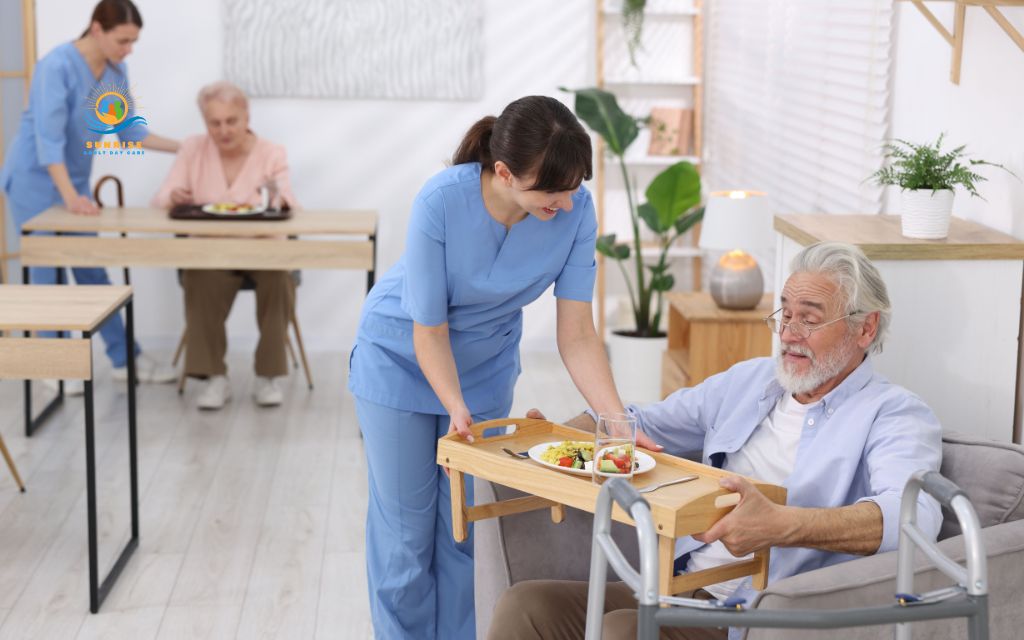

Assisted living or nursing home care: Which one does your parent actually need?

Assisted living or nursing home care: Which one does your parent actually need?

When an older adult can no longer safely live alone, families often face one of the most difficult decisions they will ever make together. The question comes up suddenly: Should we look at assisted living or nursing home care?

The right level of care depends on the individual: their health, their daily needs, and the life they want to continue living. This article will walk you through the key differences between assisted living and nursing homes, help you match the right option to the right situation, and introduce one more option that many families overlook: adult day care.

원호 생활이란 무엇인가요?

Assisted living is a residential care setting designed for older adults who need some help with daily activities but do not require around-the-clock medical supervision. Residents typically live in a private apartment or room within a community setting and receive personalized support tailored to their individual needs and preferences.

Assisted living communities generally provide a wide range of supportive services, including:

  • Help with activities of daily living (ADLs), such as bathing, dressing, and grooming
  • Medication reminders and management support
  • 3 meals a day in a communal dining setting
  • 객실 청소 및 세탁 서비스
  • Transportation to medical appointments and outings
  • Social activities, wellness programs, and community events

What is a nursing home (skilled nursing facility)?

A nursing home (also referred to as a skilled nursing facility (SNF)) is a licensed medical care setting that provides 24-hour nursing supervision and clinical treatment. It is designed for individuals whose health conditions require ongoing medical oversight that cannot be safely managed in a less intensive care environment.

Nursing homes provide a comprehensive level of medical and personal care, including:

  • Skilled nursing care from registered nurses (RNs) and licensed practical nurses (LPNs) available around the clock
  • Rehabilitation services including physical therapy, occupational therapy, and speech-language therapy
  • Management of complex or chronic health conditions such as advanced dementia, post-stroke recovery, congestive heart failure, or wound care
  • Full assistance with all daily personal care needs
  • Structured nutritional and dietary support

Assisted living or nursing home care: Key differences

Understanding the difference between assisted living and nursing homes is one of the most important steps in making the right care decision. The comparison below covers the areas that matter most to families.

Feature원호 생활Nursing Home
Medical ServicesBasic support, limited medical care24/7 skilled nursing & medical supervision
Living SpacePrivate apartments or roomsClinical; shared or semi-private rooms
Daily AssistanceHelp with daily activities (ADLs)Full ADL assistance + medical care
RecreationStrong social activity calendarFewer activities; care-focused
식사Restaurant-style, flexible optionsStructured, medically tailored meals
Median Annual Cost*~$54,000/year (~$4,500/month)~$94,900 – $108,000/year
Insurance CoveragePrimarily private pay; LTC insuranceMedicare (short-term); Medicaid (eligible)

* Median cost estimates based on Genworth Cost of Care Survey data. Actual costs vary by location, room type, and care level.

Assisted living or nursing home care: Key differences

의료 서비스

Assisted living communities offer basic health support – medication reminders, vital sign monitoring, and coordination with outside healthcare providers. They are not equipped for ongoing skilled nursing care.

Nursing homes, by contrast, provide 24/7 skilled nursing and medical supervision, making them appropriate for individuals with complex or unstable health conditions that require continuous clinical attention.

Living space

Assisted living features private apartments or semi-private rooms with a warm, residential feel – comfortable furnishings, common areas, and outdoor spaces designed for everyday living. 

Nursing homes are more clinical in their design, with shared or semi-private rooms configured to accommodate medical equipment and allow easy staff access at all times.

Daily assistance

In assisted living, staff assists with activities of daily living – bathing, dressing, meals, and mobility – while encouraging residents to do as much as they can on their own.

In a nursing home, staff provide full personal care assistance alongside medical care, because most residents require comprehensive support throughout the day and night.

Recreation

Assisted living communities typically maintain active social calendars with group outings, fitness classes, arts and crafts, music programs, and community celebrations. These are a meaningful part of the daily experience.

Nursing homes do offer activities, but the primary focus is on medical care and safety, so recreational programming tends to be more limited in scope.

식사

Assisted living usually features restaurant-style dining with a range of menu choices and flexible mealtimes – a familiar and enjoyable experience.

Nursing homes provide structured meals designed around medical and dietary requirements, which may include texture-modified diets, specialized nutritional supplements, or other directed eating plans.

Median annual cost

Based on Genworth’s Cost of Care Survey, the median annual cost of assisted living in the United States is approximately $54,000 (roughly $4,500 per month). A semi-private nursing home room averages approximately $94,900 per year, while a private room averages around $108,000 per year. Costs vary considerably by geographic location, facility amenities, and the level of care required. 

보험 적용 범위

Assisted living is primarily a private-pay expense. Long-term care insurance may cover some or all costs, but Medicare generally does not pay for assisted living.

Nursing home care may be covered by Medicare for short-term skilled nursing stays following a qualifying three-night hospital admission (up to 100 days under certain conditions, with cost-sharing beginning on day 21).

Medicaid may cover long-term nursing home care for individuals who meet both financial and medical eligibility requirements.

Services in assisted living vs nursing homes

Assisted living is built around independence, lifestyle, and social engagement. The goal is to help residents live as fully and comfortably as possible, with the right amount of support available in the background.

Nursing homes are built around medical care, safety, and continuous supervision. They exist to serve people whose health needs cannot be safely managed in a less intensive environment.

Choosing between the two is fundamentally a question of care level, not personal preference. Someone who requires daily IV medications, wound care, or continuous monitoring after a serious illness needs a nursing home. Someone who needs help with grooming, medications, and staying socially connected may thrive in assisted living.

Services in assisted living vs nursing homes

How to decide between assisted living and a nursing home

The decision between these two options comes down to an honest assessment of the older adult’s current health, safety, and support needs. The following guidelines can help orient your thinking.

Choose assisted living if…

Assisted living is often the right fit when an older adult:

  1. Needs help with daily tasks such as bathing, dressing, or meal preparation
  2. Retains the ability to walk, make decisions, and participate in daily life with some support
  3. Would benefit meaningfully from social activities and peer connection
  4. Does not require continuous medical monitoring or skilled nursing care on a daily basis

Choose a nursing home if…

A nursing home is likely the more appropriate choice when an older adult:

  1. Has complex medical needs that require daily skilled nursing care or clinical monitoring
  2. Lives with a serious health condition such as advanced dementia, post-stroke complications, severe mobility limitations, or another medically intensive diagnosis
  3. Cannot safely be left without constant supervision due to fall risk, behavioral concerns, or acute health instability

How to pay for assisted living or nursing home care

Understanding payment options early in the planning process can reduce stress and help families make decisions that are sustainable over the long term.

Assisted living payment options

Most assisted living costs are covered through one or more of the following:

  • Private pay: personal savings, retirement accounts, or proceeds from the sale of a home
  • Long-term care insurance: policies designed to cover assisted living and similar care expenses
  • Veterans benefits: The Aid and Attendance benefit may be available to qualifying veterans and surviving spouses through the U.S. Department of Veterans Affairs
  • State Medicaid waiver programs: some states offer limited Medicaid assistance for assisted living; eligibility and availability vary by state

Medicare does not cover assisted living costs.

Nursing home payment options

Nursing home care is typically funded through:

  • Medicare: covers short-term skilled nursing care (up to 100 days) following a qualifying three-night hospital stay, with cost-sharing beginning on day 21
  • Medicaid: covers long-term nursing home care for individuals who meet both financial and medical eligibility criteria; this is the most common payer for long-term nursing home stays
  • Long-term care insurance: private policies that may cover a portion of nursing home costs depending on the terms of the plan
  • Private pay: personal assets, savings, or family contributions
How to pay for assisted living or nursing home care

What about adult day care?

Adult day care is a community-based program that provides structured supervision, social activities, health monitoring, and personal care support during daytime hours. Participants return home to their families or caregivers each evening. 

Adult day care is a strong fit for older adults who:

  • Are safe and comfortable at home during evenings and overnight
  • Need supervision, social engagement, or health monitoring during the day
  • Would benefit from structured activities and professional support without leaving home permanently
  • Are at risk of isolation or cognitive decline due to limited daytime stimulation

Adult day care offers several meaningful advantages over full residential placement:

  • Lower cost than assisted living or nursing home care
  • Rich social interaction and structured programming that reduce isolation and support cognitive health
  • A practical way to delay or avoid the need for full-time residential placement while ensuring the older adult receives quality daytime care

선라이즈 성인 주간 보호 센터 소개

Sunrise Adult Daycare is a professional daytime care program that provides supervised activities, socialization, health monitoring, and personal care support for older adults in the Denver area. Participants spend the day with us and return home each evening.

If your loved one needs daytime support, socialization, and professional supervision while remaining at home in the evenings, Sunrise Adult Daycare may be the right fit. We invite you to schedule a tour, speak with one of our care specialists, and see our program in action.

Call us at 303-226-6882 today.

결론

Choosing between assisted living, a nursing home, or adult day care is not about picking the most expensive option or the most widely recognized name. It is about matching the right level of care to the real and current needs of the person you love.

The right choice supports safety and preserves dignity. It fits where your loved one is today and leaves room to adapt as needs evolve. Whatever stage you are in, flexible, compassionate care options exist at every level.

You do not have to figure this out alone. Connecting with a physician, a geriatric care manager, or a trusted local provider can help you move from uncertainty to a clear and confident next step. 

자주 묻는 질문(FAQ)

What is the difference between assisted living and a nursing home?

Assisted living provides housing and help with daily activities for older adults who are relatively independent, while nursing homes offer 24/7 skilled nursing care and medical supervision for individuals with complex or serious health needs. The primary distinction is the level of medical oversight and clinical care provided each day.

Which is more affordable?

Assisted living is generally less expensive. The U.S. median annual cost of assisted living is approximately $54,000, compared to roughly $94,900 – $108,000 per year for a nursing home. Costs vary by location, room type, and level of care required.

Can someone transition between care types?

Yes. It is common for older adults to begin with adult day care or assisted living and later transition to a nursing home as health needs increase. A physician or geriatric care manager can help families plan proactively for these transitions and initiate the right level of care at the right time.

Is adult day care enough support?

Yes,  especially when the older adult is safe at home overnight and the primary needs are daytime supervision, structured programming, and social engagement. Adult day care can significantly reduce caregiver stress and delay the need for residential placement, making it a meaningful and cost-effective option for the right situation.

How do I choose the right option?

Start by honestly assessing the older adult’s current health, safety, and daily functioning. Consult with their primary care physician or a geriatric care manager for a professional evaluation. Visit facilities, ask about staffing ratios, activity programming, and care planning processes. Consider cost, geographic location, and proximity to family as practical factors that will affect long-term sustainability.

관련 게시물

50대 데이트의 15 가지 위험 신호와 오늘날 자신을 보호하는 방법

50대 데이트의 15 가지 위험 신호와 오늘날 자신을 보호하는 방법

14 50대에 다시 데이트하는 것은 설레고, 희망차고, 때로는 ...
양궁은 노인에게 좋은 운동일까? 알아야 할 15가지 이점

양궁은 노인에게 좋은 운동일까? 알아야 할 15가지 이점

11 운동이 효과적이기 위해 격렬할 필요는 없습니다. 많은 노년층의 경우 ...
시니어들이 꼭 들어야 할 팟캐스트 12가지

시니어들이 꼭 들어야 할 팟캐스트 12가지

12 연결성, 호기심, 정신적 활동을 유지하기 위해 체육관이 필요하지 않습니다 ...
위로 스크롤

소중한 사람들을 위한 행복하고 안전한 공간.


또는
전화번호를 남겨 주시면 24시간 이내에 전화를 드리겠습니다.