Nhảy tới nội dung
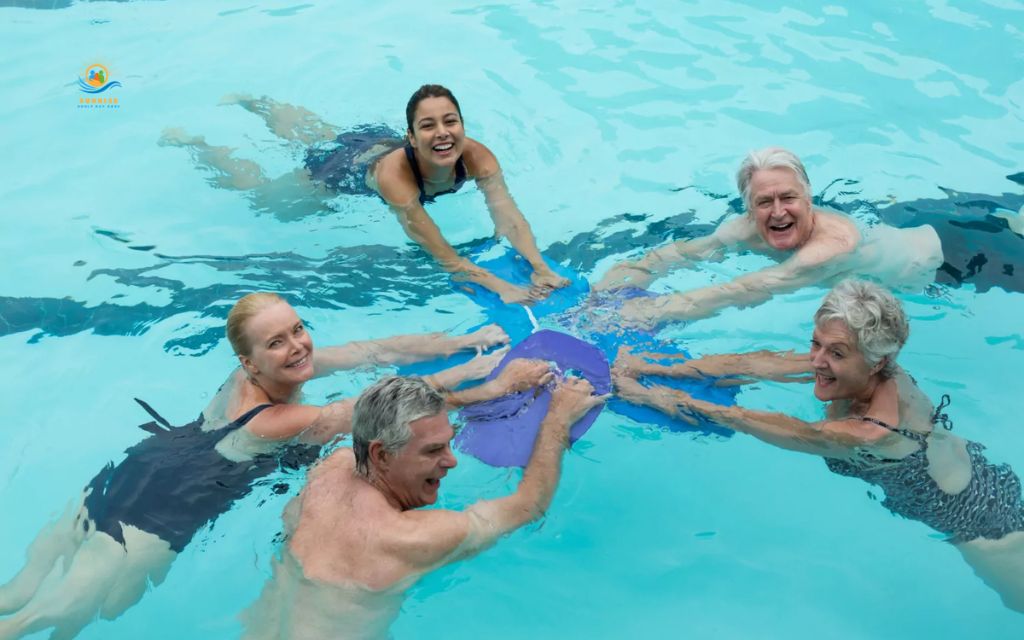
Việc duy trì hoạt động trở nên khó khăn hơn khi đau khớp, viêm khớp hoặc các vấn đề về cân bằng cản trở những bài tập mà bạn từng yêu thích. Thể dục dưới nước cho người cao tuổi cung cấp một lựa chọn nhẹ nhàng, ít tác động nhưng vẫn mang lại lợi ích thực sự về sức mạnh, tim mạch và khả năng vận động. Bằng cách kết hợp độ nổi tự nhiên và sức cản của nước, bài tập dưới nước cho người cao tuổi cho phép người lớn tuổi di chuyển tự do hơn, xây dựng cơ bắp một cách an toàn và giảm áp lực lên đầu gối, hông và cột sống. Hướng dẫn này đề cập đến lợi ích của thể dục dưới nước, ai là người phù hợp, mẹo an toàn, danh sách đầy đủ các bài tập để thử và cách tìm lớp học gần bạn.
Thủy liệu aerobic là gì?
Thể dục dưới nước là một hình thức tập luyện có tác động thấp được thực hiện trong bể bơi, thường là ở độ sâu từ eo đến ngực. Các lớp học thường do một huấn luyện viên dẫn dắt và kết hợp các động tác cardio, kháng lực và kéo giãn theo nhạc. Bởi vì nước nâng đỡ phần lớn trọng lượng của cơ thể, các bài tập thể dục dưới nước dễ dàng hơn cho các khớp so với các động tác tương tự thực hiện trên đất liền, khiến chúng trở thành lựa chọn phổ biến trong các bài tập dưới nước cho người cao tuổi.
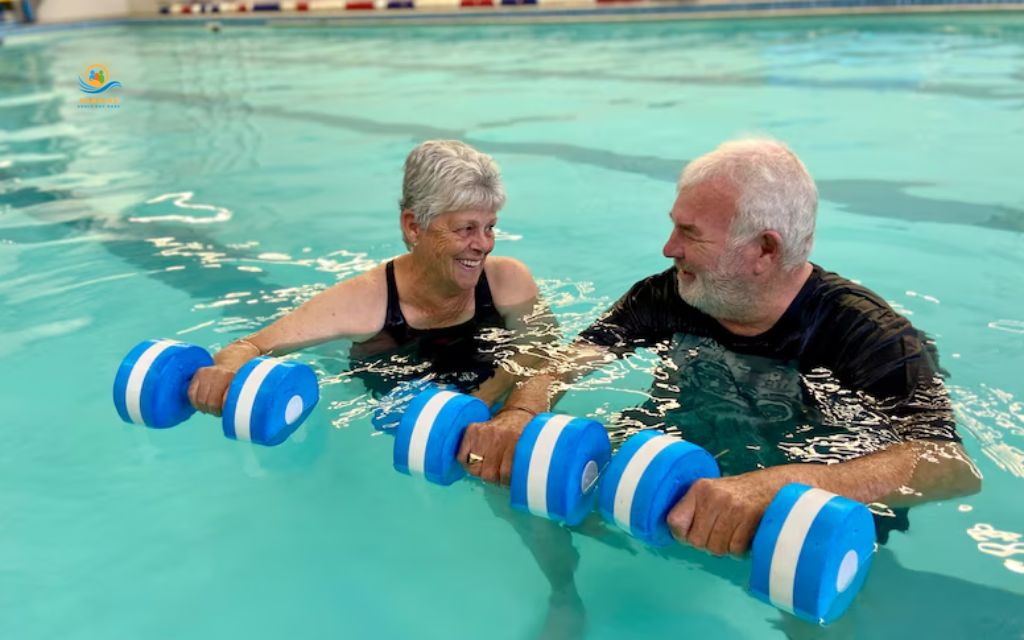
Các hoạt động thể dục dưới nước có thể được thực hiện chỉ bằng trọng lượng cơ thể hoặc với các thiết bị đơn giản như phao bơi, ván bơi, tạ nước và găng tay kháng lực. Không yêu cầu khả năng bơi lội, vì hầu hết các lớp học diễn ra trong nước nông đủ để đứng thoải mái.
Lợi ích của thể dục dưới nước cho người cao tuổi
Giảm căng thẳng cho khớp
Nước hỗ trợ một phần lớn trọng lượng của cơ thể khi một người ngâm mình đến ngực. Sự nổi này giảm đáng kể áp lực lên đầu gối, hông và lưng dưới trong quá trình di chuyển, đây là một trong những lý do chính mà thể dục dưới nước được khuyến nghị cho những người bị viêm khớp hoặc đau khớp mãn tính.
Xây dựng sức mạnh thông qua sức cản nước tự nhiên
Nước dày đặc gấp khoảng mười hai lần không khí, vì vậy mỗi chuyển động trong bể bơi đều yêu cầu các cơ phải làm việc chống lại sức cản tự nhiên. Điều này khiến các bài tập thể dục dưới nước cho người cao tuổi trở thành một cách hiệu quả để xây dựng và duy trì sức mạnh ở tay, chân và cơ bụng mà không cần đến tạ nặng hay máy móc.
Cải thiện sức khỏe tim mạch
Các bài tập thể dục dưới nước kết hợp đi bộ, diễu hành và các động tác tay giúp tăng nhịp tim một cách có kiểm soát và ít tác động. Các bài tập thể dục dưới nước thường xuyên có thể hỗ trợ huyết áp khỏe mạnh và cải thiện chức năng tim và phổi tổng thể theo thời gian.
Cải thiện sự cân bằng và giảm nguy cơ ngã
Sự kháng cự và độ nổi của nước mang lại cho người cao tuổi thêm thời gian để phản ứng và phục hồi nếu họ bắt đầu mất thăng bằng, điều này làm cho bể bơi trở thành một môi trường an toàn hơn để luyện tập thăng bằng so với mặt đất rắn. Nhiều chương trình tập thể dục dưới nước cho người cao tuổi bao gồm các động tác đứng và một chân đặc biệt để tăng cường thăng bằng.
Hỗ trợ quản lý tình trạng mãn tính
Các bài tập dưới nước thường được khuyến nghị cho người cao tuổi đang quản lý bệnh viêm khớp, loãng xương, tiểu đường hoặc phục hồi sau phẫu thuật thay khớp, vì nước giảm áp lực trong khi vẫn cho phép chuyển động có ý nghĩa. Thể dục nhịp điệu dưới nước cho người cao tuổi thường được đưa vào như một phần của kế hoạch vật lý trị liệu và phục hồi chức năng vì lý do này.
Tăng cường tâm trạng và kết nối xã hội
Ngoài những lợi ích về thể chất, các lớp tập thể dục dưới nước cung cấp cơ hội để giao lưu, xây dựng tình bạn và gắn kết với cộng đồng. Yếu tố xã hội này có thể đóng vai trò quan trọng trong việc giảm cảm giác cô đơn và hỗ trợ sức khỏe tinh thần cho người cao tuổi.
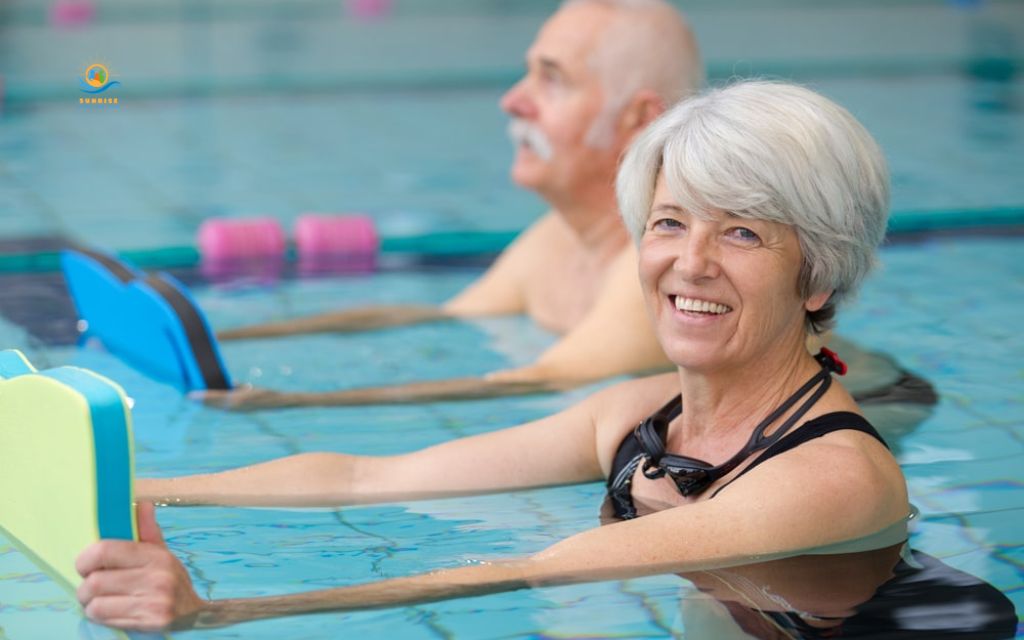
Thể dục dưới nước có an toàn cho người cao tuổi không?
Thể dục dưới nước thường được coi là một trong những lựa chọn tập luyện an toàn nhất cho người cao tuổi, bao gồm cả những người có khả năng di chuyển hạn chế, đau khớp hoặc lo ngại về sự cân bằng. Bởi vì nước hỗ trợ cơ thể và giảm chấn động cho mọi chuyển động, nguy cơ ngã và chấn thương thấp hơn nhiều so với các bài tập trên đất, khiến nó trở thành lựa chọn phù hợp cho bất kỳ ai cảm thấy các bài tập cường độ cao quá đau đớn hoặc đòi hỏi thể chất quá nhiều.
Dù vậy, vẫn nên kiểm tra với bác sĩ hoặc nhà vật lý trị liệu trước khi bắt đầu, đặc biệt là đối với những người đang quản lý các vấn đề về tim, phẫu thuật gần đây hoặc các mối quan tâm sức khỏe đáng kể khác, vì nhà cung cấp có thể giúp thiết lập cường độ phù hợp và chỉ ra bất kỳ động tác nào cần điều chỉnh. Nên tránh tập thể dục dưới nước trong thời gian có vết thương hở, nhiễm trùng đang hoạt động, bệnh tim mạch không kiểm soát, mất thăng bằng nghiêm trọng, hoặc tình trạng da hoặc hô hấp lây nhiễm, cho đến khi bác sĩ xác nhận rằng việc quay lại bể bơi là an toàn.
Những lưu ý về an toàn trước khi bắt đầu
Một vài biện pháp phòng ngừa đơn giản có thể làm cho việc tập thể dục dưới nước cho người cao tuổi vừa an toàn vừa thoải mái hơn.
- Kiểm tra nhiệt độ nước: Nước quá lạnh có thể làm cứng cơ bắp, trong khi nước quá ấm có thể gây chóng mặt hoặc quá nhiệt. Một bể bơi ấm áp thoải mái là lý tưởng cho hầu hết người lớn tuổi.
- Mang giày nước hỗ trợ: Giày phù hợp giúp ngăn ngừa trượt trên các bề mặt hồ bơi ướt và cung cấp độ bám tốt hơn trên đáy hồ bơi.
- Giữ nước cho cơ thể. Thật dễ để quên uống nước khi tập luyện trong hồ bơi, nhưng việc cung cấp đủ nước cũng quan trọng như đối với bất kỳ bài tập nào trên đất liền.
- Bắt đầu từ từ và tăng dần: Bắt đầu với các buổi tập ngắn hơn và các động tác có cường độ thấp, sau đó tăng thời gian và nỗ lực khi sức mạnh và sự tự tin được cải thiện.
- Tập luyện dưới sự giám sát khi có thể: Tham gia một lớp học với huấn luyện viên được chứng nhận, hoặc tập luyện cùng với người khác, sẽ thêm một lớp an toàn và hỗ trợ.
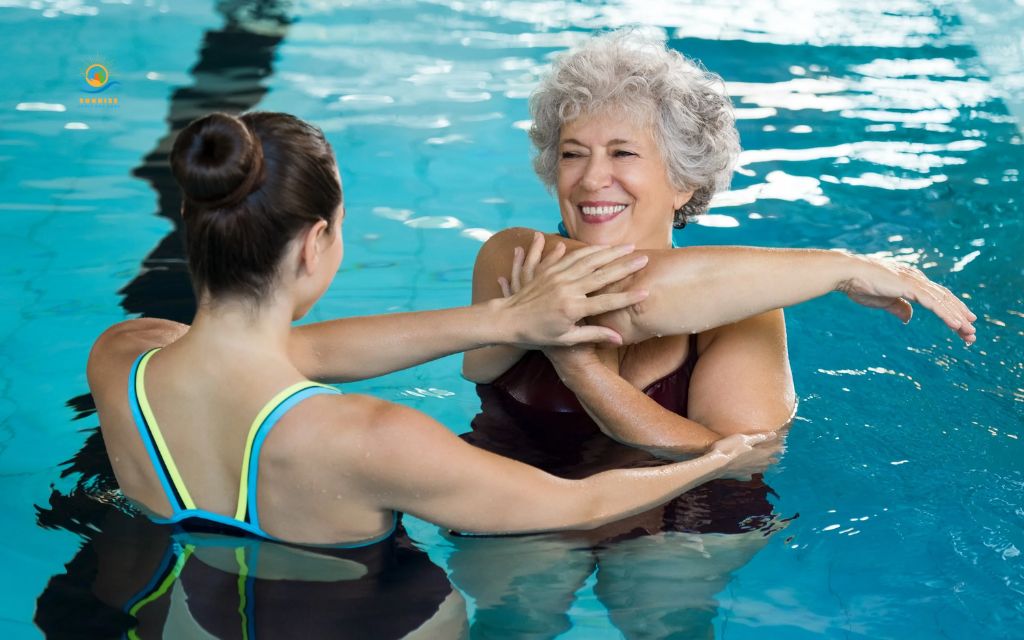
14 bài tập thể dục dưới nước đơn giản cho người cao tuổi.
Đi bộ hoặc chạy bộ dưới nước
Đây thường là nơi dễ bắt đầu nhất, và nhiều giáo viên sử dụng nó như một bài khởi động. Chỉ cần đi bộ từ một bên của khu vực nông sang bên kia, để nước đẩy lại mỗi bước đi. Khi đi bộ cảm thấy dễ dàng, tăng tốc lên một chút để chạy bộ nhẹ sẽ mang lại nhiều lợi ích cho tim mạch mà không gây thêm tác động lên các khớp.
Đi bộ tại chỗ
Đứng thẳng với lưng thẳng, sau đó nâng một đầu gối lên từng cái một như thể đang diễu hành, vung tay đối diện về phía trước với mỗi bước. Hãy cố gắng diễu hành khoảng 30 giây để bắt đầu. Bởi vì nó đòi hỏi một chút phối hợp hơn so với việc đi bộ bình thường, nó cũng là một bài tập cân bằng nhẹ.
Nâng gót chân
Từ từ đứng lên trên đầu ngón chân, giữ trong 1 đến 2 giây, sau đó hạ xuống một cách kiểm soát. 10 đến 12 lần lặp lại là một điểm khởi đầu tốt. Bất kỳ ai cảm thấy không vững có thể đơn giản quay mặt về phía tường bể bơi và bám vào để có thêm hỗ trợ trong khi bắp chân làm việc.
Đẩy ngực
Gập đầu gối một chút để vai ngập trong nước, sau đó đưa cả hai tay ra hai bên và từ từ đưa lòng bàn tay lại với nhau trước ngực như thể ôm một quả bóng lớn. Thực hiện ngược lại chuyển động một cách chậm rãi khi trở lại. Thường thì 10 lần lặp lại là đủ để cảm nhận sức cản của nước tác động lên ngực và vai.
Cuốn bắp tay
Bắt đầu với hai tay thẳng xuống hai bên, sau đó gập khuỷu tay để đưa cẳng tay lên gần vai trước khi hạ xuống trở lại. Việc tạo hình bàn tay như cái chén, thay vì giữ phẳng, sẽ tạo ra sức kháng lớn hơn cho những ai sẵn sàng đối mặt với thử thách. 10 đến 12 lần lặp chậm thường là hiệu quả nhất.
Nâng tay (trước và bên)
Giữ khuỷu tay cố định, nâng cả hai cánh tay ra hai bên cho đến khi chúng đạt đến độ cao của vai, sau đó hạ chúng xuống ngay dưới bề mặt nước. Cùng một động tác cũng có thể được thực hiện thẳng ra phía trước cơ thể để nhắm vào vai từ một góc độ khác. Di chuyển chậm quan trọng hơn ở đây so với việc di chuyển thường xuyên, vì tốc độ chậm giữ cho cơ bắp luôn căng thẳng.
Vòng tay
Với tay duỗi ra hai bên ngay dưới mặt nước, vẽ những vòng tròn nhỏ và dần dần để chúng lớn hơn trong khoảng 10 đến 15 giây. Đảo ngược hướng giữa chừng giúp làm việc đều cho vai. Nhiều giáo viên sử dụng động tác này sớm trong lớp như một cách nhẹ nhàng để khởi động trước khi thực hiện những động tác đòi hỏi hơn.
Chống đẩy vào tường
Đặt cả hai tay lên tường bể bơi rộng hơn một chút so với chiều rộng vai, giữ chân chạm đất, và nghiêng người vào trước khi đẩy ra. 2 đến 3 hiệp từ 8 đến 10 lần lặp, với một khoảng nghỉ ngắn giữa các hiệp, là một mục tiêu hợp lý để hướng tới. Ở gần tường đủ để tránh khóa khuỷu tay giúp bảo vệ các khớp trong quá trình đẩy.
Nâng chân trước và sau (gập hông)
Giữ tường bể bơi hoặc lan can bằng một tay, giữ đầu gối thẳng, và đung đưa chân về phía trước rồi lại về phía sau theo một vòng cung mượt mà, có kiểm soát. 8 đến 10 lần đung đưa mỗi chân là mục tiêu điển hình. Đứng thẳng với mắt nhìn về phía trước, thay vì nhìn xuống nước, sẽ giúp dễ dàng giữ thăng bằng trong suốt động tác.
Nâng chân bên và đá bên (khép hông)
Dựa vào tường để hỗ trợ, nâng một chân ra bên cạnh, sau đó quét nó trở lại trước cơ thể về phía chân đối diện. Giữ cho các ngón chân hướng về phía trước trong suốt thời gian là điều làm cho bài tập này hiệu quả cho hông, vì việc để bàn chân quay ra ngoài sẽ làm giảm tác động lên các cơ mục tiêu. Đổi bên sau 8 đến 10 lần lặp.
Gập chân sau
Từ tư thế đứng thẳng, gập một đầu gối để đưa gót chân lên gần mông, sau đó hạ xuống từ từ. Đây là một chuyển động nhỏ, vì vậy cám dỗ là sẽ đung đưa chân hoặc để đầu gối trượt về phía trước, nhưng giữ cho chuyển động chậm và hông ở mức ngang mới là điều quan trọng. 10 lần lặp cho mỗi chân là đủ.
Đá chân Flutter
Nắm lấy cạnh bể bơi, để cơ thể nổi lên mặt nước, và đá chân lên xuống nhanh và nhỏ trong khi giữ cho cơ bụng căng. 15 đến 30 giây là thời gian khởi đầu tốt. Những ai muốn thử thách hơn có thể thêm tạ cổ chân khi động tác cơ bản cảm thấy thoải mái.
Đứng gập gối (thử thách cân bằng)
Nâng một đầu gối lên hướng về ngực và giữ trong một khoảnh khắc trước khi đặt chân xuống, sử dụng tường để hỗ trợ nếu cần hoặc đứng độc lập để thử thách thăng bằng lớn hơn. Bài tập này ít tập trung vào số lần lặp lại và nhiều hơn vào sự kiểm soát, vì vậy 5 lần nâng chậm rãi, ổn định mỗi bên tốt hơn 10 lần vội vàng.
Ghế tường
Với lưng dựa vào tường bể bơi, hãy với tay ra sau và nắm lấy cạnh, sau đó nâng cả hai chân lên khỏi sàn và kéo đầu gối về phía ngực. Giữ trong 5 đến 10 giây trước khi đặt chân trở lại xuống. Đây là một trong những động tác khó khăn hơn trong danh sách, vì vậy tốt nhất nên để dành cho sau trong một buổi tập, khi sự cân bằng và cảm giác thoải mái trong nước đã vững chắc.
Các bài kéo giãn nhẹ nhàng và thư giãn cơ thể
Kết thúc buổi tập với những động tác kéo giãn chậm cho tay, chân và lưng trong khi vẫn ở trong nước, giữ mỗi động tác từ 15 đến 30 giây. Sự kháng cự nhẹ nhàng và ấm áp của nước giúp bạn dễ dàng kéo giãn sâu hơn bình thường, vì vậy không cần phải vội vàng trong bước cuối cùng này trước khi rời khỏi bể bơi.
Những gì cần mang đến lớp học đầu tiên của bạn
Một vài đồ dùng đơn giản có thể làm cho buổi học thể dục dưới nước đầu tiên thoải mái hơn.
- Một bộ đồ bơi vừa vặn. Sự vừa vặn ôm sát và hỗ trợ giữ cho bạn thoải mái trong suốt quá trình vận động và sẽ không bị dịch chuyển hay cảm thấy nặng nề khi ướt.
- Giày nước có độ bám tốt. Chúng bảo vệ đôi chân trên các bề mặt hồ bơi gồ ghề và mang lại độ bám tốt hơn trên đáy hồ bơi so với chân trần.
- Một chiếc khăn. Hữu ích để lau khô nhanh chóng và giữ ấm ngay sau khi ra khỏi bể bơi.
- Một chai nước tái sử dụng. Giữ nước cho cơ thể là quan trọng không kém gì ở hồ bơi so với bất kỳ bài tập nào trên đất liền.
- Kem chống nắng, nếu bể bơi ở ngoài trời. Nước phản chiếu ánh sáng mặt trời, vì vậy da có thể bị cháy nhanh hơn mong đợi ngay cả trong một ngày nhiều mây.
Thể dục dưới nước so với thể dục trên cạn
Việc nhìn thấy hai cái bên cạnh nhau giúp dễ dàng hiểu tại sao nước thường là lựa chọn dễ chịu hơn cho người lớn tuổi. Bảng dưới đây so sánh cách mỗi phương pháp ảnh hưởng đến khớp, cơ bắp và sự an toàn tổng thể của một buổi tập luyện.
| Tính năng | Thể dục nhịp điệu dưới nước | Bài tập trên cạn |
| Tác động chung | Rất thấp | Vừa phải đến cao |
| Kháng cự | Hiện diện ở mọi hướng | Chủ yếu từ trọng lực |
| Hỗ trợ cân bằng | Cao, do lực nổi | Thấp hơn |
| Nguy cơ ngã | Tối giản | Cao hơn |
| Hiệu ứng làm mát | Được xây dựng trong | Không có |
Kết luận
Thể dục dưới nước cho người cao tuổi cung cấp một cách an toàn, ít tác động để xây dựng sức mạnh, bảo vệ tim, hỗ trợ cân bằng và duy trì kết nối xã hội, tất cả trong khi giảm căng thẳng lên các khớp. Dù được thực hiện độc lập hay như một phần của lớp học có hướng dẫn, bài tập dưới nước có thể được điều chỉnh để phù hợp với nhiều nhu cầu sức khỏe và mức độ thể lực khác nhau, khiến nó trở thành một trong những bài tập dễ tiếp cận nhất cho người lớn tuổi.
Tại Sunrise Adult Daycare, chúng tôi hiểu rằng việc duy trì hoạt động và tham gia là một phần quan trọng của quá trình lão hóa khỏe mạnh. Chúng tôi chương trình ban ngày, không phải cư trú cung cấp cho người lớn tuổi một môi trường xã hội hỗ trợ với các hoạt động có cấu trúc được thiết kế để thúc đẩy sức khỏe thể chất và tinh thần suốt cả ngày. Để tìm hiểu thêm về chương trình của chúng tôi, hãy gọi cho chúng tôi theo số 303-226-6882 hôm nay!
Câu hỏi thường gặp (FAQs)
Tôi có cần biết bơi để tham gia thể dục dưới nước không?
Không. Hầu hết các lớp thể dục dưới nước diễn ra ở vùng nước nông, nơi người tham gia có thể đứng thoải mái suốt thời gian, vì vậy không yêu cầu khả năng bơi lội.
Người cao tuổi nên tập thể dục dưới nước bao nhiêu lần?
Hai đến ba buổi mỗi tuần là một điểm khởi đầu hợp lý cho hầu hết người lớn tuổi, với thời gian nghỉ ngơi hoặc hoạt động nhẹ vào những ngày giữa. Một bác sĩ hoặc nhà vật lý trị liệu có thể giúp điều chỉnh tần suất phù hợp với mức độ thể lực và nhu cầu sức khỏe của từng người.
Thủy liệu pháp có tốt cho viêm khớp không?
Có. Độ nổi của nước giảm áp lực lên các khớp, điều này thường làm cho việc di chuyển thoải mái hơn cho những người bị viêm khớp so với các bài tập trên cạn. Nhiều chương trình tập thể dục dưới nước được thiết kế đặc biệt với các tình trạng khớp trong tâm trí.
Nhiệt độ bể bơi tốt nhất cho người cao tuổi là gì?
Một bể bơi ấm áp thoải mái, thường nằm trong khoảng được cơ sở khuyến nghị cho các lớp tập thể dục trị liệu hoặc cho người cao tuổi, là lý tưởng. Nước quá lạnh có thể làm cứng cơ bắp, trong khi nước quá ấm có thể gây quá nhiệt hoặc chóng mặt trong quá trình tập luyện.
Thể dục dưới nước có thể giúp ngăn ngừa té ngã không?
Có. Thể dục dưới nước giúp xây dựng sự cân bằng, phối hợp và sức mạnh cơ thể dưới trong một môi trường được hỗ trợ, điều này có thể chuyển thành sự ổn định và tự tin hơn trong các chuyển động hàng ngày trên đất liền.