
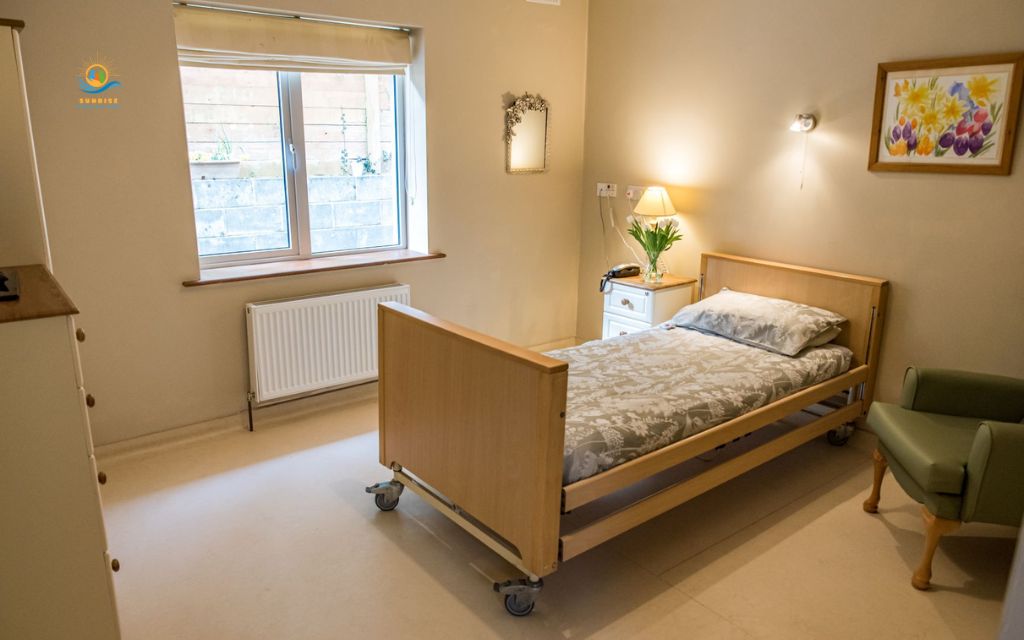
Moving a parent, spouse, or grandparent into a nursing home is rarely simple, and the room they move into often becomes the emotional center of that transition. Thoughtful nursing home room decor does more than fill blank walls. It can ease anxiety, support memory, and turn an unfamiliar space into somewhere that feels like home.
This guide covers how to decorate a nursing home room in a way that balances comfort, safety, and personality, whether you are working with a private room or a shared one. You will find practical nursing home room decorating ideas for photos, color, lighting, furniture, storage, and the rules most facilities expect families to follow.
Before you start: Check the rules and assess your space
Ask about facility policies first
Before buying or packing anything, talk with nursing staff or the activities coordinator about what is allowed. Ask specifically about:
- Wall hanging methods: Many facilities do not allow nails or screws and instead require removable adhesive strips or hooks.
- Painting: Most nursing homes do not permit residents to paint their walls, though peel and stick decor is often an acceptable substitute.
- Fire and safety rules: Some items, such as candles or space heaters, are restricted across the entire building for safety reasons.
- Shared room etiquette: If the room has a roommate, ask what rules apply to shared walls, closet space, and floor space.
Assess your room’s size and layout
Once you know the rules, take a close look at the room itself. Note the amount of wall space available for photos or artwork, the size and location of windows, and how much storage the closet and drawers provide. If mobility aids like a walker or wheelchair will be used, measure the open floor space needed to move safely.
It also helps to photograph the room from each wall before you start decorating. Having these photos on hand while you shop makes it easier to judge whether a piece of furniture, rug, or storage bin will actually fit.
Extra tips for shared rooms
Nursing home bedroom setups are often shared, which changes how you approach decorating. Focus personal touches on the areas that belong to your loved one, such as their side of the wall, their nightstand, and their section of the closet. A folding screen or curtain, if permitted, can create a sense of privacy without blocking walkways. Keep decorations compact and vertical, using wall space and shelving rather than the floor, so the shared area stays open and easy to move through for both residents.

Add personal and sentimental touches
Choose how to display photos
There are three common ways to display family photos, each with different tradeoffs:
- Framed photos: Easy to label with names and dates, and simple to glance at from a bed or chair, though each frame only holds a single image and takes up wall or shelf space.
- Digital photo frames: Can rotate through hundreds of pictures automatically, which works well for residents who enjoy variety, though individual photos cannot be labeled and a large slideshow can feel overwhelming for someone with memory challenges.
- Photo albums: Familiar and easy to look through with a visitor, and photos can be labeled clearly, though the album should be lightweight enough for the resident to hold and turn pages independently.
Bring keepsakes and artwork
Small, meaningful objects such as a favorite book, a religious item, a piece of needlework, or a treasured trinket can do a lot to make a nursing home room feel personal. Choose a handful of items rather than many small pieces, since a cluttered surface can be harder to keep clean and can make it more difficult for staff to assist with daily care. Artwork can be hung using facility approved methods, and pieces with meaningful colors or subjects, such as a favorite landscape or a grandchild’s drawing, tend to be more comforting than generic decor.
Create comfort with color, light, sound, and scent
Choose calming colors and textures
Soft, familiar colors such as pale blues, greens, and warm neutrals tend to feel more restful than bright or busy patterns. Bedding, throw pillows, and a lightweight blanket in these tones can add warmth without overwhelming the space. Choose fabrics that are easy to clean, since bedding and textiles in a nursing home room need to be washed frequently.
Maximize natural and lamp lighting
Good lighting plays a large role in mood and daily orientation. Arrange a favorite chair near a window when possible to take advantage of natural light. A bedside lamp with adjustable brightness, ideally with a large, easy to reach switch, gives residents control over their own lighting rather than relying only on overhead fixtures.
Add music and approved scents safely
Music can be played through a radio, tablet, or small speaker, and a personalized playlist of familiar songs can be genuinely comforting. For scent, most nursing homes do not allow candles, incense, or plug in air fresheners because they produce heat or flame or because scents can affect other residents through shared ventilation. Ask staff whether an approved diffuser or scented lotion is permitted instead, since these options are sometimes allowed even when open flame items are not.
Furnish and organize for safety
Choose safe, approved furniture
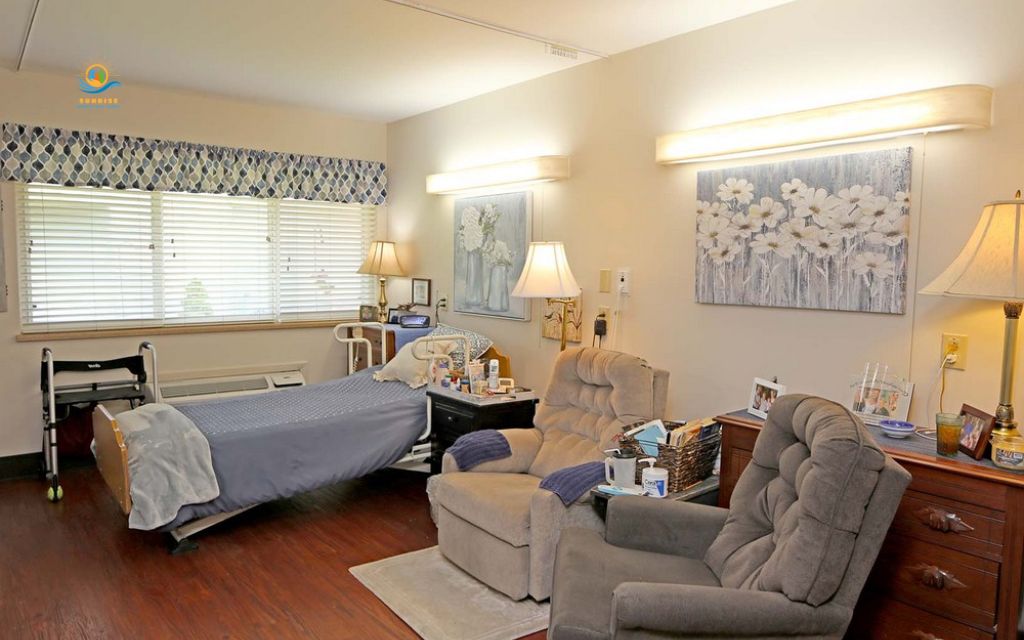
Look for furniture with rounded edges, a stable base, and a seat height that makes it easy to sit down and stand up safely. Many facilities restrict outside upholstered furniture such as recliners or armchairs for infection control reasons, so confirm with staff before purchasing a larger piece. Smaller items like a padded seat cushion or a lap desk are usually easier to get approved.
Prioritize accessibility and fall prevention
Accessibility should guide the layout of the entire room. Keep walkways clear enough for a walker or wheelchair to pass through without obstruction, and avoid loose throw rugs or mats, which are one of the most common fall hazards in a nursing home room. Tuck away cords and cables, and keep frequently used items, such as glasses, a phone, or a call button, within easy reach from the bed or chair.
Add functional, labeled storage
Labeled baskets, bins, and drawer dividers make it easier for residents, visitors, and staff to find what they need. Use large, high contrast lettering on labels so they are easy to read, and consider adding a simple picture alongside the text for residents who benefit from visual cues. Rotating out seasonal items or rarely used supplies helps keep the room organized without letting clutter build up over time.
What’s not allowed in nursing home room decor
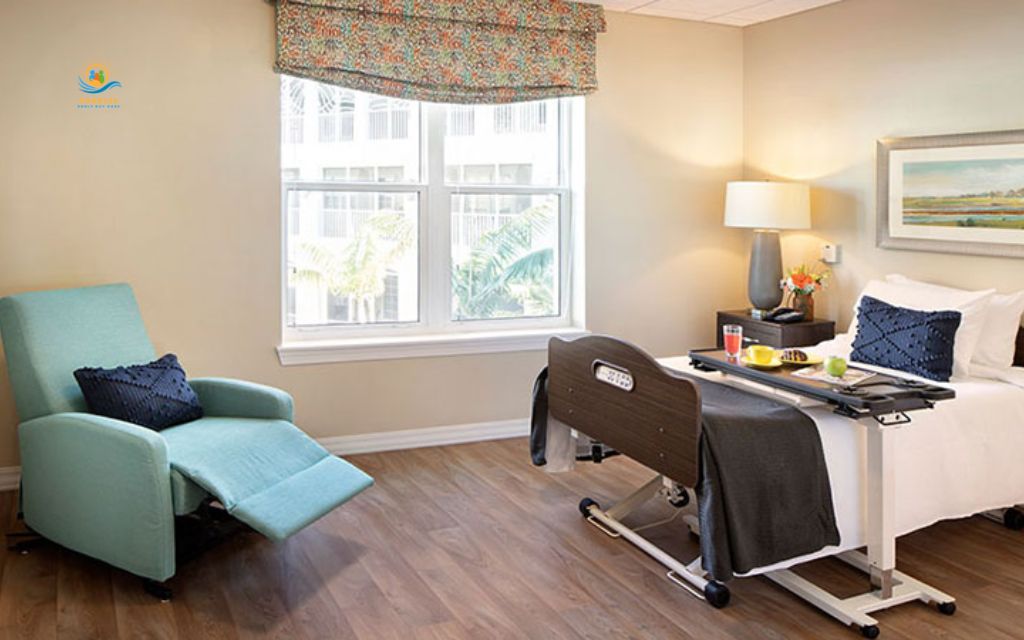
Most nursing homes follow similar safety guidelines, even though exact rules vary by facility and by state. Before you shop, it helps to know which items are commonly restricted.
- Throw rugs and loose mats: These are a leading trip and fall hazard, especially for residents using a walker or wheelchair.
- Candles and other flame based items: Open flame is almost universally prohibited for fire safety.
- Unapproved upholstered furniture: Outside recliners or armchairs are often restricted due to infection control and pest prevention policies.
- Personal medications: All medications, including over the counter products, typically must be managed and dispensed by nursing staff rather than kept in the room.
- Space heaters and other heat producing devices: These pose a fire risk and are commonly banned across the building.
Keep the room personal over time
Rotate seasonal and holiday touches
A small shelf, corkboard, or wall hook set aside for seasonal decor gives the room a reason to change throughout the year without a full redecorating effort. Swapping out a few items for a birthday, holiday, or favorite season keeps the space feeling fresh and gives residents something to look forward to.
Involve your loved one in decisions
Whenever possible, let the resident choose between options rather than deciding everything for them. Picking which photos to frame, which blanket to bring, or where a favorite item should sit gives them a sense of control during a time when many other decisions are out of their hands. This kind of involvement also tends to make the finished room feel more genuinely theirs.
Budget-friendly and DIY ideas
Decorating a nursing home room does not require a large budget. Peel and stick wall decor, a homemade photo collage, or a simple corkboard with rotating cards can add personality at low cost. Thrifted frames, a favorite throw blanket already owned, or a printed calendar with family birthdays marked are all inexpensive ways to add warmth without a major purchase.
Kết luận
Decorating a nursing home room is one part of supporting a loved one through a major life transition, but it is not the only option families have. For seniors who do not yet need full time residential care, Sunrise Adult Daycare offers a daytime program that provides supervised activities, meals, and social connection while residents continue living at home. If your family is weighing residential care against options that let your loved one remain at home longer, contact Sunrise Adult Daycare at 303-226-6882 to learn more about daytime services in the Denver area.
Những câu hỏi thường (Hỏi đáp)
What are the best nursing home room decor ideas for a small space?
Focus on vertical space rather than the floor. Wall mounted shelving, a small corkboard, and a compact photo display use limited square footage without crowding walkways or furniture.
Can you paint the walls of a nursing home room?
Most facilities do not allow residents to paint their walls. Peel and stick wallpaper or decals are usually a workable alternative, but it is best to confirm with staff before applying anything to the walls.
What should you avoid when decorating a nursing home room?
Avoid loose rugs, candles or other flame based items, unapproved upholstered furniture, and anything that blocks walkways or mobility aids. Always check facility policy before bringing in larger items.
How can you make a shared nursing home room feel more personal?
Concentrate decor on the resident’s own side of the room, such as their section of wall, nightstand, and closet, and use vertical storage so shared floor space stays open and easy to navigate.