Skip to content
Bathroom safety for elderly loved ones matters because this small room combines wet floors, hard surfaces and frequent changes in position. According to the Centers for Disease Control and Prevention (CDC), about 1 in 4 adults aged 65 and older report falling each year.
Falls are not a normal part of aging, and many bathroom hazards can be reduced with practical changes. This guide covers simple, affordable fixes and larger upgrades that help older adults bathe and use the toilet safely while staying independent.
Why bathrooms are high-risk spaces for older adults
Older adults stand on wet surfaces, step over a tub edge, lower onto a toilet and rise again, often with reduced strength, balance or vision. Tile, porcelain and metal fixtures are unforgiving if a fall happens.
Hot water adds another risk, because thinner skin can burn more quickly in older adults. Night-time visits add more, since low light and sleepiness make it harder to spot hazards.
Fear can follow a fall. According to the CDC, worry about falling again can lead older adults to cut back on daily activity, which may weaken strength and balance and raise the risk of another fall. Preventing the first fall protects both safety and confidence.
10 bathroom safety tips for seniors
1. Safe access to the bathroom
The route to the bathroom matters as much as the room itself, since it is one of the most visited spaces in the home. Remove bulky furniture, cords and other clutter from hallways so a walker, a cane or an unsteady step has room to move.
Lighting is the next check. Replace dim bulbs, and place night lights or motion-sensor lights along the path from the bedroom to the bathroom. This helps because eyes can take longer to adjust when a person moves from a dark room into a bright one.
Finally, look at the doorway. Accessibility guidelines under the Americans with Disabilities Act (ADA) call for at least 32 inches of clear width at an accessible door, which is a useful benchmark for walkers and wheelchairs. Raised thresholds can also catch feet or wheels, so keep them low or remove them where possible.
2. Slip-resistant floors
Slippery flooring is one of the most common bathroom hazards. Textured vinyl or slip-resistant tile offers better traction than polished tile. If replacing the floor is not realistic, slip-resistant mats can be a budget-friendly alternative.
Any mat must stay put. Choose low-profile mats with a non-slip backing, and replace them when the edges curl, because a loose mat can become a trip hazard. Remove decorative throw rugs entirely, since everything on the floor should serve a purpose.
Keeping the floor dry matters just as much. Wipe up splashes right away, and place a firm, non-skid mat directly outside the tub or shower so wet feet land on a stable surface.
When visiting, run the sink, tub and shower to check for leaks or spots where water collects. Mold and mildew can also make surfaces slippery, so address them promptly.

3. Safer showers
Many injuries happen while stepping in or out, so watch how easily the person enters and leaves the shower. Shower safety for seniors usually depends on traction, support, seating and reach, and these changes address each one.
- Traction: Rubber mats with suction cups or self-stick, non-skid decals on the shower floor add grip where soap and water make the surface slick.
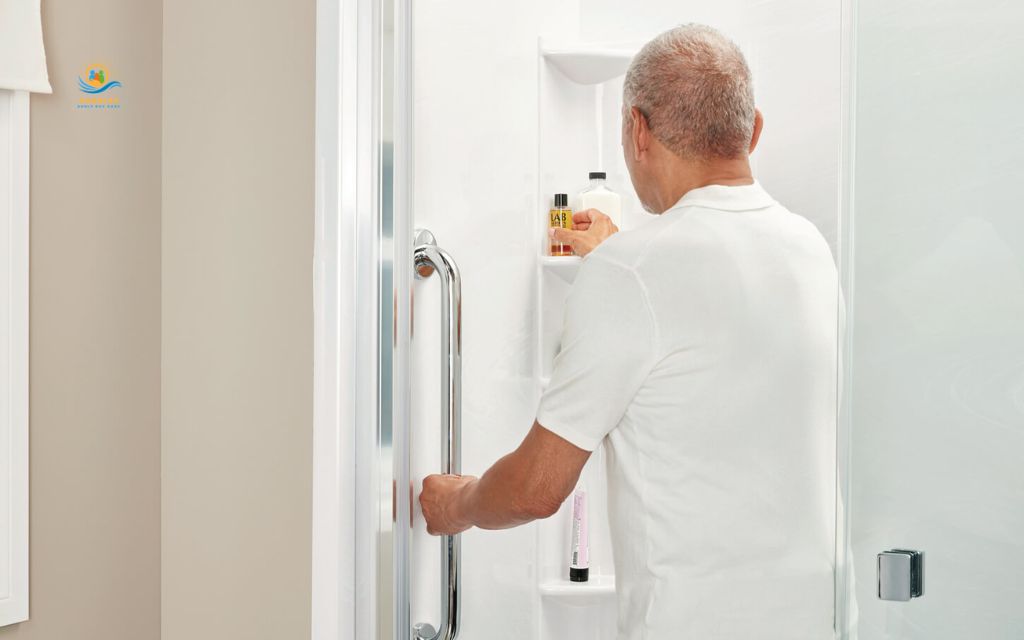
- Support: Grab bars outside and inside the shower give the hands something solid to hold when stepping over the edge or turning, while towel racks cannot carry body weight.
- Seating: Shower chairs or benches with non-slip tips let someone with limited balance or endurance sit while washing, and a handheld shower head allows rinsing without standing up.
- Reach aids: Long-handled sponges or brushes reduce bending and stretching to wash feet and the back.
If a glass shower door is not safety glass, replacing it with safety glass or a plastic panel can reduce the risk of cuts if someone falls against it.
4. Reducing risks around the tub
Some older adults prefer a bath to relax or ease sore muscles, and that preference can be respected with the right setup. Good bathtub safety for elderly bathers starts with clearing the area around the tub.
Keep hair dryers, radios and other electrical devices away from the water, and unplug them after use so they cannot fall into the tub.
Elderly tub safety depends most on getting in and out. Install a grab bar on the wall beside the tub, plus a second or vertical bar at the entry point, so there is always something firm to hold while lifting a leg over the rim. Add a non-slip mat or decals on the tub floor as well.
For anyone who bathes alone, keep an emergency call button or wearable alert device within reach so help can be called after a fall.

5. Transfer bench for tub entry
Among elderly bathing solutions, a transfer bench is one of the most practical for people who struggle to lift their legs over the tub wall. One end of the bench sits outside the tub and the other sits inside, so the person sits down first, then slides across into the bath or shower without stepping over the edge.
Look for a sturdy bench with adjustable leg height and non-slip feet. Check the weight capacity listed by the manufacturer, and consider a model with a back support if balance is a concern. Adding a handheld shower head allows the entire bath to be taken while seated.
Shower chairs are generally used by people who can still step into the shower on their own, while transfer benches suit those who find the tub wall difficult to cross.
6. Scald-safe water temperature
Scalds are easy to overlook. Thinner skin can burn more quickly, and some older adults may react more slowly to heat, so hot water can cause injury before they pull away.
The U.S. Consumer Product Safety Commission (CPSC) recommends setting water heaters to 120°F. Even at 120°F, about 5 minutes of exposure could cause a third-degree burn, while most adults can suffer one from 150°F water in about 2 seconds.
If the water heater cannot be adjusted, as can happen in some apartments, a thermostatic mixing valve or anti-scald device at the shower or tub helps limit sudden temperature spikes, and a licensed plumber can install one. Before the person steps in, test the water with a hand or a bath thermometer.

7. Toilet safety and support
Lowering onto the toilet and standing up again depend heavily on leg strength and balance. Raised toilet seats and comfort height toilets shorten how far the body has to travel, which makes both movements easier.
Comfort height models sit about 17 to 19 inches high, taller than many standard toilets. If choosing a raised seat, pick one that locks securely so it does not shift under weight.
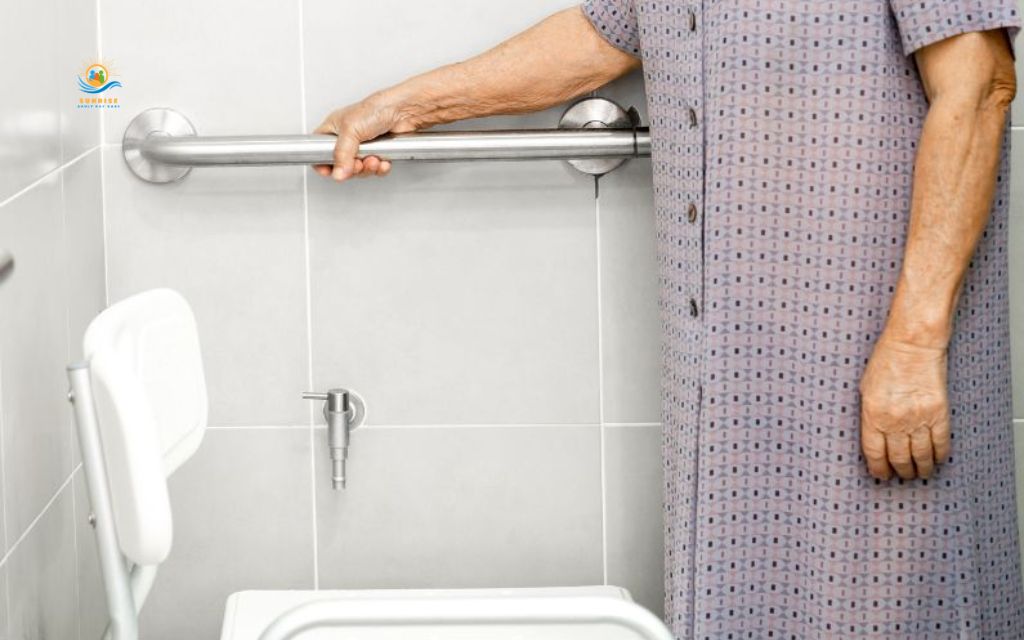
Grab bars beside the toilet give a firm hold for pushing up and lowering down. Horizontal bars are commonly mounted 33 to 36 inches above the floor, measured to the top of the bar, which follows ADA guidance, though the best position depends on the person’s height and reach.
Choose a bar rated for body weight with a textured grip, and anchor it into wall studs or solid blocking rather than drywall alone. Never rely on towel bars or toilet paper holders for support. If there is no wall close enough to the toilet, a freestanding toilet safety frame can provide arm supports on both sides.

8. Accessible bathroom upgrades
Senior bathroom safety works best when upgrades also protect independence and dignity. Grab bars and shower chairs are the starting point, and larger changes can follow as needs evolve. These upgrades are worth considering when stepping in or keeping balance becomes a lasting concern.
- Barrier-free shower: Showers with little or no curb remove the step over the edge and, depending on size and design, can make room for a walker or wheelchair.
- Walk-in tub: Tubs with a low entry door and built-in seat reduce the step height, although most models require the bather to stay seated while the tub fills and drains, so they suit some people better than others.
- Lever faucets: Lever handles can be used with an open hand or forearm, which can help people with arthritis or limited grip strength.
- Built-in or fold-down seating: Permanent shower seats remove the need to move a separate chair and keep the bather supported while washing.
Because remodeling can be complex, speak with a contractor who has accessible design experience. Doctors can also refer older adults to an occupational therapist, who can visit the bathroom and recommend changes that fit their abilities.

9. Supplies within reach
Reaching overhead or bending low can pull a person off balance, so keep everyday items between waist and shoulder height. Towels, toilet paper, washcloths, toothbrushes and toothpaste should sit within arm’s reach of where they are used.
Inside the shower, a soap dispenser mounted at a comfortable height or an adhesive shower caddy keeps shampoo and body wash close at hand. If an item needs a step stool, move it to a better spot.
10. Sitting outside the shower
Brushing teeth, styling hair and shaving often involve several minutes of standing, which can tire the legs and challenge balance. If the room is large enough, a sturdy stool or chair with a back lets the person sit at the sink.
In a small bathroom, an extra seat can become a tripping hazard. In that case, set up a vanity or grooming area in the bedroom or another comfortable room, where the person can sit to style hair, care for skin or shave.

Conclusion
Bathroom safety for elderly loved ones usually starts with a few practical steps rather than a full renovation. Non-slip surfaces, brighter lighting, secure grab bars, a water heater set to no higher than 120°F and supplies within easy reach can remove many everyday hazards, and bigger upgrades can follow when needs change.
Family caregivers who need daytime support can also consider Sunrise Adult Daycare, a daytime, non-residential program where older adults join activities and connect with others. To learn more, call us at 303-226-6882.
Frequently asked questions (FAQs)
What is the most important bathroom safety change for an older adult?
No single fix suits everyone, but non-slip surfaces and well-anchored grab bars address two of the most common risks, which are slipping and losing balance when changing position.
What bathroom safety solutions work without a remodel?
Several affordable options need no construction. Non-slip mats or decals, night lights, a handheld shower head, a shower chair with non-slip tips, a raised toilet seat that locks in place and a soap dispenser or shower caddy all help right away. Grab bars should be anchored into the wall, so consider professional installation.
Where should grab bars be installed in the bathroom?
Grab bars work best beside the toilet, with another bar on the wall behind it if space allows, to help with sitting down and standing up. Add bars at the tub or shower entry to support stepping in and out. Beside the toilet, horizontal bars are commonly mounted 33 to 36 inches above the floor, and every bar should be anchored into wall studs or solid blocking.
Should older adults take a shower or a bath?
Showers are often easier, because a seated shower with a handheld head avoids stepping over a high tub wall. The best choice still depends on the person’s mobility, preferences and available equipment. Tub bathing can stay safe with a transfer bench, grab bars and non-slip surfaces.
Is it safe for an older adult to bathe alone?
Some older adults can bathe alone safely, while others may need standby help. The answer depends on balance, strength, vision and memory, and a doctor or occupational therapist can help judge it. If the person bathes alone, keep an emergency call device within reach and agree on a simple check-in routine.
How often should the bathroom be rechecked?
Review the bathroom every few months, and again after any fall, hospital stay or noticeable change in strength, balance or vision. Needs shift over time, and a setup that worked last year may no longer be enough.
Do walk-in tubs prevent falls?
Walk-in tubs can lower the step height and often include a seat and grab bars, which may reduce the risk of falling while getting in. They do not remove every hazard, though. Most models require the bather to sit while the tub fills and drains, and wet surfaces still call for care.