If you’re like many older adults in Denver, you want to eat healthier – but you might feel tired of complicated cooking routines, strict “diet” rules, or eating alone.
Here’s the good news: healthy recipes for seniors don’t have to mean bland chicken breast and steamed broccoli every night. They can be simple, flavorful, safe, and genuinely enjoyable – meals that support your heart, blood sugar, and overall well-being without making you feel like you’re on a restrictive diet.
This article brings you 11 easy, health-supportive recipes designed specifically with older adults in mind. Each one comes with clear labels so you can quickly spot which meals fit your needs.
What makes a recipe “healthy” for seniors?
Understanding what “healthy” truly means for older adults starts with recognizing how nutrition needs shift as we age. These changes aren’t about restriction – they’re about giving your body the right fuel to stay strong, energized, and resilient.
How nutrition needs change with age
More protein to maintain muscle: After age 60, our bodies naturally lose muscle mass more quickly. Getting enough protein at each meal (think chicken, fish, eggs, beans, Greek yogurt, or tofu) helps preserve strength and independence.
More fiber for digestion and heart health: Fiber keeps your digestive system moving smoothly, helps manage cholesterol, and supports stable blood sugar. Good sources include vegetables, fruits, beans, lentils, and whole grains like oatmeal or brown rice.
Enough calcium and vitamin D for bones: Dairy products, fortified plant milks, leafy greens, and small fish with bones (like canned salmon) provide calcium. Vitamin D comes from fortified foods and safe sun exposure.
Less salt, added sugar, and saturated fat: As we age, our kidneys and cardiovascular system benefit from reduced sodium. Managing added sugars helps with blood sugar control and energy stability. Choosing healthier fats (olive oil, avocado, nuts) over saturated fats supports heart health.

Understanding the labels used throughout this article
To help you quickly scan and choose recipes that fit your needs, every recipe in this guide includes one or more of these labels:
- Low-sodium: These recipes use minimal added salt and get flavor from herbs, garlic, lemon juice, black pepper, and other sodium-free seasonings. They’re designed to support healthy blood pressure and heart function.
- Diabetes-friendly: These meals feature controlled portions of carbohydrates, more fiber, minimal added sugar, and a balance of protein and vegetables. They help prevent blood sugar spikes while keeping you satisfied.
- Soft texture: These recipes are easier to chew and swallow, making them ideal if you have dental issues, gum sensitivity, or swallowing difficulties. They often feature cooked vegetables, tender proteins, mashed components, or soups.
- High-fiber: Packed with beans, vegetables, fruits, and whole grains, these recipes support digestive health, help manage cholesterol, and keep you feeling fuller longer.
- 15-min: These meals require approximately 15 minutes or less of active prep time. Some may need additional cooking time (like baking or simmering), but the hands-on work is quick and simple.
An important safety note
While these recipes are designed with common senior health needs in mind, everyone’s medical situation is unique.
Always check with your doctor or a registered dietitian before making significant dietary changes, especially if you have specific conditions like kidney disease, heart failure, advanced diabetes, food allergies, or swallowing disorders.
This is particularly important here in Denver, where altitude can sometimes affect certain health conditions and medication needs.
How to choose & prep healthy recipes for seniors
Choosing the right recipes becomes much easier when you know what to look for based on specific health needs.
Here’s simple, practical guidance to help you navigate this article and beyond.
Use “if this, then that” guidance for common conditions
If you have high blood pressure
Start with recipes labeled Low-sodium. When shopping, look for low-sodium or no-salt-added versions of broth, canned vegetables, and beans. Rinse canned foods under running water to remove about 40% of the sodium. Avoid adding salty condiments like soy sauce, teriyaki sauce, or premade salad dressings unless they’re specifically low-sodium versions.
If you have diabetes or prediabetes
Focus on Diabetes-friendly recipes. Pay attention to portion sizes of starchy foods (bread, pasta, rice, potatoes). Fill half your plate with non-starchy vegetables, add a palm-sized portion of protein, and include a moderate serving of whole grains. Limit sweet sauces, sugary drinks, and fruit juices. Fresh whole fruit is fine in reasonable portions.
If chewing or swallowing is difficult
Prioritize Soft texture recipes like soups, stews, casseroles, mashed vegetables, or finely chopped foods. Cook vegetables and proteins until very tender. If needed, use a fork to mash components on your plate, or blend soups to your preferred consistency.
Always follow specific recommendations from your doctor or speech therapist if you have an official swallowing evaluation.
If you struggle with constipation or low energy
Choose High-fiber recipes featuring beans, lentils, fruits (especially berries, prunes, pears), vegetables, and whole grains. Drink plenty of water throughout the day. Gradually increase fiber intake to avoid digestive discomfort.
Kitchen safety tips for seniors and caregivers
Cooking should be safe and comfortable, regardless of mobility or energy levels. Consider these practical adjustments:
- Use non-slip tools: Place a damp towel under cutting boards to prevent sliding. Look for kitchen tools with large, easy-grip handles.
- Choose smaller, lighter equipment: Heavy cast-iron pans can be difficult to lift. Lightweight non-stick pans work well for most recipes and reduce the need for excess oil.
- Prep ingredients in advance: Caregivers or family members can pre-chop vegetables, portion out ingredients into labeled containers, or assemble “meal kits” that seniors can easily prepare themselves.
- Consider batch cooking: Making larger portions and freezing individual servings reduces daily cooking demands. This approach works especially well for soups, stews, and casseroles.
- Adult day programs can adapt easily: Settings like adult daycare facilities can use these recipes for group cooking activities or daily lunch service, offering participants healthy options with social connection built in.
Breakfast: Easy starts that support energy & blood sugar
Starting your day with a balanced breakfast sets the tone for stable energy and better blood sugar control throughout the day. These three breakfast ideas are simple, nutritious, and far more supportive than sugary cereals or pastries.
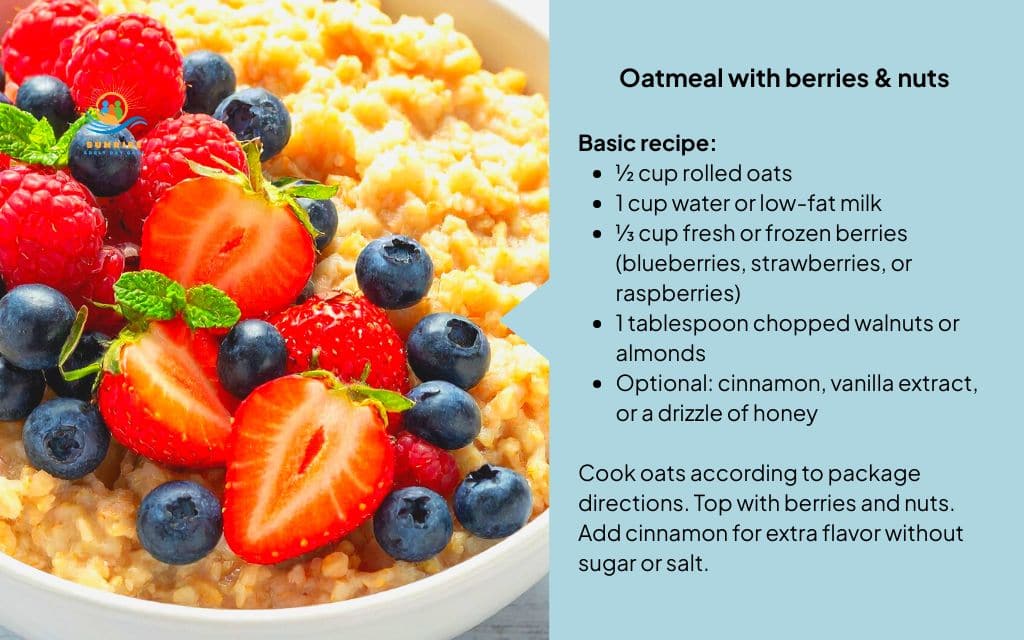
Oatmeal with berries & nuts
Diabetes-friendly • High-fiber • 15-min
Steel-cut or rolled oats provide steady-release energy that won’t spike your blood sugar like white toast or breakfast pastries. The fiber supports both heart health and digestion, while berries add antioxidants and natural sweetness without added sugar.
Basic recipe:
- ½ cup rolled oats
- 1 cup water or low-fat milk
- ⅓ cup fresh or frozen berries (blueberries, strawberries, or raspberries)
- 1 tablespoon chopped walnuts or almonds
- Optional: cinnamon, vanilla extract, or a drizzle of honey
Cook oats according to package directions. Top with berries and nuts. Add cinnamon for extra flavor without sugar or salt.
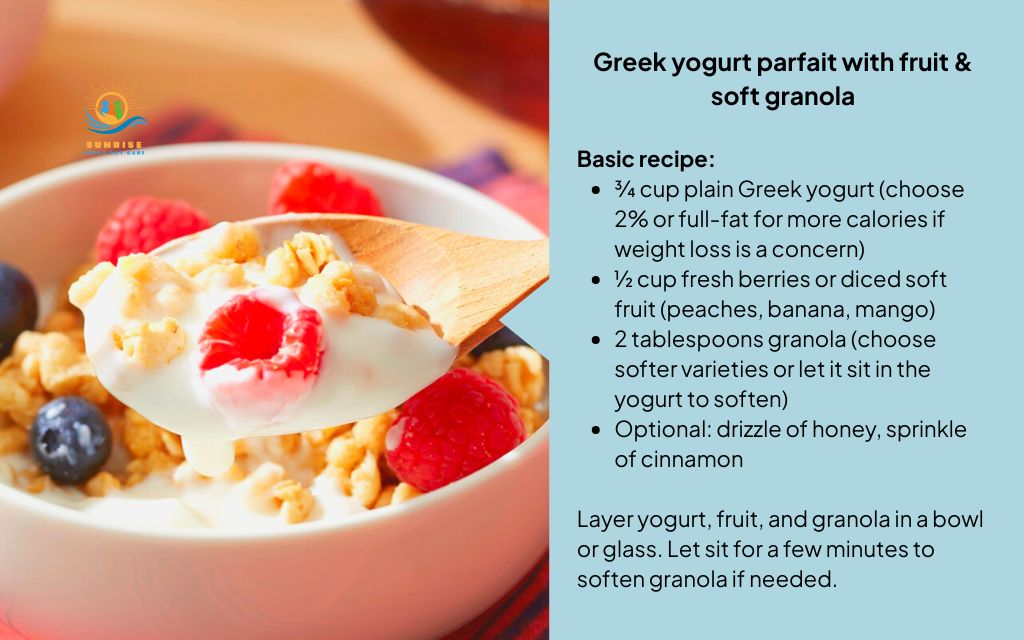
Greek yogurt parfait with fruit & soft granola
Soft texture (with softer toppings) • High-protein • 15-min
Greek yogurt delivers about twice the protein of regular yogurt, helping maintain muscle strength. It’s naturally soft and easy to eat, making it ideal for those with dental concerns. This breakfast requires almost no cooking.
Basic recipe:
- ¾ cup plain Greek yogurt (choose 2% or full-fat for more calories if weight loss is a concern)
- ½ cup fresh berries or diced soft fruit (peaches, banana, mango)
- 2 tablespoons granola (choose softer varieties or let it sit in the yogurt to soften)
- Optional: drizzle of honey, sprinkle of cinnamon
Layer yogurt, fruit, and granola in a bowl or glass. Let sit for a few minutes to soften granola if needed.
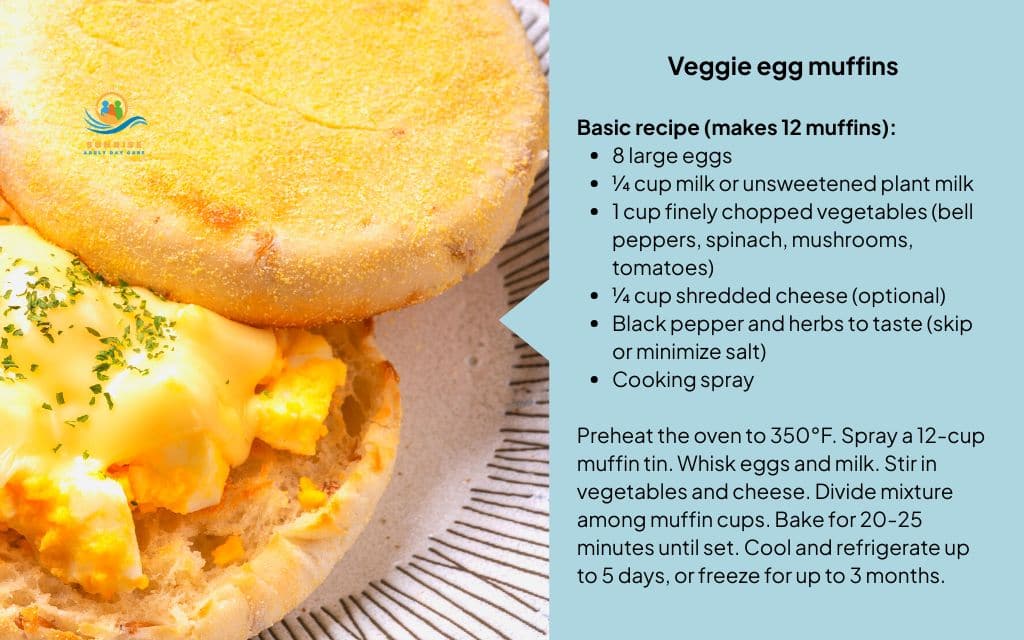
Veggie egg muffins
Low-sodium (if minimal added salt) • High-protein • Reheat-friendly
These portable, protein-rich muffins can be made once and reheated for several breakfasts. They work in adult day settings, senior living kitchens, or for family caregivers preparing meals in advance. The vegetables add fiber and nutrients without the need for salty breakfast meats.
Basic recipe (makes 12 muffins):
- 8 large eggs
- ¼ cup milk or unsweetened plant milk
- 1 cup finely chopped vegetables (bell peppers, spinach, mushrooms, tomatoes)
- ¼ cup shredded cheese (optional)
- Black pepper and herbs to taste (skip or minimize salt)
- Cooking spray
Preheat the oven to 350°F. Spray a 12-cup muffin tin. Whisk eggs and milk. Stir in vegetables and cheese. Divide mixture among muffin cups. Bake for 20-25 minutes until set. Cool and refrigerate up to 5 days, or freeze for up to 3 months.
Lunch: Light, balanced meals
Lunch should keep you satisfied and energized for the afternoon without weighing you down. These three options are flavorful, nourishing, and feel like real meals – not bland diet food.
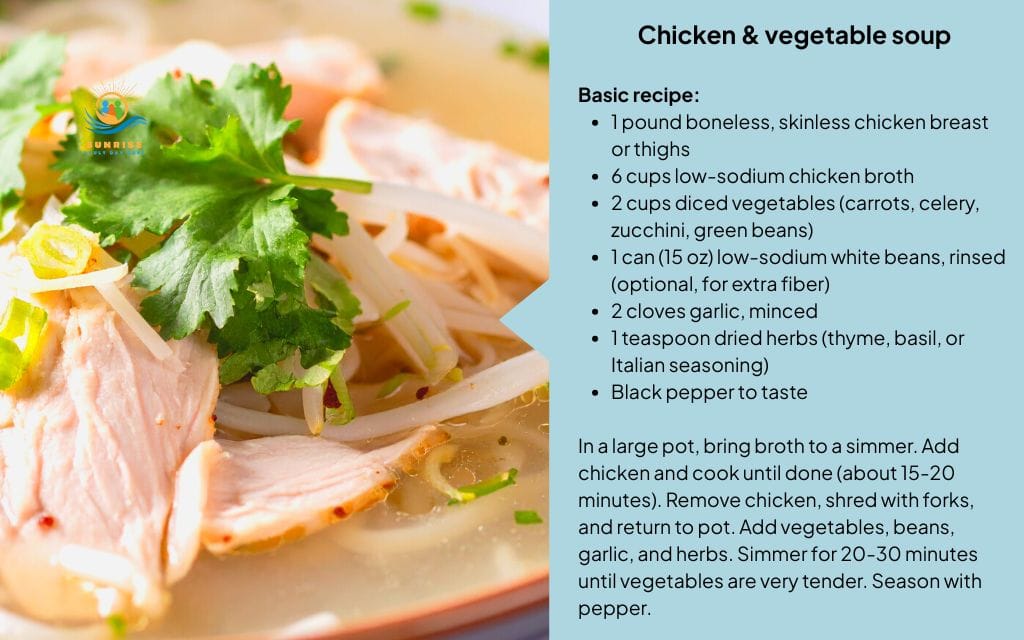
Chicken & vegetable soup
Low-sodium • Soft texture • High-fiber (with beans/extra veg) • Big-batch
This heart-friendly soup is naturally low in sodium when you use unsalted or low-sodium broth and skip the salt shaker. The soft-cooked vegetables and tender chicken make it easy to eat for those with chewing difficulties. It’s also perfect for batch cooking and freezing individual portions.
Basic recipe:
- 1 pound boneless, skinless chicken breast or thighs
- 6 cups low-sodium chicken broth
- 2 cups diced vegetables (carrots, celery, zucchini, green beans)
- 1 can (15 oz) low-sodium white beans, rinsed (optional, for extra fiber)
- 2 cloves garlic, minced
- 1 teaspoon dried herbs (thyme, basil, or Italian seasoning)
- Black pepper to taste
In a large pot, bring broth to a simmer. Add chicken and cook until done (about 15-20 minutes). Remove chicken, shred with forks, and return to pot. Add vegetables, beans, garlic, and herbs. Simmer for 20-30 minutes until vegetables are very tender. Season with pepper.
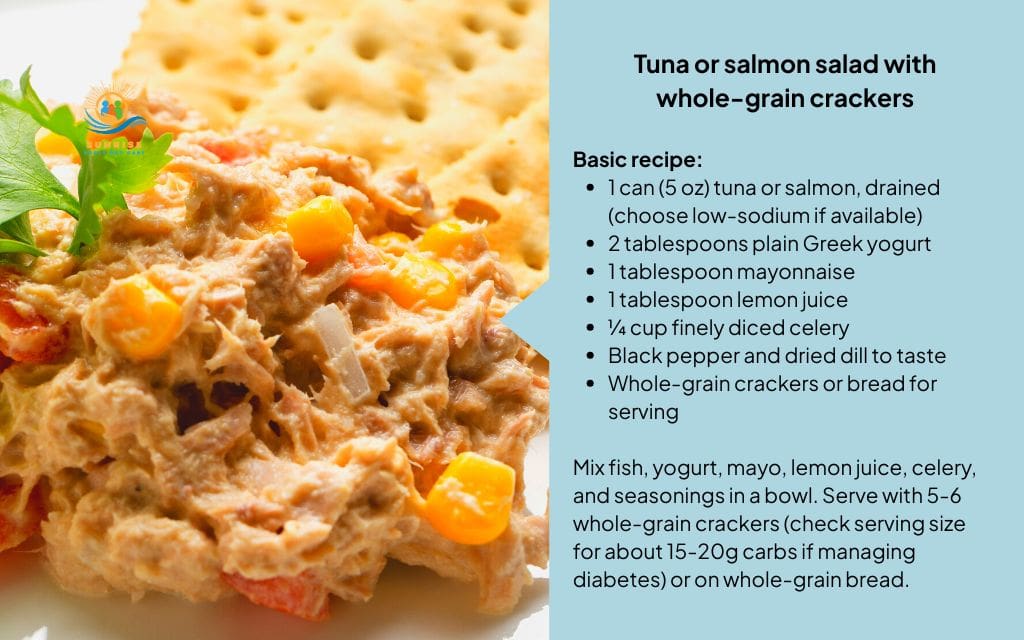
Tuna or salmon salad with whole-grain crackers
Heart-healthy • Diabetes-friendly (with controlled crackers) • 15-min
Canned fish provides heart-healthy omega-3 fatty acids, protein, and convenience. This recipe lightens the traditional mayonnaise-heavy version by mixing in plain Greek yogurt, reducing calories and saturated fat while adding protein.
Basic recipe:
- 1 can (5 oz) tuna or salmon, drained (choose low-sodium if available)
- 2 tablespoons plain Greek yogurt
- 1 tablespoon mayonnaise
- 1 tablespoon lemon juice
- ¼ cup finely diced celery
- Black pepper and dried dill to taste
- Whole-grain crackers or bread for serving
Mix fish, yogurt, mayo, lemon juice, celery, and seasonings in a bowl. Serve with 5-6 whole-grain crackers (check serving size for about 15-20g carbs if managing diabetes) or on whole-grain bread.
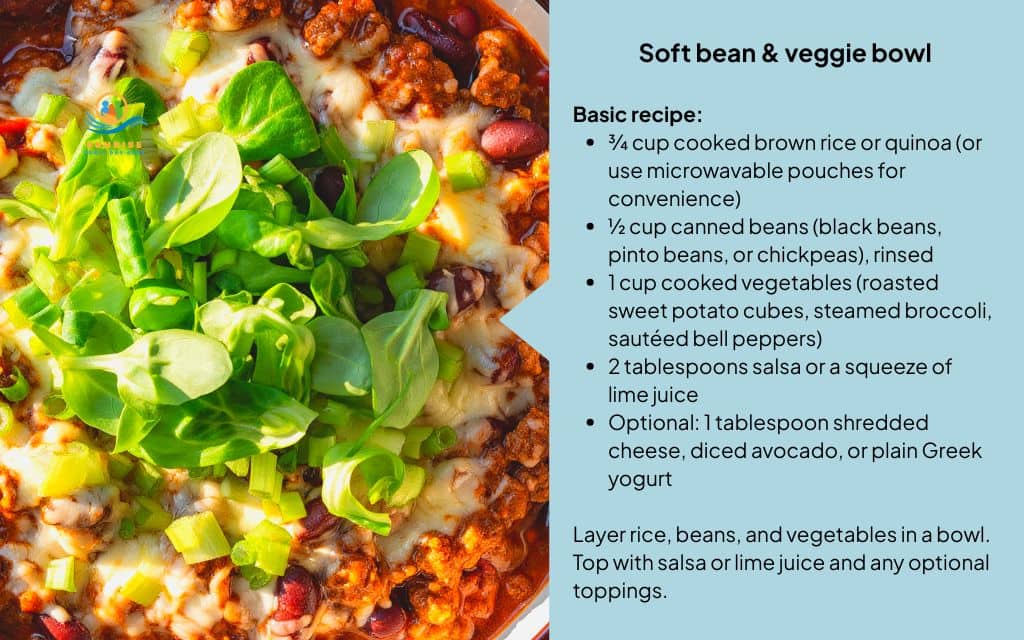
Soft bean & veggie bowl
High-fiber • Soft texture • Vegetarian-friendly
This customizable bowl delivers filling fiber and plant-based protein without meat. The combination of beans, soft-cooked vegetables, and whole grains creates a complete, balanced meal that supports digestive health and stable blood sugar.
Basic recipe:
- ¾ cup cooked brown rice or quinoa (or use microwavable pouches for convenience)
- ½ cup canned beans (black beans, pinto beans, or chickpeas), rinsed
- 1 cup cooked vegetables (roasted sweet potato cubes, steamed broccoli, sautéed bell peppers)
- 2 tablespoons salsa or a squeeze of lime juice
- Optional: 1 tablespoon shredded cheese, diced avocado, or plain Greek yogurt
Layer rice, beans, and vegetables in a bowl. Top with salsa or lime juice and any optional toppings.
Dinner: Simple, heart-healthy mains for older adults
Dinner is often the main meal of the day and a chance to gather with family or friends. These three recipes are nutritious, satisfying, and simple enough for regular rotation.
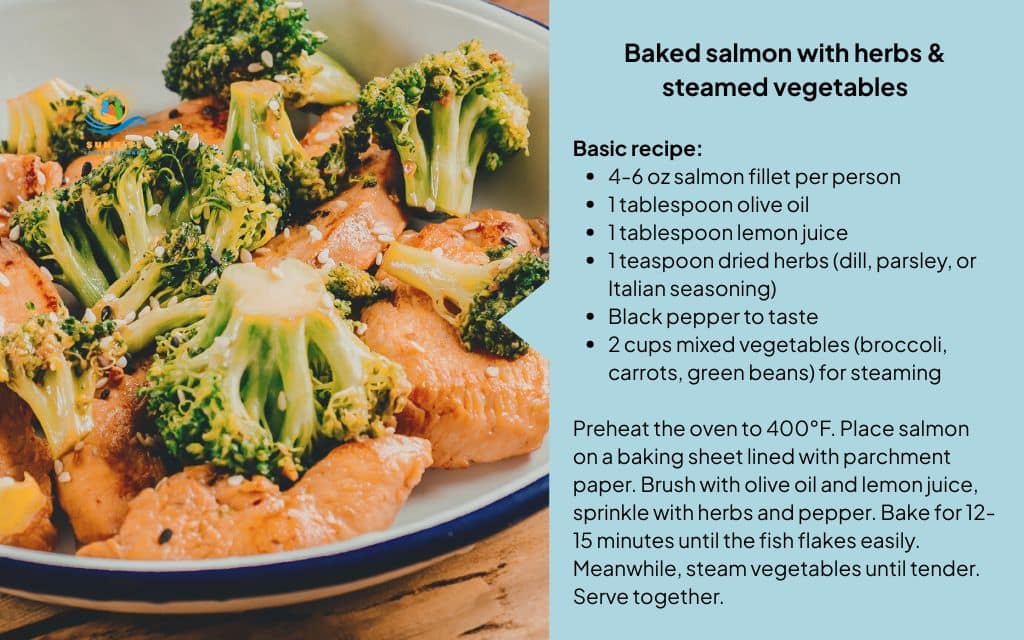
Baked salmon with herbs & steamed vegetables
Heart-healthy • Low-sodium • High-protein
Salmon is one of the best sources of omega-3 fatty acids, which support heart and brain health. This recipe uses fresh lemon, herbs, and olive oil for flavor instead of heavy, sodium-laden sauces. It’s elegant enough for company but simple enough for a weeknight.
Basic recipe:
- 4-6 oz salmon fillet per person
- 1 tablespoon olive oil
- 1 tablespoon lemon juice
- 1 teaspoon dried herbs (dill, parsley, or Italian seasoning)
- Black pepper to taste
- 2 cups mixed vegetables (broccoli, carrots, green beans) for steaming
Preheat the oven to 400°F. Place salmon on a baking sheet lined with parchment paper. Brush with olive oil and lemon juice, sprinkle with herbs and pepper. Bake for 12-15 minutes until the fish flakes easily. Meanwhile, steam vegetables until tender. Serve together.
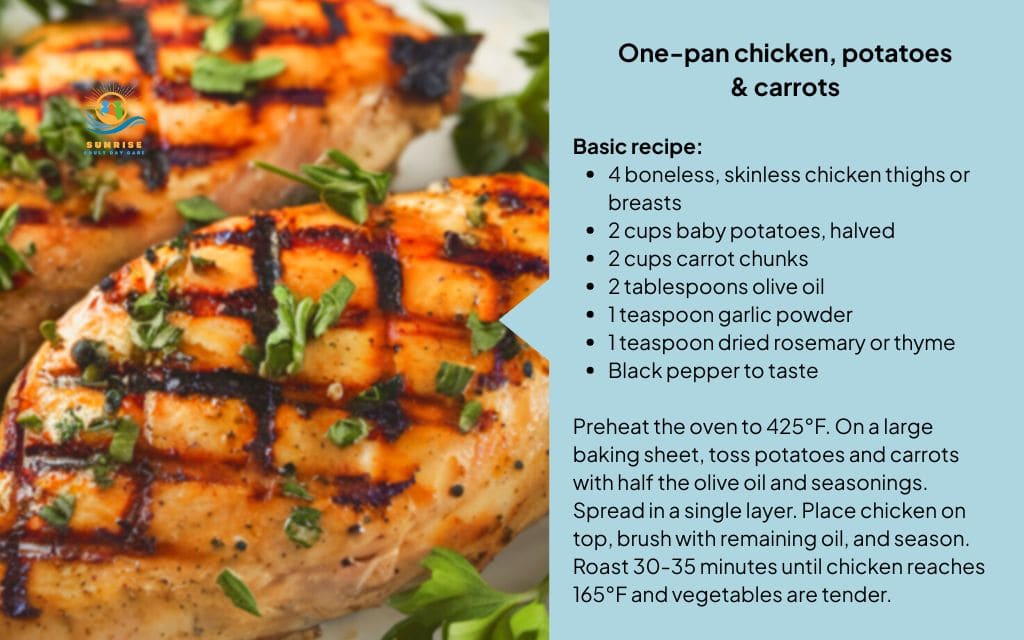
One-pan chicken, potatoes & carrots
15-min prep • Soft texture (when roasted until tender) • Family-style
Everything cooks together on one sheet pan, which means minimal dishes and less kitchen time. This recipe is easy to scale up for families, dinner parties, or meal prep in adult day programs. When roasted properly, all components become tender and flavorful.
Basic recipe:
- 4 boneless, skinless chicken thighs or breasts
- 2 cups baby potatoes, halved
- 2 cups carrot chunks
- 2 tablespoons olive oil
- 1 teaspoon garlic powder
- 1 teaspoon dried rosemary or thyme
- Black pepper to taste
Preheat the oven to 425°F. On a large baking sheet, toss potatoes and carrots with half the olive oil and seasonings. Spread in a single layer. Place chicken on top, brush with remaining oil, and season. Roast 30-35 minutes until chicken reaches 165°F and vegetables are tender.
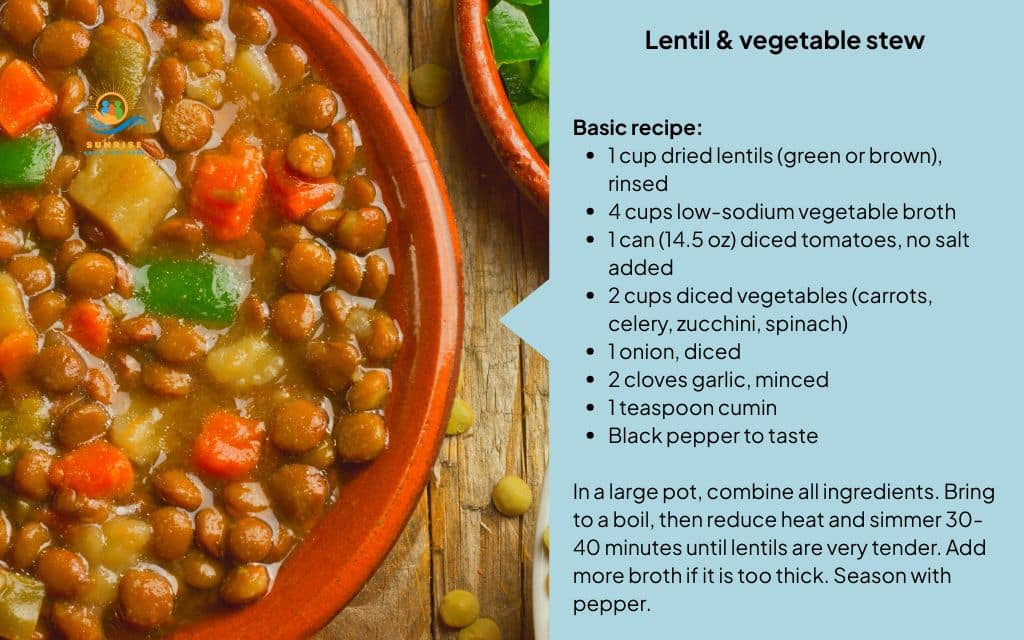
Lentil & vegetable stew
High-fiber • Diabetes-friendly • Soft texture
This filling, plant-based stew is exceptionally gentle on digestion while delivering substantial fiber and protein. Lentils are one of the best sources of soluble fiber, which helps manage cholesterol and blood sugar. The stew is naturally soft and easy to eat, even for those with chewing difficulties.
Basic recipe:
- 1 cup dried lentils (green or brown), rinsed
- 4 cups low-sodium vegetable broth
- 1 can (14.5 oz) diced tomatoes, no salt added
- 2 cups diced vegetables (carrots, celery, zucchini, spinach)
- 1 onion, diced
- 2 cloves garlic, minced
- 1 teaspoon cumin
- Black pepper to taste
In a large pot, combine all ingredients. Bring to a boil, then reduce heat and simmer 30-40 minutes until lentils are very tender. Add more broth if it is too thick. Season with pepper.
Snacks & appetizers: Smart bites between meals
Healthy snacking can help maintain energy levels, prevent overeating at meals, and provide extra nutrients. These two snack ideas are nutritious, satisfying, and easy to prepare or share.
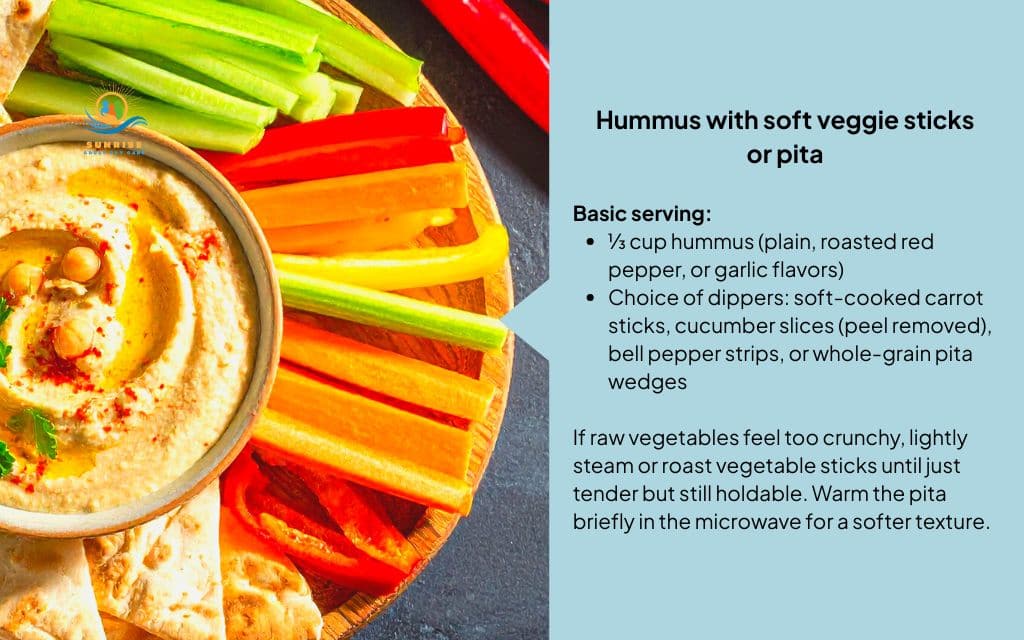
Hummus with soft veggie sticks or pita
High-fiber • Heart-healthy • 15-min
Store-bought or homemade hummus provides plant-based protein and fiber from chickpeas. Paired with vegetables or whole-grain pita, it makes a satisfying snack that supports heart health without excess sodium or saturated fat.
Basic serving:
- ⅓ cup hummus (plain, roasted red pepper, or garlic flavors)
- Choice of dippers: soft-cooked carrot sticks, cucumber slices (peel removed), bell pepper strips, or whole-grain pita wedges
If raw vegetables feel too crunchy, lightly steam or roast vegetable sticks until just tender but still holdable. Warm the pita briefly in the microwave for a softer texture.
Fruit & yogurt smoothie
Soft texture • Diabetes-friendly (when unsweetened and portion-controlled) • 5-min
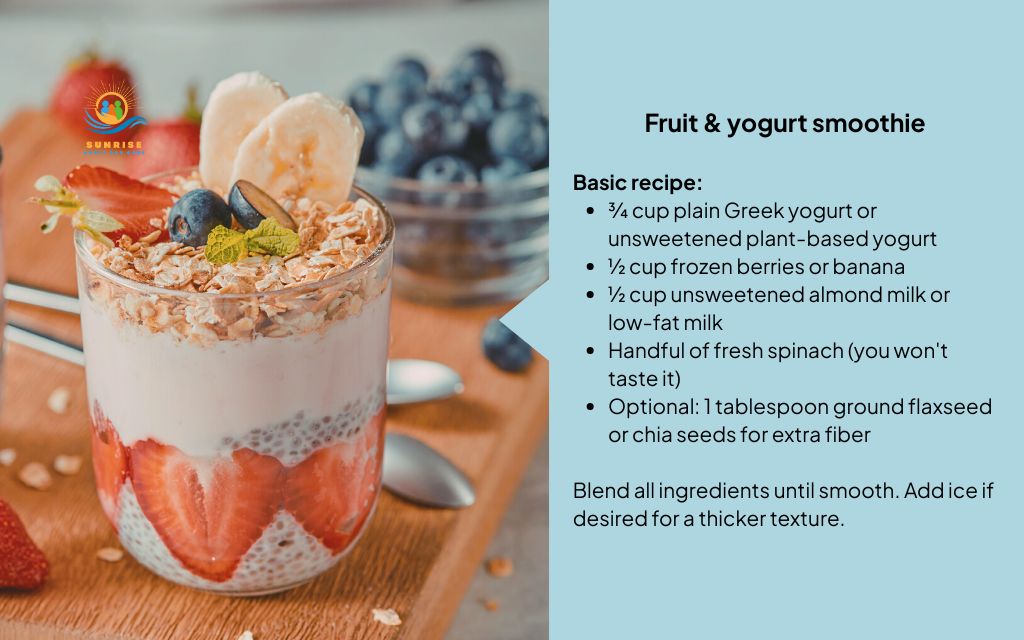
Smoothies are ideal for older adults who prefer drinking over chewing, have low appetite, or need extra calories but struggle with large portions. They can be packed with nutrients and are infinitely customizable.
Basic recipe:
- ¾ cup plain Greek yogurt or unsweetened plant-based yogurt
- ½ cup frozen berries or banana
- ½ cup unsweetened almond milk or low-fat milk
- Handful of fresh spinach (you won’t taste it)
- Optional: 1 tablespoon ground flaxseed or chia seeds for extra fiber
Blend all ingredients until smooth. Add ice if desired for a thicker texture.
Baked veggie dip
Party-friendly • Soft texture • Shareable
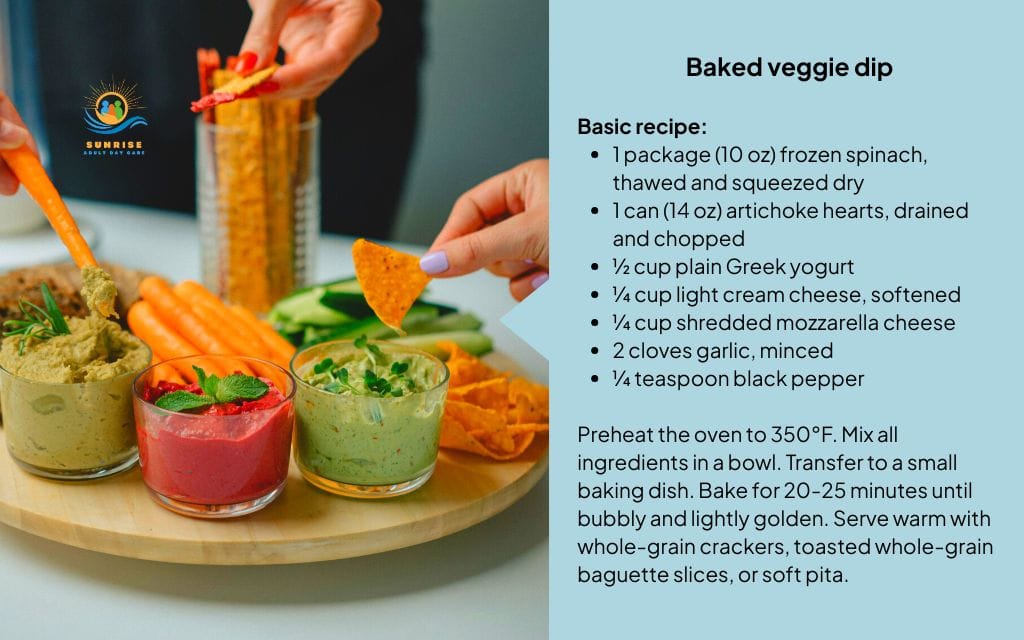
This lighter version of the classic spinach-artichoke dip reduces the cream cheese and sour cream typically used, replacing some with Greek yogurt for protein and less saturated fat. It’s perfect for gatherings, senior center events, or family dinners, and pairs beautifully with whole-grain crackers or soft bread.
Basic recipe:
- 1 package (10 oz) frozen spinach, thawed and squeezed dry
- 1 can (14 oz) artichoke hearts, drained and chopped
- ½ cup plain Greek yogurt
- ¼ cup light cream cheese, softened
- ¼ cup shredded mozzarella cheese
- 2 cloves garlic, minced
- ¼ teaspoon black pepper
Preheat the oven to 350°F. Mix all ingredients in a bowl. Transfer to a small baking dish. Bake for 20-25 minutes until bubbly and lightly golden. Serve warm with whole-grain crackers, toasted whole-grain baguette slices, or soft pita.
Adapting recipes for common health needs
Even the healthiest recipes may need tweaking to fit specific medical conditions or personal preferences. Here’s how to adapt any recipe in this guide (or from other sources) to better support common senior health needs.
Low-sodium tips
High blood pressure affects many older adults, making sodium reduction a priority. The American Heart Association recommends no more than 1,500mg of sodium daily for most seniors.
Practical swaps:
- Use low-sodium or no-salt-added broths, canned vegetables, and beans
- Rinse all canned foods under running water before using (removes about 40% of sodium)
- Replace salt with flavor boosters: fresh lemon juice, lime zest, vinegar, garlic, onions, fresh or dried herbs (basil, oregano, thyme, rosemary), black pepper, paprika, cumin, or ginger
- Avoid or limit salty condiments like soy sauce, teriyaki sauce, ranch dressing, and ketchup or choose low-sodium versions
- Be cautious with processed foods like deli meats, frozen dinners, canned soups, and restaurant meals, which often contain hidden sodium
Diabetes-friendly swaps
Managing blood sugar means balancing carbohydrates with protein, healthy fats, and fiber—not eliminating foods you enjoy.
Practical swaps:
- Choose brown rice, quinoa, or whole-grain pasta instead of white rice or regular pasta
- Eat fresh whole fruit instead of fruit juice (fiber in whole fruit slows sugar absorption)
- Reduce portions of starchy foods: instead of 2 cups of pasta, try 1 cup pasta with 1 cup extra vegetables
- Skip added sugars in drinks, sauces, and dressings – use plain water, unsweetened tea, or sparkling water with lemon
- Include protein at every meal to slow carbohydrate digestion and stabilize blood sugar
- Read labels and watch for hidden sugars in items like flavored yogurt, granola bars, and salad dressings
Soft-texture adjustments
Difficulty chewing or swallowing – whether from dental issues, dry mouth, or medical conditions – doesn’t mean giving up flavor or nutrition.
Practical adjustments:
- Cook foods longer until very tender: meats should fall apart easily with a fork, vegetables should be soft but not mushy
- Cut foods into smaller, more manageable pieces before serving
- Mash components with a fork, adding a little broth, milk, or sauce for moisture
- Partially blend soups and stews for a smoother consistency while keeping some texture
- Moisten dry foods with gravies, broths, sauces, or yogurt
- Choose naturally softer proteins: flaky fish, ground meats, eggs, tofu, or well-cooked beans
- Avoid hard, crunchy, or sticky foods like nuts, raw carrots, tough meats, or sticky bread unless modified
High-fiber boosts
Most Americans, including older adults, don’t get enough fiber. The recommended amount is 21-25g daily for women over 50 and 30g for men over 50.
Practical boosts:
- Add beans or lentils to soups, stews, salads, and grain bowls
- Swap white bread, white rice, and regular pasta for whole-grain versions
- Include a serving of fruit or vegetables at every meal and most snacks
- Start your day with oatmeal, whole-grain cereal, or whole-grain toast
- Snack on fresh fruit, raw vegetables with hummus, or a small handful of nuts
- Leave edible peels on fruits and vegetables when possible (potatoes, apples, cucumbers)
Tips for enjoying meals and making eating social
Healthy eating isn’t just about the food on your plate – it’s also about the experience of eating. Research consistently shows that older adults who eat socially tend to have better nutrition, enjoy their meals more, and maintain healthier eating patterns.
Combat eating alone
If you live by yourself, consider these strategies:
- Schedule weekly or bi-weekly shared meals. Everyone can bring one component, making it easier and more affordable.
- Many Denver recreation centers, senior centers, and faith communities offer regular communal meals. The Seniors’ Resource Center in Denver operates multiple locations with meal programs and social activities.
- If family members live far away, set up regular video meals together. It’s not the same as in-person connection, but it’s far better than eating alone in silence.
- Programs that include meals provide natural opportunities for social dining without the pressure of hosting or organizing.
Make meals more appealing
If appetite is low or food feels uninteresting:
- Even simple meals look more appealing with color variety. The bright orange of carrots, deep green of spinach, and red of tomatoes make plates visually inviting.
- Set the table nicely, play music you enjoy, or eat near a window with a view. Small rituals and pleasant surroundings make meals feel more special.
- Experiment with herbs and spices you haven’t used before. Fresh basil, cilantro, or rosemary can make familiar foods feel new without overwhelming your palate.
- If large portions feel overwhelming, try eating 5-6 smaller meals throughout the day instead of forcing yourself through three large ones.
Honor your changing tastes
As we age, taste and smell can diminish, making food seem bland even when it’s well-seasoned. This is normal and doesn’t mean you need to add excessive salt or sugar.
- Use more herbs, garlic, ginger, citrus zest, and aromatic vegetables like onions. These add complexity without sodium.
- Sometimes interest comes from texture variation – creamy yogurt with crunchy granola, smooth hummus with crisp vegetables.
- If you’ve never liked fish, you don’t have to force yourself to eat salmon just because it’s healthy. Find protein sources you genuinely enjoy – chicken, eggs, beans, tofu, or Greek yogurt all work.
Conclusion
Healthy eating doesn’t require complicated plans or giving up foods you enjoy. These 11 healthy recipes for seniors offer practical options that support your health while fitting into real life – with flavors that don’t depend on excess salt, textures that work for various abilities, and prep times that won’t exhaust you.
Start with one or two recipes that appeal to you most. Adapt them for your specific needs, and build from there. Whether you’re cooking for yourself, preparing meals for an elderly parent, or planning menus for a Denver-area care setting, you now have tested ideas that balance nutrition, safety, and genuine enjoyment.
Frequently asked questions (FAQs)
What makes a recipe healthy for seniors?
A healthy senior recipe includes adequate protein for muscle maintenance, fiber for digestion and heart health, and limited sodium and added sugar. It should also be safe for any chewing or swallowing difficulties. Most importantly, it needs to taste good enough to eat regularly.
How can I cook healthy meals quickly for my elderly parents or loved ones?
Look for recipes with the 15-min label, batch cook on weekends for ready-to-reheat meals, and use shortcuts like pre-cut vegetables, rotisserie chicken, and canned beans. Many recipes here like tuna salad, parfaits, or smoothies require minimal cooking.
What if chewing or swallowing is difficult? Can these recipes be adapted?
Yes. Choose Soft texture recipes like soups, stews, and smoothies. Adapt others by cooking foods longer, cutting smaller pieces, or mashing with broth. For diagnosed swallowing disorders (dysphagia), always follow your speech therapist’s specific guidelines.
Are these meals safe for people with diabetes or high blood pressure?
Yes, when you choose appropriately labeled recipes (diabetes-friendly or low-sodium). However, always check with your doctor before making dietary changes, especially if you take medications that may need adjustment.
How can I encourage a senior with a low appetite to eat more?
Serve smaller, more frequent meals throughout the day. Make eating social when possible. Try nutrient-dense options like smoothies, Greek yogurt, or soups that pack nutrition into smaller portions. If appetite loss is severe or causes weight loss, consult a healthcare provider.