콘텐츠로 건너뛰기
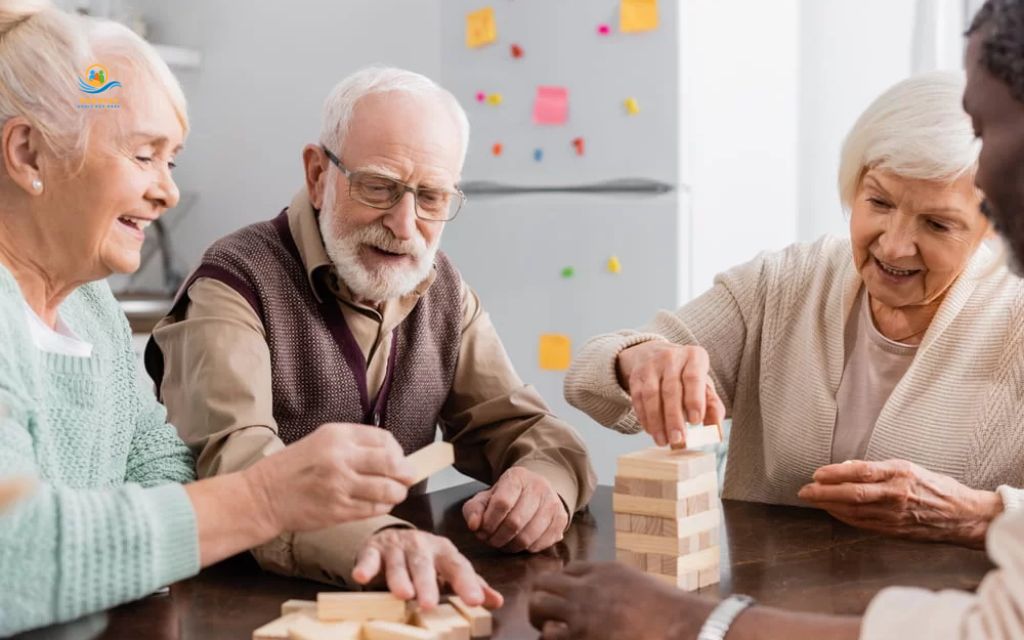
Staying mentally active is one of the simplest ways older adults can support their day to day well-being. Cognitive activities for seniors offer an easy, enjoyable way to keep the mind engaged, whether at home or as part of a daily routine.
This guide walks through practical cognitive activities for seniors, explains what mental skills each one supports, and offers ideas for adapting activities to different abilities, including for seniors living with dementia or memory loss.
Why cognitive engagement matters for seniors
The brain responds to use much like the rest of the body does. Regular cognitive stimulation activities for older adults have been associated with steadier focus, a more positive mood, and a stronger sense of independence in daily tasks. Mental engagement also supports communication, since many enjoyable activities, including conversation, games, and storytelling, require listening, recalling information, and responding in the moment.
Cognitive activities will not reverse or prevent conditions such as dementia, and no single activity guarantees a particular outcome. What consistent engagement can offer is a fuller, more connected daily life: fewer idle hours, more chances for social contact, and the quiet satisfaction of learning something new or finishing a good puzzle.
14 cognitive activities for seniors to try
Crossword puzzles and word games
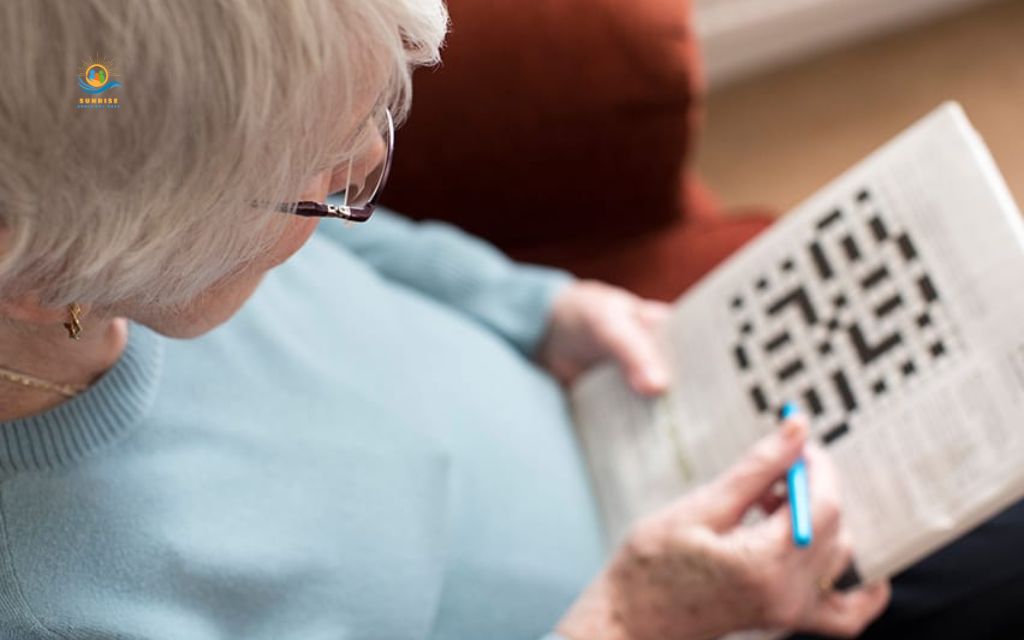
Crossword puzzles and other word games draw on language recall and vocabulary, along with sustained attention. They work well as a quiet solo activity or as something a caregiver and senior can puzzle through together. Large-print versions are widely available for seniors with vision changes.
Sudoku and number puzzles
Sudoku and similar number puzzles are among the more well-known cognitive stimulating activities because they call on logical reasoning and problem-solving rather than memory alone. Starting with an easier grid size helps build confidence before moving to more complex puzzles.
Jigsaw puzzles
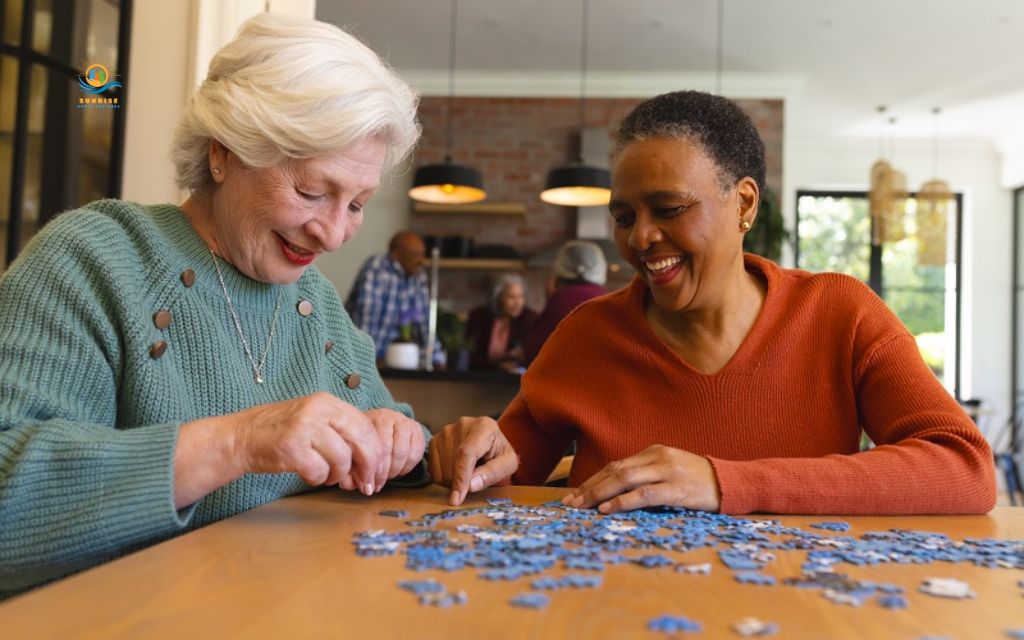
Jigsaw puzzles engage visual-spatial reasoning and patience, and they naturally encourage sustained focus over a longer period. A puzzle left out on a table also invites family members or visitors to join in for a few minutes at a time, adding a light social element.
메모리 매칭 게임
Card matching games, where players flip pairs to find matches, give short-term memory and recall a direct workout. These games can be scaled up or down in size, making them one of the more flexible cognitive activities for elderly participants with different memory abilities.
Trivia and reminiscence activities
Trivia questions and reminiscence conversations, such as talking through favorite memories or looking at old photographs, draw on long-term memory and language skills. These activities tend to work especially well in a group, since they naturally lead to shared stories and conversation.
Chess and checkers
Strategy games like chess and checkers exercise planning, foresight, and problem-solving. They can be slow-paced and reflective, which makes them a good fit for seniors who enjoy a quieter, more deliberate kind of mental challenge.
Reading and audiobooks
Reading, whether in print or through audiobooks, supports language comprehension, memory, and focus. Following up with a brief conversation about the story or article adds a layer of recall and discussion, which reinforces the cognitive benefit.

Learning a new language
Learning a new language is one of the more demanding mental stimulation activities for adults, since it calls on memory, attention, and active learning strategies all at once. Even a light introduction, such as common words and greetings through an app or class, offers meaningful engagement without requiring fluency as a goal.
Journaling and creative writing
Writing a few lines about the day, or trying a short creative piece, combines language skills with memory and self-expression. Journaling can also double as a gentle way to process emotions, which supports overall well-being alongside cognitive engagement.

Painting, drawing, or coloring
Creative visual activities combine fine motor coordination with creative thinking and focus. These activities are also naturally low-pressure, since there is no single correct outcome, which makes them a comfortable option for seniors who feel discouraged by more rules-based games.
Music and playing an instrument
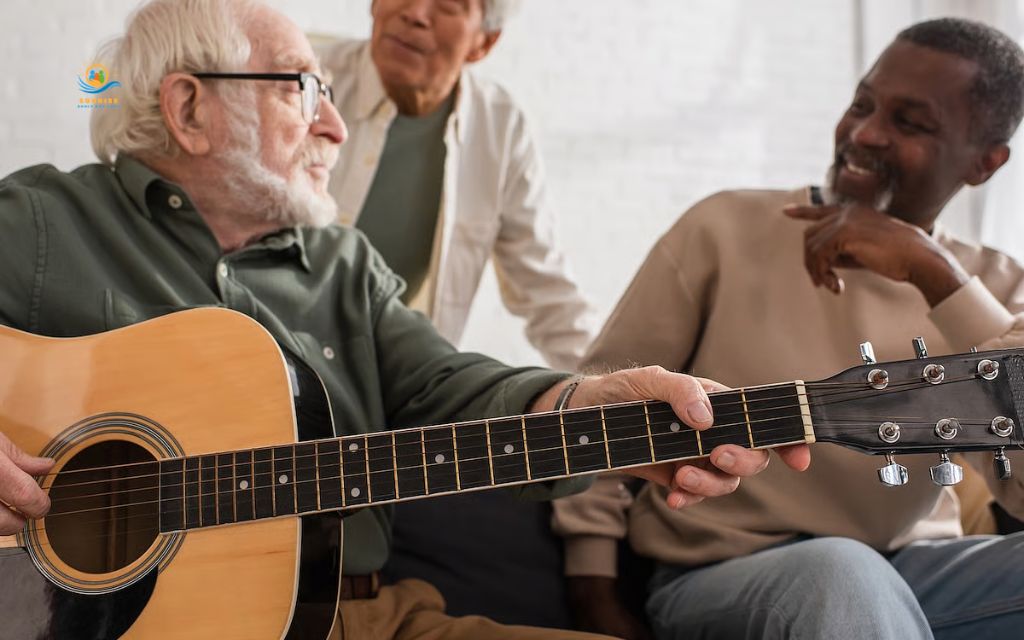
Listening to familiar music, singing along, or playing an instrument engages memory, particularly the recall of song lyrics and melodies, along with coordination and emotional connection. Music-based activities are often one of the most accessible brain stimulating activities for seniors, including those with more advanced memory loss.
Card games and board games with others
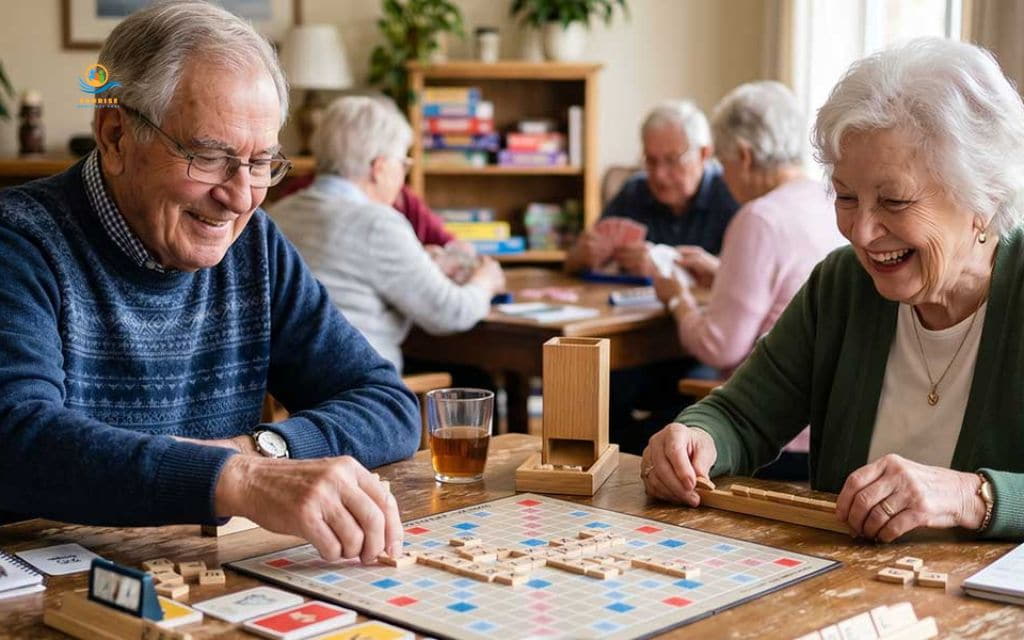
Playing cards or board games in a group setting brings together attention, strategic thinking, and social communication. Simpler games with clear, forgiving rules tend to work best when players have a range of abilities, since the goal is participation and enjoyment rather than competition.
Gentle movement activities
Walking, tai chi, gentle stretching, or dancing to familiar music combine physical movement with attention and coordination. These activities support blood flow and overall physical health while still asking the brain to track rhythm, sequence, or balance, making them a natural complement to more seated cognitive activities.

Everyday routine changes
Small changes to daily routine, such as taking a different route on a walk, trying a new recipe, or using the non-dominant hand for a simple task, introduce novelty that keeps the brain paying closer attention. This category also includes light use of technology, such as video calls with family, which combines attention and social connection in one activity.
Choosing activities for different abilities and interests
The right cognitive activity depends less on the activity itself and more on how well it matches the person’s current abilities, energy level, and interests. A few starting points can help narrow the choices:
- For seniors with limited mobility: Choose seated or tabletop activities such as puzzles, card games, or reading rather than activities that require standing or fine coordination.
- For seniors who enjoy company: Prioritize group-friendly options like trivia, board games, or reminiscence conversations over solitary activities.
- For seniors who prefer quiet, solo time: Reading, journaling, and puzzles offer mental engagement without the pressure of group interaction.
- For seniors with vision or hearing changes: Look for large-print puzzles, audiobooks, or activities that rely more on touch and conversation than fine print.
- For seniors new to an activity: Start with a simplified or shorter version and build up gradually, rather than beginning with the most challenging option.
결론
Cognitive activities for seniors work best when they become a regular, enjoyable part of the week rather than an occasional task. Puzzles, music, conversation, and creative projects each offer a different way to keep the mind engaged, and mixing a few types tends to work better than relying on just one.
For families who want this kind of consistent, supported engagement without the commitment of a residential facility, 선라이즈 시니어 데이케어 구조화된 것을 제공합니다 주간 프로그램 that combine social activities, cognitive stimulation, and professional support in a non-residential setting.
Sunrise operates daytime programs in Denver, Colorado, and in Richardson and Garland, Texas. To learn more about the daily activity schedule at the Denver location, call 303-226-6882.
자주 묻는 질문(FAQ)
What are some good cognitive questions to ask elderly people?
Open-ended, reminiscence-style questions tend to work best because they draw on long-term memory and naturally lead to conversation. Good examples include asking about a childhood home, a first job, how they met a spouse or close friend, a favorite family recipe, or a memorable trip. Questions like these give the person room to share detail and emotion, rather than a simple yes or no answer.
What are some good memory exercises?
Simple, repeatable exercises tend to work well, such as recalling a short grocery list after a few minutes, playing a card matching game, or retelling a familiar recipe or story step by step. Reminiscing about a specific memory in detail, such as describing a room or an event, is another accessible way to exercise recall. Regular, brief practice tends to offer more benefit than a single long session.
What activities can help prevent cognitive decline?
No activity can guarantee prevention of cognitive decline, but some research suggests that regularly combining mentally engaging activities, physical movement, and social contact may be associated with better cognitive health over time. Puzzles, learning a new skill, staying socially active, and gentle exercise are commonly recommended together, since they engage the brain in different ways rather than relying on one type of activity alone.
Can cognitive activities help seniors with dementia or memory loss?
Cognitive activities can offer meaningful engagement, comfort, and connection for seniors with dementia or memory loss, particularly when the activities are simplified and familiar. They are not a treatment or cure, and outcomes vary from person to person, but many caregivers see real value in the moments of enjoyment and connection these activities create.
How often should seniors do cognitive activities?
There is no strict rule for frequency, but many caregivers and care professionals aim for a little engagement most days rather than one long session per week. Short, regular activities tend to fit more naturally into daily life and are easier to sustain than infrequent, longer ones.
What is the difference between cognitive and physical activities for brain health?
Physical activities, such as walking or gentle exercise, support brain health indirectly by improving blood flow and overall physical condition. Cognitive activities more directly exercise thinking skills like memory, attention, and problem-solving. Many activities, such as dancing or tai chi, actually combine both, which is one reason movement-based options are often included alongside more traditional puzzles and games.