For older adults facing stiffness, low energy, balance worries, or the overwhelming task of “getting back in shape”, walking offers the perfect starting point. Unlike complicated exercise programs or expensive gym memberships, walking is:
Low-impact and joint-friendly: Walking doesn’t pound your joints the way running or jumping does. Your feet stay connected to the ground, making it gentler on knees, hips, and ankles.
Free and accessible: No equipment required beyond comfortable shoes. No monthly fees. No driving to a facility. The “gym” is your neighborhood, your hallway, or your local mall.
Easy to adapt: Walk outdoors when weather permits, indoors when it doesn’t. Walk alone for peaceful reflection, or join a group for social connection.
This guide explains 9 powerful, evidence-backed benefits of walking for seniors, from stronger hearts and better balance to sharper minds and lifted moods. You’ll learn exactly how much walking you need, how to walk safely, and how to build a walking routine that fits your life.
Whether you’re walking on your own, with a caregiver, or as part of an adult day program, you’ll find practical steps to start walking with confidence today.
The information in this article is for educational purposes only and does not replace medical advice. Always consult your healthcare provider before starting a new exercise program, especially if you have chronic conditions, recent falls, or concerns about your health.
How much walking do seniors need?
Public health guidelines from the Centers for Disease Control and Prevention (CDC) and the American Heart Association provide clear targets for older adults:
Aim for 150 minutes per week of moderate-intensity aerobic activity (like brisk walking), spread throughout the week. That breaks down to:
- 30 minutes, 5 days a week, or
- 20 – 25 minutes most days, or
- Even three 10-minute walks throughout the day
What does “moderate intensity” mean?
Use the simple talk test:
- If you can talk but not sing while walking → you’re at a good pace
- If you’re breathing too hard to carry on a conversation → slow down a bit
- If you can belt out your favorite song easily → pick up the pace slightly
The talk test removes guesswork. You don’t need a smartwatch or heart rate monitor. Your own breathing tells you whether you’re in the sweet spot.
What about step counts?
You may have heard that 10,000 steps is the magic number. But recent research on older adults tells a different story: significant health benefits start appearing around 4,000 – 6,000 steps per day. More steps brought more benefits, but improvements happened in that 4,000 – 6,000 range – a much more achievable goal for many seniors.
Safety first: Walking for the elderly without fear of falls
Falls are the leading cause of injury-related deaths in adults over 65, and fear of falling can become a prison that limits independence. But walking actually reduces fall risk by building strength and balance.
Here’s how to walk with confidence, not fear.
Pre-walk safety checklist
Talk to your doctor before starting a walking program if you have:
- Recent falls (within the past 6 months)
- Chest pain, pressure, or discomfort, especially with activity
- Uncontrolled high blood pressure
- Severe arthritis that limits movement
- New or worsening shortness of breath
- Dizziness or lightheadedness when standing
- Any condition your doctor has told you limits physical activity
This conversation helps your doctor offer specific guidance (ideal pace, duration, warning signs to watch for) and ensures walking fits safely into your overall care plan.
Choose the right footwear:
- Supportive walking shoes with good tread (not smooth soles)
- Shoes that fit snugly but don’t pinch (feet can swell during the day)
- Replace shoes when tread wears down or cushioning flattens
- Avoid flip-flops, loose slippers, or shoes with worn heels
Environmental safety: Choosing safe routes
Outdoor walking:
- Start with flat, even surfaces (sidewalks, paved paths, indoor tracks)
- Walk in daylight or well-lit areas
- Avoid walking on ice, wet leaves, or uneven ground until you build strength and balance
- Cross streets at marked crosswalks; give yourself extra time
- Walk facing traffic (on the left side of the road if no sidewalk exists) so you can see oncoming vehicles
Indoor walking (ideal for bad weather, icy conditions, or if you prefer controlled environments):
- Shopping malls (many open early for walkers before stores open)
- Community centers or senior centers with indoor tracks or hallways
- Large big-box stores
- Your own home hallways (especially if you live in an apartment building with long, carpeted corridors)
At adult day programs: Staff can set up safe indoor walking routes using hallways, activity rooms, or outdoor courtyards with handrails and even surfaces.
Ready to start walking today? Follow this simple guide to get started.
9 key benefits of walking for seniors
Stronger heart & better circulation
Your heart is a muscle, and like any muscle, it gets stronger with regular use. Walking is cardiovascular (aerobic) exercise, meaning it gets your heart pumping and your blood flowing.
- Lowers blood pressure: Regular walking can reduce systolic blood pressure (the top number) by 4 – 9 points, enough to move some people out of the “high blood pressure” range without medication changes.
- Improves cholesterol: Walking raises “good” HDL cholesterol and can help lower “bad” LDL cholesterol and triglycerides.
- Reduces heart disease risk: Studies show that older adults who walk regularly have significantly lower rates of heart attack, stroke, and cardiovascular death compared to sedentary peers.
A daily walk is like a tune-up for your cardiovascular system. Your heart doesn’t have to work as hard to pump blood. Your circulation improves. Over time, this adds up to better heart health and a lower chance of life-threatening events like heart attacks and strokes.
Better blood sugar & diabetes management
If you have type 2 diabetes, prediabetes, or a family history of diabetes, walking offers powerful blood sugar control.
- Muscles use glucose for fuel: When you walk, your leg muscles pull glucose (sugar) out of your bloodstream for energy. This happens even without insulin, which is why walking works so well for people with insulin resistance.
- Improves insulin sensitivity: Regular walking makes your cells more responsive to insulin, meaning your body can manage blood sugar more efficiently.
- Lowers diabetes risk: Even if you don’t have diabetes now, walking can reduce your risk of developing it by up to 30%.
Research shows that a 15-minute walk after meals can significantly reduce blood sugar spikes, especially helpful after lunch or dinner. For older adults with type 2 diabetes, walking programs often lead to measurable improvements in A1C levels (the 3-month average of blood sugar control).
Stronger muscles, joints & bones
“Won’t walking hurt my joints?” This is one of the most common concerns we hear. The truth: when done correctly, walking exercise for elderly adults actually supports joint and bone health.
- Builds leg and hip strength: Walking works your quadriceps (front thigh), hamstrings (back thigh), glutes (buttocks), and calf muscles. Stronger leg muscles take pressure off knee and hip joints.
- Maintains bone density: Walking is a weight-bearing exercise, which means your bones have to support your body weight. This gentle stress signals your bones to maintain density, reducing osteoporosis risk.
- Supports joint function: Movement keeps joints lubricated with synovial fluid. When you don’t move, joints stiffen. Regular walking keeps them flexible.
What about arthritis? Many people with arthritis worry that walking will make joint pain worse. Research shows the opposite: low-impact walking programs, started gradually, often reduce arthritis pain and stiffness over time. The key is starting slowly and building up – not pushing through sharp pain.
Improved balance & lower fall risk
Here’s the beautiful irony: the fear of falling often keeps older adults from walking, but walking is one of the best ways to prevent falls.
- Strengthens stabilizing muscles: Walking works the small muscles in your ankles, hips, and core that keep you steady.
- Improves reaction time: As you walk, your body constantly makes tiny adjustments to stay balanced, over uneven ground, around obstacles, during turns. This trains your nervous system to react faster if you start to lose balance.
Walking programs for older adults often include simple balance drills, like standing on one foot for 10 seconds while holding a counter, or walking heel-to-toe along a line. These exercises, combined with regular walking, dramatically reduce fall risk.
Brain health & lower dementia risk
Walking doesn’t just benefit your body, it’s one of the best things you can do for your brain.
- Increases blood flow to the brain: When you walk, your heart pumps more blood to your brain, delivering oxygen and nutrients that brain cells need to function.
- Stimulates growth of new brain cells: Aerobic exercise like walking triggers the release of brain-derived neurotrophic factor (BDNF), a protein that supports the growth and survival of neurons.
Studies have found that older adults who walk regularly have a lower risk of developing dementia compared to those who are inactive. Even among adults who already have mild cognitive impairment, walking programs can slow the rate of decline.
Walking also improves specific brain functions in the short term: attention, processing speed, executive function (planning and decision-making), and memory.
Better mood, less stress & anxiety
Feeling blue, anxious, or overwhelmed? Take a walk.
- Releases endorphins: Physical activity triggers your brain to release endorphins, natural chemicals that improve mood and reduce pain perception. This is the “feel-good” effect many walkers describe.
- Reduces stress hormones: Walking lowers levels of cortisol (the stress hormone) and helps your nervous system shift from “fight or flight” mode to “rest and digest” mode.
- Eases mild depression and anxiety: Studies show that regular walking can be as effective as medication for some cases of mild to moderate depression, especially when combined with social connection (like walking with a friend or group).
Outdoor walking offers extra benefits
Sunlight exposure helps regulate your sleep-wake cycle and boosts vitamin D levels. Natural settings (parks, tree-lined streets, nature trails) have a calming effect that indoor walking doesn’t quite match.

More energy & stamina for everyday tasks
How walking builds everyday stamina:
- Improves cardiovascular efficiency: As your heart and lungs get stronger, they deliver oxygen to your muscles more efficiently.
- Reduces fatigue: Regular walkers report feeling less tired throughout the day. Consistent movement prevents the stiffness and lethargy that come from sitting too much.
- Builds functional strength: The leg strength you build from walking directly transfers to daily activities: getting up from chairs, stepping into the bathtub, walking through the grocery store, playing with grandchildren.
Walking also reduces chronic lower back pain, which affects nearly 60% of older adults. Regular walking strengthens core muscles and keeps your spine mobile, reducing stiffness and discomfort.
Social connection & reduced loneliness
Loneliness and social isolation are serious health risks for older adults. Walking offers a natural solution.
- Walking clubs and groups: Many senior centers, churches, parks departments, and community organizations offer free walking groups specifically for older adults. These provide regular social contact plus accountability.
- Walking with family: A simple walk with an adult child, grandchild, or neighbor creates quality time without the pressure of a formal “visit.”
- Shared activity at day programs: Adult day programs can structure walking as a social activity – group walks followed by a snack and conversation.
Walking programs for older adults that include a social component show better adherence (people stick with them longer) and better health outcomes compared to solo walking. Social interaction itself provides mental health benefits beyond physical exercise.
Independence, confidence & longer healthy life
This benefit ties everything together: walking helps you stay independent and live a longer, healthier life.
- Preserves mobility: The ability to walk safely is fundamental to independent living. Regular walking maintains that ability as you age.
- Maintains balance and coordination: Better balance means fewer falls, which means fewer hospitalizations and better odds of continuing to live in your own home.
- Supports cardiovascular health: Heart disease is the leading cause of death in older adults. Walking directly reduces this risk.
Older adults who walk regularly live longer. One study of adults over 60 found that those who walked about 7,000 steps per day had a 50 – 70% lower risk of death from any cause over 10 years compared to those walking fewer than 4,000 steps.
Another way to think about it: every minute of walking you do today isn’t just time spent – it’s time added to your life and your active, healthy years.
Walking with elderly loved ones: Tips for caregivers
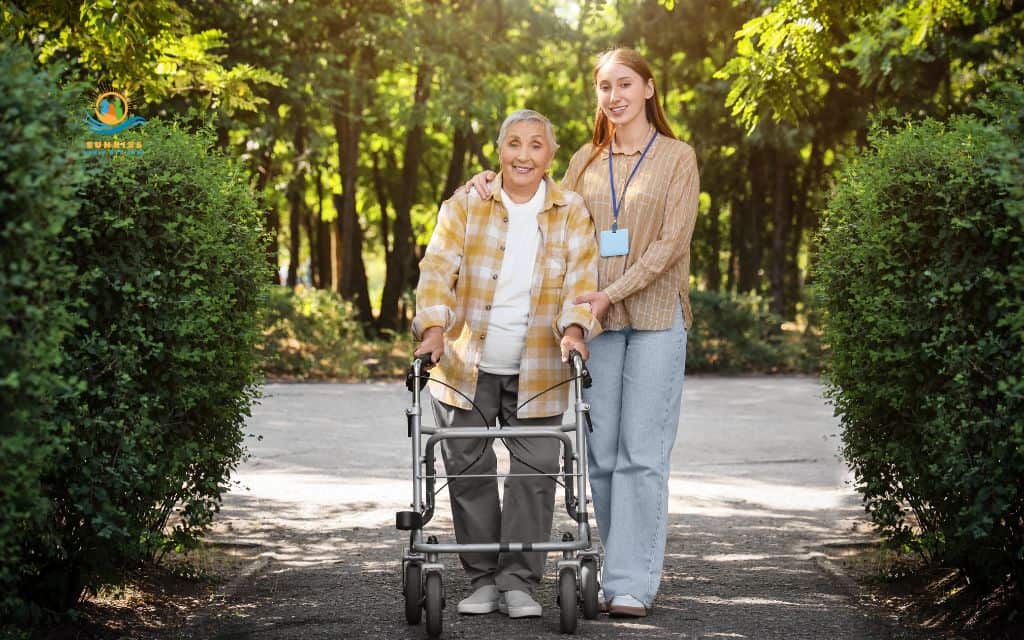
If you’re a family caregiver or work in an adult day program, here’s how to support safe, enjoyable walking for the seniors in your care.
Safety tips when accompanying elderly walkers
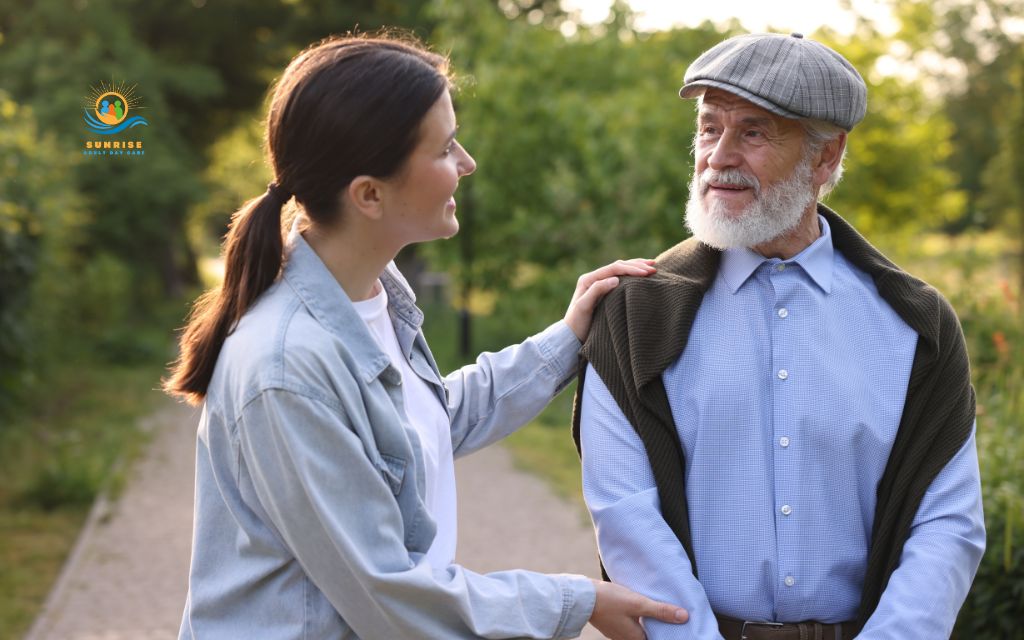
Walk side-by-side, not ahead:
- Position yourself slightly to the side so you can catch them if they stumble
- Offer your elbow for support if balance is an issue
- Let them set the pace; don’t rush or pull them along
Watch for fatigue and discomfort:
- Use the talk test: if they can’t speak in full sentences, slow down
- Look for signs of overexertion: excessive sweating, pallor, shortness of breath, confusion
- Plan rest breaks – bring a portable stool or identify benches along your route
Avoid sudden changes:
- Don’t suddenly speed up or stop without warning
- Alert them to upcoming obstacles: curbs, uneven pavement, stairs
- Turn corners slowly and announce turns before making them
Ready to take your first step?
Walking for seniors isn’t complicated. You don’t need special equipment, expensive memberships, or perfect weather. You just need comfortable shoes and a commitment to start small and stay consistent.
Whether you’re walking around your living room, down your street, through a shopping mall, or as part of a group at an adult day program, you’re investing in your heart, your brain, your balance, your mood, and your independence.
Start today. Start with 5 minutes if that’s all you can do. Tomorrow, do it again. Small steps add up to big changes and every walk you take is a step toward a healthier, more confident, more independent you.
If you’re looking for structured activities, social connection, and supervised wellness programs, contact Trung tâm Chăm sóc Người lớn Sunrise in Denver at (303) 226-6882 to learn how our daytime programs support active, engaged living for older adults.
We build walking routines, balance exercises, and social activities into every day, helping seniors stay strong, connected, and confident.
Câu hỏi thường gặp (FAQ)
How many minutes should seniors walk per day for health benefits?
Aim for 30 minutes of moderate-intensity walking most days of the week (at least 5 days) to meet the recommended 150 minutes per week. You can break this into shorter walks: three 10-minute walks throughout the day count just as much as one 30-minute walk.
Is walking enough exercise for the elderly, or do they need more?
Walking is excellent cardiovascular exercise, but for complete health, older adults also need: Strength training with simple exercises like standing up from a chair without using your hands, lifting light hand weights,… Balance exercises like standing on one foot, heel-to-toe walking, or tai chi reduce fall risk. Flexibility/stretching with gentle stretching keeps joints mobile and reduces stiffness.
Is walking safe for seniors with arthritis or joint replacements?
Yes, walking is generally safe and beneficial for arthritis and joint replacements, but start slowly and talk to your doctor first.
Can walking really help prevent falls in older adults?
Yes, research shows that walking programs, especially when combined with balance exercises, reduce fall risk by 20 – 40%.
What if I don’t feel safe walking outside in my neighborhood?
Many older adults face this challenge, especially in winter, in areas without sidewalks, or in neighborhoods where safety is a concern. Indoor walking is a completely valid alternative. Indoor walking options include shopping malls, community centers or senior centers, large retail stores, your own home, adult day programs,…