
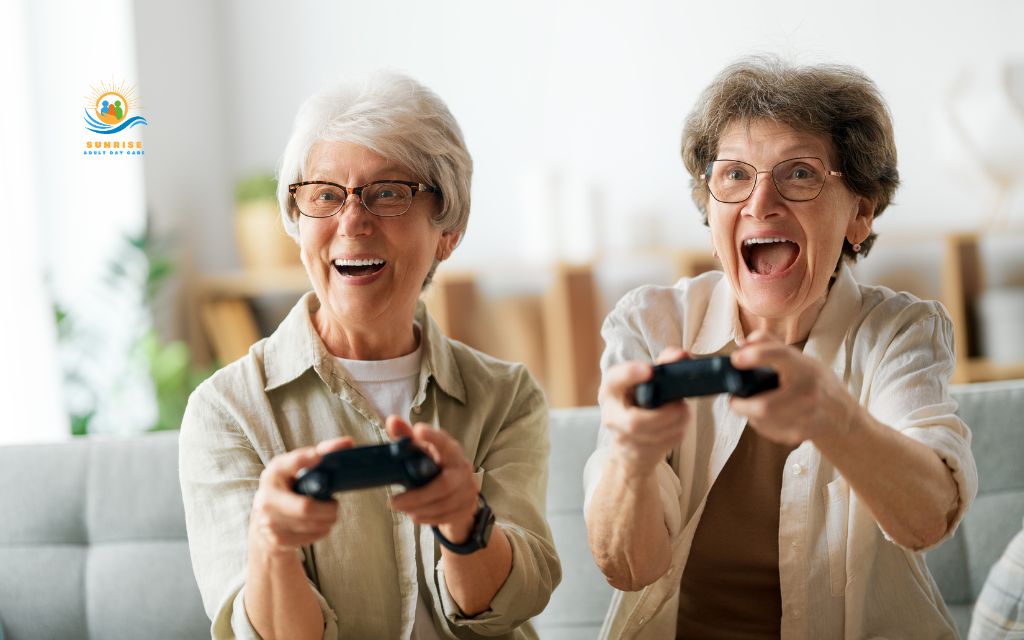
Brain games for elderly adults are a simple, enjoyable way to support memory, focus, problem-solving, conversation, and social connection.
Brain games are a helpful, low-risk activity, but they are not a treatment or cure for dementia or memory loss. They work best as part of a balanced routine that also includes social interaction, movement, good nutrition, sleep, and appropriate medical care.
This guide covers 25 specific games with tips for each, and how adult day programs can help support brain health and engagement.
Why brain games matter for older adults
Brain games for seniors are not just a way to pass the time. When chosen thoughtfully, they can support mental stimulation, confidence, mood, and a sense of daily routine.
They encourage mental stimulation
Mind games for seniors can gently challenge memory, attention, language, reasoning, and problem-solving, all in a way that feels enjoyable rather than like a test. Regular mind exercises for elderly adults are one of the simplest ways to keep the brain active throughout the day.
They support social connection
Many of the best brain games for older adults are more enjoyable when played with others. Trivia, bingo, card games, storytelling, and group puzzles naturally encourage conversation, laughter, and connection, which can help reduce feelings of loneliness and isolation.
They build routine and purpose
A regular activity schedule gives seniors something to look forward to each day, especially for those who spend long stretches of time at home. Knowing that a favorite game or puzzle is coming up can add structure and a sense of purpose to the day.
They can boost confidence
Completing a puzzle, answering a trivia question correctly, or remembering the words to a favorite song can give seniors a genuine sense of accomplishment. These small wins matter, especially for older adults who may feel less confident than they once did.
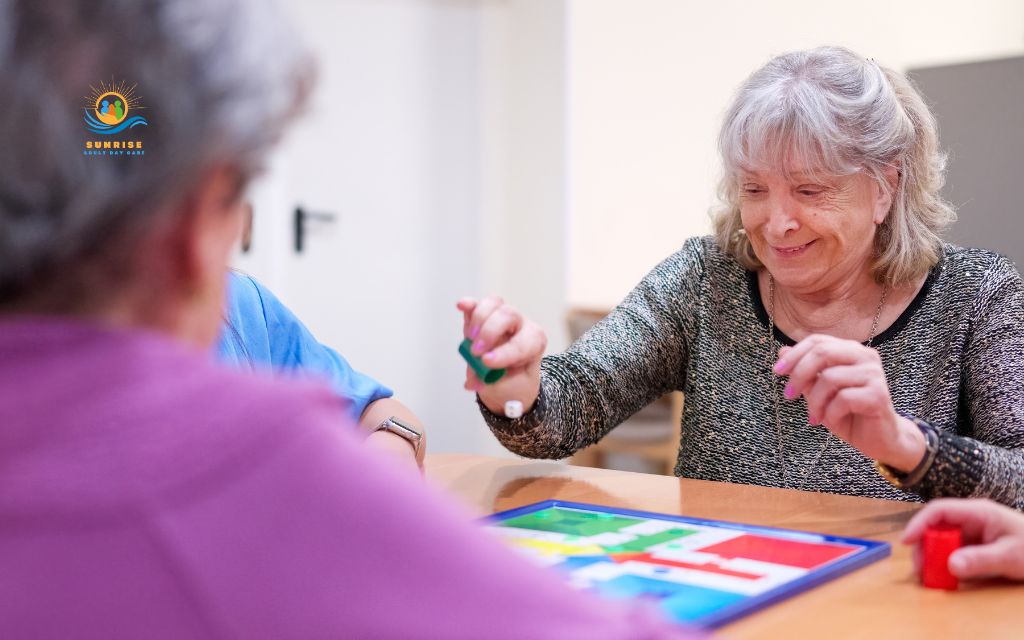
How to choose the right brain game for elderly adults
Good brain games are ones that match the person’s ability and interests rather than feeling like a test. A few simple considerations can help you pick the right fit.
Match the game to ability level
Choose games that are challenging enough to stay interesting but not so difficult that they cause frustration. The goal is gentle stimulation, not stress.
Consider vision, hearing, and mobility
Use large-print materials, clear audio, good lighting, seated options, and simple instructions when needed. Small adjustments can make a big difference in how comfortable and successful a senior feels during an activity.
Think about memory or dementia symptoms
For seniors living with dementia, choose familiar, low-pressure activities such as music, matching games, sorting tasks, simple trivia, or reminiscence prompts. These options focus on comfort and connection rather than correct answers.
Choose games that feel enjoyable
A game is only helpful if the senior actually enjoys it. Use past hobbies, favorite topics, music, family memories, or cultural interests as a guide when choosing memory games for seniors or other brain-stimulating activities.
Que las sesiones sean breves
Short sessions of about 10 to 20 minutes often work better than long activities, especially for seniors who experience fatigue, confusion, or a shorter attention span.
25 brain games for elderly adults
The best brain games for older adults can be played alone, with family, or in a supervised group setting such as an adult day program. The list below offers a wide range of options to match different abilities, interests, and energy levels.
1. Trivia quizzes
Trivia is one of the most flexible mind games for seniors. It works well one-on-one, in teams, or with a full group. Favorite topics often include music, classic movies, history, holidays, sports, food, and local or family memories.
Recalling facts and sharing answers exercises working memory and word retrieval, which can help keep conversation skills sharp and give your loved one a regular sense of accomplishment.
2. Sudoku
Sudoku is a number-based puzzle that supports logic, reasoning, concentration, and pattern recognition. Working through each grid keeps the brain engaged in active problem-solving, which can help maintain focus and a sense of mental sharpness over time.
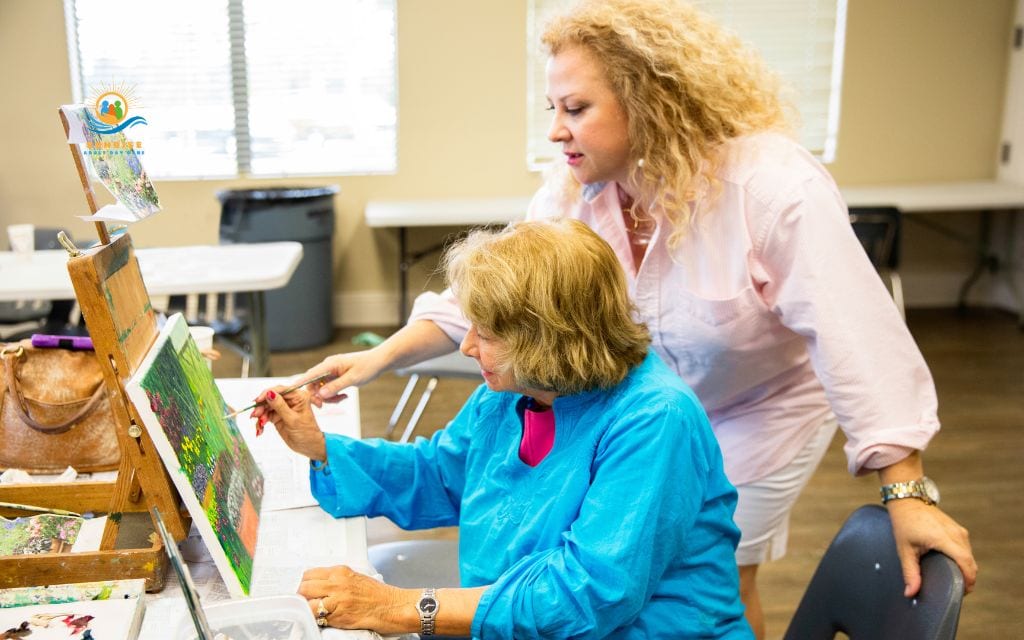
3. Arts and crafts
Creative projects can stimulate planning, memory, sequencing, and imagination. Popular options include greeting cards, painting, collage, beaded bracelets, scrapbooking, seasonal crafts, and simple pattern-making.
Planning a project and guiding the hands through each step combines fine motor practice with creative thinking, which can support hand strength, coordination, and a rewarding sense of accomplishment.
4. Word puzzles
Word puzzles support language, recall, attention, and problem-solving. This category includes crossword puzzles, word searches, word scrambles, fill-in-the-blank games, and finish-the-phrase activities. Searching for words and finishing phrases keeps language and vocabulary skills active, which can help support clear communication and quick recall.
5. Bingo
Bingo combines listening, recognition, attention, and social interaction in one easy-to-follow game. Listening for numbers and scanning the card keeps attention and processing speed engaged, while the group setting naturally encourages friendly conversation and connection.
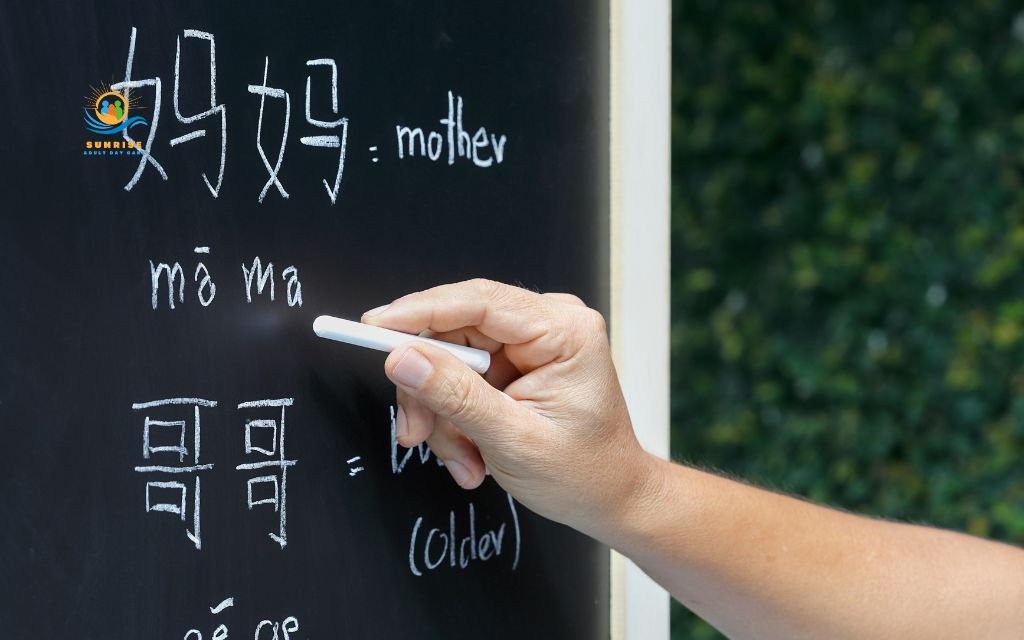
6. Learn a new language
Picking up simple words or phrases in a new language can support memory, listening, attention, and curiosity. This does not need to be formal; greetings, food words, travel phrases, or songs in another language all count.
Repeating new words and phrases gives the brain fresh material to practice with, which can help strengthen listening skills, memory, and curiosity at any age.
7. Try a brain training app
Digital brain training apps can offer memory, attention, speed, and problem-solving exercises, making them some of the most accessible brain training exercises for the elderly available today. Short digital exercises target memory, attention, and reaction time in small doses, making them an easy way to fit a quick mental workout into the day.
8. Online games
Online games give seniors access to puzzles, card games, trivia, word games, and memory exercises right from home. Popular examples include online solitaire, digital crossword puzzles, virtual bingo, and simple word or strategy games.
9. Logic puzzles
Logic puzzles encourage reasoning, sequencing, and problem-solving. Examples include brain lines and pattern puzzles, number sequences, simple riddles, “which item does not belong” games, and clue-based puzzles.
10. Chess
Chess is a classic strategy game that supports planning, concentration, memory, and decision-making. Planning several moves ahead exercises strategic thinking and concentration, which can help keep decision-making skills active and engaged.
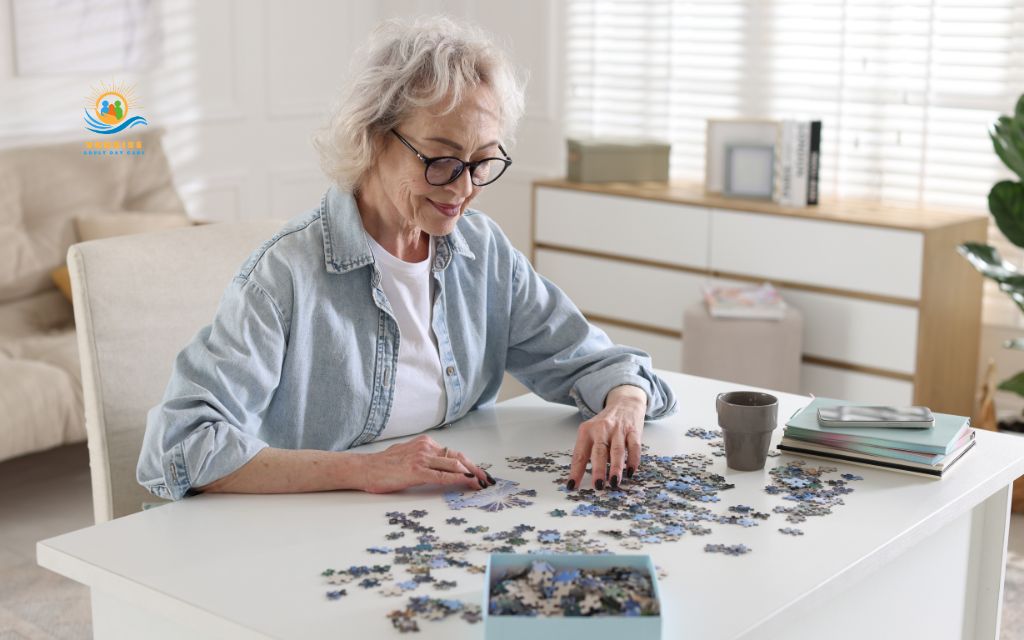
11. Jigsaw puzzles
Jigsaw puzzles support visual reasoning, patience, focus, and problem-solving. Matching shapes and colors strengthens visual-spatial reasoning and patience, and finishing a puzzle often brings a satisfying sense of completion.
12. Special tasks to boost memory and attention
Simple games to help memory and attention let seniors practice focus without needing a formal game. Examples include sorting objects by color, grouping items by category, remembering three words, following a short sequence, or spotting differences between 2 pictures. Practicing short recall and sorting tasks gives the brain low-pressure repetition, helping reinforce attention and memory skills over time.

13. Games for those living with dementia
Brain games for someone living with dementia should feel supportive, familiar, and low-pressure. Helpful options include familiar music, simple matching games, sorting safe objects, large-print bingo, photo-based memory conversations, finish-the-phrase games, and short reminiscence prompts.
14. Identify botanicals
Identifying flowers, herbs, leaves, or plant scents can be a calming activity that draws on memory, smell, touch, and conversation. Try naming herbs by scent, matching flowers to colors, sharing garden memories, or sorting safe leaves and petals.

15. Reading fiction books
Reading fiction can support imagination, attention, language, memory, and emotional engagement. For seniors who have difficulty reading small print, large-print books, audiobooks, or read-aloud groups are great alternatives.
16. The serving tray game
This simple memory activity involves placing several familiar items on a tray, letting the senior look at them briefly, covering the tray, and asking which items they remember. It is one of the easiest memory exercises for seniors to try at home, using items such as a spoon, key, cup, flower, comb, coin, or small photo.
17. Shopping list game
This verbal memory game helps with recall, sequencing, and attention. One person begins with, “I went to the store and bought…” and each player adds a new item while repeating everything said before. Repeating a growing list strengthens short-term memory and sequencing, while the back-and-forth play keeps the activity social and fun.

18. Card matching
Card matching is one of the simplest memory games for adults and seniors alike, helping build visual memory and concentration. Remembering where each card is located exercises visual memory and concentration, giving the brain steady, repeatable practice.
19. Video games
Some video games support attention, reaction time, problem-solving, and hand-eye coordination. Slow-paced puzzle games, music games, bowling-style motion games, or gentle adventure games tend to work better than fast or stressful ones.
20. Over-50s volunteering
Volunteering supports brain health by combining purpose, planning, conversation, and social connection. Options include writing cards, helping with community projects, making crafts for donation, mentoring, phone check-ins, or joining senior center projects.
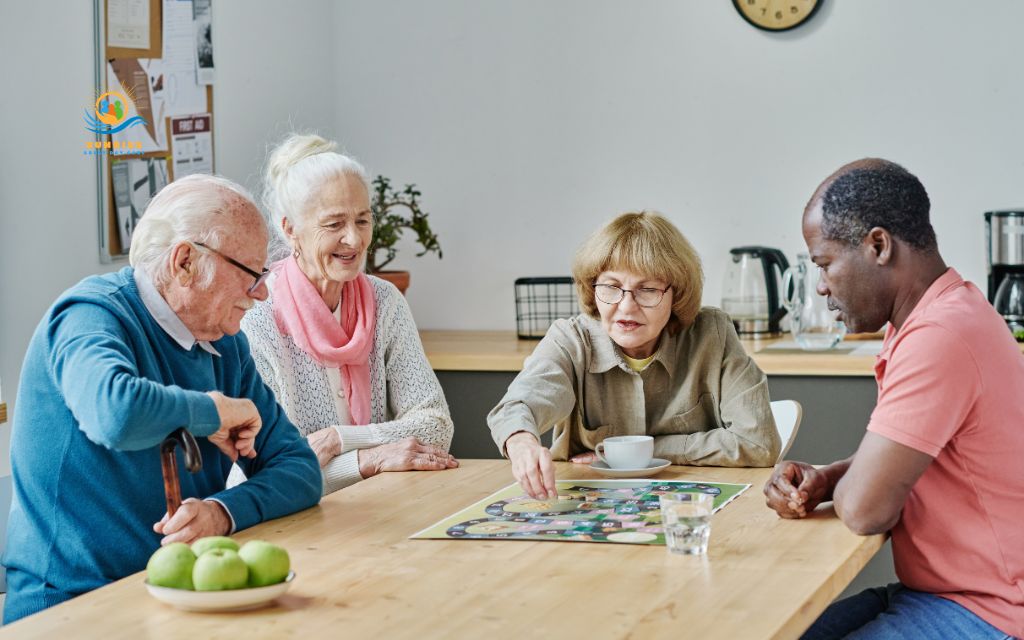
21. Easy and fun party games
Simple party games make brain activities feel social and joyful rather than like homework. Try charades with easy prompts, “would you rather” questions, name-that-tune, holiday trivia, guessing games, and word association.
22. Dancing
Dancing combines memory, rhythm, movement, music, and mood support, and it can easily be adapted for seated participation. Try seated dance, hand motions to music, gentle rhythm movement, or simple steps with support.
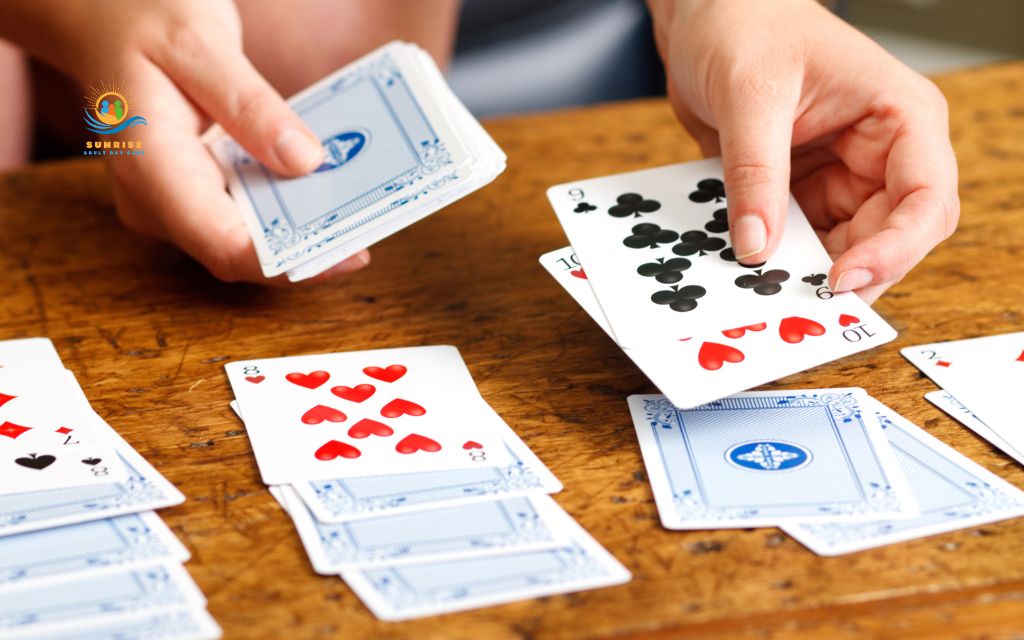
23. Solitaire
Solitaire is a familiar card game that supports sequencing, planning, attention, and independent play. Planning each move ahead keeps sequencing and attention skills active, offering a calm, independent way to stay mentally engaged.
24. Scrabble
Scrabble supports vocabulary, spelling, planning, and friendly social interaction. Searching for words and planning the best placement keeps vocabulary, spelling, and strategic thinking all working together.
25. Brain yoga
Brain yoga blends mind exercises for seniors with gentle movement, breath, and coordination through cross-body movements, finger exercises, breathing patterns, or seated coordination activities. Coordinating breath with movement helps the brain and body work together, which can support focus, balance, and a sense of calm.

What brain games can and cannot do
Brain exercises for seniors can support attention, memory, reasoning, and engagement, but it helps to keep expectations realistic and grounded in what current research actually shows.
- Brain games may help support attention, memory, reasoning, and engagement.
- Cognitive exercises for seniors tend to work best when done consistently and matched to a person’s ability level.
- They are not a substitute for medical care, therapy, medication, or a dementia evaluation.
- They cannot guarantee prevention of Alzheimer’s disease or dementia.
- Cognitive health tends to be strongest when brain games are combined with physical activity, social connection, restful sleep, good nutrition, medical care, and daily structure.
This information is for general educational purposes only and is not medical advice. Please speak with a doctor about any specific concerns regarding memory loss or cognitive decline.
Keeping your brain healthy as you age
Brain training for elderly adults and mental exercises for seniors work best as part of a complete daily routine, not as a stand-alone fix. A few simple habits can support overall brain health alongside regular games and puzzles.
- Play brain games regularly, but keep them fun and low-pressure.
- Stay socially connected through family, friends, group activities, or senior programs.
- Move safely through walking, stretching, chair exercise, or dancing.
- Get enough sleep and follow a consistent daily routine.
- Eat balanced meals and stay hydrated, unless a doctor recommends otherwise.
- Keep learning new things, such as a hobby, song, recipe, language, or skill.
How adult day services can support brain health and engagement
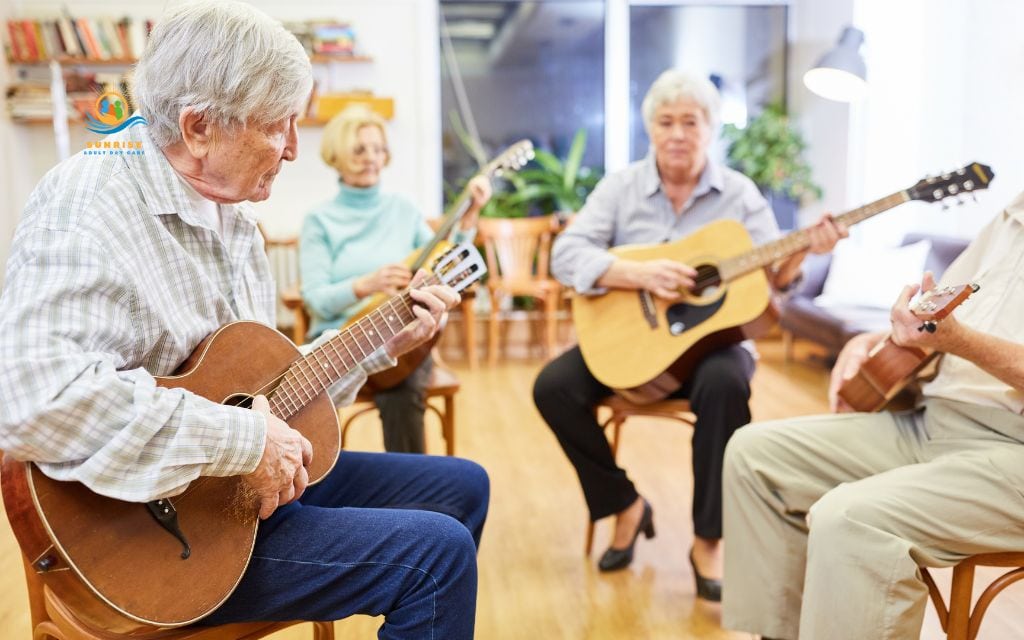
Cuidado diurno para adultos and senior day programs can offer structured activities, social interaction, meals, and supervision in a safe, welcoming daytime setting. Senior brain games are often built right into the daily schedule, alongside other activities that support connection and routine.
For many families, a daytime program becomes a natural next step when an older loved one needs more consistency, companionship, or oversight than at-home activities alone can provide.
Adult day programs may include:
- Trivia games
- Bingo
- Music memory activities
- Storytelling groups
- Arts and crafts
- Group discussions
- Chair exercise and movement
- Read-aloud activities
- Holiday and theme-based games
- Dementia-friendly activities
- Meals and social time
- Recordatorios de medicamentos o supervisión, dependiendo del programa
- Health monitoring, depending on the program
If your loved one could benefit from brain games, social activities, meals, supervision, or caregiver respite during the day, Sunrise Adult Daycare’s daytime program can help create a supportive routine that keeps them engaged and connected.
Guardería Sunrise Senior is a non-residential, daytime program, so your loved one returns home each evening while gaining the structure and companionship a day program can offer. Call us at (303) 226-6882 or visit us to learn more.
Conclusión
Brain games for elderly adults can support mental stimulation, routine, confidence, and social connection. Great options include crosswords, word searches, Sudoku, trivia, bingo, card games, music memory games, storytelling, crafts, and group discussion.
For seniors who could benefit from more companionship, structure, meals, supervision, or caregiver relief, a structured adult day program can provide a safe and engaging environment during the day.
Preguntas frecuentes (FAQ)
How can I help improve cognitive decline in a senior?
Cognitive decline can often be supported, though not reversed, through a combination of regular mental stimulation, physical activity, social connection, quality sleep, good nutrition, and consistent medical care. Brain games are one helpful piece of that routine, but any cognitive concerns should always be discussed with a doctor for a proper evaluation.
What are some easy memory games for seniors?
Easy options include the serving tray game, card matching, the shopping list game, simple trivia, and large-print bingo. These memory games for seniors work well because they are short, low-pressure, and easy to adapt to different ability levels.
Are online brain training games good for older adults?
Online brain training games for older adults can be a convenient way to practice memory, attention, and problem-solving from home. They tend to work best when paired with social interaction, movement, and other parts of a balanced daily routine, since no single game can address every aspect of brain health.
How often should seniors do brain games?
Many caregivers and seniors find that short daily or near-daily sessions of about 10 to 20 minutes work well, since brain games tend to be most helpful when done consistently rather than all at once. The right frequency depends on the person’s energy, attention span, and overall daily routine.