Skip to content
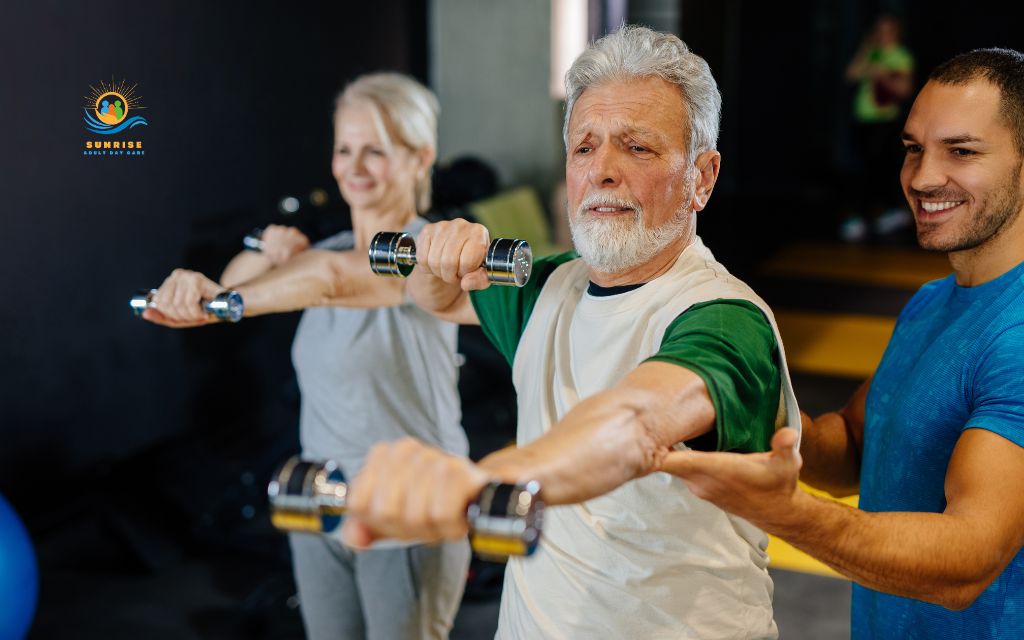
As we grow older, the way we move through daily life matters more than how much weight we can lift or how fast we can run.
Functional exercises for seniors are built around that simple truth. Unlike traditional gym, functional fitness focuses on real-life movements – the kind that help you rise from a chair, carry a bag of groceries, walk safely across a room,…
The connection between functional movement and everyday independence is direct and well-supported. When older adults regularly practice movements that mirror daily activities, they build the strength, coordination, and balance needed to remain self-sufficient. That, in turn, reduces reliance on caregivers and contributes to a greater sense of dignity and confidence.
What is functional fitness?
Functional fitness is a style of exercise training centered on movements that reflect what people actually do in everyday life. Rather than training muscles in isolation, functional fitness trains the body to move together as a coordinated system. For seniors, this means exercises that build the strength, balance, and mobility needed to sit and stand safely, walk without assistance, bend to pick something up, or reach overhead.
Benefits of functional exercises for seniors
Improves strength for everyday activities
Functional exercises for seniors build practical, usable strength – the kind that makes ordinary moments safer and easier. Standing up from a chair requires leg and core strength. Carrying groceries from the car to the kitchen demands grip, arm, and shoulder endurance. Climbing stairs calls on hip extensors and knee stabilizers. Functional fitness trains all of these patterns directly, so the body is ready when daily life demands it.
Enhances balance and stability
Falls are one of the leading causes of serious injury among older adults in the United States. Functional exercises train the small stabilizing muscles of the ankles, knees, hips, and core,… Regular practice improves confidence while walking, stepping over obstacles, or navigating uneven surfaces, all of which meaningfully reduces fall risk.
Increases mobility and flexibility
Stiffness in the hips, shoulders, ankles, and spine makes daily life harder and less comfortable. Functional fitness for seniors includes a range of gentle mobility exercises that encourage the joints to move through their full, healthy range.
Over time, this makes it easier to turn your head while driving, reach items on a shelf, get dressed without discomfort, and move through the day with far less effort.
Supports joint health
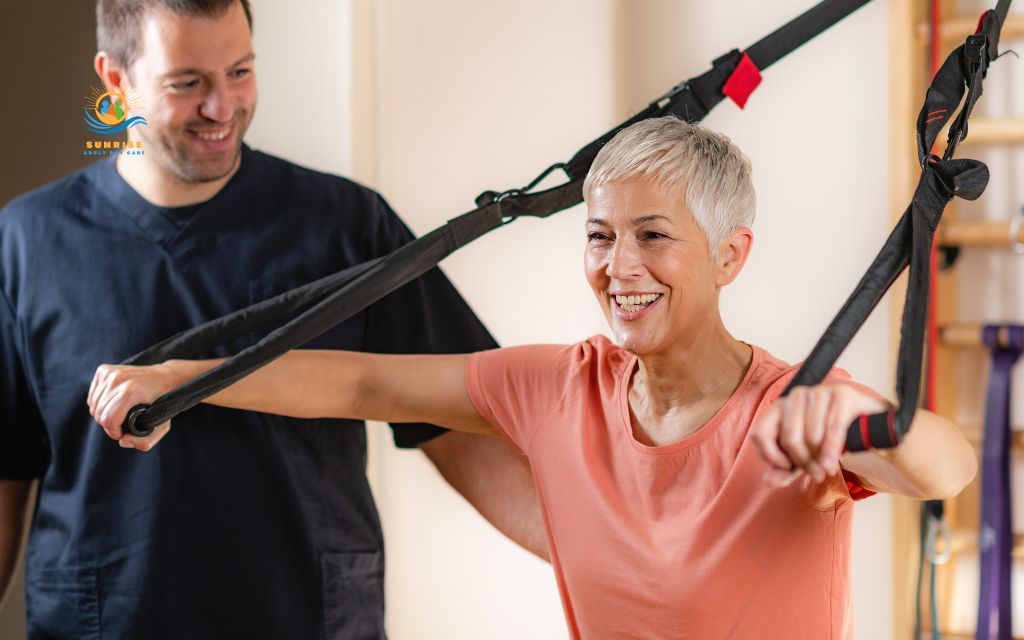
Gentle, low-impact functional movement helps preserve and support joint health as we age. When joints are moved regularly through their natural range, they receive better circulation and lubrication, reducing stiffness and discomfort. Unlike high-impact exercise, functional movements are designed to load the joints gradually and safely.
Promotes independence
Perhaps the most meaningful benefit is the sense of independence that functional fitness sustains. When older adults feel physically capable – when sitting, standing, walking, and carrying feel manageable – they remain active participants in their own lives.
Functional exercises for elderly individuals build the physical foundation that supports self-sufficiency, personal dignity, and a continued sense of purpose.
What are the best types of exercises for seniors?
Not all exercise is the same, and the most effective programs for older adults typically combine several different categories. Each plays a distinct role in supporting functional independence.
Mobility exercises
Mobility exercises focus on joint movement and flexibility. They are typically performed slowly and gently, encouraging the hips, shoulders, ankles, and spine to move through their full range of motion. These exercises reduce stiffness, ease morning discomfort, and make it easier to perform other activities safely.
Strength-building exercises
As we age, maintaining muscle mass becomes increasingly important. Sarcopenia – the natural age-related loss of muscle – accelerates after age 60, affecting the ability to perform basic tasks. Strength exercises using bodyweight, resistance bands, or light dumbbells help counteract this process, supporting both muscle and bone health over time.
Balance and stability exercises
Balance exercises train the proprioceptive system, the body’s internal sense of where it is in space. Single-leg stands, weight shifts, and heel-to-toe walking are all examples that build the neuromuscular coordination needed to prevent falls and navigate the environment safely.
Core strength exercises
The core encompasses more than the abdominal muscles. It includes the deep muscles of the back, hips, and pelvis that hold the body upright and transfer force between the upper and lower body. Strong core muscles improve posture, reduce back pain, and make nearly every other movement, from bending to reaching to walking, safer and more efficient.
Functional movement exercises
Functional movement exercises intentionally mimic real-life activities. Squats mirror sitting and standing. Step-ups prepare the body for climbing stairs. Hip hinges simulate safe bending and lifting. These exercises offer direct, practical carryover to everyday life.
17 functional exercises for seniors to stay independent
The following exercises span mobility, strength, balance, and functional movement. Begin with the exercises that feel most manageable, use support when needed, and progress gradually at your own pace.
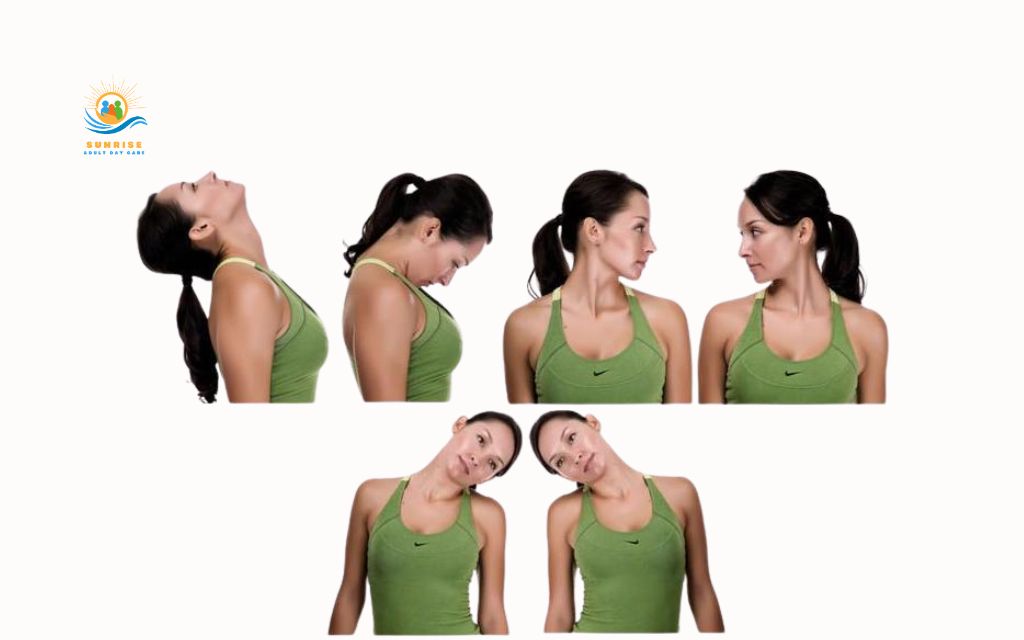
1. Neck stretches
Neck stiffness is one of the most common complaints among older adults, and it directly affects the ability to perform everyday tasks safely. This gentle mobility exercise helps restore and maintain the natural range of motion in the cervical spine, making it easier to turn your head. Regular neck stretching also helps reduce tension headaches and shoulder tightness that often accompany prolonged sitting.
How to do it:
- Sit tall in a sturdy chair with both feet flat on the floor and your hands resting in your lap.
- Slowly tilt your right ear toward your right shoulder, stopping when you feel a gentle stretch along the left side of your neck.
- Hold the position for 15 to 20 seconds, breathing slowly and steadily throughout.
- Return your head to the upright center position with control.
- Repeat on the left side, tilting the left ear toward the left shoulder.
- Perform 2 to 3 repetitions on each side.
2. Shoulder rolls
The shoulders are involved in nearly every reaching, lifting, and carrying movement performed throughout the day. Shoulder rolls gently warm up the shoulder joint, release accumulated tension in the upper back and neck, and encourage better posture by counteracting the forward rounding that commonly develops with age and prolonged sitting.
How to do it:
- Sit upright in a chair or stand comfortably with your arms relaxed at your sides.
- Slowly roll both shoulders forward in a large, smooth circular motion, feeling the movement through the front and top of the shoulder.
- Complete 5 full forward rolls, moving deliberately and breathing throughout.
- Reverse the direction, rolling both shoulders backward in the same large, slow circles.
- Complete 5 full backward rolls.
3. Ankle circles
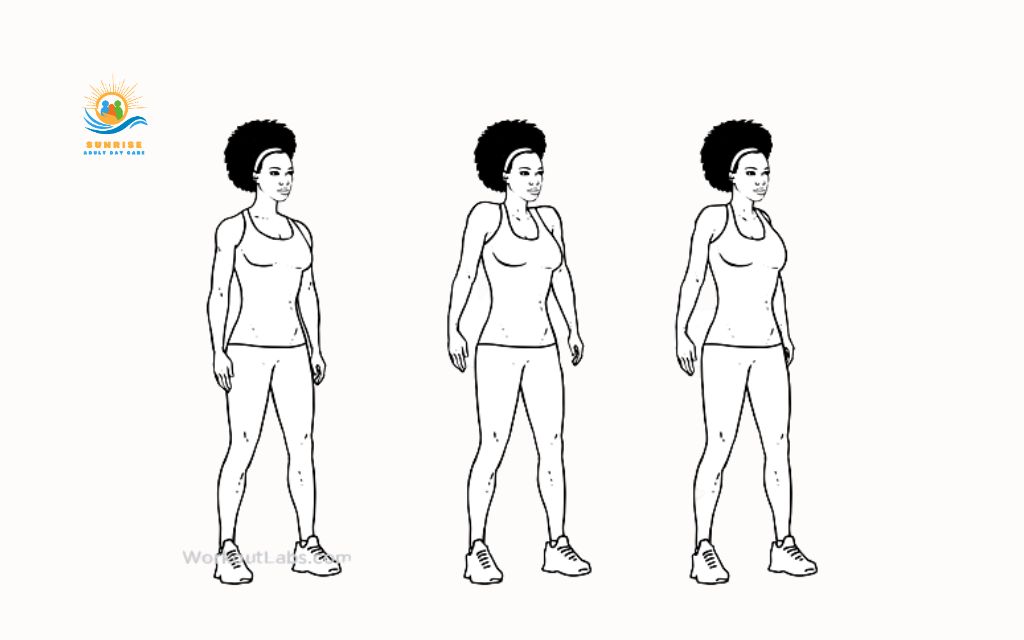
Strong, mobile ankle joints allow the body to detect and respond quickly to changes in the ground surface and make automatic adjustments to stay upright.
Ankle circles improve joint mobility and circulation in the lower legs, reduce morning stiffness, and directly support safer, more confident walking. This exercise is valuable for older adults who spend extended periods seated during the day.
How to do it:
- Sit in a sturdy chair and extend one leg slightly so the foot is lifted off the floor.
- Keeping the leg still, slowly rotate the foot in a large, smooth circle – 5 repetitions clockwise.
- Pause, then rotate the same foot 5 repetitions counterclockwise.
- Gently lower the foot back to the floor.
- Repeat the same sequence on the other foot.
4. Hip rotations
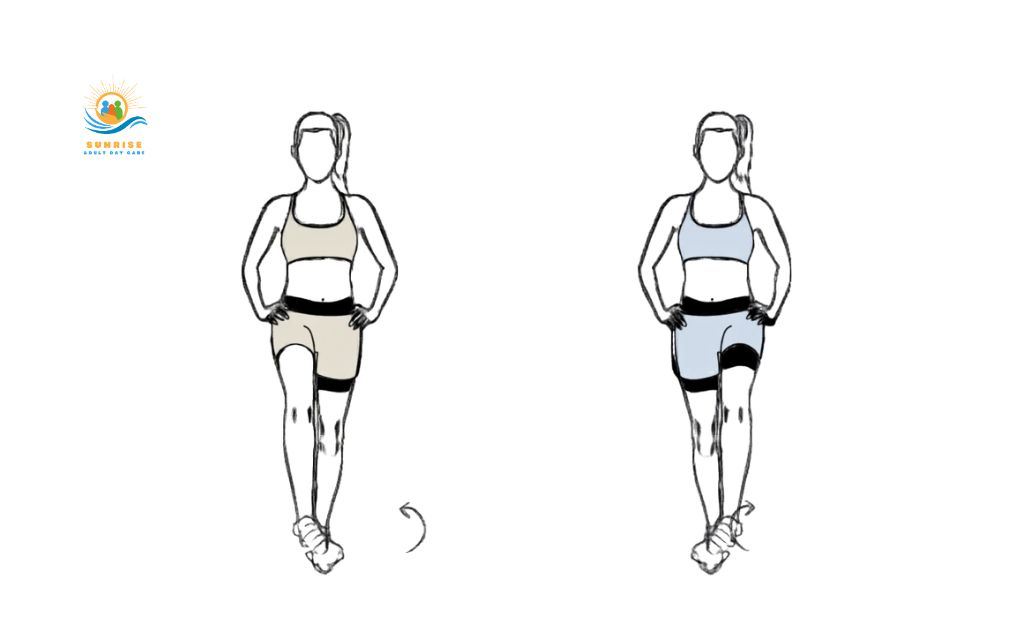
Hip rotations gently mobilize the hip joint through its natural range of motion, reducing stiffness that accumulates from prolonged sitting and helping the joint move with greater ease and comfort. This exercise also engages the small stabilizing muscles around the hip, which play an important role in fall prevention and overall lower-body control.
How to do it:
- Stand behind a sturdy chair and place both hands on the chair back for support.
- Shift your weight onto your right foot and slowly lift your left knee to approximately hip height.
- With the knee raised, rotate it outward in a slow, controlled circle – 5 rotations.
- Reverse the direction, rotating the knee inward – 5 rotations.
- Gently lower the foot back to the floor.
- Shift your weight to the left foot and repeat the sequence with the right knee.
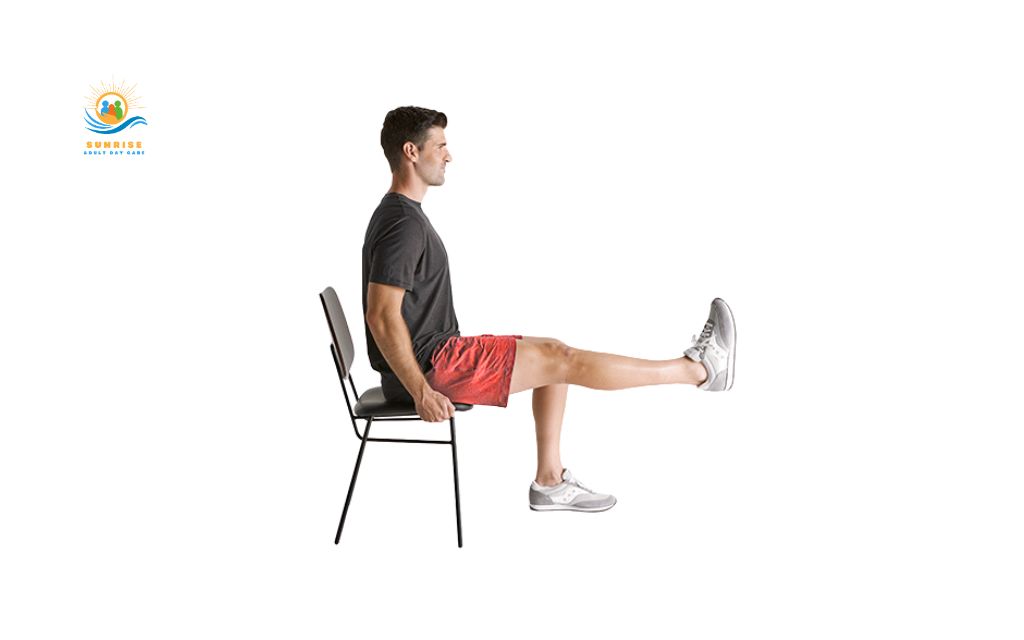
5. Knee extensions
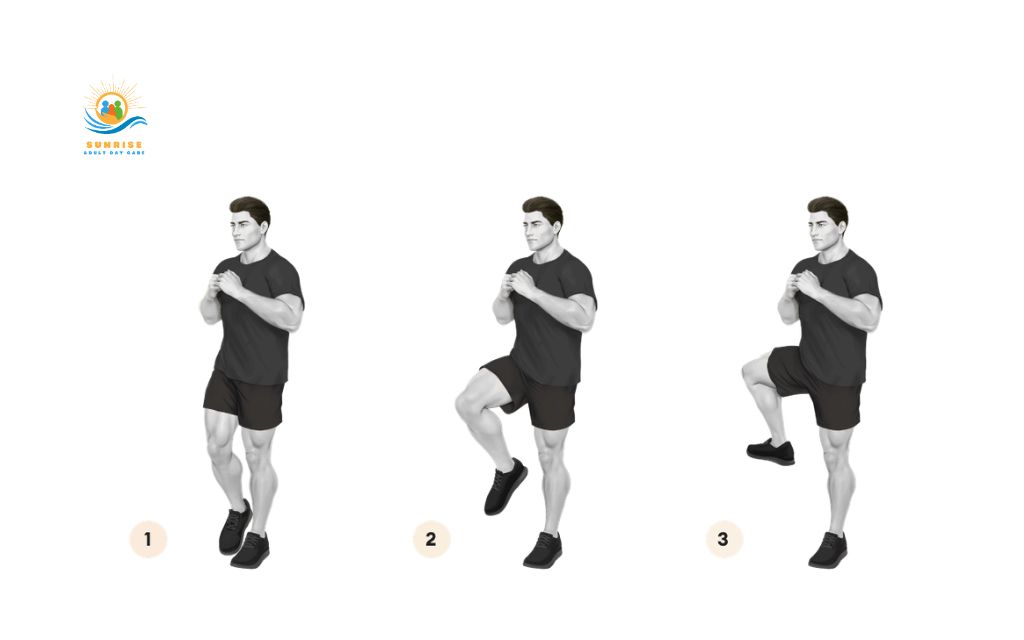
The quadriceps – the large muscles at the front of the thigh – are among the most important muscle groups for independence in older adults. They are the primary drivers of standing up from a seated position, maintaining balance during walking, and climbing stairs safely.
Knee extensions directly strengthen these muscles in a controlled, low-impact way that is gentle on the joint itself, making them an ideal exercise for older adults managing knee discomfort or early-stage arthritis.
How to do it:
- Sit tall at the front edge of a sturdy chair with both feet flat on the floor and your back straight.
- Slowly straighten your right leg, raising the foot until the leg is roughly parallel to the floor.
- Hold the extended position for 2 seconds, squeezing the front of the thigh gently.
- Slowly lower the foot back to the floor with full control — do not let it drop.
- Complete 10 repetitions on the right leg, then switch to the left.
- Perform 2 to 3 sets per leg.
6. Seated leg lifts
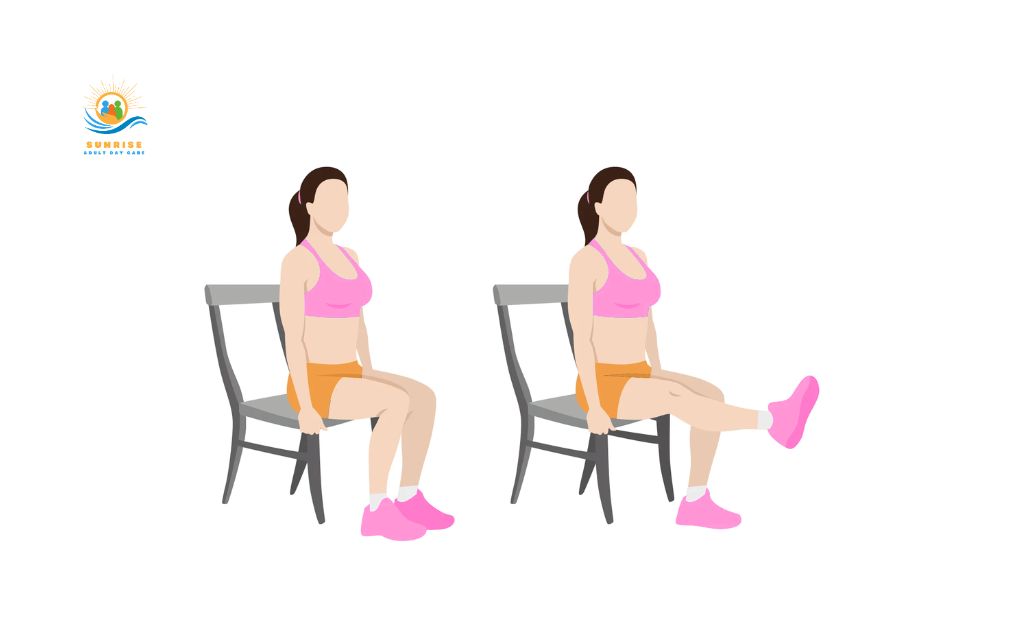
Seated leg lifts target the hip flexors and lower abdominal muscles – the muscles responsible for lifting the legs during walking, stepping over thresholds, and climbing curbs. Weakness in these areas contributes to shuffling gait patterns that increase fall risk.
Because this exercise is performed entirely in a chair, it is one of the most accessible functional exercises for elderly individuals who are new to movement, managing lower-body weakness, or not yet ready for standing exercise.
How to do it:
- Sit upright at the front edge of a sturdy chair with your back straight and both feet flat on the floor.
- Keep your left foot flat on the floor for stability.
- Slowly lift your right leg a few inches off the ground, keeping the knee bent at roughly a 90-degree angle.
- Hold the position for 2 seconds, maintaining an upright posture.
- Slowly lower the foot back to the floor with control.
- Complete 10 repetitions on the right leg, then switch to the left.
- Perform 2 sets per leg.
7. Bodyweight squats
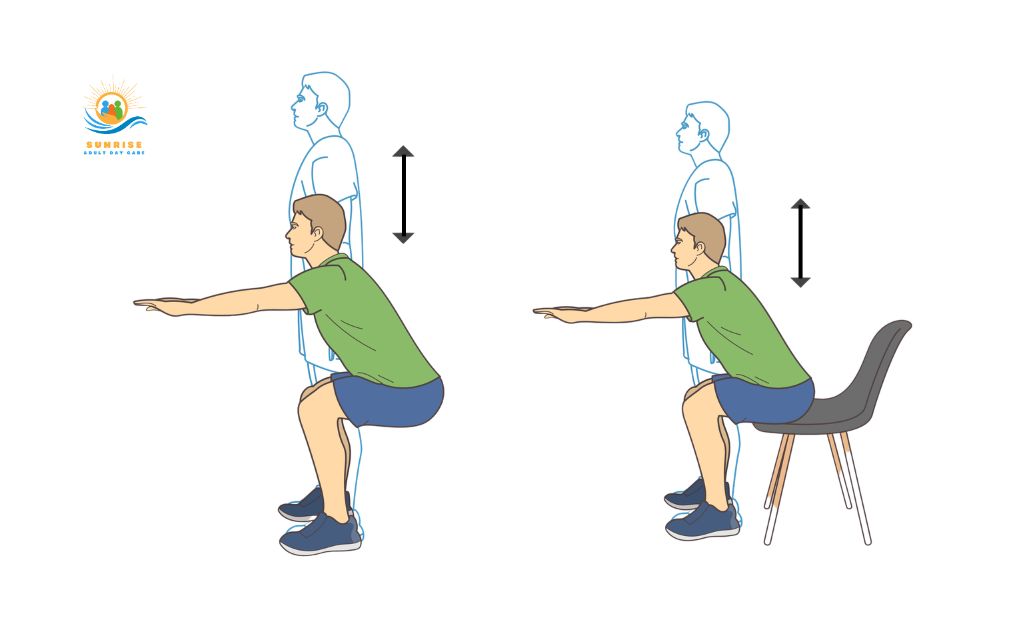
The squat is arguably the most functionally important movement pattern for older adults. Every time a person sits down or stands up, they are performing a squat.
Practicing this movement builds the leg, hip, and core strength needed to make those transitions safer, easier, and more independent. Regular squatting also reinforces the proper biomechanical habits that protect the knees and lower back during daily activities.
How to do it:
- Stand directly in front of a sturdy chair, facing away from the seat, with your feet shoulder-width apart.
- Extend your arms forward for balance if helpful.
- Slowly push your hips back and bend your knees, as if you are about to sit down — keep your chest tall, your back flat, and your knees tracking over your toes rather than caving inward.
- Lower until you lightly touch the chair seat without fully resting your weight on it.
- Pause briefly, then press firmly through your heels to return to a fully upright standing position.
- Perform 8 to 12 repetitions for 2 to 3 sets.
8. Step-ups
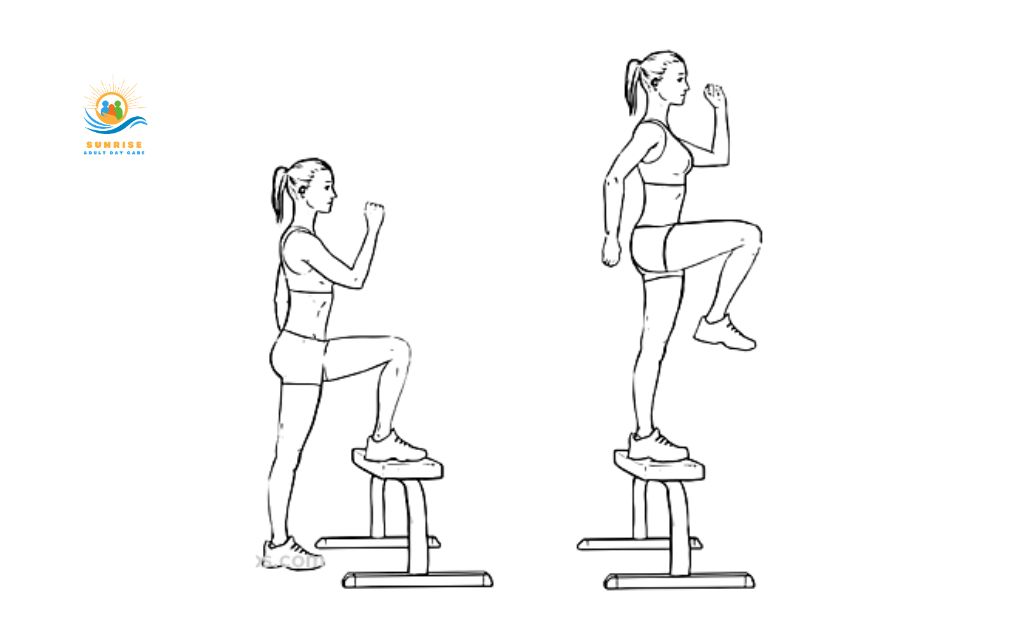
Navigating stairs, stepping onto curbs, and getting in and out of vehicles are everyday tasks that many older adults find increasingly challenging. Step-ups replicate these demands in a controlled, repeatable environment, building the single-leg strength, coordination, and confidence required to handle elevation changes safely.
How to do it:
- Stand at the base of a staircase or beside a low, stable step, facing the step and holding a handrail or wall for support.
- Place your right foot fully on the step.
- Press firmly through the right heel to lift your body upward, bringing the left foot up to meet the right.
- Stand fully upright at the top of the step with both feet flat.
- Step back down one foot at a time, leading with the left foot and following with the right.
- Alternate the lead foot with each repetition.
- Perform 8 to 10 step-ups per side.
9. Reverse lunges
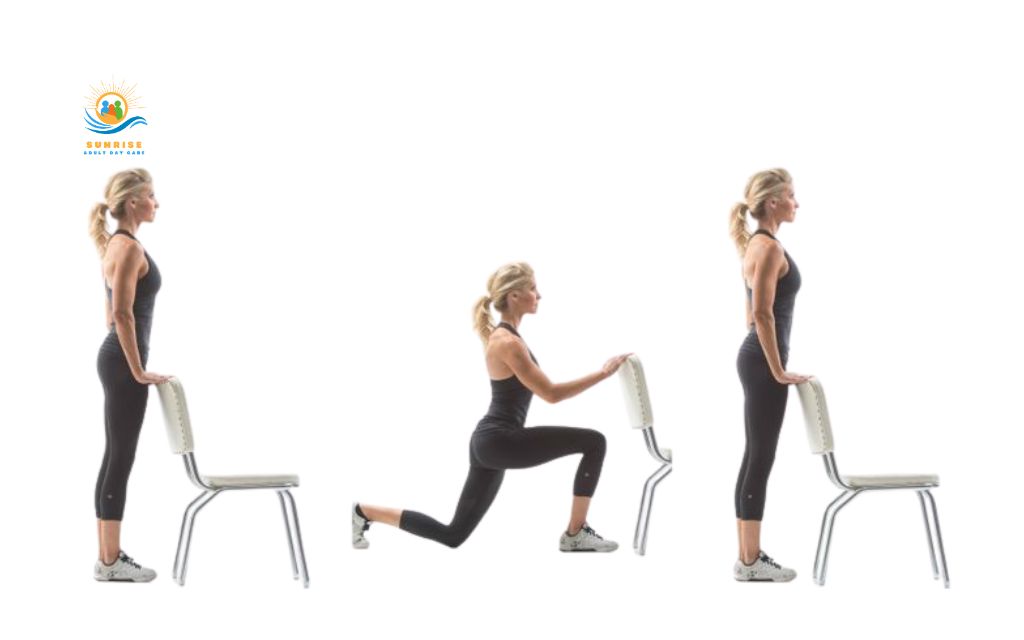
Unlike a forward lunge, stepping backward rather than forward puts less shear force on the front knee, making it more comfortable and appropriate for older adults managing knee sensitivity. The movement pattern directly supports everyday activities that require weight shifting, uneven terrain navigation, and confident stepping in any direction.
How to do it:
- Stand upright behind a sturdy chair, holding the chair back lightly with both hands for balance.
- Step your right foot back behind you, placing the ball of the foot on the floor.
- Slowly lower your right knee toward the floor while keeping your left knee directly above your left ankle. Do not allow the front knee to drift forward past the toes.
- Stop when you feel a comfortable stretch through the right hip flexor.
- Hold for 1 to 2 seconds, then press firmly through the left heel to return to standing.
- Perform 6 to 8 repetitions on the right side, then switch to the left.
- Complete 2 sets per leg.
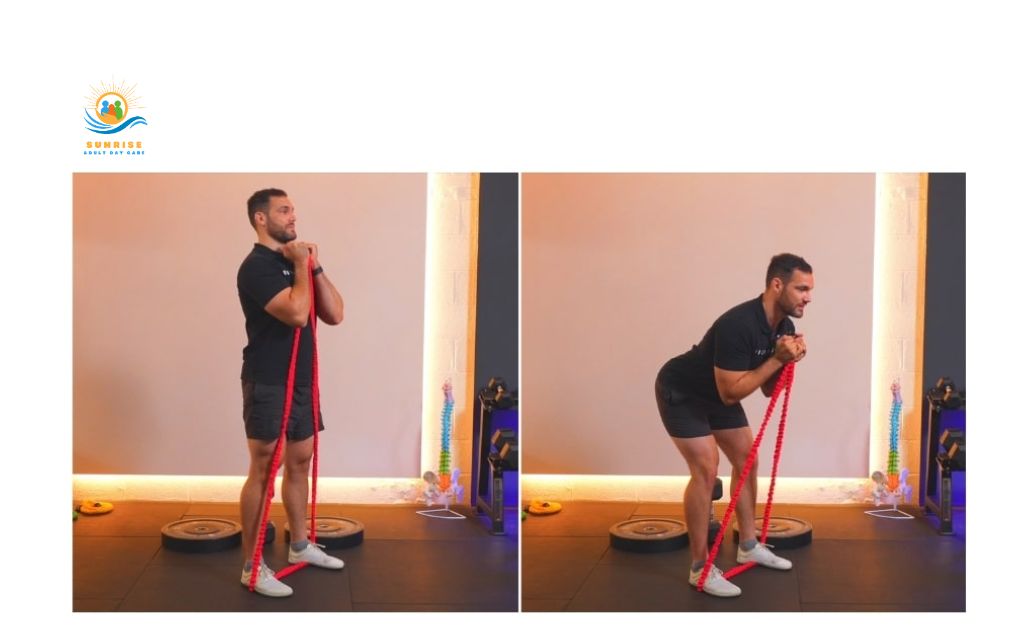
10. Hip hinges with resistance bands
Bending down to pick something up from the floor is one of the most common causes of back injury among older adults when done incorrectly. The hip hinge teaches the body to bend safely by loading the hips and legs rather than rounding the lower back. Adding a resistance band gently strengthens the hamstrings and glutes that power this movement, making safe bending a trained habit rather than an afterthought.
How to do it:
- Stand with a light resistance band looped under both feet, holding one end of the band in each hand.
- Begin in an upright stance with a soft, slight bend in both knees.
- Keeping your back flat and your gaze directed forward, push your hips back behind you – imagine trying to touch the wall behind you with your hips.
- Lower your hands along your thighs as your torso tilts forward, stopping when you feel a gentle, comfortable stretch along the back of the legs.
- Drive your hips forward to return to an upright standing position, squeezing the glutes at the top.
- Perform 8 to 10 repetitions for 2 sets.
11. Wall push-ups
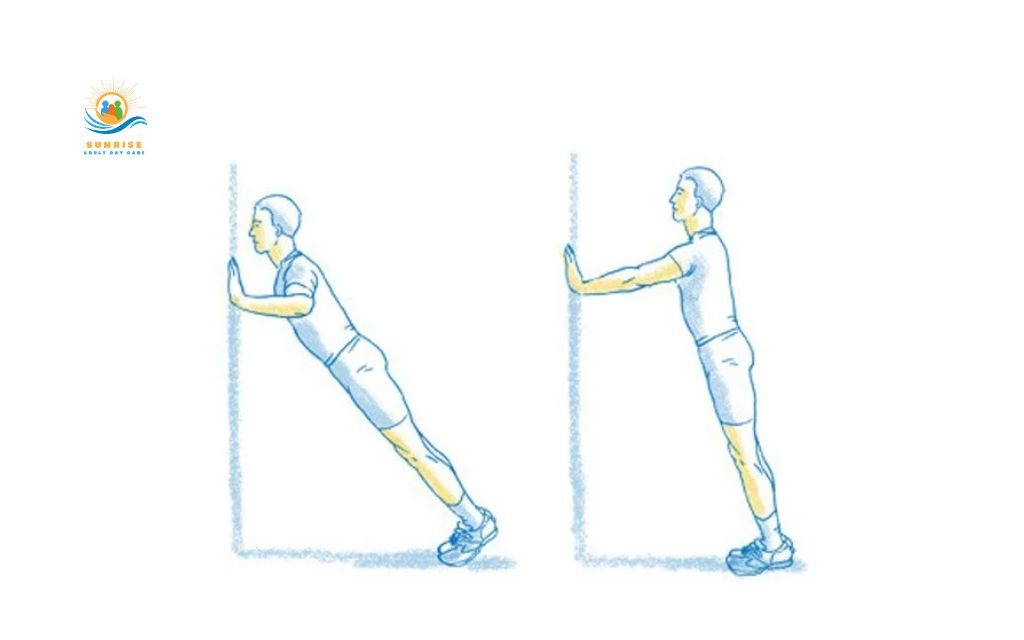
Upper body pushing strength is essential for tasks like opening heavy doors, rising from a low surface using the arms, pushing a shopping cart, and steadying oneself against a wall or counter. Wall push-ups build this strength in the chest, shoulders, and triceps while keeping the exercise low-impact, easily modifiable, and accessible for any fitness level.
How to do it:
- Stand facing a wall, approximately arm’s length away, with your feet hip-width apart.
- Place both palms flat on the wall at shoulder height and shoulder width apart.
- Keeping your body in a straight line from head to heels. Do not let the hips sag or the lower back arch. Slowly bend your elbows to lower your chest toward the wall.
- Stop when your elbows form roughly a 90-degree angle or your face is close to the wall.
- Press firmly through both palms to return to the starting position.
- Perform 10 to 15 repetitions for 2 to 3 sets.
12. Dumbbell rows
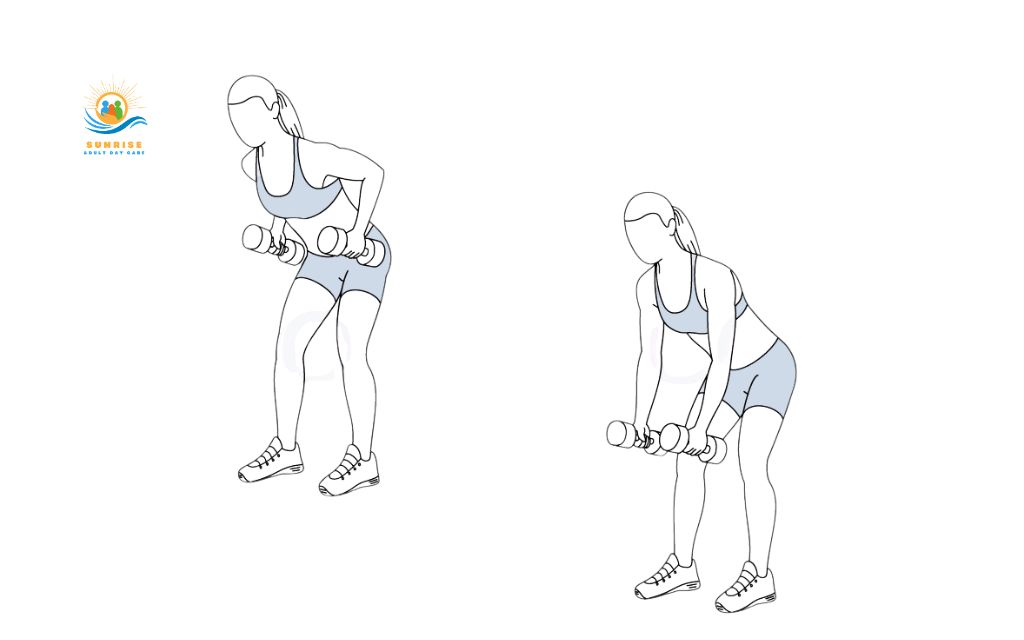
The muscles of the upper back are responsible for pulling movements, maintaining upright posture, and counteracting the forward-rounding that develops from prolonged sitting or hunching.
Dumbbell rows strengthen these muscles, making it easier to open doors, pull yourself up from a seated position, carry bags, and maintain a confident, upright posture throughout the day. Strong upper back muscles also help reduce chronic neck and shoulder tension.
How to do it:
- Hold a light dumbbell in your right hand. Place your left hand and left knee on a sturdy chair seat for support, keeping your back flat and roughly parallel to the floor.
- Allow the right arm to hang straight down from the shoulder, dumbbell facing the floor.
- Slowly pull your right elbow upward and back, as if drawing it toward the ceiling, keep the elbow close to the body throughout.
- Hold briefly at the top when the elbow is at or above the level of the back.
- Slowly lower the dumbbell back to the starting position with full control.
- Perform 8 to 10 repetitions on the right side, then switch to the left.
- Complete 2 sets per arm.
13. Dumbbell overhead press
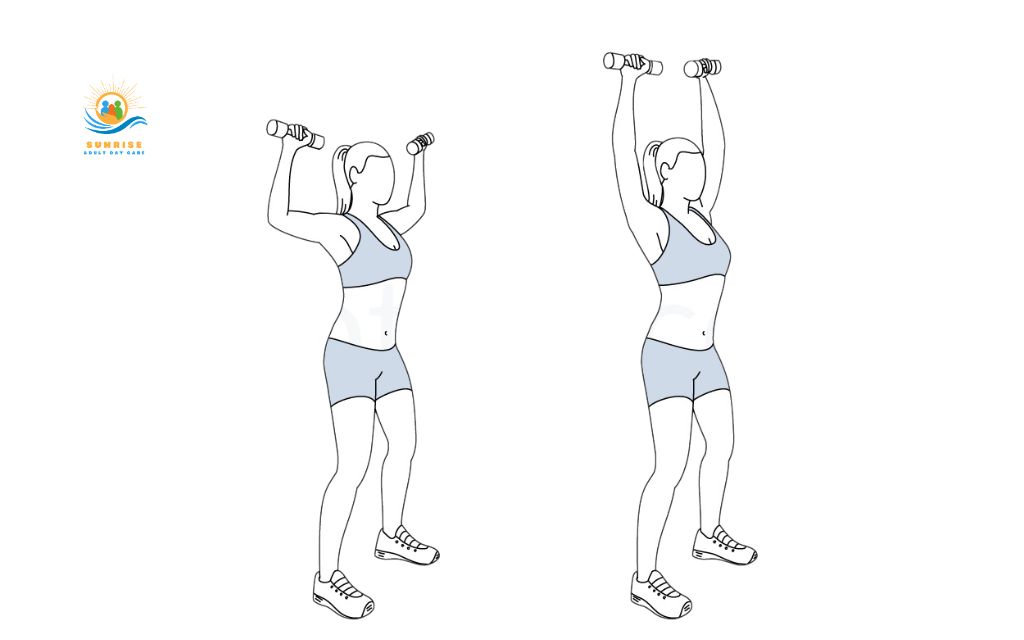
The overhead press builds shoulder, upper back, and arm strength directly aligned with these tasks while also reinforcing core stability, since the torso must remain upright and controlled throughout the lift. Maintaining overhead strength is one of the key factors that helps older adults remain independent in their own homes.
How to do it:
- Sit tall in a sturdy, supportive chair with both feet flat on the floor.
- Hold a light dumbbell in each hand at shoulder height, palms facing forward and elbows bent at roughly 90 degrees.
- Slowly press both dumbbells upward until your arms are nearly straight above your head.
- Pause briefly at the top without locking the elbows.
- Slowly lower both dumbbells back to shoulder height with full control.
- Perform 8 to 10 repetitions for 2 sets.
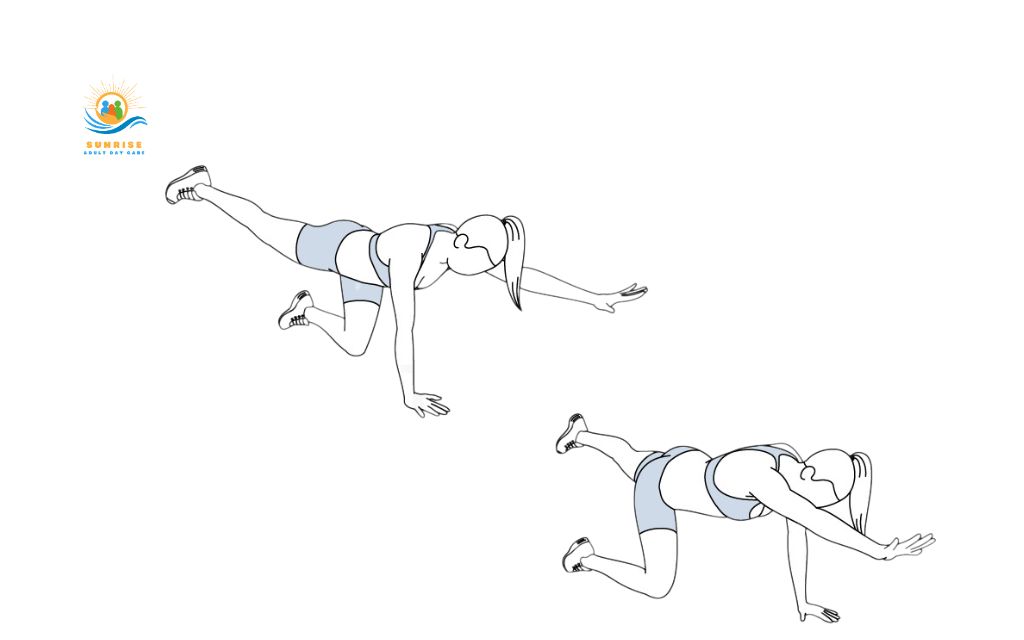
14. Bird dogs
The bird dog exercise trains the deep core muscles that stabilize the spine, along with the glutes and shoulder stabilizers, all while requiring the body to maintain balance and coordination across opposing limbs. This makes it one of the most efficient functional exercises for older adults: it builds multiple qualities at once without placing any impact stress on the joints.
How to do it:
- Begin on hands and knees on a yoga mat, with your wrists directly below your shoulders and your knees directly below your hips.
- Engage your core gently and keep your back flat throughout.
- Slowly extend your right arm forward and your left leg back simultaneously, reaching both away from your body in a long, straight line.
- Keep the hips level. Avoid rotating the pelvis or lifting one hip higher than the other.
- Hold the extended position for 3 to 5 seconds, breathing steadily.
- Slowly return the arm and leg to the starting position with control.
- Repeat on the opposite side: left arm forward, right leg back.
- Perform 6 to 8 repetitions per side for 2 sets.
15. Single-leg stands
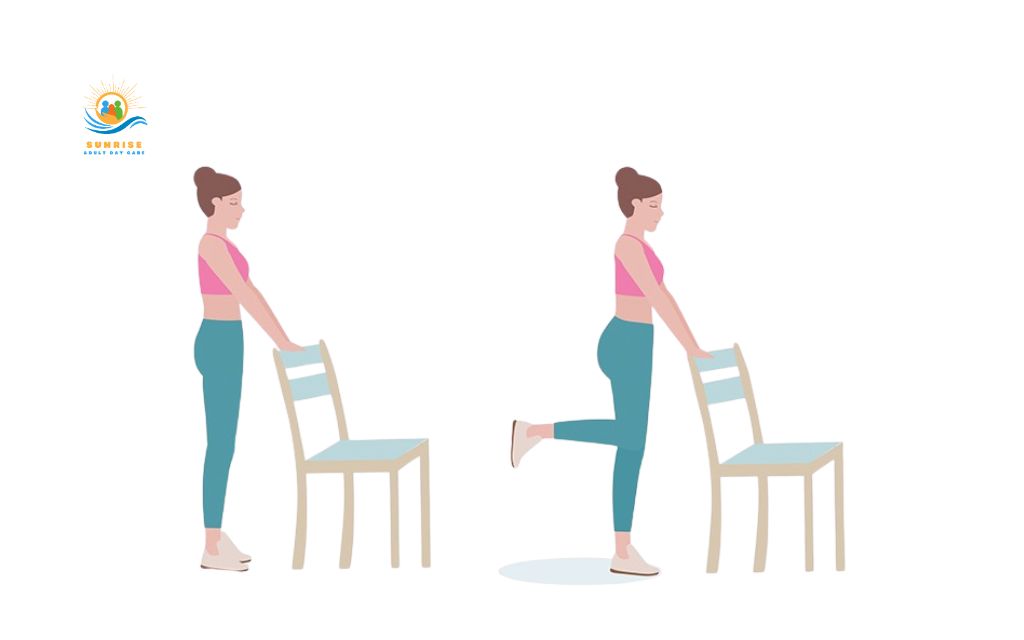
Single-leg stands are among the most direct and evidence-supported exercises for improving the neuromuscular coordination that prevents falls.
By challenging the body to maintain stability on one foot, this exercise strengthens the small muscles of the ankle, knee, and hip that activate during everyday activities like stepping over a threshold, walking on uneven ground, or shifting weight while reaching for something.
Even a few minutes of single-leg standing practice each day produces measurable improvements in balance over time.
How to do it:
- Stand directly behind a sturdy chair, placing both hands on the chair back for support.
- Stand with feet hip-width apart and distribute your weight evenly across both feet.
- Slowly lift one foot a few inches off the floor, shifting all your weight onto the standing leg.
- Focus your gaze on a fixed point directly ahead to help maintain stability.
- Hold the position for 10 to 30 seconds, or as long as you can maintain good balance.
- Gently lower the foot and stand on both feet briefly before switching sides.
- Perform 3 repetitions per side.
16. Farmer’s carry
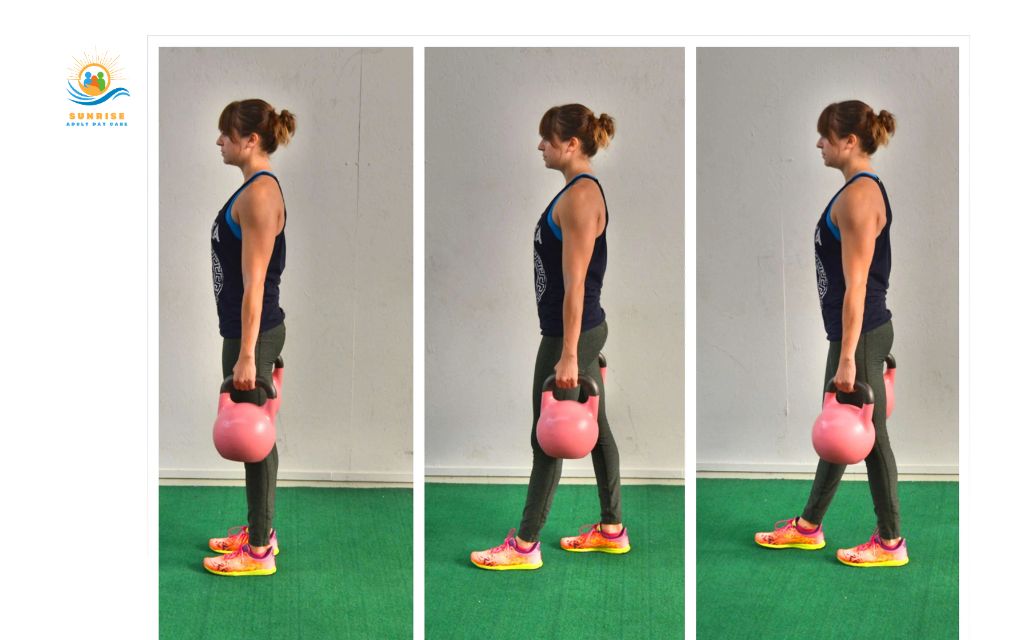
The farmer’s carry directly trains the grip strength, arm endurance, core stability, and upright walking posture required to do this safely and confidently. It also builds mental focus, since carrying a load while walking requires coordinated attention to both the task and the environment.
How to do it:
- Stand upright and hold a light dumbbell or a small weighted bag in each hand, arms hanging naturally at your sides.
- Engage your core gently and roll your shoulders back to maintain an upright posture. Avoid leaning to either side or letting the weight pull you forward.
- Walk at a slow, steady, controlled pace for 20 to 30 feet, keeping your gaze forward and your steps deliberate.
- Turn carefully at the end – take small steps rather than pivoting sharply.
- Walk back to the starting point.
- Set the weights down, rest briefly, and repeat for 3 to 5 passes total.
17. Standing chops
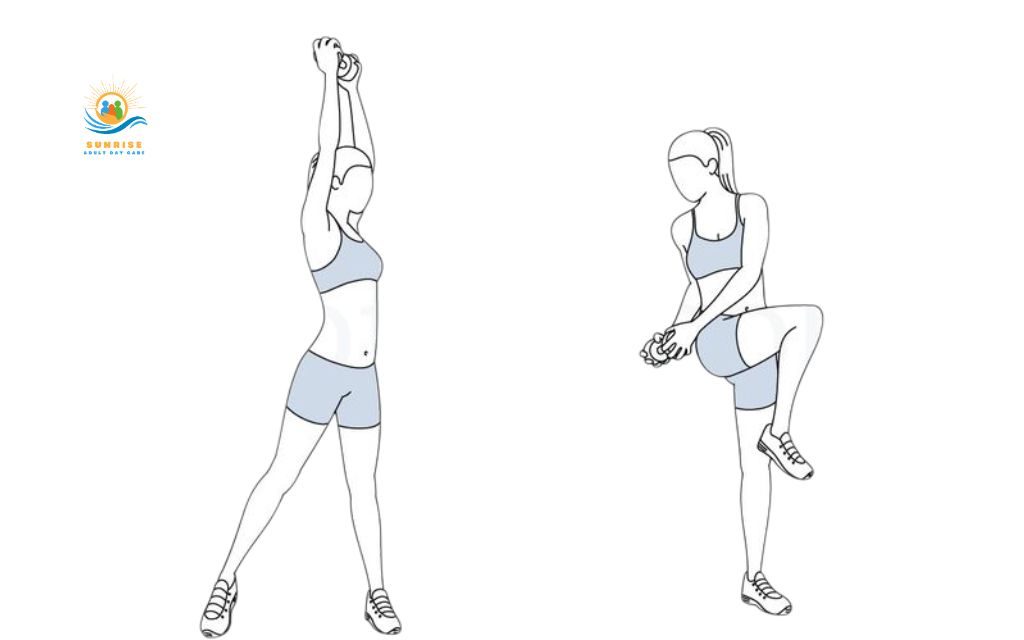
Rotational movement is involved in dozens of everyday tasks: turning to look behind you, reaching across the body,… However, rotational strength and mobility are rarely addressed in basic exercise routines.
Standing chops train this movement pattern deliberately, strengthening the core, obliques, and hips in a way that directly prepares the body for real-world twisting demands, and helps protect the lower back from strain during those movements.
How to do it:
- Stand with feet shoulder-width apart, knees slightly soft, in a comfortable, balanced position.
- Hold a light medicine ball, a small dumbbell, or a folded towel with both hands.
- Begin with your hands raised toward your right shoulder, arms slightly bent.
- In one smooth, controlled motion, swing the object diagonally downward across your body toward the left hip, like a diagonal chopping movement.
- Pause briefly at the bottom, then return to the starting position with control.
- Perform 8 to 10 repetitions on this diagonal, then switch: starting at the left shoulder and chopping toward the right hip.
- Complete 2 sets per side.
What equipment do you need for functional fitness?
One of the greatest advantages of functional fitness for seniors is its accessibility. A large portion of the exercises in this guide require nothing more than a sturdy chair and a safe space to move. No gym membership. No expensive machines.
Helpful equipment for beginners
When you are ready to add gentle challenge to your routine, a small set of affordable tools can expand your options:
- Sturdy chair: provides support and stability during seated and standing exercises, and can serve as a reliable anchor for balance work
- Resistance bands: lightweight, inexpensive, and versatile; ideal for adding gentle resistance to hip hinges, leg presses, and rows without heavy weights
- Light dumbbells: a pair of 2 to 5 lb dumbbells supports exercises like dumbbell rows, overhead presses, and farmer’s carries at an appropriate level for most beginners
- Medicine ball: useful for standing chop exercises that develop rotational strength; an 1 to 2 lb ball is appropriate for most older adults starting out
- Yoga mat: provides cushioning and a non-slip surface for floor-based exercises such as bird dogs
Safety equipment and support tools
Beyond exercise equipment, a few everyday items are worth having nearby during any functional fitness session:
- Stable countertop or wall: provides a secondary point of contact for balance exercises when the chair is not positioned conveniently
- Handrail: essential during step-up exercises and stair practice; always use when available
- Supportive, non-slip shoes: proper footwear is one of the simplest and most effective tools for fall prevention during exercise and everyday movement
How often should seniors do functional fitness exercises?
Recommended weekly routine
Physical activity guidelines from leading health authorities recommend that older adults aim for at least 150 minutes of moderate-intensity activity per week, alongside strength training at least two days per week and balance exercises on most days.
Translated into practical terms for a functional fitness routine, this means most seniors benefit from three to five sessions per week, with each session lasting 20 to 45 minutes depending on fitness level and tolerance.
Combining strength, balance, and mobility training
The most effective weekly routines for functional fitness for elderly adults combine all three essential elements: strength, balance, and mobility.
A practical approach might look like this: 2 or 3 days per week focus primarily on strength-based exercises such as squats, step-ups, dumbbell rows, and farmer’s carries. On alternate days, the focus shifts to balance work such as single-leg stands and reverse lunges, combined with mobility exercises like neck stretches, shoulder rolls, hip rotations, and ankle circles.
This kind of balanced rotation ensures the whole body is trained without overloading any one system.
Rest and recovery considerations
Rest is an essential part of progress. Older adults generally benefit from at least one full rest day between strength-focused sessions to allow muscles and joints time to recover and adapt. On rest days, gentle walking or light stretching is perfectly appropriate.
Listen to your body: soreness that fades within 24 to 48 hours is normal, but sharp, persistent, or joint-specific pain is a signal to pause and consult a healthcare provider before continuing.
Safety tips for functional fitness training
Warm up before every session
A brief warm-up prepares the muscles, joints, and cardiovascular system for activity and significantly reduces the risk of strain or injury. Spend 5 to 8 minutes walking slowly, performing gentle ankle circles and shoulder rolls, or simply marching in place before moving into more demanding exercises. Never skip this step, regardless of how short the session will be.
Start with support if needed
Using a sturdy chair, a countertop, or a wall for balance during standing exercises is not a sign of weakness, it is a smart, safety-conscious choice that allows you to build strength and confidence at a pace that is genuinely sustainable. Progress naturally as your body adapts.
Focus on proper form over repetitions
Quality of movement always outweighs quantity. Performing 5 squats with proper alignment, controlled speed, and good posture is significantly more beneficial than rushing through 15 with poor form. When learning any new exercise, start slowly, move deliberately, and pay close attention to how your body feels throughout each repetition.
Stay hydrated and rest when necessary
Older adults are more susceptible to dehydration than younger individuals, and even mild dehydration can impair coordination, concentration, and performance during exercise.
Keep a water bottle nearby during every session and drink before, during, and after activity. If fatigue, dizziness, shortness of breath, or unusual discomfort occurs at any point, stop immediately and rest.
Know when to stop and consult a doctor
Not every sensation during exercise is normal or safe to push through. Stop your session and seek medical attention if you experience chest pain or pressure, sudden difficulty breathing, sharp joint pain, significant dizziness, or unusual heart palpitations.
Regular communication with a physician or physical therapist is a core part of a responsible, sustainable exercise routine for older adults.
Conclusion
Functional fitness for seniors is not about achieving peak athletic performance. It is about something far more meaningful: being able to live each day with confidence, comfort, and independence. The 17 exercises in this guide form a comprehensive, practical toolkit for exactly that purpose.
The best exercise is the one that fits your life, your current ability level, and your personal goals. Even beginning with just a few minutes of gentle movement each day creates a foundation. Balance improves. Strength builds. Daily tasks become more manageable. And with consistency, those gains compound into a genuinely better quality of life.
Programs like those offered at Sunrise Adult Daycare provide structured daytime activities in a warm, community-centered setting. Participants benefit from social connection, health monitoring, and the kind of structured routine that helps good habits stick. It can be the ideal complement to, or bridge toward, a more active and independent life.
About Sunrise Adult Daycare
Sunrise Adult Daycare is a daytime, non-residential adult day program located at Denver, CO. Our structured daytime program offers supervised wellness activities, therapeutic support, social engagement, and health monitoring in a warm, compassionate community environment. To learn more or schedule a tour, call us at 303-226-6882 or visit us today.
Frequently asked questions (FAQs)
How do functional exercises help older adults stay independent?
Functional exercises for older adults train the specific movement patterns used in daily tasks (sitting, standing, carrying, reaching, and walking) so the body remains capable of performing those tasks safely and confidently. By building practical strength, improving balance, and maintaining joint mobility, functional fitness directly supports the physical foundation that independence depends on.
Can functional exercises be done in a chair?
Yes. Many functional exercises can be performed from a seated position, including seated leg lifts, knee extensions, overhead presses, and shoulder rolls. Chair-based exercise is an excellent starting point for older adults who are new to movement, managing limited mobility, or recovering from illness or injury. A physical therapist can help design a chair-based functional fitness routine tailored to individual needs and goals.
Are functional exercises safe for seniors with arthritis?
Gentle, low-impact functional exercises are generally well-tolerated by older adults managing arthritis, and regular movement is widely recommended by health professionals as part of arthritis management. However, the specific exercises that are appropriate vary depending on the joints affected and the severity of the condition. It is important to consult a physician or physical therapist before beginning, and to listen to your body carefully.
How often should seniors perform functional fitness exercises?
Most older adults benefit from 3 to 5 sessions of functional fitness activity per week, with each session lasting 20 to 45 minutes. Strength-focused exercises should include at least one rest day between sessions, while mobility and gentle balance work can be practiced daily.