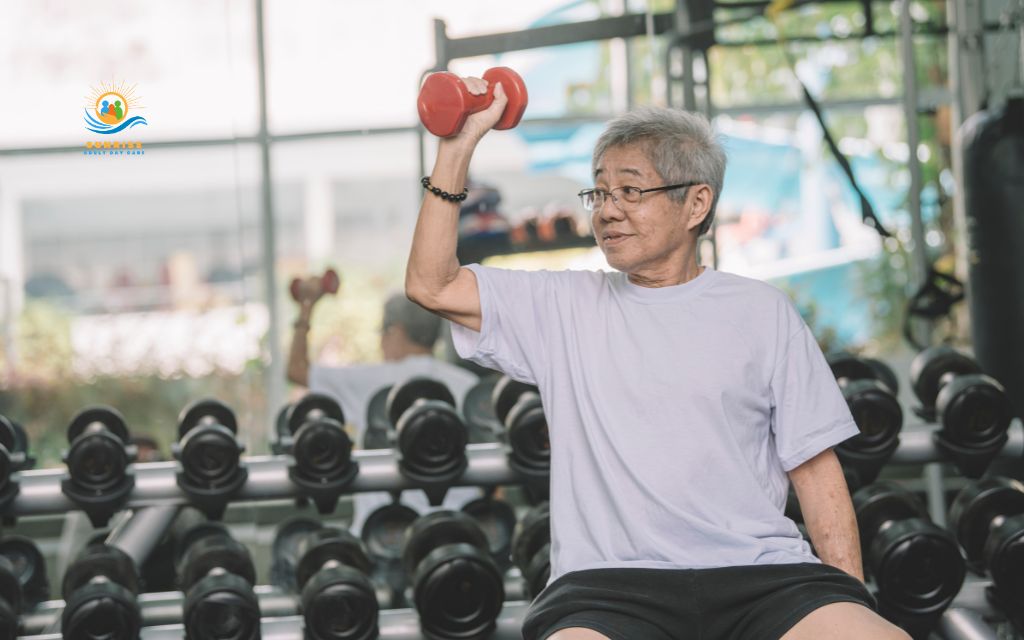
Research indicates that HIIT workout for seniors may support heart health, build functional muscle strength, improve balance, and boost overall energy. Even better, seniors don’t need to push themselves to exhaustion.
Modified versions focus on moderate effort, short sessions, and joint-protective movements that work with the aging body, not against.
In this article, you will learn:
- What HIIT really means for seniors
- Key safety guidelines before getting started
- Simple low-impact HIIT exercises that protect aging joints
- How structured adult day programs create a safe, supportive exercise environment
Whether you are an older adult, a family caregiver, or an adult day care staff member planning group activities, this guide provides a practical framework for getting started with HIIT training for seniors.
What is HIIT (high-intensity interval training)?
HIIT stands for High-Intensity Interval Training. At its core, it is a workout style built around a simple and repeatable rhythm: Short bursts of activity, followed by rest or slower movement, repeated several times.
A beginner-friendly example might look like this:
- Walk briskly for 30 seconds
- Walk slowly for 30 seconds
- Repeat several times
A basic but effective HIIT exercise for seniors requires no gym equipment, no jumping, and no extreme exertion. The idea is to alternate between working a little harder and taking a breath, and to do so consistently over a short session.
See more: exercise programs for seniors
Is HIIT safe for seniors?
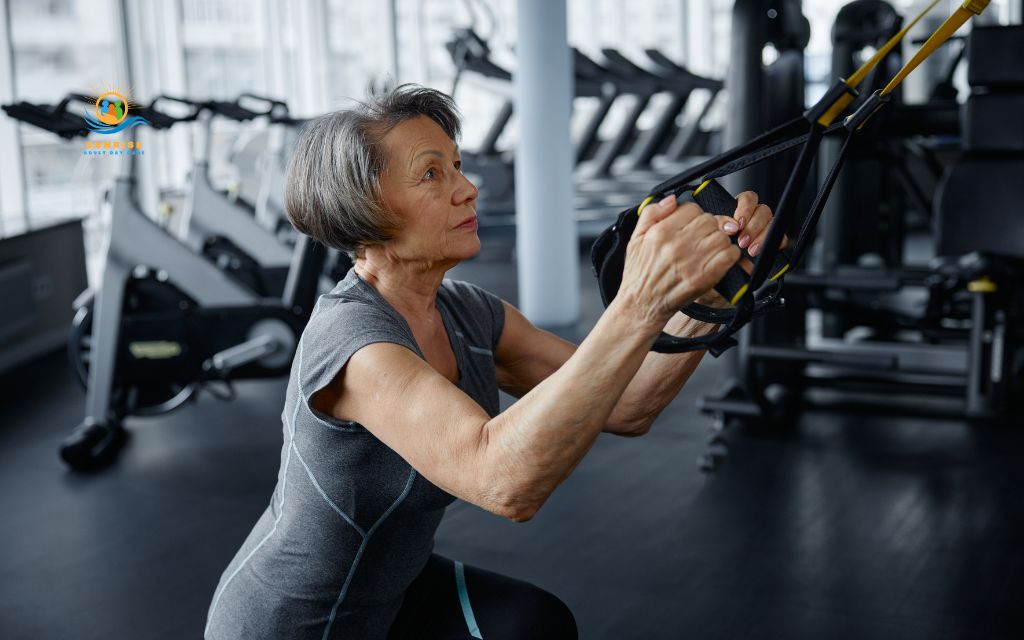
For many older adults, the answer is yes, with the right precautions in place. HIIT workouts for seniors are not a one-size-fits-all prescription, but research and clinical experience consistently show that modified, supervised versions can be both safe and highly beneficial.
Benefits of HIIT for older adults
HIIT exercises for older adults have been studied across a wide range of age groups and fitness levels. When properly modified, high-intensity interval training for seniors may help:
- Improve cardiovascular health: Short intervals place controlled, beneficial demands on the heart, strengthening its efficiency over time.
- Build muscle strength: Resistance-based movements within HIIT workouts counter age-related muscle loss (sarcopenia).
- Enhance balance and mobility: Dynamic movement patterns improve coordination and reduce the risk of falls.
- Support blood sugar control: Interval exercise has demonstrated benefits for insulin sensitivity, which is especially relevant for older adults managing diabetes.
- Boost mental well-being: Physical activity is consistently linked to improved mood, cognitive function, and sleep quality.
Who should talk to a doctor first
Before starting any HIIT seniors program, a conversation with a healthcare provider is essential. According to Harvard Health, extra caution is required for older adults who have:
- Heart disease or a history of cardiac events
- High blood pressure (hypertension)
- Diabetes (Type 1 or Type 2)
- Joint problems, arthritis, or osteoporosis
- A recent surgery, injury, or medical procedure
For those with clinical risk factors, the American Council on Exercise (ACE) recommends a medical examination and fitness assessment before beginning, alongside ongoing monitoring of exercise intensity throughout each session. Medical clearance ensures that the HIIT workout plan is appropriate and personalized.
Safety warning:
Stop immediately and call emergency services if you experience:
- Chest pain or pressure
- Severe shortness of breath
- Dizziness, lightheadedness, or faintness
- Abnormal heart rate response (racing, irregular, or very slow)
- Severe fatigue that feels disproportionate to the level of effort
How to structure a safe HIIT workout for seniors
Most senior-friendly HIIT routines follow a simple three-part structure: warm-up, interval training, and cool-down. Each phase serves a distinct purpose in keeping the session safe and effective.
Warm-up (5 minutes)
Never skip the warm-up. It raises body temperature, increases blood flow to the muscles, and prepares the cardiovascular system for more demanding movement, reducing injury risk.
Effective warm-up movements for seniors include:
- Marching in place
- Shoulder rolls
- Arm circles
- Light, slow walking
Interval training (10 – 15 minutes)
This is the core phase of any HIIT workout for elderly participants. Use the following structure:
- 30 – 60 seconds of activity
- 30 – 60 seconds of rest or slow movement
- Repeat across 4 – 6 exercises in a circuit
- Complete the full circuit 2 – 3 times
Cool-down (5 minutes)
Cooling down is just as important as the warm-up. It gradually lowers the heart rate and prevents dizziness, blood pooling, or muscle stiffness following exertion.
Cool-down activities include:
- Gentle walking at a slow, easy pace
- Deep, steady breathing
- Light stretching of the major muscle groups (legs, arms, back)
Together, this 20 – 25 minute HIIT framework is manageable, structured, and appropriate for most older adults, particularly those exercising within supervised settings.
Low-impact HIIT workouts for seniors
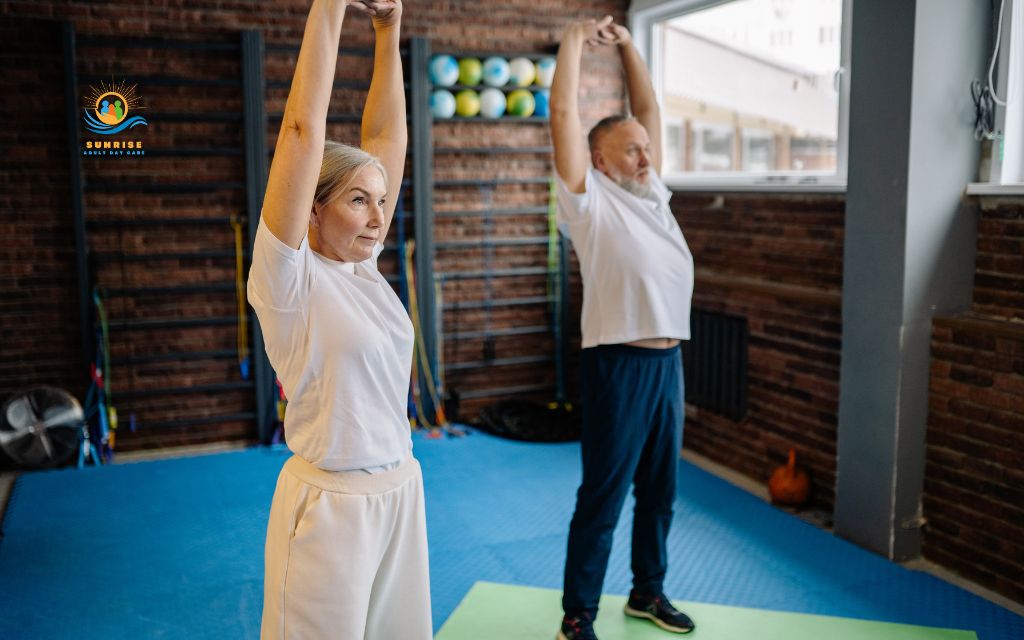
These exercises are specifically selected to eliminate jumping, minimize joint strain, and accommodate varying fitness levels. They form the foundation of any effective low-impact HIIT workout for seniors.
Marching in place
A foundational movement that improves circulation, coordination, and lower-body strength. Lift alternating knees to a comfortable height while swinging the arms gently. Can be performed seated or standing.
Sit-to-stand
One of the most functional HIIT exercises for seniors available. Rising from a chair and sitting back down in a controlled manner strengthens the legs, glutes, and core — all movements directly tied to daily independence. Armrests may be used for support when needed.
Step touch side-to-side
Step one foot out to the side, then bring the other foot to meet it — alternating left and right in a rhythmic motion. This movement improves lateral balance and hip mobility without any impact on the joints.
Seated punches
Performed from a sturdy chair, this upper-body movement targets the shoulders, arms, and core while elevating heart rate, making it an excellent HIIT exercise for older adults who have limited lower-body mobility or balance concerns.
Heel raises
Standing near a counter or wall for support, rise up slowly onto the balls of both feet, hold briefly, then lower back down with control. This exercise strengthens the calves and improves ankle stability – key elements of fall prevention.
Fast-paced walking
Among the safest HIIT exercises for older adults, brisk walking intervals require no equipment and can be performed indoors or outdoors. Simply alternate between a brisker walking pace and a comfortable, relaxed stroll. Ideal for walking corridors, courtyards, or sidewalks near adult day programs.

3 levels of HIIT for seniors
Accessibility is the cornerstone of a safe and sustainable HIIT seniors program. Offering 3 distinct workout levels ensures that every participant can engage safely and at their own pace.
Level 1: Seated HIIT
Best for: Seniors with limited mobility, balance concerns, or those returning from rehabilitation.
All exercises in Level 1 are performed from a sturdy, stable chair. This format allows seniors to receive meaningful cardiovascular and strength benefits with minimal fall risk.
Sample seated HIIT exercises:
- Seated marches (alternating knee lifts while seated)
- Seated arm punches (forward or alternating)
- Seated leg extensions
For activity coordinators in adult day programs, seated HIIT circles where participants face one another in a group circle work especially well. This format encourages social connection alongside physical activity.
Level 2: Standing low-impact HIIT
Best for: Beginners, those with mild joint discomfort, or adults ready to transition from seated to standing exercise.
Exercises are performed while standing, with a chair back or wall available for support as needed.
Sample standing low-impact exercises:
- Step touches side-to-side
- Sit-to-stand repetitions from a chair
- Light walking intervals around a room or hallway
Level 2 bridges the gap between chair-based activity and more active formats, making it the ideal entry point for most older adults beginning high-intensity interval training for seniors for the first time.
See more: aerobic exercise for seniors
Level 3: Walking interval HIIT
Best for: More active seniors who are mobile and have been cleared for moderate cardiovascular exercise.
Walking intervals are among the most well-supported forms of HIIT training for seniors in the research literature. They require no special equipment, carry very low injury risk, and can easily be done in pairs or small groups.
Sample walking interval format:
- 1 minute brisk walk
- 1 minute relaxed, comfortable pace
- Repeat for 10 – 15 minutes total
This format is ideal for outdoor walks during adult day program schedules and pairs with social conversation, encouraging consistency and emotional well-being alongside physical health.
How adult day programs can support HIIT safely
Structured adult day programs provide one of the most effective environments for implementing HIIT workouts for older adults.
Supervised exercise
Trained staff monitor participants throughout every session – watching for signs of overexertion, adjusting exercise intensity in real time, and ensuring that movements are performed with appropriate form and safety. This level of oversight is especially critical for seniors with chronic health conditions who are participating in HIIT seniors programs.
Group motivation
There is measurable power in exercising alongside others. Group formats naturally foster consistency – participants are more likely to show up, stay engaged, and push through a challenging moment when surrounded by peers. Social participation during exercise also contributes positively to emotional well-being and reduces feelings of isolation.
Structured schedules
Regular, predictable activity routines support older adults in building and maintaining long-term exercise habits. In adult day programs, HIIT sessions can be integrated into the weekly schedule with designated days and times, removing the guesswork and improving adherence over weeks and months.
Health monitoring
Staff in adult day health care settings can monitor vital signs before, during, and after exercise; identify early warning signs of overexertion; and coordinate with participants’ primary care providers when adjustments to the exercise plan are needed. This multi-layered approach transforms a general fitness format into a personalized, medically-informed experience tailored to each participant.
About Sunrise Adult Daycare
At Sunrise Adult Daycare, located at 2500 S. Sheridan Blvd, Denver, CO, our structured adult daytime program supports older adults in staying active, socially engaged, and well – all within a safe and caring environment. If you are seeking a supervised setting where a loved one can thrive, we invite you to reach out.
Call us at 303-226-6882 to learn more about our adult day program.
Conclusion
A HIIT workout for seniors does not have to mean intensity for intensity’s sake. When thoughtfully adapted, HIIT exercises for seniors can meaningfully improve cardiovascular health, muscle strength, balance, and overall quality of life.
Whether you start with seated marches in a chair or walking intervals around the block, the most important steps are to begin safely, progress gradually, and always have the medical conversation first.
With the right support in place, high-intensity interval training for seniors is not only possible, it can be one of the most rewarding and sustainable investments in long-term health and independence.
Frequently asked questions (FAQs)
Is HIIT safe for seniors?
Yes, when appropriately modified. Low-impact versions of HIIT for seniors replace jumping and high-impact movements with joint-friendly alternatives such as seated exercises, step touches, and walking intervals. Medical clearance and supervision are strongly recommended, particularly for older adults with existing health conditions.
How often should seniors do HIIT workouts?
Most fitness and health experts recommend 2 – 3 HIIT sessions per week for older adults, with rest days in between to allow for adequate recovery. This frequency is sufficient to support cardiovascular and strength benefits without overloading aging joints and muscles.
What is the best HIIT exercise for seniors?
Fast-paced walking intervals and sit-to-stand exercises are widely regarded as two of the safest and most effective options. Walking intervals carry low injury risk, require no equipment, and are easily scalable. Sit-to-stands build functional leg strength that directly supports daily independence.
Can beginners try HIIT workouts?
Absolutely. Starting with Level 1 seated HIIT or Level 2 standing low-impact exercises makes high-intensity workouts for seniors accessible even to complete beginners or those returning to exercise after a long break. Progress is always gradual, supervised, and paced to the individual.
Should seniors consult a doctor before HIIT?
Yes, this is especially important for seniors with heart disease, diabetes, high blood pressure, joint problems, or recent surgeries. A healthcare provider can assess readiness, recommend appropriate modifications, and establish clear stop criteria before exercise begins.