

It’s natural to feel uncertain about senior living. You may worry about losing your independence, leaving behind familiar surroundings, or feeling like you’re “giving up” something important. These feelings are valid, and you’re not alone in having them.
Many retirees and their families grapple with the same questions: What is senior living? Is it right for me? Will I still feel like myself?
Here’s what we want you to know: Senior living isn’t about what you’re leaving behind – it’s about what you’re gaining. It’s about choosing a lifestyle that offers security, connection, and support while you continue to live on your own terms.
In this guide, we’ll walk you through everything you need to know about senior living. We’ll explore how modern senior living communities empower you to live well, safely, and socially connected. Let’s explore it!
See more: What is a retirement community
What is senior living?
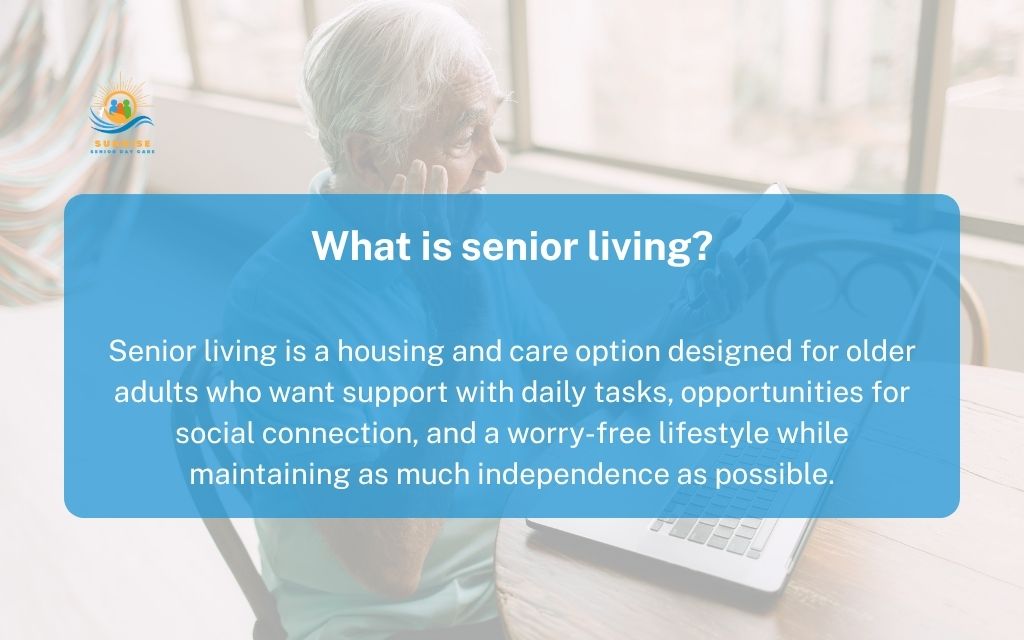
Senior living is a housing and care option designed for older adults who want support with daily tasks, opportunities for social connection, and a worry-free lifestyle while maintaining as much independence as possible.
What makes senior living different?
Senior living communities in Denver and beyond typically include:
- Private apartments or suites where you have your own space and belongings
- Shared amenities like dining rooms, fitness centers, libraries, and gardens
- Chef-prepared meals that accommodate dietary preferences and needs
- Housekeeping and maintenance services so you never have to worry about cleaning gutters or fixing appliances again
- Personalized care and support tailored to your specific needs
- Social activities and events that keep you engaged and connected
The key difference between senior living and other housing options is this: It’s designed specifically for your lifestyle stage. Whether you’re an active retiree looking for social opportunities or someone who needs help with daily activities, there’s a senior living option that fits your needs.
Benefits of senior living
Why do so many older adults and their families choose senior living? The benefits go far beyond simply having a place to live
Safety & peace of mind
One of the most significant advantages is knowing that help is always available. Senior living communities provide 24/7 staff presence, emergency response systems in every apartment, and environments designed to prevent falls and accidents.
You can go to bed each night knowing that if something happens, someone will be there within minutes. For family members, this peace of mind is invaluable.
Social connection
Loneliness is one of the most serious health risks. In a senior living community, you’re surrounded by neighbors who become friends.
Group dining experiences, planned events, hobby clubs, and conversations in common areas create natural opportunities for connection. You’ll find yourself looking forward to activities, making new friends, and feeling part of a vibrant community again.
Healthy living
Many communities offer fitness classes tailored to your abilities. You’ll have access to nutritious meals that support your health goals. Medication management support ensures you never miss a dose.
Many residents find that their overall health improves after moving to senior living because they’re eating better, staying more active, and engaging their minds regularly.

Maintenance-free lifestyle
Remember the last time you had to shovel snow, clean gutters, or fix a leaky faucet? In senior living, those worries disappear. Housekeeping, laundry services, maintenance, and yard work are all taken care of. This frees up your time and energy for the things you actually enjoy doing.
Personalized support
Perhaps most importantly, senior living provides assistance with daily activities – what professionals call Activities of Daily Living (ADLs) – in a way that promotes independence rather than taking it away.
Need help bathing or getting dressed? It’s available. Want to manage those tasks yourself? That’s respected too. The care is personalized to your needs and preferences, adjusting as those needs change over time.
Types of senior living options (and who they’re for)
Not all senior living is the same. Understanding the different types will help you determine what’s right for you or your loved one.
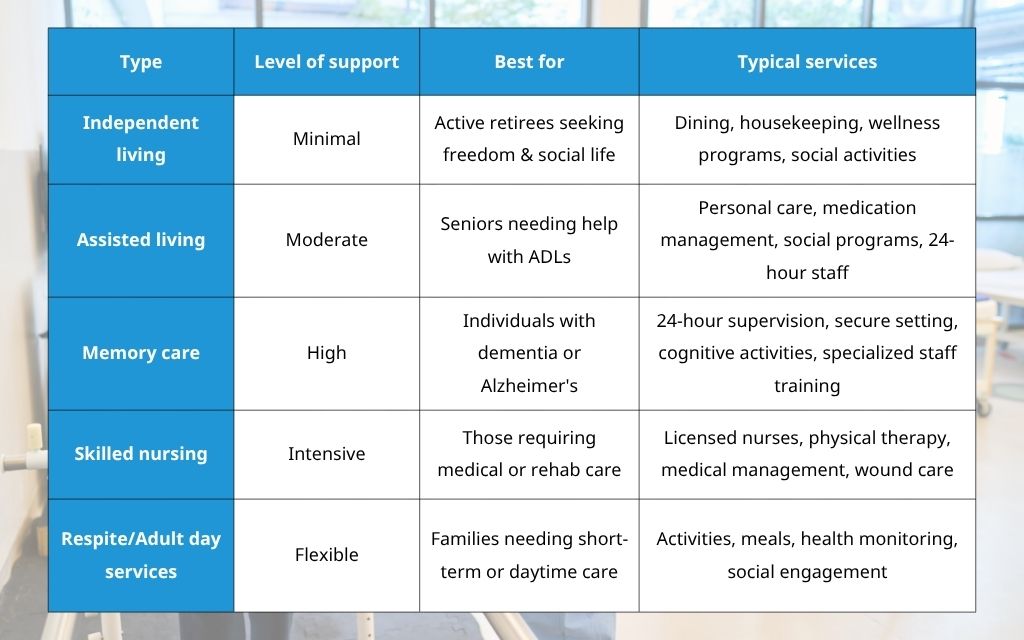
Here’s a comprehensive look at your options:
Independent living
Independent living is perfect if you’re still quite active and capable but want to simplify your life. You maintain your independence while enjoying the convenience of meals, housekeeping, and a built-in social community.
Assisted living
Assisted living provides the right balance for seniors who need some help with daily tasks like bathing, dressing, or medication management but don’t require medical care. You still have your own apartment and independence, but trained staff are available to assist when needed.
Memory care
Memory care offers a secure, specialized environment for those living with Alzheimer’s or other forms of dementia. These communities provide cognitive activities, trained staff who understand memory loss, and safety features that allow residents to move freely within a protected environment.
Skilled nursing
Skilled nursing is appropriate when you need ongoing medical care, rehabilitation after surgery, or management of complex health conditions. While this is the most clinical option, modern skilled nursing facilities focus on dignity and quality of life alongside medical care.
Respite and adult day services
Respite and adult day services provide flexible options for families who are caring for loved ones at home but need occasional support whether for a few hours during the day or a few weeks to take a vacation.
What’s included in senior living
When you’re evaluating senior living options, it’s helpful to know what you’re actually getting for your investment. Here’s what most senior living options typically include:
Accommodations
You’ll have a private apartment or suite furnished with your own belongings, decorated to your taste, and equipped with safety features like grab bars, emergency call systems, and non-slip flooring.
Housekeeping services keep your space clean and fresh without you lifting a finger. Many communities offer various floor plans, from cozy studios to spacious two-bedroom apartments.
Dining
Forget cooking for one or grocery shopping. Senior living communities provide chef-prepared, nutritious meals in restaurant-style dining rooms.
Meals are tailored to accommodate dietary restrictions, whether you’re managing diabetes, need low-sodium options, or have specific preferences. Many communities offer flexible dining times and even private dining rooms for when family visits.
Health & Wellness
Access to fitness classes designed for your ability level – from gentle stretching to more vigorous activities – helps you stay active. Many communities offer therapy services, health monitoring, and wellness programs.
On-site nurses or healthcare coordinators can help manage appointments and medications, and some communities have partnerships with local healthcare providers for convenient access to medical care.

Activities & engagement
Daily schedules are filled with opportunities for engagement: art classes, book clubs, movie nights, musical performances, gardening, educational lectures, and social events. These aren’t mandatory – you participate as much or as little as you like. The goal is to keep your mind active, your body moving, and your social connections strong.
Transportation
Many senior living communities provide scheduled transportation to medical appointments, grocery stores, shopping centers, and local attractions. This service is especially valuable if you’ve stopped driving or simply prefer not to navigate traffic and parking.
The comprehensive nature of these services is what makes senior living such a valuable option. When you add up the cost of maintaining a home, hiring help, and managing all these services separately, senior living often provides better value while significantly improving quality of life.
Cost of senior living
How much does senior living cost? While we wish there was a simple answer, pricing depends on several factors including the level of care needed, apartment size, location within Denver, and specific amenities offered.
Average costs in Denver (2025)
Here’s what you can generally expect to pay in the Denver area:
- Independent Living: $2,800 – $4,000 per month
- Assisted Living: $4,500 – $6,000 per month
- Memory Care: $6,500 – $8,500 per month
These ranges reflect the current market in the Denver metro area, though specific communities may fall outside these parameters based on their location and offerings.
What’s included in monthly fees?
Your monthly fee typically covers:
- Rent and utilities
- Meals (usually three per day)
- Housekeeping and laundry services
- Maintenance and repairs
- Activities and social programming
- Basic cable and internet
- Transportation services
- Emergency response systems
- Staff support (level varies by care type)
Additional costs may include personal care services beyond the basic plan, special dietary accommodations, medication management, or specific therapies.
Financial planning options
Many families worry about affording senior living, but there are several ways to make it work:
- Long-term care insurance may cover assisted living or memory care costs – check your policy details
- Home equity from selling your current home can fund many years of senior living
- Veterans benefits through VA Aid and Attendance can provide additional financial assistance
- Medicaid may cover some costs in certain communities (availability varies)
- Monthly payment plans allow you to budget effectively
Senior living vs. other care options
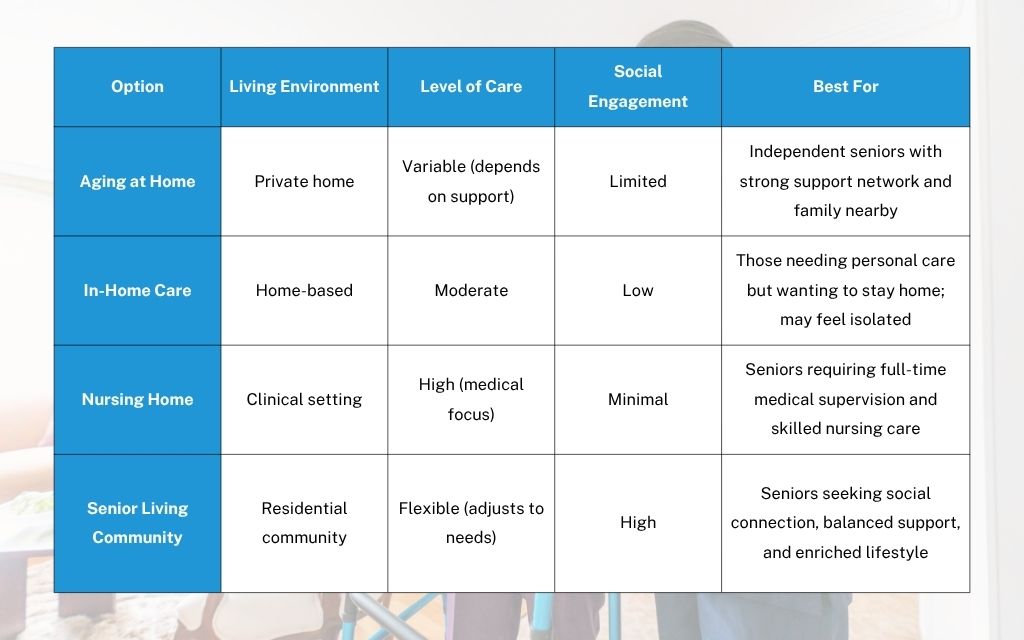
As you explore your options, it’s helpful to understand how senior living compares to other alternatives. Here’s an honest look at the pros and cons of each approach:
Aging at home
Aging at home appeals to many people – it’s familiar, comfortable, and allows you to maintain your routines. However, it often means increasing isolation, difficulty maintaining the property, safety concerns, and growing reliance on family members who have their own obligations. While it works well for some, others find that the challenges eventually outweigh the benefits.
In-home care
In-home care brings professional assistance to your home, which helps with practical needs like bathing, medication, and meal preparation. However, you’re still alone much of the time, and social engagement remains limited.
The cost of comprehensive in-home care can also exceed the cost of assisted living, especially if 24-hour care is needed.
Nursing homes
Nursing homes provide the highest level of medical care and are appropriate for those with serious health conditions requiring constant medical supervision.
However, they’re typically more clinical and institutional, with less emphasis on social activities and lifestyle compared to senior living communities.
Senior living communities
Senior living communities offer a middle path that many families find ideal. They provide flexible levels of care, strong social connections, engaging activities, and a residential (not clinical) environment.
You receive support when needed while maintaining independence and dignity. The community aspect makes a significant difference in daily happiness and wellbeing.
Is senior living right for you (or your loved one)?
This is perhaps the most personal question you’ll face, and there’s no one-size-fits-all answer. However, certain signs often indicate that it may be time to explore senior living options:
Signs it may be time to consider senior living:
- Difficulty with daily tasks: Cooking, cleaning, managing medications, or personal care have become challenging or overwhelming
- Increased isolation or loneliness: You’re spending most days alone, seeing fewer friends, and feeling disconnected from community
- Safety concerns: You’ve experienced falls, close calls, or increasing forgetfulness that creates risk
- Home maintenance burden: Your house feels like too much work, and upkeep is becoming stressful or neglected
- Health changes: Medical conditions are becoming harder to manage independently
- Desire for more companionship: You miss having people around and crave more social interaction and structured activities
- Family caregiver stress: Adult children are struggling to balance caregiving with their own families and careers
Here’s what we want you to understand: Choosing senior living isn’t about giving up independence – it’s about gaining support to live fully. It’s a proactive choice that allows you to maintain control over your life while receiving help with the things that have become difficult.

How to choose the right senior living community in Denver
Once you’ve decided that senior living might be right for you, the next step is finding the perfect community. Here’s a practical checklist to guide your search:
Visit communities in person
Nothing replaces an in-person visit. Tour multiple Denver communities, stay for lunch, attend an activity, and spend time in common areas observing the atmosphere. Does it feel warm and inviting? Are residents engaged and happy? Trust your gut feeling about the place.
Ask about staff
The staff makes all the difference. Inquire about:
- Staff-to-resident ratios (especially important in assisted living and memory care)
- Training and qualifications
- How long staff members typically stay (high turnover is a red flag)
- Background checks and hiring processes
- How they handle emergencies
Review activity calendars and menus
Look at actual activity calendars for the past few months. Are they diverse and engaging? Check several weeks of menus. Is the food appealing and nutritious? Ask residents what they think of the meals and activities.
Understand pricing and care levels
Get clear, written information about:
- Base monthly costs
- What services are included
- Additional fees for extra services
- How costs change as care needs increase
- Refund policies and contract terms
Talk to current residents and families
This is invaluable. Ask the community to introduce you to current residents and their family members. Ask honest questions: Are you happy here? How responsive is the staff? What would you change? Their answers will tell you more than any brochure.
Check licensing and inspections
Verify that the community is properly licensed and check for any violations or complaints. In Colorado, you can review inspection reports through the state health department.
Consider location
Think about proximity to family, friends, your doctors, and favorite places in Denver. Being close to loved ones makes visits easier and helps you maintain important connections.
Start exploring today
Begin your search now – even if you’re not ready to move immediately. This allows you to make a thoughtful, confident decision rather than a rushed one during a crisis. Many Denver communities have waiting lists for the most desirable apartments, so early exploration gives you more options.
Conclusion
Senior living is a choice about how you want to live this chapter of your life: with support, safety, and connection, rather than struggling alone with daily challenges.
We encourage you to start visiting communities and asking questions today, even if you’re not ready to move immediately. Early exploration allows you to make a confident, informed decision when the time is right. Many quality Denver communities have waiting lists, so planning ahead gives you better choices.
Ultimately, the decision is simple: Do you want to spend your energy managing a home and struggling with daily tasks, or do you want to focus on the things that bring you joy? Senior living exists to support your independence, not take it away.
Whatever you decide, we hope this guide has helped you understand your options. Because senior living isn’t about where you go – it’s about choosing to live well.
Sunrise Adult Daycare – Denver Adult Day Services
Sunrise Adult Daycare provides daytime care and activities for seniors in the Denver area. We offer a safe, engaging environment with social programs, meals, and health monitoring for older adults who need daytime support. While we specialize in adult day services, we understand families often have questions about senior living options. We’re happy to share general information and local resources to help you explore what’s available in Denver.
For adult day services or senior care questions: 📞 (303) 226-6882
Frequently asked questions (FAQs)
What exactly does “senior living” mean?
Senior living is housing designed for older adults, offering support with daily tasks, social opportunities, and maintenance-free living. It includes different care levels for those needing more help. All options focus on maintaining independence and providing necessary support.
How is senior living different from assisted living or nursing homes?
The main difference is the level of medical support versus lifestyle focus. “Senior living” is an umbrella term covering all types of senior housing. Independent living offers minimal care with lifestyle amenities. Assisted living provides help with daily activities like bathing and medication. Nursing homes offer intensive medical care.
What is the average cost of senior living in Denver?
Denver costs (2025) vary by care level: Independent Living $2,800 – $4,000/month, Assisted Living $4,500 – $6,000/month, and Memory Care $6,500 – $8,500/month. These include housing, meals, housekeeping, activities, and basic services. Costs vary by location, apartment size, and specific care needs.
What services are typically included?
Most communities include: private apartments, 3 daily meals, housekeeping and laundry, 24-hour staff, emergency response, social activities, fitness programs, transportation, and utilities. Assisted living and higher care levels also include personal care assistance and medication management.
How can I tell if it’s time to consider senior living?
Consider senior living if you’re experiencing: difficulty with daily tasks (cooking, cleaning, medications), increased isolation, safety concerns (falls, forgetfulness), overwhelming home maintenance, or desire for more social connection. The ideal time to explore is before a crisis occurs, while you can still actively enjoy community life.