You glance in the mirror one morning and pause. Your eyes look… different. Maybe they seem bigger than you remember. Or smaller. Perhaps they appear more prominent, even a bit “bulgy.” Or maybe your vision has changed, and you wonder if your eyes themselves are changing shape.
You’re not imagining things. Many older adults notice their eyes look different after 60, and it’s natural to wonder: Are my eyes still growing?
Here’s what people usually mean when they ask “can your eyes grow”:
- Are my eyeballs actually getting bigger in size?
- Or do they just look different because of aging?
- Why does my vision keep changing if my eyes aren’t growing?
This article will give you clear, simple answers. You’ll learn how eyes grow throughout life, what changes are normal after 60, and how to protect eyes in old age.
Whether you’re noticing these changes yourself or you’re a caregiver helping an older loved one, you’ll finish reading with a practical action plan for protecting vision, preventing falls, and staying independent.
Can your eyes grow after 60?
The short answer: No, your eyeballs do not keep growing in size after 60.
Here’s the truth:
- Eyeballs grow mostly during childhood and reach their adult size by your late teens or early twenties.
- After your early 20s, eyeball size stays stable for the rest of your life.
- What changes after 60 is usually appearance and internal eye health, not the actual length or size of the eyeball itself.
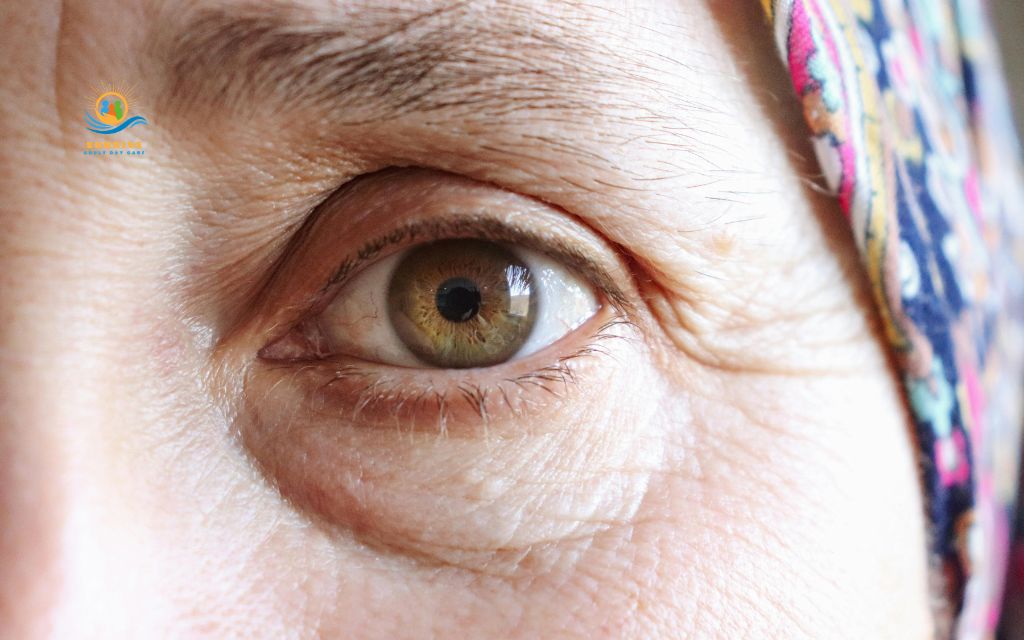
If your eyes look bigger, smaller, or more prominent now than they did in your younger years, it’s almost always due to changes in the skin, muscles, fat, and bones around your eyes – or changes inside the eye like cataracts or other age-related conditions. The eyeball itself isn’t growing.
How human eyes actually grow over a lifetime
Understanding when and how your eyes grow helps explain why they don’t keep growing after 60.
Eye growth in infancy and childhood
When you were born, your eyeballs were already working hard, but they were small:
- Newborn eyeballs measure approximately 16.5 millimeters from front to back (called “axial length”).
- Adult eyeballs measure approximately 24 millimeters, nearly 50% longer.
Most of this growth happens early and fast:
- Rapid growth in the first 2 years of life: Your eyes grew quickly as an infant to help you see the world clearly.
- Gradual growth through childhood: Between ages 2 and 12, eyes continued growing, but at a slower pace.
This early growth is critical for developing healthy vision. The eyeball needs to reach the right size for light to focus properly on the retina at the back of the eye.
Puberty and early adulthood
Your eyes aren’t done yet:
- Eyes have a second growth phase during puberty, usually in the early-to-mid teen years.
- By the late teens or early 20s, eyes reach their near-final adult size and stop growing.
One important note: During this teenage growth spurt, some people develop or worsen nearsightedness (myopia). This happens when the eyeball grows slightly longer than ideal, causing distant objects to look blurry. This elongation, called axial elongation, is far more common in children and young adults, not in people over 60.
Adulthood and older age
Once you reach your early twenties:
- Eyeball size is largely stable for life. There may be microscopic structural changes, but nothing you’d call “growth” in the way bones or muscles grow.
- After 60, the changes you notice involve aging of internal structures – the lens, retina, tear film, and blood vessels inside the eye.
- Changes also happen to the tissues surrounding your eyes: skin, eyelids, muscles, fat pads, and even the bones of your eye socket.
If you’re over 60 and worried your eyeballs are growing, you can relax. What you’re experiencing is the natural aging process affecting the appearance and function of your eyes, not actual eyeball growth.
What really changes after 60
So if your eyeballs aren’t growing, why do your eyes look or feel different? Let’s break it down into what happens outside and inside the eye.
Skin, fat, and bone around the eye
The tissues surrounding your eyes age just like the rest of your body:
Thinning skin and drooping eyelids:
- Skin loses elasticity and collagen, causing eyelids to sag or droop (a condition called ptosis).
- Drooping upper lids can make eyes look smaller or hooded.
- Loose lower lids can make eyes appear more prominent or “bulgy.”
Loss or shifting of fat pads:
- The cushions of fat around your eyes can shrink or move downward with age.
- Less fat can make eyes look sunken or hollow.
- Fat shifting forward can make eyes look more prominent or puffy.
Facial bone remodeling:
- The bones of your eye socket (orbit) slowly change shape over decades.
- This gradual remodeling can affect how big or small your eyes appear in your face, even though the eyeball itself hasn’t changed size.
These changes are cosmetic in nature, but they can affect how you see yourself and how others see you. More importantly, drooping eyelids can sometimes block your vision or make it harder to see obstacles, increasing fall risk.
Inside the eye: Lens, vitreous, and retina
While the eyeball isn’t growing, the structures inside are definitely aging:
The lens thickens and stiffens:
- Your lens sits behind the pupil and helps you focus on near objects.
- After 40, the lens becomes less flexible, making it harder to read up close. This is called presbyopia – the reason most people need reading glasses after 40.
- After 60, the lens can develop cataracts: cloudy areas that cause blurry vision, glare, and faded colors.
The vitreous gel shrinks and liquefies:
- Your eye is filled with a clear gel called vitreous.
- With age, this gel shrinks and becomes more liquid, which can cause floaters – those little specks or cobwebs you see drifting across your vision.
- Rarely, shrinking vitreous can pull on the retina and cause a tear, which is a medical emergency.
The retina and macula age:
- The retina is the light-sensitive tissue at the back of your eye. The macula is the center part responsible for sharp, detailed vision.
- After 60, the risk of age-related macular degeneration (AMD) increases, affecting your central vision (what you see straight ahead).
- The blood vessels in the retina can also weaken or leak, especially in people with diabetes or high blood pressure.
Vision changes you may notice
Even with no eyeball growth, you might experience:
- Needing brighter light to read or do close work
- Difficulty reading fine print, even with your usual glasses
- More glare from headlights or sunlight
- Slower refocusing when you shift your gaze from near to far (or vice versa)
- Faded or less vibrant colors
- Occasional blurry spots or floaters
Normal eye & vision changes after 60 – What to expect
Let’s review the most common age-related eye conditions you might face after 60. Understanding these helps you know what’s normal and what requires urgent care.
Presbyopia:
- Nearly everyone develops this by their mid-40s.
- You’ll need reading glasses, bifocals, or progressive lenses to see up close.
- Not dangerous, but ignoring it can lead to headaches and eyestrain.
Cataracts:
- Very common after 60; by age 80, more than half of Americans have cataracts.
- Symptoms: blurry vision, glare around lights, faded colors, trouble seeing at night.
- Treatable with outpatient surgery when they interfere with daily life.
Dry eye:
- Tears don’t provide enough moisture, or they evaporate too quickly.
- Symptoms: stinging, redness, feeling like something’s in your eye, watery eyes (sounds backward, but it’s a reflex).
- Manageable with artificial tears, prescription drops, or humidifiers.
Age-Related Macular Degeneration (AMD):
- Affects central vision – the sharp, detailed sight you need for reading, driving, and recognizing faces.
- “Dry” AMD is more common and progresses slowly; “wet” AMD is less common but can cause rapid vision loss.
- Early detection is key; treatments can slow progression.
Glaucoma:
- Often called the “silent thief of sight” because it usually has no early symptoms.
- Affects peripheral (side) vision first; you may not notice until significant damage occurs.
- Caught early through regular eye exams, it’s treatable with eye drops, laser, or surgery.
Diabetic Retinopathy:
- High blood sugar damages blood vessels in the retina.
- Can lead to bleeding, swelling, and vision loss if not managed.
- Controlling blood sugar, blood pressure, and cholesterol helps prevent it.
How these changes affect daily life
Vision problems don’t just affect what you see – they affect how you live:
| Reading and hobbies | It is harder to enjoy books, puzzles, crafts, or screen time without the right glasses or lighting. |
| Driving safety | Glare, slow refocusing, and reduced side vision make nighttime driving especially challenging. |
| Confidence walking and fall prevention | Poor depth perception and reduced contrast sensitivity make it harder to see steps, curbs, and trip hazards.Falls are a leading cause of injury in older adults; vision problems increase that risk. |
| Sự tham gia xã hội | Difficulty recognizing faces or reading facial expressions can make social gatherings uncomfortable or isolating. |
For older adults in adult day programs or senior care settings, regular vision screenings and transportation to eye appointments are essential for maintaining independence, safety, and quality of life.
Protecting your eyes after 60: Practical daily habits
Your eyes may not be growing anymore, but they still need excellent care. Here’s how to protect your vision and eye health every day.
Schedule regular eye exams
After 60, see an eye doctor at least once a year, or more often if you have diabetes, glaucoma, or other eye conditions. Comprehensive eye exams check not just your prescription, but also eye pressure, retina health, and signs of disease. Early detection of conditions like glaucoma or AMD can save your sight.
Manage chronic health conditions
- Bệnh tiểu đường: Keep blood sugar levels in your target range to prevent diabetic retinopathy.
- Huyết áp cao: Uncontrolled hypertension damages the tiny blood vessels in your eyes.
- High cholesterol: Can increase risk of blockages in retinal blood vessels.
- Work with your doctor to keep these conditions under control.
Wear UV-blocking sunglasses outdoors
- Ultraviolet (UV) light from the sun increases your risk of cataracts and macular degeneration.
- Choose sunglasses labeled “100% UV protection” or “UV400.”
- Wear them year-round, not just in summer – snow and water reflect UV rays, too.
- A wide-brimmed hat adds extra protection.
Use good lighting at home
- Brighten reading areas, kitchens, bathrooms, and stairways.
- Use task lighting (like a reading lamp) for close work.
- Install nightlights in hallways and bathrooms to prevent falls in the dark.
- Reduce glare by using lampshades and avoiding bare bulbs.
Follow the 20-20-20 rule for screen time
- If you use a computer, tablet, or phone, take regular breaks.
- Every 20 minutes, look at something 20 feet away for at least 20 seconds.
- This reduces digital eye strain and gives your focusing muscles a rest.
Use artificial tears or humidifiers for dry eye
- If your doctor recommends it, use preservative-free artificial tears to keep eyes moist.
- Run a humidifier in your bedroom, especially in winter when indoor air is dry.
- Avoid sitting directly in front of fans or air vents, which can dry your eyes.
Eat a vision-friendly diet
- Leafy greens (spinach, kale), colorful vegetables, and fish rich in omega-3s support retina health.
- Ask your doctor if a daily multivitamin or eye supplement is right for you.
Kết luận
If you’ve been wondering, “Can your eyes grow after 60?”, now you know the answer: No, your eyeballs stopped growing decades ago.
What is happening after 60 is normal aging. The skin around your eyes thins and sags. The lens inside your eye stiffens and may cloud over. Your retina becomes more vulnerable to disease. These changes can make your eyes look different and affect how well you see but they don’t mean your eyeballs are getting bigger.
Here are your key takeaways:
- Most eyeball growth happens in childhood and is complete by early adulthood, usually by your late teens or early twenties.
- Changes you notice after 60 are due to aging tissues and eye conditions.
- Regular eye exams are essential. Yearly checkups catch problems early, when they’re most treatable.
- A safe, well-lit home environment reduces fall risk and supports mobility for older adults with vision changes.
- Caregiver support and supervised care settings (like adult day programs) help ensure older adults get to eye appointments, wear the right glasses, and stay safe and socially engaged.
For caregivers and families: If your loved one is noticing changes in their vision or the appearance of their eyes, don’t wait. Schedule an eye exam and ask how programs like adult day care can support their daily routines with medical supervision, safe transportation to appointments, and structured activities that keep them engaged and confident.
________________
Looking for compassionate, structured support for an older adult in the Denver area?
Trung tâm Chăm sóc Người lớn Sunrise offers a safe, engaging environment with medical supervision, social activities, and transportation assistance, including help getting to important eye appointments.
Hãy gọi cho chúng tôi tại (303) 226-6882 to learn how we can support your loved one’s health, independence, and quality of life.
Câu hỏi thường gặp (FAQ)
Can your eyes grow after 60, or do human eyes stay the same size?
No, human eyes do not grow after 60. Eyeballs reach their adult size by the late teens or early twenties and remain stable in size for the rest of your life. Changes you notice after 60 are due to aging of the surrounding skin, muscles, fat, and bones, or changes inside the eye (like cataracts), not actual eyeball growth.
Why do my eyes look bigger (or more bulging) now than when I was younger?
Eyes can appear more prominent or “bulging” due to several age-related changes: drooping or loose lower eyelids, forward-shifting fat pads, or thinning skin that makes the eyeball more visible. In rare cases, bulging eyes can signal a medical condition like thyroid eye disease (Graves’ disease) or a tumor. If you notice sudden or significant bulging, see your doctor promptly.
Why do my eyes look smaller or sunken in photos as I get older?
Eyes may look smaller or sunken due to loss of fat around the eye socket, drooping upper eyelids (ptosis), or bone changes in the face. These are normal aging changes. Dehydration, weight loss, or certain medications can also make eyes appear more hollow. If the change is sudden or accompanied by vision problems, consult your eye doctor.
Do eyeballs grow in kids and teens, and when do they stop?
Yes, eyeballs grow significantly in kids and teens. A newborn’s eyeball is about 16.5 millimeters long; it grows rapidly in the first two years, then more gradually through childhood. There’s a second growth spurt during puberty. By the late teens or early twenties, eyeballs reach their adult size of approximately 24 millimeters and stop growing. This is why children and teenagers are more likely to develop or worsen nearsightedness (myopia) than adults.
How often should older adults get their eyes checked to stay safe and independent?
Older adults should have a comprehensive eye exam at least once a year after age 60. If you have diabetes, glaucoma, macular degeneration, or a family history of eye disease, your doctor may recommend exams every 6 months. Regular exams detect problems early and help update your prescription so you can see clearly, move safely, and stay independent. Don’t skip appointments, even if your vision seems fine; many eye diseases have no early symptoms.