
Một buổi sáng, bạn thức dậy với cổ họng đau rát, sốt nhẹ và vài nốt phồng rộp nhỏ trên tay – những thứ không có ở đó vào tối hôm trước. Bạn tìm kiếm trên mạng và những kết quả đầu tiên hiện ra đề cập đến một căn bệnh gọi là “bệnh lở mồm long móng ở người lớn”. Bạn cảm thấy hơi lo lắng. Nghe có vẻ nghiêm trọng.
Đây là một thông tin trấn an quan trọng ngay từ đầu: bệnh mà phần lớn người lớn đang mắc phải thực chất là bệnh tay chân miệng (HFMD) – một bệnh do virus phổ biến gây ra bởi virus Coxsackie.
Đây không phải là căn bệnh ở gia súc mà bạn có thể đã nghe nói trên tin tức. Bệnh tay chân miệng là bệnh có thể kiểm soát được, chỉ mang tính tạm thời và thường tự khỏi trong vòng một tuần đến mười ngày.
Tuy nhiên, khi phải đối mặt với những triệu chứng khó chịu, bạn xứng đáng nhận được những câu trả lời rõ ràng và trung thực cho những thắc mắc thực tế:
- Tôi có lây bệnh không?
- Tôi có nên ở nhà thay vì tham gia chương trình chăm sóc ban ngày dành cho người lớn hoặc các hoạt động nhóm không?
- Khi nào tôi nên gọi bác sĩ?
Bài viết này sẽ giúp bạn hiểu rõ bệnh tay chân miệng ở người lớn là gì, cách nhận biết các triệu chứng của bệnh này, những việc bạn có thể làm tại nhà để cảm thấy dễ chịu hơn, và khi nào cần đi khám bác sĩ.
Bệnh lở mồm long móng so với bệnh tay-chân-miệng
Một trong những nguyên nhân thường gây nhầm lẫn nhất trên mạng là sự trùng lặp giữa hai căn bệnh hoàn toàn khác nhau, nhưng lại có tên gọi rất giống nhau. Hiểu rõ sự khác biệt này là bước đầu tiên để bạn bớt lo lắng.
Bệnh lở mồm long móng ở động vật
Bệnh lở mồm long móng (FMD) theo nghĩa truyền thống là một bệnh truyền nhiễm rất dễ lây lan ở gia súc. Bệnh chủ yếu ảnh hưởng đến các loài động vật móng chẻ như bò, lợn, cừu và dê. Bệnh do vi-rút bệnh lở mồm long móng (FMDV) gây ra, thuộc một họ vi-rút hoàn toàn khác so với các vi-rút gây bệnh cho người.
Điểm mấu chốt ở đây là: con người hầu như không bao giờ mắc bệnh lở mồm long móng ở động vật.
Các trường hợp lây nhiễm sang người được ghi nhận là cực kỳ hiếm, và khi có xảy ra, các triệu chứng thường nhẹ và tự khỏi. Tại Hoa Kỳ, dịch lở mồm long móng đã không xuất hiện trên gia súc kể từ năm 1929, và các cơ quan y tế công cộng không coi đây là một mối lo ngại đáng kể đối với sức khỏe con người.

Bệnh tay chân miệng (HFMD)
Khi hầu hết người lớn tìm kiếm cụm từ ‘bệnh lở mồm long móng ở người lớn’, thực ra họ đang đề cập đến bệnh tay chân miệng (HFMD) – một bệnh do virus gây ra và chỉ ảnh hưởng đến con người.
Bệnh tay chân miệng do vi-rút Coxsackie (thường gặp nhất là vi-rút Coxsackie A16) hoặc các loại vi-rút đường ruột khác gây ra, bao gồm vi-rút đường ruột 71 (EV-A71).
Mặc dù tên gọi có sự tương đồng, bệnh tay chân miệng (HFMD) hoàn toàn không liên quan đến bệnh lở mồm long móng ở động vật. Hai bệnh này do các loại vi-rút hoàn toàn khác nhau gây ra, ảnh hưởng đến các loài khác nhau theo những cách khác nhau và đòi hỏi các biện pháp ứng phó hoàn toàn khác nhau.
Trong phần còn lại của bài viết này, khi chúng tôi đề cập đến ‘bệnh tay chân miệng ở người lớn’, chúng tôi muốn nói đến bệnh tay chân miệng (HFMD) – một bệnh do virus gây ra ở người mà nhiều người cao tuổi và người chăm sóc đang phải đối mặt và tìm kiếm lời khuyên.
Người lớn có thể mắc bệnh tay chân miệng không?
Câu trả lời ngắn gọn là có, người lớn hoàn toàn có thể mắc bệnh tay chân miệng.
Mặc dù bệnh tay chân miệng thường gặp nhất ở trẻ em dưới 5 tuổi, nhưng bệnh này không chỉ giới hạn ở nhóm tuổi này. Trẻ em lớn hơn, thanh thiếu niên và người trưởng thành ở mọi lứa tuổi đều có thể bị nhiễm bệnh.
Người lớn có nguy cơ mắc bệnh tay chân miệng cao hơn nếu họ:
- Thường xuyên chăm sóc hoặc tiếp xúc với các cháu bị nhiễm bệnh
- Tham gia các hoạt động nhóm như các chương trình chăm sóc ban ngày cho người lớn, trung tâm người cao tuổi hoặc các hoạt động cộng đồng
- Hệ miễn dịch bị suy yếu do những thay đổi về miễn dịch liên quan đến tuổi tác, bệnh mãn tính hoặc các loại thuốc ức chế chức năng miễn dịch
- Trước đây chưa từng tiếp xúc với chủng vi-rút Coxsackie cụ thể đang lưu hành hiện nay
Khi chúng ta già đi, hệ miễn dịch của chúng ta tự nhiên trở nên yếu đi – một quá trình được gọi là sự lão hóa miễn dịch. Điều này có thể khiến cơ thể khó khăn hơn trong việc chống lại virus một cách nhanh chóng và hiệu quả.
Một số người lớn mắc bệnh tay chân miệng có các triệu chứng nhẹ hơn so với trẻ em; một số khác có thể cảm thấy rất mệt mỏi, đặc biệt là nếu họ mắc các bệnh nền như tiểu đường, bệnh tim hoặc các bệnh phổi mãn tính.
Tìm hiểu thêm: bệnh thường gặp ở người cao tuổi
Các triệu chứng thường gặp của bệnh lở mồm long móng ở người lớn
Nhận biết sớm các triệu chứng của bệnh tay chân miệng ở người lớn có thể giúp bạn nhanh chóng thực hiện các biện pháp phù hợp – vừa để phục hồi sức khỏe cho bản thân, vừa để ngăn ngừa lây lan bệnh cho người khác.
Các triệu chứng thường xuất hiện từ ba đến sáu ngày sau khi tiếp xúc với virus. Khoảng thời gian trước khi các triệu chứng xuất hiện được gọi là thời gian ủ bệnh.
Các triệu chứng ban đầu (Ngày 1 – 2)
Các triệu chứng ban đầu của bệnh tay chân miệng ở người lớn thường mang tính chất chung chung và giống như cảm cúm. Nhiều người ban đầu cho rằng mình chỉ bị cảm lạnh thông thường hoặc sốt nhẹ:
- Sốt nhẹ đến vừa (thường từ 100°F đến 103°F / 37,8°C–39,4°C)
- Đau họng, đôi khi kèm theo cảm giác đau khi nuốt
- Mệt mỏi bất thường hoặc cảm giác không khỏe chung
- Chán ăn hoặc mất hứng thú với thức ăn
Phát ban và vết loét (Ngày 2 – 5)
Trong vòng một đến hai ngày sau khi xuất hiện các triệu chứng ban đầu, các dấu hiệu dễ nhận biết hơn của bệnh tay chân miệng thường bắt đầu xuất hiện. Đây là những đặc điểm mà hầu hết mọi người thường liên tưởng đến căn bệnh này:
- Loét miệng gây đau (còn gọi là herpangina hoặc tổn thương niêm mạc miệng): Đây là những vết loét nhỏ, nông xuất hiện trên lưỡi, nướu, mặt trong má và vòm miệng. Chúng có thể gây khó chịu khi ăn, uống và nói chuyện.
- Các mụn nước nhỏ hoặc phát ban đỏ ở lòng bàn tay và lòng bàn chân: Những mụn nước này thường có kích thước nhỏ (1–5 mm), có thể hơi nhô lên và gây ra cảm giác nhạy cảm hoặc đau nhẹ.
- Phát ban cũng có thể xuất hiện ở chân, mông hoặc vùng sinh dục, mặc dù triệu chứng này ít gặp hơn ở người lớn.
Một lưu ý quan trọng về các triệu chứng ở người cao tuổi
Ở người lớn, phát ban liên quan đến bệnh tay chân miệng có thể xuất hiện nhẹ hơn, ít lan rộng hơn hoặc thậm chí không xuất hiện so với các biểu hiện rõ rệt thường thấy ở trẻ em.
Một số người cao tuổi chủ yếu gặp các vết loét trong miệng và các triệu chứng toàn thân (sốt, mệt mỏi) mà không có phát ban da rõ rệt. Điều này đôi khi khiến việc chẩn đoán bệnh tay chân miệng trở nên khó khăn hơn ở nhóm tuổi này.
Nếu bạn không chắc chắn liệu những triệu chứng mình đang gặp phải có phải là bệnh tay chân miệng hay không, hãy liên hệ với bác sĩ gia đình hoặc nhà cung cấp dịch vụ y tế từ xa để được tư vấn. Đừng tự chẩn đoán chỉ dựa trên các triệu chứng bề ngoài.
Bệnh lở mồm long móng có lây sang người lớn không?
Một trong những câu hỏi quan trọng nhất mà người lớn thường đặt ra khi nhận thấy các triệu chứng của bệnh tay chân miệng là liệu bệnh có lây không, đặc biệt là nếu họ đang sống trong môi trường chăm sóc tập thể, sống chung với các thành viên trong gia đình hoặc thường xuyên tham gia các hoạt động xã hội.
Câu trả lời thẳng thắn là: đúng vậy, bệnh tay chân miệng là bệnh lây nhiễm, và người lớn nhiễm virus này có thể và thực sự lây truyền bệnh cho người khác.
Bệnh tay chân miệng lây lan như thế nào
Các loại vi-rút gây bệnh tay-chân-miệng ở người lớn lây lan qua nhiều con đường:
- Giọt bắn từ đường hô hấp: Khi một người bị nhiễm bệnh ho, hắt hơi hoặc nói chuyện, những giọt bắn nhỏ chứa virus sẽ bay ra trong không khí. Người ở gần có thể hít phải những giọt bắn này và bị lây nhiễm.
- Tiếp xúc trực tiếp với dịch trong mụn nước: Chất lỏng bên trong các mụn nước xuất hiện trên tay và chân chứa virus còn sống. Việc chạm vào các mụn nước này rồi sau đó chạm vào mắt, mũi hoặc miệng của chính mình có thể lây truyền bệnh.
- Tiếp xúc với các bề mặt bị ô nhiễm: Virus có thể tồn tại trên các bề mặt cứng (bàn bếp, tay nắm cửa, dụng cụ dùng chung) trong vài giờ. Việc chạm vào những bề mặt này rồi sau đó chạm vào mặt có thể dẫn đến lây nhiễm.
- Lây truyền qua đường phân-miệng: Trong các cơ sở chăm sóc có cung cấp dịch vụ hỗ trợ vệ sinh cá nhân, virus có thể lây lan qua tiếp xúc với phân. Điều này đặc biệt đúng đối với các chương trình chăm sóc ban ngày dành cho người lớn, nơi nhân viên hỗ trợ người tham gia trong các nhu cầu chăm sóc cá nhân.
Khi nào bệnh tay chân miệng lây lan mạnh nhất?
Bệnh tay chân miệng lây lan mạnh nhất trong tuần đầu tiên của bệnh, khi lượng virus trong cơ thể ở mức cao nhất. Tuy nhiên, virus vẫn có thể tồn tại trong phân trong vài tuần sau khi các triệu chứng đã thuyên giảm.
Điều này có nghĩa là ngay cả khi một người dường như đã hồi phục hoàn toàn, vẫn có một khoảng thời gian mà việc tuân thủ các biện pháp vệ sinh cẩn thận vẫn rất quan trọng, đặc biệt là việc rửa tay sau khi đi vệ sinh.
Virus cũng có thể lây lan từ những người đã nhiễm bệnh nhưng không có triệu chứng (người mang mầm bệnh không có triệu chứng), và đây là một trong những lý do tại sao việc tuân thủ các biện pháp vệ sinh một cách nhất quán trong các môi trường tập thể lại rất quan trọng, bất kể có ai có biểu hiện bệnh rõ ràng hay không.
Phải làm gì nếu bạn nghi ngờ mình bị bệnh tay chân miệng
Hiện không có loại thuốc kháng vi-rút cụ thể nào được sử dụng để điều trị bệnh tay chân miệng ở người lớn. Việc điều trị tập trung vào kiểm soát các triệu chứng, duy trì lượng nước trong cơ thể và hỗ trợ cơ thể trong quá trình hệ miễn dịch loại bỏ vi-rút. Hầu hết mọi người đều hồi phục hoàn toàn trong vòng 7–10 ngày mà không cần bất kỳ can thiệp y tế nào ngoài việc tự chăm sóc cơ bản.
Dưới đây là một phương pháp thực tế từng bước:
Nếu bạn nhận thấy các triệu chứng
Ngay khi nhận thấy các triệu chứng ban đầu của bệnh tay chân miệng, hãy thực hiện các bước sau:
- Hãy nghỉ ngơi càng nhiều càng tốt. Cơ thể bạn cần năng lượng để chống lại nhiễm trùng, và việc nghỉ ngơi đầy đủ sẽ giúp quá trình hồi phục diễn ra nhanh hơn.
- Hãy uống nhiều nước. Việc duy trì đủ nước cho cơ thể là vô cùng quan trọng, đặc biệt là khi các vết loét trong miệng khiến việc nuốt trở nên đau đớn. Nước lọc, nước ép pha loãng, trà thảo mộc lạnh hoặc nước điện giải đều là những lựa chọn tốt.
- Nếu cần, hãy dùng các loại thuốc giảm đau không cần kê đơn (OTC). Acetaminophen (Tylenol) hoặc ibuprofen (Advil, Motrin) có thể giúp hạ sốt và làm dịu cảm giác khó chịu do đau họng và loét miệng. Luôn tuân thủ hướng dẫn liều lượng trên nhãn thuốc và tham khảo ý kiến bác sĩ nếu bạn đang dùng các loại thuốc khác hoặc có vấn đề về thận hoặc gan.
- Hãy tránh tiếp xúc gần gũi với người khác. Nếu bạn sống chung với các thành viên trong gia đình hoặc cháu chắt, hãy cố gắng hạn chế tiếp xúc thân thể gần gũi, dùng chung bát đĩa khi ăn uống, cũng như dùng chung khăn tắm hoặc đồ dùng cá nhân.
Chăm sóc vết loét trong miệng
Loét miệng thường là triệu chứng gây khó chịu nhất của bệnh tay chân miệng đối với người lớn. Những bước sau đây có thể giúp việc ăn uống trở nên dễ dàng hơn:
- Hãy chọn những món ăn mềm, dễ nuốt như sữa chua, khoai tây nghiền, trứng chiên, cháo yến mạch, nước táo xay nhuyễn hoặc sinh tố.
- Hãy uống các loại đồ uống mát hoặc lạnh. Chất lỏng lạnh có thể tạo ra cảm giác tê nhẹ, giúp giảm đau tạm thời ở miệng.
- Hãy tránh các loại thực phẩm và đồ uống có tính axit hoặc cay (nước ép trái cây họ cam quýt, nước sốt làm từ cà chua, thực phẩm có giấm, ớt cay) vì những thứ này có thể gây kích ứng và làm tình trạng loét nặng thêm đáng kể.
- Tránh uống các loại đồ uống và ăn các món ăn quá nóng.
- Các loại nước súc miệng hoặc gel bôi ngoài da bán tự do dành cho vết loét miệng (chẳng hạn như những sản phẩm có chứa benzocaine) có thể giúp giảm đau tạm thời – hãy hỏi dược sĩ để được tư vấn sản phẩm phù hợp với tình trạng sức khỏe của bạn.
Chăm sóc vết phồng rộp trên da
Các vết phồng rộp xuất hiện trên tay, chân và đôi khi cả chân cần được chăm sóc đơn giản:
- Giữ cho vùng da bị ảnh hưởng luôn sạch sẽ bằng cách rửa nhẹ nhàng với xà phòng dịu nhẹ và nước.
- Tránh gãi hoặc cạy các vết phồng rộp. Việc làm vỡ các vết phồng rộp có thể khiến vi khuẩn xâm nhập, làm tăng nguy cơ nhiễm trùng da thứ phát và làm chậm quá trình lành vết thương.
- Nếu vết phồng rộp tự vỡ, hãy giữ vùng da đó sạch sẽ và dùng băng gạc băng lại một cách lỏng lẻo nếu cần.
- Hầu hết các vết phồng rộp sẽ tự khỏi trong vòng một tuần mà không để lại sẹo.
Hầu hết người lớn mắc bệnh tay chân miệng đều có thể tự chăm sóc tại nhà bằng cách nghỉ ngơi, uống đủ nước và áp dụng các biện pháp chăm sóc hỗ trợ. Các trường hợp bệnh thường khỏi trong vòng bảy đến mười ngày.
Khi nào cần đi khám
Mặc dù hầu hết các trường hợp bệnh tay chân miệng ở người lớn đều tự khỏi, nhưng vẫn có những tình huống cụ thể cần phải đi khám bác sĩ. Biết khi nào cần gọi bác sĩ là yếu tố quan trọng để điều trị bệnh này một cách an toàn, đặc biệt là đối với người cao tuổi có thể mắc các bệnh nền.
Hãy gọi cho bác sĩ hoặc đến cơ sở y tế nếu
- Sốt kéo dài hơn 3 ngày nếu không có dấu hiệu thuyên giảm, hoặc nhiệt độ cơ thể tăng lên trên 103°F (39,4°C).
- Bạn đang có các triệu chứng mất nước nghiêm trọng. Các triệu chứng này bao gồm: không thể nuốt chất lỏng do đau miệng, đi tiểu rất ít hoặc không đi tiểu được, cảm thấy chóng mặt hoặc choáng váng nghiêm trọng, miệng khô và không chảy nước mắt khi khóc, cũng như cảm thấy lú lẫn hoặc mất phương hướng bất thường.
- Bạn bị đau đầu dữ dội hoặc cổ cứng. Những triệu chứng này, đặc biệt khi đi kèm với sốt và phát ban, có thể là dấu hiệu của một biến chứng hiếm gặp nhưng nghiêm trọng ảnh hưởng đến hệ thần kinh (chẳng hạn như viêm màng não do virus) và cần được khám ngay lập tức.
- Các triệu chứng của bạn đang trở nên nghiêm trọng hơn thay vì thuyên giảm sau bốn đến năm ngày. Bệnh tay chân miệng thường sẽ bắt đầu có dấu hiệu thuyên giảm sau vài ngày đầu tiên. Nếu tình trạng của bạn ngày càng xấu đi, bạn cần đi khám bác sĩ.
- Các vết phồng rộp trên da của bạn các dấu hiệu của nhiễm trùng thứ phát do vi khuẩn: tình trạng đỏ, nóng, sưng, chảy mủ hoặc đau ngày càng nặng hơn xung quanh vùng có mụn nước.
Những người có nguy cơ cao
Một số người trưởng thành có nguy cơ cao hơn bị biến chứng do bệnh tay chân miệng và nên liên hệ với bác sĩ ngay từ giai đoạn đầu của bệnh, ngay cả khi các triệu chứng ban đầu có vẻ nhẹ:
- Người lớn mắc bệnh mãn tính chẳng hạn như bệnh tiểu đường, bệnh tim, bệnh thận mãn tính hoặc các bệnh phổi mãn tính. Những tình trạng này có thể trở nên trầm trọng hơn do áp lực thể chất từ nhiễm virus, và các biến chứng có thể phát triển nhanh hơn.
- Những người có hệ miễn dịch suy yếu, bao gồm cả những người đang điều trị hóa trị, điều trị steroid dài hạn hoặc dùng thuốc ức chế miễn dịch (chẳng hạn như các loại thuốc dùng sau khi ghép tạng).
- Những người nhiễm HIV/AIDS hoặc mắc các rối loạn hệ miễn dịch khác cũng thuộc nhóm này. Ở người lớn có hệ miễn dịch suy yếu, bệnh tay chân miệng có thể diễn biến nặng hơn và kéo dài hơn so với dân số nói chung.
- Người lớn gặp khó khăn đáng kể trong việc duy trì lượng nước đủ khó nuốt do đau miệng. Tình trạng mất nước có thể diễn biến nặng nhanh chóng ở người cao tuổi và có thể cần phải truyền dịch tĩnh mạch tại cơ sở y tế.
Nếu bạn không chắc chắn liệu các triệu chứng của mình có cần được bác sĩ khám hay không, tốt nhất là nên gọi điện hỏi thay vì ngồi chờ và lo lắng. Bác sĩ gia đình, đường dây nóng của y tá hoặc dịch vụ khám bệnh từ xa có thể giúp bạn đưa ra quyết định nhanh chóng.
Phòng ngừa lây lan trong các chương trình chăm sóc ban ngày cho người lớn và các môi trường hoạt động theo nhóm
Các chương trình ban ngày dành cho người lớn và các trung tâm cộng đồng người cao tuổi là những nơi vô cùng quan trọng. Tuy nhiên, bất kỳ môi trường tập thể nào cũng tiềm ẩn nguy cơ lây lan các bệnh như bệnh tay chân miệng từ người này sang người khác.
May mắn thay, các biện pháp vệ sinh và sàng lọc đơn giản có thể giảm đáng kể nguy cơ lây truyền và giúp bảo vệ sức khỏe cho mọi người.
Các thói quen vệ sinh hàng ngày trong môi trường tập thể
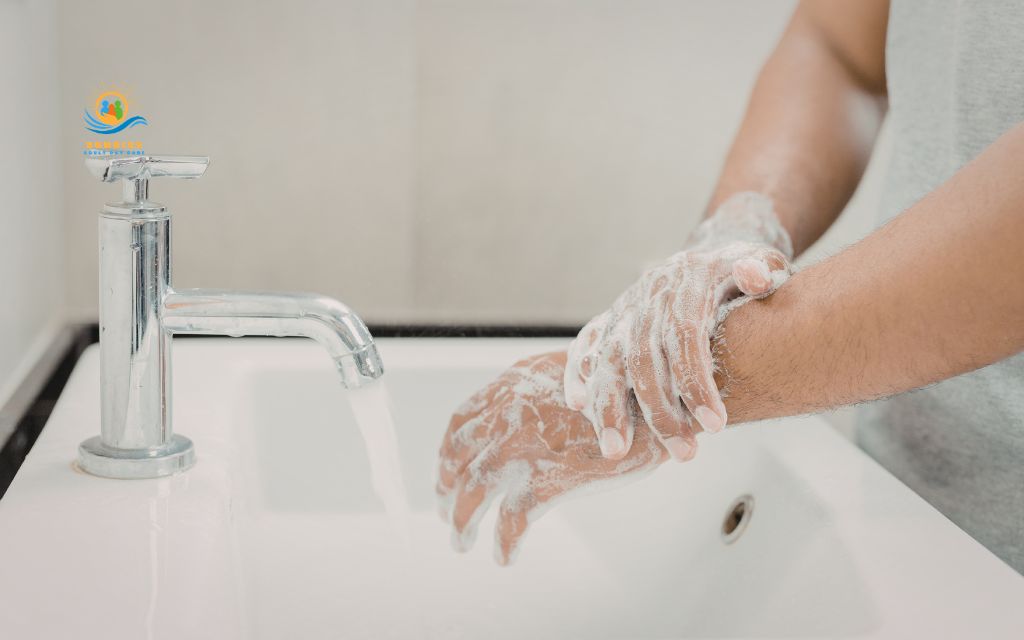
- Rửa tay thường xuyên: Tất cả người tham gia và nhân viên cần rửa tay kỹ bằng xà phòng và nước trước và sau bữa ăn, sau khi đi vệ sinh, cũng như sau bất kỳ hoạt động chăm sóc trực tiếp nào.
- Thường xuyên khử trùng các bề mặt chung: Các bề mặt thường xuyên tiếp xúc – mặt bàn, tay vịn ghế, tay nắm cửa, dụng cụ thủ công hoặc vật dụng hoạt động chung, điều khiển từ xa và các thiết bị vệ sinh – cần được khử trùng thường xuyên bằng các chất khử trùng được Cục Bảo vệ Môi trường Hoa Kỳ (EPA) phê duyệt.
- Tránh dùng chung đồ dùng ăn uống, cốc và đồ uống: Mỗi người tham gia nên sử dụng dụng cụ ăn uống và cốc chén riêng của mình trong các bữa ăn và giờ ăn nhẹ, và không được chia sẻ hay trao đổi những vật dụng này.
- Che miệng khi ho và hắt hơi: Nhân viên nên làm gương và khuyến khích thói quen ho hoặc hắt hơi vào khăn giấy hoặc khuỷu tay – không phải vào tay – và ngay sau đó phải rửa tay.
Kiểm tra sức khỏe khi nhập cảnh
Một trong những cách thiết thực nhất để ngăn chặn sự lây lan của bệnh tay chân miệng trong các chương trình chăm sóc ban ngày dành cho người lớn là kiểm tra nhẹ nhàng các triệu chứng bệnh trước khi người tham gia vào các khu vực chung mỗi ngày.
Nhân viên hoặc điều phối viên tiếp nhận có thể:
- Hãy hỏi về các triệu chứng như sốt gần đây, phát ban mới xuất hiện, loét miệng hoặc tình trạng ốm yếu chung trước khi các học viên bắt đầu các hoạt động trong ngày.
- Quan sát bằng mắt thường để phát hiện các dấu hiệu như mụn nước, những thay đổi bất thường trên da hoặc các triệu chứng phù hợp với một bệnh đang hoạt động.
- Hãy nhắc nhở các học viên cùng người thân hoặc người chăm sóc của họ rằng ở nhà khi đang bị bệnh là lựa chọn có trách nhiệm và chu đáo, đồng thời họ luôn được chào đón trở lại khi các triệu chứng đã hoàn toàn thuyên giảm.
Hướng dẫn về cách ly và quay trở lại chương trình
Đối với những người tham gia có biểu hiện của bệnh tay chân miệng:
- Hãy ở nhà trong giai đoạn có triệu chứng, đặc biệt là trong tuần đầu tiên khi bệnh lây lan mạnh nhất.
- Tránh tham gia các hoạt động tập thể, sử dụng phương tiện đi lại chung (nếu có) và đến các khu vực công cộng cho đến khi không còn sốt trong ít nhất 24 giờ mà không cần dùng thuốc hạ sốt, các vết loét trong miệng đã lành và các vết phồng rộp trên da đã khô lại.
- Khi quay trở lại chương trình, các học viên nên tiếp tục duy trì thói quen rửa tay và vệ sinh thường xuyên, vì virus có thể tồn tại trong phân trong vài tuần sau khi khỏi bệnh.
Việc thực hiện tốt các quy trình vệ sinh cùng với cách tiếp cận đầy nhân ái và không kỳ thị đối với việc cách ly người bệnh giúp các chương trình chăm sóc ban ngày dành cho người lớn tiếp tục duy trì môi trường an toàn, thân thiện và có lợi cho sức khỏe – điều mà người tham gia và gia đình họ luôn tin tưởng.
Tìm hiểu thêm: Vấn đề cân bằng ở người cao tuổi

Kết luận
Mặc dù bệnh tay chân miệng có thể gây khó chịu, nhưng phần lớn các trường hợp ở người lớn sẽ khỏi hẳn trong vòng bảy đến mười ngày nhờ nghỉ ngơi, bổ sung nước và các biện pháp chăm sóc hỗ trợ đơn giản tại nhà.
Các thói quen vệ sinh tốt là công cụ đáng tin cậy nhất giúp bạn phục hồi sức khỏe và phòng ngừa bệnh tật. Nếu bạn tham gia hoặc tham dự một chương trình chăm sóc ban ngày dành cho người lớn, việc ở nhà trong giai đoạn lây nhiễm và trao đổi cởi mở với nhân viên chương trình chính là những hành động thể hiện sự quan tâm đến cả cộng đồng.
Tuy nhiên, không phải tất cả các trường hợp bệnh tay chân miệng ở người lớn đều nhẹ, và người cao tuổi hoặc những người có bệnh nền cần được quan tâm đặc biệt.
Nếu cơn sốt kéo dài quá ba ngày, nếu có nguy cơ mất nước, nếu bạn bị đau đầu dữ dội hoặc cứng cổ, hoặc nếu các triệu chứng trở nên trầm trọng hơn thay vì thuyên giảm, đừng chần chừ – hãy đến cơ sở y tế ngay lập tức.
Tại Trung tâm Chăm sóc Ban ngày cho Người lớn Sunrise ở Denver, Colorado, sức khỏe và hạnh phúc của mỗi học viên luôn là ưu tiên hàng đầu mỗi ngày. Nếu quý vị có thắc mắc về việc quản lý bệnh tật, các quy định về việc tham gia khi bị ốm, hoặc cách thức hoạt động của chúng tôi chương trình giữ trẻ để đảm bảo sức khỏe và an toàn cho người cao tuổi đang được chúng tôi chăm sóc, đội ngũ của chúng tôi luôn sẵn lòng hỗ trợ.
Hãy gọi cho chúng tôi theo số 303-226-6882 để được nhân viên của chúng tôi tư vấn.
Những câu hỏi thường (Hỏi đáp)
Người lớn có thể mắc bệnh tay chân miệng không?
Đúng vậy. Người lớn có thể mắc bệnh tay chân miệng, đặc biệt là sau khi tiếp xúc với trẻ em bị nhiễm bệnh hoặc qua các không gian chung trong các môi trường tập thể như các chương trình chăm sóc ban ngày dành cho người lớn hoặc trung tâm người cao tuổi. Mặc dù bệnh này thường gặp hơn ở trẻ nhỏ, nhưng người lớn cũng không miễn nhiễm, đặc biệt là những người có hệ miễn dịch suy yếu hoặc trước đây ít tiếp xúc với chủng vi-rút Coxsackie đang lưu hành.
Bệnh lở mồm long móng có lây sang người lớn không?
Đúng vậy, bệnh tay chân miệng có thể lây lan ở người lớn. Bệnh lây truyền qua giọt bắn đường hô hấp, tiếp xúc trực tiếp với dịch trong mụn nước, các bề mặt bị nhiễm bệnh và lây truyền qua đường phân-miệng. Bệnh có khả năng lây lan mạnh nhất trong tuần đầu tiên xuất hiện triệu chứng, mặc dù virus vẫn có thể tồn tại trong phân trong vài tuần sau khi bệnh nhân đã hồi phục rõ rệt.
Bệnh tay chân miệng kéo dài bao lâu ở người lớn?
Hầu hết các trường hợp mắc bệnh tay-chân-miệng ở người lớn sẽ thuyên giảm trong vòng bảy đến mười ngày nếu được nghỉ ngơi đầy đủ và bổ sung đủ nước. Các vết loét trong miệng thường bắt đầu lành lại sau vài ngày đầu, trong khi các mụn nước trên da ở tay và chân thường khô lại và biến mất trong khoảng thời gian tương tự. Những người lớn có hệ miễn dịch suy yếu có thể cần thời gian hồi phục lâu hơn.
Loại virus nào gây ra bệnh tay chân miệng ở người lớn?
Bệnh tay chân miệng ở người lớn thường do vi-rút Coxsackie A16 gây ra, một loại vi-rút thuộc họ enterovirus. Các loại enterovirus khác – đặc biệt là Enterovirus 71 (EV-A71) – cũng có thể gây ra bệnh tay chân miệng và trong một số trường hợp, đã được ghi nhận là có liên quan đến các biến chứng thần kinh nghiêm trọng hơn. Quá trình lây nhiễm vi-rút Coxsackie ở người lớn diễn ra theo cơ chế tương tự như ở trẻ em.
Người lớn có nên ở nhà và không tham gia các hoạt động tập thể khi bị bệnh tay chân miệng không?
Đúng vậy. Người lớn có các triệu chứng bệnh tay chân miệng (HFMD) đang hoạt động nên ở nhà và tránh tham gia các hoạt động tập thể trong giai đoạn lây nhiễm ban đầu của bệnh. Thông thường, bạn có thể an tâm quay lại sinh hoạt bình thường khi cơn sốt đã thuyên giảm ít nhất 24 giờ mà không cần dùng thuốc, các vết loét trong miệng đang lành lại và các mụn nước trên da đã khô lại. Luôn tuân thủ hướng dẫn của bác sĩ và các quy định cụ thể của chương trình chăm sóc ban ngày mà bạn tham gia.