Nhảy tới nội dung

Các vấn đề về thăng bằng ở người cao tuổi phổ biến hơn nhiều so với những gì đa số mọi người nghĩ, và đây là điều đáng an tâm: những vấn đề này thường có thể điều trị, kiểm soát được và trong nhiều trường hợp, tình trạng có thể được cải thiện. Nếu bạn hoặc người thân của bạn bắt đầu cảm thấy mất thăng bằng, phải bám vào tường để giữ thăng bằng hoặc do dự trước khi bước xuống lề đường, bạn không đơn độc, và điều này không nhất thiết phải trở thành "bình thường mới" của bạn.
Hiểu rõ nguyên nhân dẫn đến các vấn đề về thăng bằng ở người cao tuổi là bước đầu tiên để lấy lại sự tự tin và khả năng tự lập. Tuy nhiên, tính cấp thiết của vấn đề cũng không kém phần quan trọng. Ngã là một trong những nguyên nhân hàng đầu gây ra chấn thương nghiêm trọng ở người trưởng thành trên 65 tuổi. Ngoài những tổn thương về thể chất, chỉ một lần ngã cũng có thể làm suy giảm khả năng tự lập, hạn chế các hoạt động hàng ngày và âm thầm làm trầm trọng thêm tình trạng cô lập xã hội.
Bài viết này sẽ giúp bạn hiểu:
- Những nguyên nhân phổ biến nhất gây ra các vấn đề về thăng bằng ở người cao tuổi
- Những điều bạn có thể làm ngay hôm nay để giảm nguy cơ té ngã
- Khi nào nên đi khám bác sĩ và nên hỏi những gì
- Các chương trình chăm sóc ban ngày dành cho người lớn có thể mang lại những thay đổi mang tính bước ngoặt như thế nào
Rối loạn thăng bằng ở người cao tuổi là gì?
Cân bằng không chỉ đơn thuần là việc đứng yên. Đó là một quá trình liên tục, diễn ra theo thời gian thực mà cơ thể bạn điều chỉnh từng giây khi bạn đứng thẳng. Hệ thống phức tạp này phụ thuộc vào sự phối hợp nhịp nhàng của nhiều hệ thống trong cơ thể.
Để đạt được sự cân bằng tối ưu, cơ thể bạn cần:
- Tai trong (hệ thống tiền đình): Truyền tín hiệu về vị trí và chuyển động của đầu trong không gian
- Tầm nhìn: Giúp não bộ của bạn nhận biết vị trí của bạn so với môi trường xung quanh
- Sức mạnh cơ bắp: Đặc biệt là ở chân và vùng cơ lõi, giúp bạn phản ứng nhanh và giữ thăng bằng
- Cảm giác thần kinh ở bàn chân: Truyền tín hiệu tiếp xúc với mặt đất lên não (cảm giác vị trí cơ thể)
- Sự phối hợp của não bộ: Tích hợp tất cả các tín hiệu và điều phối phản ứng của cơ thể
Khi bất kỳ hệ thống nào trong số này suy yếu hoặc truyền đi các tín hiệu sai lệch, người cao tuổi có thể bị mất thăng bằng. Ở người cao tuổi, việc nhiều hệ thống bị ảnh hưởng cùng lúc là điều thường gặp, đó là lý do tại sao các vấn đề về thăng bằng ở người cao tuổi có thể khó lường hoặc dường như xuất hiện “từ đâu không biết”.”
Tìm hiểu thêm: Các bệnh thường gặp ở người cao tuổi

Tại sao người cao tuổi lại gặp phải các vấn đề về thăng bằng
Cần lưu ý rằng các vấn đề về thăng bằng ở người cao tuổi thường do nhiều yếu tố gây ra. Một người 68 tuổi có vấn đề về thăng bằng có thể đang phải đối mặt với những thay đổi nhẹ ở tai trong, việc sử dụng thuốc điều trị huyết áp mới và việc giảm hoạt động thể chất – tất cả cùng lúc.
Việc xác định và giải quyết từng yếu tố chính là chìa khóa để điều trị đạt hiệu quả.
Các vấn đề về tai trong
Hệ thống tiền đình, nằm trong tai trong, là yếu tố chính quyết định sự cân bằng. Có hai bệnh lý chính liên quan đến tai trong thường gặp ở người cao tuổi:
Chóng mặt tư thế lành tính từng cơn (BPPV): Một trong những nguyên nhân phổ biến nhất gây chóng mặt và mất thăng bằng đột ngột ở người cao tuổi. Các tinh thể canxi nhỏ trong tai trong bị dịch chuyển khỏi vị trí ban đầu, gây ra cảm giác quay cuồng ngắn ngủi nhưng dữ dội, đặc biệt là khi lật người trên giường, ngước nhìn lên hoặc cúi người về phía trước.
Suy giảm chức năng tiền đình do tuổi tác: Các tế bào lông và các kết nối thần kinh trong tai trong sẽ suy giảm tự nhiên theo tuổi tác, làm giảm độ chính xác của các tín hiệu cân bằng được truyền đến não.
Tác dụng phụ của thuốc
Thuốc là một trong những nguyên nhân thường bị đánh giá thấp nhất dẫn đến mất thăng bằng ở người cao tuổi. Nhiều nhóm thuốc thông dụng có tác động đến huyết áp, mức độ tỉnh táo hoặc chức năng thần kinh theo những cách làm tăng nguy cơ té ngã:
- Thuốc hạ huyết áp: Có thể khiến huyết áp giảm quá thấp, đặc biệt là khi đứng dậy
- Thuốc an thần và thuốc hỗ trợ giấc ngủ: Gây buồn ngủ, làm chậm phản xạ và giảm khả năng phối hợp
- Thuốc chống trầm cảm và thuốc chống loạn thần: Có thể gây rối loạn dáng đi và khả năng phối hợp
- Dùng nhiều loại thuốc cùng lúc (dùng năm loại thuốc trở lên): Làm tăng đáng kể nguy cơ tương tác thuốc và làm trầm trọng thêm các tác dụng phụ
Việc tham khảo ý kiến bác sĩ hoặc dược sĩ về thuốc là một bước đơn giản nhưng hiệu quả, có thể giúp cải thiện các vấn đề về thăng bằng ở người cao tuổi, đôi khi mang lại kết quả rõ rệt.
Yếu cơ và suy giảm thể lực
Sức mạnh cơ bắp là một yếu tố quan trọng nhưng thường bị bỏ qua trong việc duy trì sự ổn định của các động tác. Khi con người già đi, một số quá trình sẽ làm giảm khối lượng và chức năng cơ bắp:
Hoạt động giảm sút: Dù là do bệnh tật, đau đớn hay thay đổi lối sống, việc ít vận động sẽ dẫn đến việc mất sức nhanh chóng
Sarcopenia: Sự suy giảm dần dần khối lượng cơ xương do tuổi tác, bắt đầu từ độ tuổi 40 và gia tăng nhanh chóng sau 70 tuổi, làm suy yếu cơ chân và cơ lõi, từ đó làm giảm khả năng giữ thăng bằng của cơ thể khi bị vấp ngã
Đối với một người 80 tuổi bị mất thăng bằng, suy yếu cơ bắp thường là một trong những nguyên nhân chính — và đây là vấn đề có thể được cải thiện đáng kể nhờ các bài tập tăng cường sức mạnh có mục tiêu.
Các vấn đề về thần kinh (bệnh thần kinh ngoại biên)
Bệnh thần kinh ngoại biên: Tổn thương thần kinh làm giảm cảm giác ở bàn chân và cẳng chân. Khi không có phản hồi chính xác về sự tiếp xúc với mặt đất, não bộ không thể điều chỉnh thăng bằng một cách nhanh chóng.
Giảm cảm giác ở bàn chân: Ngay cả khi chưa bị bệnh thần kinh hoàn toàn, sự suy giảm độ nhạy cảm với xúc giác và rung động ở bàn chân do tuổi tác cũng làm suy giảm khả năng nhận thức vị trí cơ thể, tức là khả năng của cơ thể trong việc cảm nhận vị trí của chính mình.
Thay đổi thị lực
Thị lực rõ ràng là yếu tố thiết yếu để duy trì sự cân bằng. Hai vấn đề về thị lực liên quan đến tuổi tác rất phổ biến sau đây góp phần đáng kể vào tình trạng mất thăng bằng ở người cao tuổi:
Đục thủy tinh thể: Làm mờ ống kính, làm giảm độ nhạy tương phản và khả năng nhận biết chiều sâu, khiến việc đánh giá các bậc thang, lề đường và bề mặt gồ ghề trở nên khó khăn hơn
Bệnh thoái hóa điểm vàng: Gây tổn hại đến thị lực trung tâm, khiến người lái khó nhận biết các nguy hiểm ngay phía trước
Sự thay đổi huyết áp (hạ huyết áp tư thế đứng)
Hạ huyết áp tư thế đứng là tình trạng huyết áp giảm đột ngột khi đứng dậy từ tư thế ngồi hoặc nằm. Đây là nguyên nhân hàng đầu gây chóng mặt và suýt ngã ở người cao tuổi. Não bộ tạm thời nhận được lượng máu ít hơn mức cần thiết, gây ra cảm giác choáng váng, mờ mắt hoặc yếu chân đột ngột. Tình trạng này trở nên phổ biến hơn theo tuổi tác và thường trở nên trầm trọng hơn do một số loại thuốc, tình trạng mất nước hoặc nằm nghỉ trên giường trong thời gian dài.
Các bệnh mãn tính ảnh hưởng đến dáng đi và sự thăng bằng
Một số bệnh mãn tính có thể trực tiếp làm rối loạn sự phối hợp thần kinh-cơ cần thiết để đi lại an toàn:
Bệnh Parkinson: Gây ra run rẩy, cứng cơ, dáng đi lê bước và khó khăn khi bắt đầu cử động.
Tiền sử đột quỵ: Tình trạng yếu cơ, co cứng hoặc rối loạn cảm giác ở một bên cơ thể gây ra các vấn đề về thăng bằng kéo dài ở người cao tuổi.
Viêm khớp: Đau và cứng khớp ở đầu gối, hông hoặc mắt cá chân làm thay đổi cơ chế vận động khi đi lại, dẫn đến các động tác bù trừ khiến tình trạng mất thăng bằng trở nên trầm trọng hơn.
Các dấu hiệu cảnh báo cần được bác sĩ khám
Mặc dù việc mất thăng bằng ở một mức độ nhất định là hiện tượng bình thường khi tuổi tác tăng lên, nhưng nếu xuất hiện một số triệu chứng nhất định, bạn nên liên hệ ngay với bác sĩ. Việc chẩn đoán sớm sẽ giúp điều trị nhanh chóng và hiệu quả hơn, đồng thời có thể ngăn ngừa những vụ ngã nghiêm trọng trước khi chúng xảy ra.
Hãy gọi bác sĩ nếu:
- Gần đây hoặc đột ngột xuất hiện các vấn đề về thăng bằng hoặc chóng mặt mà không rõ nguyên nhân
- Trong năm qua đã xảy ra một hoặc nhiều vụ ngã hoặc suýt ngã
- Chóng mặt kèm theo triệu chứng yếu tay hoặc chân, nói lắp hoặc thay đổi thị lực
- Có thể xảy ra các cơn ngất xỉu hoặc gần ngất xỉu, đặc biệt là khi đứng dậy
- Có tình trạng lú lẫn mới xuất hiện hoặc ngày càng trầm trọng kèm theo tình trạng đi đứng không vững
Hãy đến cơ sở y tế cấp cứu ngay lập tức nếu:
- Bạn nhận thấy các triệu chứng đột quỵ: mặt đột ngột bị lệch, tay yếu hoặc khó nói (hãy nhớ từ viết tắt F.A.S.T. — Mặt, Tay, Lời nói, Thời gian)
- Đột nhiên xuất hiện cơn đau đầu dữ dội như “tiếng sấm”, khác hẳn với những cơn đau đầu trước đây
- Đau ngực, cảm giác nặng nề hoặc tim đập nhanh kèm theo mất thăng bằng hoặc ngất xỉu
Lưu ý quan trọng dành cho người chăm sóc: Nếu bạn đang chăm sóc một người cao tuổi gặp vấn đề về thăng bằng, hãy tin vào trực giác của mình. Nếu cảm thấy có điều gì đó “không ổn”, ngay cả khi họ không thể diễn tả được, việc đưa họ đi khám bác sĩ luôn là quyết định đúng đắn.
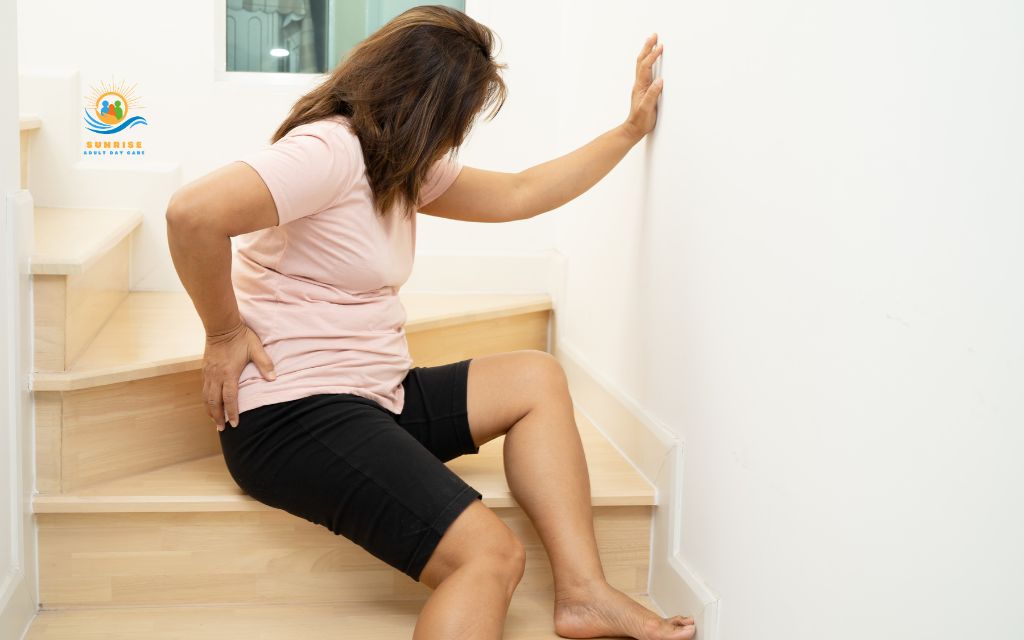
Những việc cần làm hôm nay: Danh sách kiểm tra an toàn là trên hết
Trong khi chờ đến lượt khám bệnh hoặc bắt đầu một chương trình tập luyện chính thức, bạn có thể thực hiện ngay những biện pháp hữu ích để giảm nguy cơ té ngã và tạo ra một môi trường an toàn hơn. Những thay đổi nhỏ trong nhà và trong thói quen hàng ngày có thể mang lại hiệu quả đáng kể.
Các biện pháp đảm bảo an toàn tại nhà ngay lập tức
- Hãy mang giày chắc chắn, vừa vặn và có đế chống trượt, ngay cả khi ở trong nhà. Tránh đi lại chỉ với tất, dép xỏ ngón hoặc dép lê rộng thùng thình
- Lắp đặt thanh vịn trong phòng tắm, bên cạnh bồn cầu và trong buồng tắm đứng hoặc bồn tắm
- Cải thiện hệ thống chiếu sáng trong toàn bộ ngôi nhà, đặc biệt là ở hành lang, cầu thang và lối đi từ phòng ngủ đến phòng tắm vào ban đêm
- Hãy dọn dẹp hoặc cố định những tấm thảm và thảm lót sàn lỏng lẻo có thể trượt hoặc vướng vào chân khi di chuyển
- Hãy để sẵn một chiếc ghế chắc chắn gần đó khi bạn phải đứng để thực hiện các công việc như mặc quần áo hay nấu ăn
Khi đứng dậy
- Hãy dừng lại và ngồi ở mép giường hoặc ghế trong khoảng 10 đến 15 giây trước khi đứng dậy. Điều này giúp huyết áp ổn định và giảm nguy cơ chóng mặt
- Hãy đứng dậy từ từ và cẩn thận, đừng bao giờ nhảy dựng lên
- Hãy bám vào đồ đạc vững chắc (không phải ghế có bánh xe hay giá treo khăn) cho đến khi bạn cảm thấy thăng bằng
Theo dõi các triệu chứng của bạn
Hãy ghi chép lại những điều cần lưu ý trước khi đi khám bác sĩ. Lưu ý:
- Khi nào bạn cảm thấy mất thăng bằng hoặc chóng mặt? (Khi đứng? Khi đi bộ? Vào ban đêm?)
- Gần đây có bắt đầu dùng loại thuốc mới nào không?
- Có quy luật nào không – Tình trạng này thường xảy ra vào buổi sáng, sau khi ăn hay trong điều kiện ánh sáng yếu?
Các bài tập giữ thăng bằng đơn giản dành cho người cao tuổi
Tập thể dục là một trong những biện pháp đã được chứng minh hiệu quả nhất trong việc cải thiện vấn đề mất thăng bằng ở người cao tuổi và giảm nguy cơ té ngã.
Trước khi bắt đầu bất kỳ chương trình tập luyện mới nào, hãy tham khảo ý kiến của bác sĩ hoặc chuyên gia vật lý trị liệu – đặc biệt nếu bạn mắc các bệnh về tim mạch, vừa trải qua phẫu thuật hoặc gặp vấn đề nghiêm trọng về thăng bằng. Hãy bắt đầu từ từ và luôn tập luyện gần tường hoặc ghế để có điểm tựa.
Diễu hành ngồi
Ngồi thẳng lưng trên một chiếc ghế chắc chắn. Từ từ nâng một đầu gối lên cao nhất có thể mà vẫn cảm thấy thoải mái, sau đó hạ xuống, rồi đổi chân. Mục tiêu là thực hiện 10 đến 15 lần lặp lại cho mỗi bên. Bài tập đi bộ tại chỗ giúp tăng cường sức mạnh cơ gập hông và kích hoạt các cơ vùng lõi tham gia vào quá trình đi bộ – đây là bước nền tảng cho bất kỳ ai bắt đầu khắc phục các vấn đề về thăng bằng khi về già.
Đứng gót chạm mũi chân (tư thế đứng song song)
Hãy đứng cạnh mặt bàn hoặc tường để đảm bảo an toàn. Đặt một chân ngay trước chân kia, gót chân chạm vào mũi chân, giống như người đi dây. Giữ tư thế này trong 10 đến 30 giây, sau đó đổi chân. Bài tập này tác động trực tiếp đến hệ thống cân bằng được sử dụng khi đi bộ hàng ngày và giúp cải thiện đáng kể khả năng phối hợp theo thời gian.
Thực hành tư thế ngồi-đứng
Bắt đầu bằng tư thế ngồi trên một chiếc ghế chắc chắn, hai chân đặt phẳng trên sàn, hai chân rộng bằng vai. Nghiêng người về phía trước một chút và từ từ đứng dậy mà không dùng tay nếu có thể. Ngồi xuống lại một cách kiểm soát. Lặp lại 5 đến 10 lần. Động tác ngồi xuống rồi đứng lên giúp tăng cường sức mạnh cơ đùi trước và cơ mông – rất quan trọng để đứng dậy an toàn từ ghế, nhà vệ sinh và ghế xe hơi.
Đi bộ hàng ngày
Việc đi bộ đều đặn giúp cải thiện khả năng giữ thăng bằng, sức mạnh cơ bắp, sức khỏe tim mạch và tâm trạng. Đối với người cao tuổi gặp vấn đề nghiêm trọng về thăng bằng, việc đi bộ dưới sự giám sát trong một chương trình có tổ chức (chẳng hạn như tại trung tâm chăm sóc ban ngày cho người lớn) sẽ đảm bảo an toàn, tạo động lực tuân thủ và giúp đạt được sự tiến bộ dần dần. Hãy đặt mục tiêu đi bộ ít nhất 10 đến 20 phút mỗi ngày, đồng thời tăng dần quãng đường khi sự tự tin được cải thiện.
Tìm hiểu thêm: Nhiễm trùng đường tiết niệu ở người cao tuổi
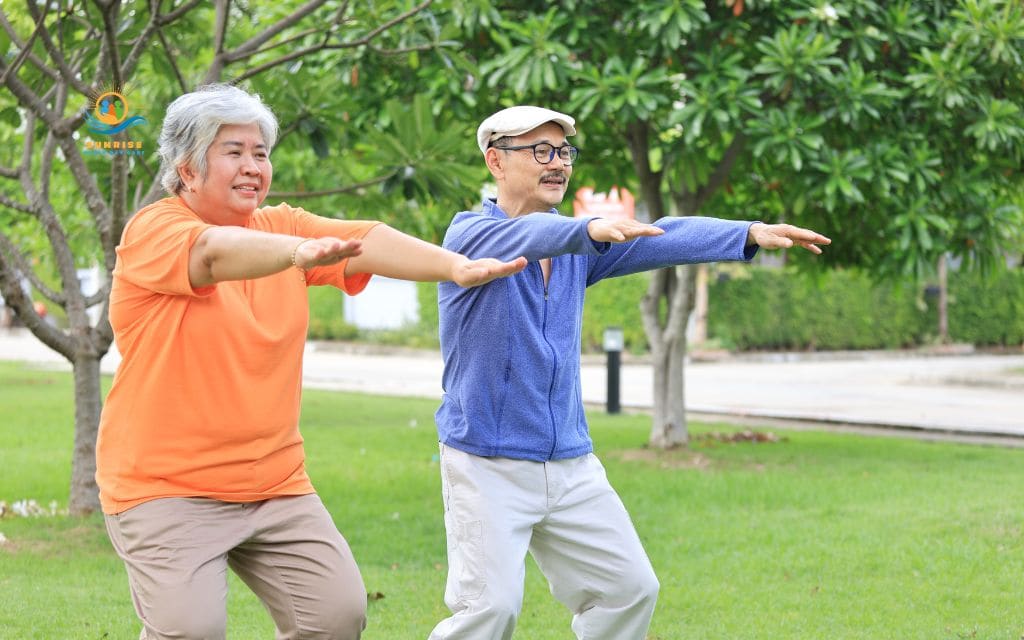
Các chương trình chăm sóc ban ngày và chăm sóc sức khỏe ban ngày dành cho người lớn hỗ trợ như thế nào
Đối với người cao tuổi gặp vấn đề nghiêm trọng về thăng bằng, các chương trình chăm sóc ban ngày và chăm sóc sức khỏe ban ngày dành cho người lớn cung cấp một môi trường có tổ chức và được giám sát chuyên nghiệp, nhằm đảm bảo cả an toàn lẫn sức khỏe tinh thần.
Các chương trình này được thiết kế đặc biệt nhằm cung cấp dịch vụ giám sát ban ngày, sự đồng hành và các hoạt động có ý nghĩa cho người cao tuổi, giúp lấp đầy khoảng trống quan trọng giữa cuộc sống tự lập và dịch vụ chăm sóc tại cơ sở.
Các hoạt động thể chất có sự giám sát
Các chương trình chăm sóc ban ngày chất lượng dành cho người lớn bao gồm các buổi tập thể dục có tổ chức do nhân viên được đào tạo chuyên nghiệp hướng dẫn, bao gồm:
- Các lớp tập thể dục nhóm được thiết kế phù hợp với khả năng vận động của người cao tuổi, bao gồm cả các bài tập đứng và ngồi
- Yoga trên ghế: Giúp cải thiện độ dẻo dai, sự ổn định của vùng lõi, kỹ thuật thở và nhận thức về cơ thể — tất cả đều có lợi cho việc khắc phục các vấn đề về thăng bằng ở người cao tuổi
- Các buổi tập sức mạnh được thiết kế cho người lớn tuổi, tập trung vào các cơ chân và cơ trung tâm quan trọng nhất để ngăn ngừa té ngã.
Giám sát y tế và theo dõi an toàn
Các chương trình chăm sóc sức khỏe ban ngày cho người lớn - cung cấp dịch vụ chuyên sâu hơn so với chăm sóc ban ngày tiêu chuẩn cho người lớn - thường cung cấp:
- Theo dõi dấu hiệu sinh tồn: Kiểm tra huyết áp thường xuyên có thể phát hiện hạ huyết áp tư thế trước khi nó gây ra ngã.
- Quản lý thuốc: Nhân viên có thể đảm bảo thuốc được sử dụng đúng cách và phát hiện các tương tác tiềm ẩn góp phần gây ra vấn đề về thăng bằng.
- Sàng lọc nguy cơ té ngã: Các công cụ tiêu chuẩn hóa như bài kiểm tra Timed Up and Go (TUG) giúp nhân viên xác định những người có nguy cơ té ngã cao nhất và điều chỉnh hỗ trợ phù hợp.
Xây dựng sự tự tin xã hội
Có lẽ lợi ích ít được đánh giá cao nhất của các chương trình chăm sóc ban ngày cho người lớn là tác động của chúng đến sự tự tin và sức khỏe tinh thần.
Cô lập xã hội vừa là hệ quả vừa là yếu tố góp phần gây ra các vấn đề thăng bằng ở người cao tuổi - khi người lớn tuổi cảm thấy không an toàn hoặc xấu hổ, họ rút lui, hoạt động giảm và sự suy giảm thể chất tăng tốc.
- Giảm sự cô lập bằng cách cung cấp tương tác hàng ngày với bạn bè, các hoạt động xã hội có cấu trúc, và cảm giác thuộc về.
- Khuyến khích di chuyển an toàn trong một môi trường giám sát, hỗ trợ, nơi người tham gia có thể thực hành các hoạt động cân bằng mà không sợ hãi.
Tại Trung tâm Chăm sóc Người cao tuổi Sunrise ở Denver, chúng tôi các chương trình giữ trẻ được thiết kế dựa trên chính những nguyên tắc này, cung cấp cho người cao tuổi các hoạt động có giám sát, sự hỗ trợ tận tâm từ nhân viên, và một cộng đồng thân thiện nơi sự tự tin có thể phát triển.
Nếu bạn hoặc người thân đang gặp vấn đề về mất cân bằng ở người cao tuổi và có thể hưởng lợi từ sự hỗ trợ có cấu trúc vào ban ngày, chúng tôi mời bạn gọi cho chúng tôi theo số 303-226-6882 để tìm hiểu thêm.
Kết luận
Các vấn đề về thăng bằng ở người cao tuổi là phổ biến, dễ hiểu và — trong nhiều trường hợp — có thể quản lý tốt. Dù bạn là một người 68 tuổi có thăng bằng kém, một người 80 tuổi mất thăng bằng, hay một thành viên gia đình đang chứng kiến cha mẹ ngày càng không vững, con đường phía trước rất rõ ràng: được đánh giá, thực hiện các thay đổi có mục tiêu, và tận dụng các nguồn hỗ trợ tuyệt vời có sẵn.
Những thay đổi nhỏ, nhất quán về an toàn trong nhà và thói quen hàng ngày có thể giảm đáng kể nguy cơ té ngã bắt đầu từ hôm nay. Các bài tập nhắm mục tiêu có thể tái tạo sức mạnh và sự phối hợp để hỗ trợ chuyển động vững vàng, tự tin. Đánh giá y tế có thể phát hiện các nguyên nhân có thể điều trị được mà có thể đã âm thầm làm suy yếu sự ổn định trong nhiều tháng hoặc nhiều năm.
Quan trọng nhất, bạn không phải tự mình giải quyết các vấn đề cân bằng ở người cao tuổi. Từ vật lý trị liệu đến các chương trình chăm sóc sức khỏe ban ngày cho người lớn, có những nguồn lực chuyên nghiệp và tận tâm được thiết kế chính xác cho thời điểm này. Bước đầu tiên là liên hệ. Khám phá các chương trình phòng ngừa té ngã có cấu trúc trong cộng đồng của bạn và cân nhắc xem liệu một chương trình chăm sóc ban ngày hỗ trợ cho người lớn có thể cung cấp sự giám sát, kết nối xã hội và giám sát chuyên nghiệp để giúp cuộc sống an toàn, năng động trở lại hay không.
Những câu hỏi thường (Hỏi đáp)
Điều gì gây ra tình trạng mất thăng bằng ở người cao tuổi?
Các vấn đề về thăng bằng ở người cao tuổi thường là đa yếu tố, nghĩa là có nhiều nguyên nhân xảy ra cùng lúc. Những nguyên nhân phổ biến nhất bao gồm thay đổi tai trong (như BPPV), tác dụng phụ của thuốc, yếu cơ, bệnh lý thần kinh ngoại biên và suy giảm thị lực. Các bệnh mãn tính như bệnh Parkinson, tiền sử đột quỵ và viêm khớp cũng thường góp phần vào việc mất thăng bằng ở người lớn tuổi.
Mất thăng bằng có phải là một phần bình thường của quá trình lão hóa không?
Một sự suy giảm dần dần trong khả năng cân bằng là một phần bình thường của quá trình lão hóa, khi hệ thống tiền đình, cơ bắp và dây thần kinh tự nhiên yếu đi theo thời gian. Tuy nhiên, tình trạng mất cân bằng thường xuyên, suýt ngã, hoặc ngã làm hạn chế hoạt động hàng ngày không nên bị coi nhẹ chỉ vì "già đi." Những triệu chứng này cần được đánh giá y tế, vì nhiều nguyên nhân tiềm ẩn có thể được xác định và điều trị.
Khi nào người cao tuổi nên đi khám bác sĩ vì các vấn đề về thăng bằng?
Người cao tuổi nên đi khám bác sĩ nếu họ đã từng bị ngã hoặc suýt ngã một lần trở lên, nhận thấy sự thay đổi đột ngột về khả năng giữ thăng bằng, hoặc cảm thấy chóng mặt kèm theo yếu cơ hoặc thay đổi giọng nói. Các vấn đề về thăng bằng đang bắt đầu hạn chế các hoạt động hàng ngày hoặc gây ra nỗi lo sợ bị ngã cũng cần được đánh giá kịp thời. Việc đánh giá sớm luôn mang lại kết quả tốt hơn và giảm nguy cơ ngã.
Tập thể dục có thể giúp cải thiện tình trạng mất thăng bằng ở người cao tuổi không?
Đúng vậy, các bài tập rèn luyện sức mạnh và thăng bằng là một trong những phương pháp được khoa học chứng minh hiệu quả nhất trong việc cải thiện các vấn đề về thăng bằng ở người cao tuổi và giảm nguy cơ té ngã. Các bài tập như tập đứng lên từ tư thế ngồi, đi bộ tại chỗ khi ngồi và đứng bằng gót chân chạm mũi chân giúp tăng cường sức mạnh và khả năng phối hợp của chân – những yếu tố thiết yếu để di chuyển ổn định. Hãy luôn tham khảo ý kiến của bác sĩ hoặc chuyên gia vật lý trị liệu trước khi bắt đầu một chương trình tập luyện mới.
Các vấn đề về thăng bằng ở người cao tuổi có thể điều trị được không?
Trong nhiều trường hợp, câu trả lời là có. Các vấn đề về thăng bằng ở người cao tuổi thường có thể điều trị được hoặc cải thiện đáng kể, đặc biệt là khi nguyên nhân được phát hiện sớm. Ngay cả đối với những trường hợp không thể hồi phục hoàn toàn, việc cải tạo nhà ở để đảm bảo an toàn, sử dụng các thiết bị hỗ trợ và tham gia các chương trình hỗ trợ có hệ thống cũng có thể giúp giảm đáng kể nguy cơ té ngã.