Your pulse is one of the most informative signals your body sends. For older adults, understanding the normal heart rate for elderly individuals is not about fear, it is about confidence. When you know what is typical for your age and health, you can notice changes early, respond wisely, and maintain your independence longer.
Heart rate monitoring becomes especially valuable in later life because the body’s ability to self-regulate changes over time. Pulse tracking can help detect early signs of dehydration, reveal medication side effects, identify arrhythmias (irregular heartbeats), and even support fall prevention by flagging dizziness-related causes before they become dangerous.
Adult day care centers and routine medical checkups commonly include vital sign monitoring – including heart rate – as a standard part of caring for older adults. Whether you are tracking your own pulse at home, or a family caregiver supporting a loved one, this guide will give you the knowledge to act with clarity.
This article will help you understand: What is a normal heart rate for elderly adults, how to measure pulse correctly and when to seek medical care
What is a normal heart rate for elderly adults?
General safe resting range
For most older adults, the normal heart rate for elderly individuals at rest falls between 60 and 100 beats per minute (bpm).
This range applies to adults of all ages, including seniors. Within that range, readings between 60 and 80 bpm are most common in healthy, moderately active older adults.
| Category | Heart Rate Range | What It May Mean |
| Very slow (Bradycardia) | Below 60 bpm | May be normal in fit adults; seek care if symptoms appear |
| Normal resting range | 60 – 100 bpm | Healthy range for most seniors at rest |
| Optimal for many seniors | 60 – 80 bpm | Common in healthy, moderately active older adults |
| Elevated (Tachycardia) | Above 100 bpm | May indicate stress, dehydration, or medical issue |
| Emergency threshold | Above 120 bpm at rest | Seek immediate medical care, especially with symptoms |
It is important to note: numbers alone do not tell the whole story. How you feel matters just as much as what the monitor displays.
What ‘resting’ truly means
A resting heart rate is only meaningful when measured under genuinely calm conditions. Many people check their pulse after walking to a chair or immediately after waking and wonder why the number seems high. True resting conditions require:
- Sitting quietly or lying down for at least 5 minutes
- Calm, steady breathing, not catching your breath
- No recent physical activity (walking, climbing stairs, standing quickly)
- No recent food, caffeine, or emotional stress in the past 20–30 minutes
The best time to check your resting pulse is first thing in the morning, while still in bed, or after sitting quietly for several minutes.
Average pulse for seniors
While 60 – 100 bpm is the accepted clinical range, most healthy seniors naturally fall between 60 and 80 bpm at rest.
Well-conditioned older adults may have resting heart rates at the lower end of this range, which is a sign of cardiovascular efficiency, not cause for concern.
Differences by sex
Research indicates that the normal heart rate for elderly women may run slightly higher than for men on average. Studies show women typically average 2 – 7 bpm higher than men across age groups. These small variations are normal and are accounted for in the standard 60 – 100 bpm range. The normal pulse rate for elderly female adults is still well within the general range, so there is no need to apply a separate standard.

How to measure pulse correctly
Accurate measurement is the foundation of meaningful monitoring. Here are two reliable methods that work well for older adults.
Option 1: Wrist (radial pulse)
- Extend your arm with your palm facing upward.
- Place your index and middle fingers on the inside of your wrist, on the thumb side.
- Press gently until you feel a steady beat.
- Count the beats using one of the methods below.
Option 2: Neck (carotid pulse)
- Place your index and middle fingers gently beside your windpipe (Adam’s apple), on either the left or right side.
- Press lightly, you should feel the beat without pressing too firmly.
Important: Never press both sides of the neck at the same time, as this can reduce blood flow to the brain.
Counting method
Count for 60 seconds – this is the most accurate method, especially if the rhythm feels irregular.
Count for 15 seconds and multiply by 4 – a quick, practical option for regular rhythm checks.
Using a smartwatch or blood pressure monitor
Many older adults now use wrist-based pulse oximeters, smartwatches, or automatic blood pressure monitors that display heart rate. These are convenient and generally reliable. For best accuracy:
- Sit quietly for at least 5 minutes before checking.
- Keep your wrist or arm still during the reading.
- Take 2 readings, 1–2 minutes apart, and average the two numbers.
Why heart rate changes in older adults
Seeing a number outside your usual range is not automatically alarming. Many everyday factors cause heart rate to rise or fall temporarily. Understanding these helps you respond wisely instead of anxiously.
Physical activity
Walking, climbing stairs, exercising, or even getting up quickly from a chair will temporarily raise the elderly heart rate. This is normal and healthy, it means the heart is doing its job. The pulse should return to resting levels within a few minutes of stopping activity.
Emotions and stress
Anxiety, excitement, worry, and pain all trigger the body’s stress response, which raises heart rate. A difficult phone call, an emotional conversation, or even anticipating a medical appointment can temporarily push the average pulse for seniors higher than usual. Once calm returns, so does the pulse.
Temperature and hydration
Fever increases heart rate – every degree of body temperature rise can push the pulse up by roughly 10 bpm. Dehydration is another common culprit. When the body lacks adequate fluid, the heart pumps faster to compensate for lower blood volume. This is especially relevant for seniors, who often have a reduced sense of thirst.
Medications
Medications are one of the most significant influences on heart rate in older adults. Understanding their effects helps caregivers and families monitor appropriately:
- Beta blockers (e.g., metoprolol, atenolol): Commonly used for heart conditions and blood pressure – these medications lower heart rate. A pulse in the 50s is expected and normal for someone on beta blockers.
- Thyroid medications (e.g., levothyroxine): Too high a dose can increase heart rate.
- Blood pressure medications: Various classes can affect pulse rate in different ways.
- Stimulants and decongestants: Common in cold and allergy medications — these may raise heart rate temporarily.
Always review any heart rate concerns with the prescribing physician before making any assumptions about medications.
Medical conditions
Certain health conditions directly affect heart rate in older adults. These include:
- Arrhythmias: Irregular heartbeat patterns that affect rhythm and rate
- Anemia: Low red blood cell count forces the heart to beat faster
- Thyroid disorders: Both overactive and underactive thyroid affect heart rate
- Heart disease: Various cardiac conditions can alter resting pulse
- Infections: Fever and systemic illness raise pulse as the body responds
Slow vs. fast heart rate
Bradycardia (slow heart rate)
Bradycardia refers to a heart rate that is consistently below 60 bpm. In medical terms, it is defined as fewer than 60 beats per minute at rest. However, bradycardia does not automatically mean something is wrong.
Bradycardia becomes concerning when paired with symptoms – particularly dizziness, unusual fatigue, shortness of breath, near-fainting, or fainting. Without symptoms, a slightly low pulse in a stable, otherwise healthy older adult may simply reflect individual variation.
Tachycardia (fast heart rate)
Tachycardia refers to a resting heart rate that is consistently above 100 bpm. For seniors, a consistently elevated pulse rate for elderly individuals at rest may signal:
- Infection or fever
- Dehydration
- Anxiety or emotional distress
- Heart rhythm problems
- Anemia or thyroid issues
A single elevated reading is often not cause for alarm. A pattern of consistently high readings, or a high reading accompanied by symptoms, deserves medical evaluation.
When to call for help
Most heart rate variations are temporary and harmless. However, certain combinations of readings and symptoms require immediate action.
Call 911 immediately if you observe any of the following
- Chest pain or chest pressure, even mild or brief
- Shortness of breath at rest or sudden difficulty breathing
- Fainting or loss of consciousness
- Severe, sudden weakness or inability to move
- Sudden confusion or disorientation
- Heart rate above 120 bpm at rest, especially with symptoms such as dizziness, chest tightness, or shortness of breath
- Heart rate below 40 bpm with accompanying dizziness, fainting, or weakness
Contact a doctor promptly (same day or next day) if:
- Heart rate is consistently above 100 bpm over multiple readings without an obvious explanation
- Heart rate drops below 50 bpm and you feel lightheaded or unusually tired
- Your heart rhythm feels irregular – skipping beats, fluttering, or racing briefly
- A reading seems unusually high or low compared to your normal pattern, even without severe symptoms
When in doubt: Call your doctor’s office and describe what you measured, when you measured it, and how you feel. A brief phone consultation is always safer than guessing.
Long-term heart health for seniors
Healthy daily habits
No single habit transforms heart health overnight, but consistent daily choices make a meaningful difference in average heart rate and cardiovascular health over time:
- Regular walking: Even 20 – 30 minutes of gentle walking most days supports heart efficiency, gradually lowering resting heart rate over weeks.
- Balanced diet: Foods rich in potassium, magnesium, and healthy fats support normal heart rhythm and blood pressure.
- Adequate hydration: Drinking enough fluids daily – approximately 6 – 8 cups of water or hydrating beverages – prevents dehydration-related pulse elevation.
- Quality sleep: Sleep allows the heart to rest and recover. Poor or fragmented sleep chronically elevates resting heart rate and stress hormones.
- Stress management: Gentle mindfulness, breathing exercises, or time in nature support a calm nervous system and lower resting pulse.
Routine medical supervision
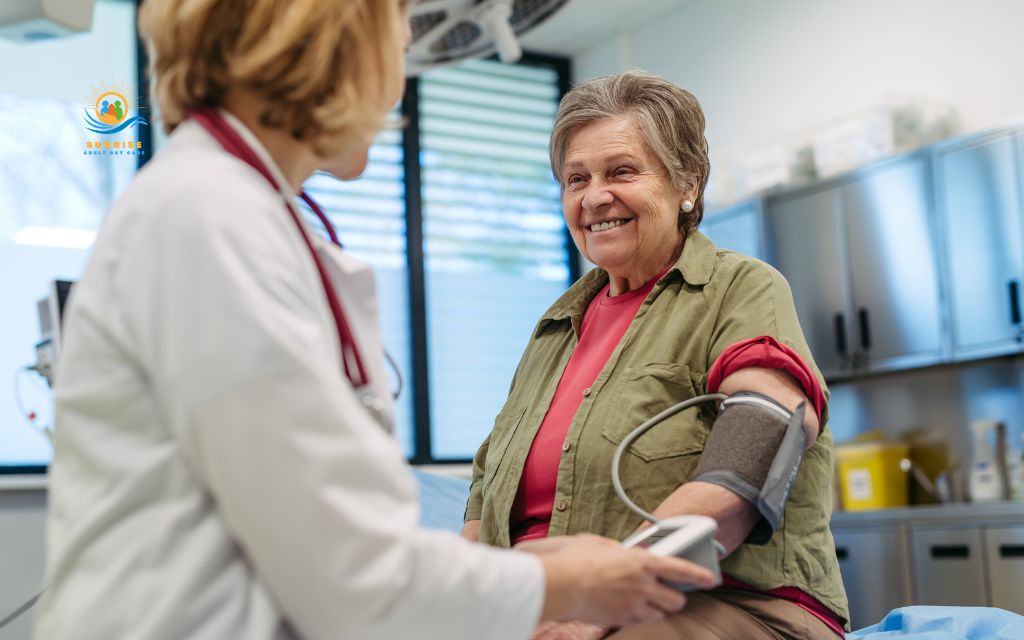
Regular contact with a healthcare provider is the cornerstone of heart safety in older adults. Effective supervision includes:
- Annual physical checkups with heart rate and blood pressure screening
- Periodic medication review, especially for drugs that affect heart rate
- Electrocardiogram (EKG) when irregular rhythms are suspected
- Discussion of any changes in energy, dizziness, or pulse patterns between visits
How adult day care & caregivers support heart monitoring
For families managing the care of an older loved one, the support of a structured adult day care program can be genuinely valuable, particularly for health monitoring and safety oversight.
Monitoring and documentation
Quality adult day care programs provide structured health oversight as part of their daily routine:
- Routine vital sign checks: Many programs monitor heart rate, blood pressure, and oxygen levels as part of a regular health check-in, providing a consistent record that families and doctors can review.
- Medication supervision: Staff trained in medication administration ensure that heart-affecting medications are taken correctly and on schedule.
- Symptom reporting: Staff are trained to recognize and document early warning signs (fatigue, dizziness, or unusual pulse readings) and to communicate these promptly to family members and medical providers.
Structured activities that support heart health
Beyond monitoring, adult day programs actively support cardiovascular well-being through programming:
- Gentle exercise programs: Chair yoga, light stretching, walking groups, and low-impact movement improve heart health.
- Social engagement: Loneliness and social isolation are documented risk factors for heart disease. Regular group activities, conversation, and community reduce psychological stress and its impact on heart rate.
- Structured routine: Predictable daily schedules reduce anxiety, which in turn supports a more stable resting heart rate.
Safety oversight
Adult day care staff are positioned to respond quickly if a participant shows signs of cardiac distress:
- Immediate response protocols when abnormal readings are detected
- Direct communication with family members regarding any health concerns
- Established communication channels with the participant’s primary care physician
- Emergency response capability, including trained first responders on site
If your loved one attends an adult day care program, ask about their vital sign monitoring protocol. Programs like Sunrise Adult Daycare (303-226-6882) incorporate health monitoring as part of comprehensive daily support for Denver-area seniors.
Conclusion
Understanding the normal heart rate for elderly adults is one of the most practical steps an older adult, or the family supporting them, can take for long-term health confidence. The key takeaways from this guide are straightforward and empowering.
Most seniors have a healthy resting heart rate between 60 and 80 bpm, with the full normal range extending from 60 to 100 bpm. Minor day-to-day variation is completely normal and is influenced by hydration, medications, emotions, temperature, and activity. Measuring pulse correctly gives readings that actually mean something.
Regular monitoring builds confidence, not anxiety. When you know your personal normal, you can identify genuine changes early and act on them. Whether you are managing your own health, supporting a parent, or working in a care program, consistent attention to heart rate is a simple, powerful tool for safety and independence.
Frequently asked questions (FAQs)
What is a normal pulse for elderly adults?
Most seniors have a resting heart rate between 60 and 100 bpm, with many healthy older adults falling between 60 and 80 bpm. True resting readings should be taken after sitting quietly for at least 5 minutes.
Is 55 bpm normal for a senior?
It can be perfectly normal, especially for older adults who exercise regularly or who take beta blocker medications for blood pressure or heart conditions. A pulse of 55 bpm is only concerning if it is accompanied by dizziness, fainting, unusual fatigue, or shortness of breath. Without symptoms, many doctors consider it acceptable.
What heart rate is dangerous for elderly people?
A resting heart rate consistently above 120 bpm, or below 40 bpm, paired with symptoms such as chest pain, dizziness, fainting, or shortness of breath, requires emergency medical care. Call 911 in these situations.
Why does my heart rate change from day to day?
Daily variation in pulse rate for elderly adults is completely normal. Hydration levels, physical activity, emotional stress, temperature, caffeine intake, and medication timing all affect your pulse. Tracking readings over time helps you understand your personal normal and spot genuine changes.
How often should seniors check their heart rate?
Once daily at rest is a reasonable routine unless your doctor recommends otherwise. Consistent timing makes patterns much easier to interpret.