Safe leg strengthening exercises for seniors: 15 moves to build strength & balance

Safe leg strengthening exercises for seniors: 15 moves to build strength & balance

Strong legs are one of the most important building blocks of a healthy, active life in older adulthood. However, many older adults experience leg weakness, poor balance, joint stiffness, or difficulty walking and standing up.

These changes are common, but they are not inevitable. With the right lower body exercises for seniors, it is entirely possible to rebuild strength, improve mobility, and feel more capable and confident in everyday life.

This guide covers 15 of the safest and most effective leg strengthening exercises for seniors, and shares how a structured daytime program like adult day care can help older adults stay active with proper support and supervision.

What is the most common cause of leg weakness in seniors?

Before jumping into exercises for weak legs in elderly adults, it helps to understand what causes leg weakness in the first place. There are several common culprits, and knowing them can help older adults and caregivers choose the right approach.

Age-related muscle loss (Sarcopenia)

The most common cause of leg weakness in older adults is sarcopenia – the gradual loss of muscle mass and strength that naturally occurs with aging.

Sarcopenia typically begins in the 30s and accelerates after age 60. As the muscles in the thighs, hips, and calves shrink, seniors may notice it becomes harder to walk, stand up from a seated position, or climb stairs. Sarcopenia also increases the risk of falls, which are a leading cause of injury among older adults. 

Physical inactivity

Spending long hours sitting weakens leg muscles over time. When muscles are not regularly used, they become smaller and less capable. Seniors who are less active may notice increased stiffness, fatigue during short walks, and reduced endurance for daily tasks like grocery shopping or housework.

Arthritis and joint pain

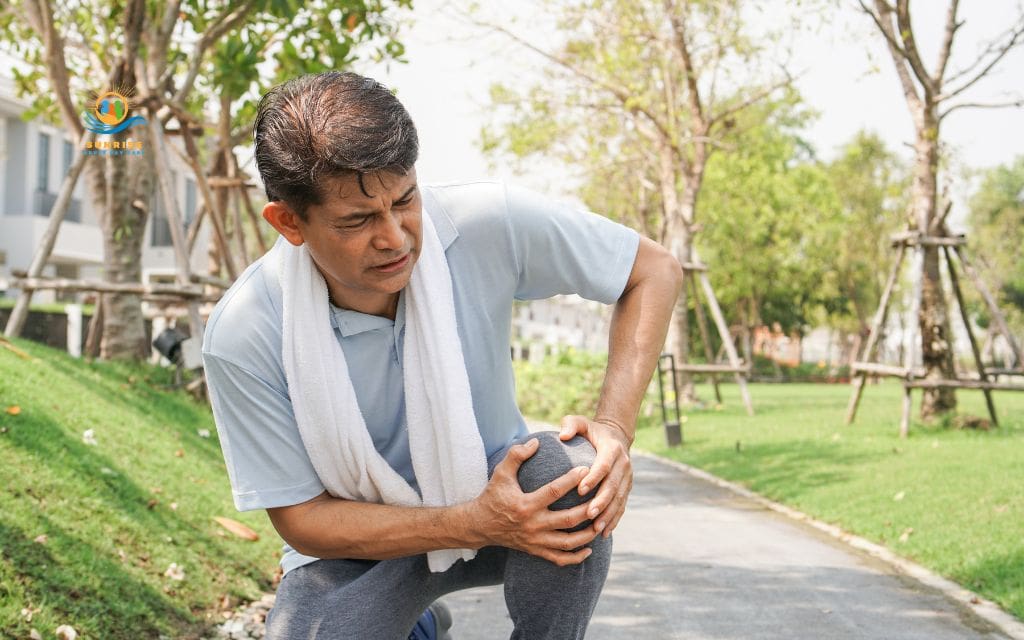
Osteoarthritis, particularly in the knees, hips, and ankles, is one of the most common sources of pain and stiffness in older adults. When movement hurts, it is natural to avoid it, but avoiding movement leads to weaker muscles, which then places even more pressure on the affected joints. This cycle of pain and inactivity is one of the biggest challenges in senior leg health.

leg strengthening exercises for seniors: What is the most common cause of leg weakness in seniors?
What is the most common cause of leg weakness in seniors?

Balance and nerve problems

Conditions that affect the nervous system or blood circulation can cause numbness, tingling, or instability in the legs. Peripheral neuropathy is one example. Poor circulation from cardiovascular conditions can also reduce sensation and coordination in the lower limbs. These issues make it harder for seniors to feel where their feet are, increasing fall risk and reducing confidence while walking.

만성 건강 상태

Conditions such as diabetes, heart disease, stroke, and Parkinson’s disease can all affect leg strength, mobility, and endurance. Stroke survivors, for example, may have weakness or limited function on one side of the body. Parkinson’s disease affects motor control and gait. Seniors managing these conditions benefit from exercises tailored to their specific needs, often under medical supervision or within a structured wellness program.

Why leg strength matters for seniors

Investing time in leg strengthening exercises for elderly adults pays dividends that go far beyond the gym. Here is why strong legs are so important for older adults’ everyday lives.

Supports safer walking

Strong legs allow seniors to walk with a steadier, more controlled stride. Weak legs often lead to shuffling, shortened steps, or difficulty clearing the ground – all of which increase the risk of tripping. Exercises targeting the thighs, hips, and calves help older adults maintain a more natural, confident walking pattern.

Helps prevent falls

Falls are the leading cause of injury-related deaths among adults 65 and older, according to the Centers for Disease Control and Prevention (CDC). Stronger leg muscles and improved balance are among the most effective strategies for fall prevention.

Exercises like side leg raises, standing knee lifts, and single-leg balance drills directly train the muscles that catch and stabilize the body when balance is disrupted.

Improves balance and stability

Balance depends on a coordinated system of leg muscles, core strength, and proprioception – the body’s sense of where it is in space. Regular lower body exercises for seniors train all three components. Over time, seniors who exercise consistently notice they feel more stable on uneven surfaces, on stairs, and when changing direction.

Helps maintain independence

Basic daily activities all depend on leg strength. As leg strength improves, seniors often find they need less help from family members or caregivers, which also contributes positively to confidence, mood, and quality of life.

Supports joint health and mobility

Stronger muscles act as shock absorbers for the joints. When the muscles around the knees and hips are well-conditioned, they help distribute weight more evenly and reduce the stress placed on cartilage and bone. Regular, gentle leg exercise for seniors can actually help reduce arthritic joint pain over time by improving muscle support and maintaining flexibility.

leg strengthening exercises for seniors: Why leg strength matters for seniors
Why leg strength matters for seniors

Safety tips before starting leg exercises

Getting the most out of lower body exercises for elderly adults starts with exercising safely. These simple precautions help seniors avoid injury and build confidence from the very first session.

Start slowly and build gradually

Begin with just a few repetitions of each exercise and gradually increase over days and weeks. There is no need to push through fatigue or discomfort. The goal is steady, sustainable progress, not a single breakthrough session.

Use a chair or wall for support

Many of the exercises in this guide can be done while holding a sturdy chair back or resting a hand on a wall. Using support is not a sign of weakness, it is a smart safety strategy that allows seniors to focus on proper movement rather than worrying about balance.

Wear supportive shoes

Avoid exercising in socks or bare feet on hard floors, which increases slip risk. Wear well-fitted athletic or walking shoes with non-slip soles and adequate arch support.

Stop if you feel sharp pain or dizziness

Mild muscle fatigue is normal and expected. Sharp, shooting, or joint pain is not. If a senior feels sudden pain, dizziness, chest tightness, or shortness of breath, they should stop immediately and rest. If symptoms persist, seeking medical attention is important. 

Talk to a doctor before starting new exercises

Seniors with heart conditions, recent surgeries, osteoporosis, severe arthritis, or other chronic health conditions should consult with their physician or physical therapist before beginning a new exercise routine. A healthcare provider can help identify which exercises are most appropriate and which should be modified or avoided.

Exercise with supervision if needed

For seniors who are new to exercise, recovering from an illness, or managing balance problems, exercising with a trained instructor, caregiver, or wellness professional adds an important layer of safety. Supervised exercise also provides real-time feedback on form and technique, which helps prevent injury and maximizes results.

15 safe leg strengthening exercises for seniors to start today

The following leg strengthening exercises for seniors cover the full range of lower body muscles – thighs, hamstrings, hips, calves, and glutes. Exercises marked as ‘beginner-friendly’ are ideal starting points for those new to exercise or recovering from weakness.

1. Sit to stand

The sit-to-stand is one of the single most practical exercises for weak legs in elderly adults because it directly mirrors one of the most common daily movements: getting up from a chair. It strengthens the quadriceps, glutes, and hip flexors all at once while also building the coordination and balance needed for safe standing.

사용 방법:

  1. Sit near the front edge of a sturdy chair with feet flat on the floor, hip-width apart.
  2. Lean slightly forward from the hips – do not round the back.
  3. Press through the heels and use the thighs and hips to rise to a standing position.
  4. Pause briefly at the top, then slowly lower back down as if sitting gently.
  5. Aim for 8 – 10 repetitions. Use armrests for support if needed.

2. Chair squats

Chair squats are a modified version of a traditional squat, using the chair as both a target and a safety net. This beginner-friendly lower body exercise for seniors builds leg strength safely, improves balance, and prepares the body for more demanding movements over time.

사용 방법:

  1. Stand in front of a sturdy chair with feet shoulder-width apart.
  2. Hold the chair back lightly for balance if needed.
  3. Slowly lower your hips backward and downward, as if you are about to sit, until your bottom just touches the seat.
  4. Push through both heels to stand back up without fully sitting.
  5. Repeat 8 – 10 times, keeping knees aligned over the toes throughout.

3. Seated leg extensions

Seated leg extensions are one of the safest and most effective leg exercises for elderly individuals with limited mobility, arthritis, or balance concerns. This exercise specifically targets the quadriceps – the large muscles at the front of the thigh that support the knee joint.

사용 방법:

  1. Sit upright in a sturdy chair with feet flat on the floor.
  2. Slowly straighten one leg until it is parallel to the floor, or as high as feels comfortable.
  3. Hold for 2 – 3 seconds at the top, squeezing the thigh muscles gently.
  4. Slowly lower the foot back to the floor.
  5. Complete 10 repetitions on each leg, alternating sides.

4. Calf raises

Calf raises are a simple standing exercise that strengthens the gastrocnemius and soleus muscles of the lower leg. These muscles are critical for walking, pushing off the ground with each step, and maintaining ankle stability. Regular calf raises also improve circulation in the lower legs, which is beneficial for seniors with peripheral vascular concerns.

사용 방법:

  1. Stand behind a sturdy chair and hold the back lightly with both hands.
  2. Rise up onto the balls of both feet, lifting the heels as high as is comfortable.
  3. Hold for 1 – 2 seconds at the top.
  4. Slowly lower the heels back to the floor.
  5. Repeat 10 – 15 times. For added challenge, try single-leg calf raises once comfortable.

5. Toe taps

Toe taps are a gentle, fully seated exercise ideal for seniors with significant leg weakness, stiffness, or limited standing ability. They encourage circulation in the feet and lower legs, help maintain range of motion in the ankles, and improve the foot control needed for safe walking.

사용 방법:

  1. Sit upright in a chair with feet flat on the floor.
  2. Lift the toes of one foot toward the ceiling while keeping the heel on the floor.
  3. Lower the toes back down.
  4. Alternate between feet, tapping each foot 10 – 15 times.
  5. For extra circulation benefit, perform gentle ankle rolls after completing the taps.

6. Standing knee lifts

Standing knee lifts target the hip flexors and core stabilizers while also challenging balance. This exercise is useful for improving the mechanics of walking and climbing stairs, both of which require the ability to lift the knee toward the chest in a controlled way.

사용 방법:

  1. Stand behind a sturdy chair and hold the back with one or both hands.
  2. Slowly lift one knee toward the chest, stopping at a comfortable height.
  3. Hold for 2 seconds, keeping the supporting leg slightly bent at the knee.
  4. Lower the foot back to the floor with control.
  5. Alternate legs for 10 repetitions each side.

7. Side leg raises

Side leg raises strengthen the gluteus medius and the muscles along the outer hip and thigh. These muscles are essential for lateral stability – the ability to stay balanced when shifting weight from side to side while walking. Strengthening them is a key strategy for reducing fall risk in older adults.

사용 방법:

  1. Stand beside a sturdy chair and hold the back for support.
  2. With both feet together and a slight bend in the standing knee, slowly lift one leg out to the side.
  3. Raise the leg 6 – 12 inches from the floor, no higher than hip level.
  4. Hold for 1 – 2 seconds, then slowly lower it back.
  5. Complete 10 – 12 repetitions on each side.

8. Leg curls

Leg curls target the hamstrings – the group of muscles running along the back of the thigh. The hamstrings play a vital role in controlling each step while walking, preventing the knee from hyperextending, and supporting the hip.

사용 방법:

  1. Stand behind a sturdy chair and hold the back for balance.
  2. Slowly bend one knee, bringing the heel toward the back of the thigh.
  3. Lift the heel as high as is comfortable without tilting the pelvis.
  4. Hold for 2 seconds at the top, then slowly lower the foot back to the floor.
  5. Repeat 10 – 12 times on each leg.

9. Marching in place

Marching in place is a gentle, rhythmic exercise that simultaneously improves leg strength, coordination, circulation, and cardiovascular endurance without placing any impact on the joints. It is one of the most accessible lower body exercises for elderly adults of all fitness levels and can be done seated or standing.

사용 방법:

  1. Stand behind a chair or sit upright in a sturdy seat.
  2. Begin alternately lifting each knee, mimicking the action of walking.
  3. Swing the opposite arm gently with each knee lift to engage coordination.
  4. Aim for 1 – 2 minutes of continuous marching, resting as needed.
  5. Gradually increase duration over time as endurance builds.

10. Lateral step ups

Lateral step ups replicate the motion of stepping onto a curb or low step, making them one of the most functional exercises for seniors who want to maintain the ability to navigate stairs and uneven terrain safely. This exercise strengthens the hip abductors, quadriceps, and glutes.

사용 방법:

  1. Stand beside a low, stable step or a sturdy step platform (4–6 inches high).
  2. Hold a wall or railing for support if needed.
  3. Step sideways onto the platform with one foot, then bring the other foot up.
  4. Step back down the same way, leading with the foot you stepped up with.
  5. Repeat 8 – 10 times to each side, controlling the movement in both directions.

11. Lunges

Lunges are one of the most effective exercises for building strength in the quadriceps, hamstrings, and glutes. Because they are more challenging than chair squats, they are best suited for seniors who have already built a foundation of leg strength. For those new to lunges, a chair or wall for support greatly reduces the difficulty and risk.

사용 방법:

  1. Stand tall beside a chair or wall for support.
  2. Step one foot forward, keeping the back foot in place.
  3. Slowly lower the back knee toward the floor, stopping when both knees form roughly a 90-degree angle.
  4. Push through the front heel to return to the starting position.
  5. Complete 8 repetitions on each leg, alternating sides.

12. Single leg RDL

The modified single-leg Romanian deadlift (RDL) is a balance and strength exercise that challenges the hamstrings, glutes, and core muscles all at once. It mimics the demands placed on the body when reaching forward for an object, which is a common moment when falls occur. This exercise is best performed with chair or wall support until balance and strength are well established.

사용 방법:

  1. Stand beside a sturdy chair and hold the back with one hand for support.
  2. Stand on one leg with a slight bend in the knee.
  3. Slowly hinge forward at the hips – not the waist – while extending the free leg behind you for counterbalance.
  4. Lower the torso until it is roughly parallel to the floor, or as far as is comfortable.
  5. Slowly return to an upright standing position. Complete 6–8 repetitions per side.

13. Ankle circles and tib raises

Ankle circles and tibialis anterior raises (tib raises) address 2 areas that are often overlooked in lower body exercises for seniors: ankle flexibility and the strength of the lower shin muscles. Together, these movements support proper foot clearance while walking, reduce stiffness around the ankle joint, and improve the fine-motor control needed for balance on uneven surfaces.

사용 방법:

  1. For ankle circles: Sit or stand and lift one foot slightly off the floor. Slowly rotate the foot in wide circles – 10 circles clockwise, then 10 counterclockwise. Repeat with the other foot.
  2.  For tib raises: Stand with heels on the floor and lift the front of both feet (toes toward the ceiling) as high as possible.
  3. Hold for 2 seconds, then lower the feet back to the floor.
  4. Repeat 10 – 15 times.
  5. Perform both movements together as a warm-up or cool-down pairing.

14. Glute bridges

The glute bridge is a floor-based exercise that powerfully targets the glutes, hips, and lower back without placing any stress on the knees. This exercise is gentle enough for most seniors and can be done on a firm yoga mat or exercise mat on the floor.

사용 방법:

  1. Lie on your back with knees bent, feet flat on the floor hip-width apart, and arms relaxed at the sides.
  2. Press through both heels and slowly lift the hips toward the ceiling, squeezing the glutes at the top.
  3. Hold the raised position for 2 – 3 seconds.
  4. Slowly lower the hips back to the floor without letting them drop suddenly.
  5. Repeat 10 – 12 times, focusing on a controlled tempo.

15. Wall sits

Wall sits build muscular endurance in the quadriceps, glutes, and calves using only body weight and a wall for support. Unlike a regular squat, the wall sit is a stationary hold, making it lower-risk and easier to control. It is effective for seniors who want to build the endurance needed for longer periods of standing and walking.

사용 방법:

  1. Stand with your back flat against a smooth wall and feet shoulder-width apart, about 1.5 – 2 feet out from the wall.
  2. Slowly slide your back down the wall until the thighs are roughly parallel to the floor, or stop at a comfortable height.
  3. Hold the position for 10 – 20 seconds, breathing steadily throughout.
  4. Slowly slide back up the wall to stand.
  5. Rest briefly and repeat 2 – 3 times. Gradually increase the hold duration over several weeks.

How often should seniors do leg exercises?

Consistency matters more than intensity when it comes to leg exercises for seniors. The following general guidelines align with recommendations from major health organizations for older adults:

  • Aim for 2 – 3 dedicated leg strengthening sessions per week, with at least 1 day of rest between sessions to allow muscles to recover and rebuild.
  • Short daily movement sessions – such as 10 minutes of seated toe taps, ankle circles, and calf raises – can also be beneficial.
  • Allow for adequate rest and recovery. Muscle soreness 24 – 48 hours after exercise is normal, but sharp or persistent joint pain is a signal to reduce intensity or seek guidance.
  • Pair leg strengthening with light walking, swimming, or other low-impact aerobic activity for the most well-rounded approach to senior fitness. 

성인 주간 프로그램이 시니어 피트니스를 지원하는 방법

While many seniors can begin these leg exercises at home, a structured daytime wellness program provides a level of consistency, supervision, and social support that is difficult to replicate independently.

Programs like Sunrise Adult Daycare in Denver offer a daytime, non-residential environment where older adults can exercise safely and stay active as part of a supported daily routine.

Guided exercise classes

Adult day programs often include structured group exercise classes led by trained wellness professionals. These classes are designed for the needs of older adults, including many of the leg exercises covered in this guide. Guided instruction ensures participants perform movements correctly and safely.

Safe and supervised movement

One of the biggest barriers to exercise for older adults with balance problems, chronic conditions, or recent health events is the fear of falling or getting hurt without help nearby.

In an adult day setting, staff are always present to provide hands-on support, modify exercises, and respond immediately if a participant needs assistance. This supervision makes it much easier for seniors to feel confident about staying active.

Structured wellness routines

Consistency is one of the hardest parts of any exercise program. In a structured adult day program, exercise is built into the daily schedule rather than left to chance. Participants who attend regularly benefit from the routine, accountability, and gradual progression that a well-run wellness program provides.

Social motivation and group activities

Exercising alongside peers in a supportive group environment adds an important dimension that solo home exercise lacks: social connection. Research consistently shows that older adults who exercise in groups are more likely to stick with their programs long-term. Shared encouragement, friendly competition, and the simple pleasure of moving together make exercise something to look forward to rather than a chore.

Health monitoring and support

Adult day programs often work in coordination with participants’ healthcare providers to monitor wellness goals and flag any changes in physical status. For seniors managing chronic conditions like diabetes, heart disease, or Parkinson’s, having trained staff observe their daily activity adds a meaningful layer of health oversight.

ABOUT SUNRISE ADULT DAYCARE, DENVER, COLORADO

Sunrise Adult Daycare is a daytime, non-residential 성인 주간 프로그램 serving older adults in Denver and the surrounding area. We offer structured daily activities, wellness programs, and a warm, supportive environment where seniors can stay active, connected, and cared for during the day. 

Contact us at 303-226-6882 to learn more about our wellness activities and daily programs for older adults.

결론

Stronger legs make everyday life safer, easier, and more enjoyable for older adults. Whether the goal is to walk more confidently, or simply feel more secure on your feet, the 15 leg strengthening exercises for seniors in this guide offer a practical, safe starting point for building real, lasting lower-body strength.

The most important thing is to begin, even with just a few gentle movements each day. Progress will follow. Over time, consistent exercise for legs for seniors leads to better balance, improved mobility, and greater confidence in daily activities. For older adults who benefit from extra structure, supervision, or social motivation, a daytime adult day program can be an ideal setting for staying active with support. 

자주 묻는 질문(FAQ)

What is the best exercise for seniors to strengthen their legs?

Leg strengthening exercises for seniors that work the largest muscle groups – such as sit-to-stand, chair squats, and calf raises – are generally considered the most effective because they mimic real daily movements.

Can elderly adults regain leg strength?

Yes, research shows that older adults, including those in their 80s and 90s, can meaningfully improve leg strength through regular exercise. While age-related muscle loss cannot be fully reversed, consistent lower body exercises for elderly adults can rebuild muscle mass, improve endurance, and enhance functional strength.

How do you treat weak legs in the elderly?

Addressing weak legs in elderly adults typically involves a combination of regular leg exercises, adequate protein intake to support muscle building, and in some cases physical therapy. For seniors with underlying conditions such as peripheral neuropathy or arthritis, working with a healthcare provider to address the root cause is also important.

What exercises help improve balance in elderly adults?

Balance-focused exercises such as standing knee lifts, side leg raises, single-leg RDL (with support), and marching in place are particularly effective for improving stability in older adults. These exercises train the muscles and coordination systems that keep the body upright during movement. Tai chi and yoga adapted for seniors are also well-supported approaches for balance improvement.

Can seniors with arthritis do leg exercises?

Yes, seniors with arthritis can and should do leg exercises, with appropriate modifications. Low-impact, seated exercises like seated leg extensions, toe taps, and ankle circles are gentle on arthritic joints while still building the supporting muscles that reduce joint stress. It is important to avoid exercises that cause sharp joint pain, and a physical therapist can help design an arthritis-friendly routine tailored to specific joints and severity.

Are chair leg exercises effective?

Chair leg exercises are highly effective for older adults, particularly those with limited standing tolerance, balance concerns, or significant leg weakness. Seated movements such as leg extensions, toe taps, and seated marching strengthen the major muscle groups of the lower body while keeping the body fully supported.

관련 게시물

돌보기 쉬운 노인을 위한 최고의 개 품종 27가지

돌보기 쉬운 노인을 위한 최고의 개 품종 27가지

14 최소 읽기Many older adults are drawn to the idea of having a dog. ...
25 easy recipes for people with no teeth that taste good

25 easy recipes for people with no teeth that taste good

20 최소 읽기According to the Centers for Disease Control and Prevention (CDC), nearly 1 ...
50 easy crafts for people with dementia: Calm & creative

50 easy crafts for people with dementia: Calm & creative

10 최소 읽기Dementia can make even ordinary moments feel confusing, frustrating, or isolating for ...
위로 스크롤