How much b12 should an older woman take? Vitamin B12 is a water-soluble vitamin your body needs every day to build healthy red blood cells, maintain nerve function, and support brain health. While B12 is essential at every age, it becomes especially critical for women over 50.
If you’re a woman navigating your 60s, 70s, or beyond, you’re not alone in wondering about B12. Studies show that up to 43% of older adults have insufficient B12 levels, often without realizing it.
This guide is specifically focused on older women (ages 50–70+) because you face unique risk factors that younger adults don’t encounter. Your stomach produces less acid with age, making it harder to extract B12 from food. Common medications can further block absorption. And many older women naturally eat smaller portions or shift toward plant-forward diets, reducing dietary B12 intake.
Whether you’re trying to prevent deficiency, or wondering if your current multivitamin is enough, this guide will give you clear, medically responsible answers you can bring to your next healthcare appointment.
TLDR: How much B12 should an older woman take daily?
Let’s start with the direct answer many of you came here to find.
Recommended daily amount (RDA)
The official Recommended Dietary Allowance (RDA) for all adults ages 14 and older, including older women, is 2.4 micrograms (mcg) per day from all sources combined (food plus supplements). This baseline has remained consistent for decades.
However, newer guidance from nutrition researchers and geriatric specialists recognizes an important reality: older adults don’t absorb B12 as efficiently as younger people. Because of reduced stomach acid and age-related changes in the digestive system, many experts now suggest that adults over 50 may need 10–12 mcg per day from food and supplements combined to maintain healthy blood levels.
Typical daily supplement ranges for older women
If you do NOT have a diagnosed B12 deficiency:
For general maintenance in healthy older women, a common approach is taking 25–100 mcg per day of supplemental B12. This amount often comes built into standard multivitamins or B-complex formulas and works well for many women who eat some animal foods and don’t take medications that interfere with B12 absorption.
If you’re 65+ or have risk factors:
Risk factors include low stomach acid, taking metformin for diabetes, using proton pump inhibitors (PPIs like omeprazole) or H2 blockers for acid reflux, following a vegetarian or vegan diet, or having had gastrointestinal surgery. In these situations, research and expert reviews suggest that taking up to 500 mcg per day can help older adults maintain healthy B12 levels.
If you’re already deficient (doctor-diagnosed)
Treatment for confirmed B12 deficiency is different from prevention. Typical medical regimens include:
- Oral treatment: Around 1,000 mcg per day for an initial period (often 1–3 months), followed by lower maintenance doses (such as 100–500 mcg daily).
- Injection treatment: For severe deficiency or conditions like pernicious anemia where oral absorption is very poor, doctors often prescribe 1,000 mcg injections, typically given weekly for 4–8 weeks, then monthly for maintenance.
Important: Deficiency treatment must be guided by a clinician. Self-treating without proper testing and monitoring can mask serious underlying conditions and delay appropriate care.

What vitamin B12 does in older women’s bodies
Understanding what B12 actually does helps explain why maintaining adequate levels matters so much as you age.
Red blood cell formation: B12 is essential for producing healthy, properly sized red blood cells. Without enough B12, your body makes oversized, fragile red blood cells that don’t carry oxygen efficiently. This can lead to a specific type of anemia that causes fatigue, weakness, and shortness of breath.
Nerve and brain health: B12 maintains the protective coating (myelin sheath) around your nerve fibers. This coating is critical for proper nerve signaling throughout your body. Adequate B12 supports memory, concentration, mood stability, and the nerve function that controls balance and coordination.
DNA synthesis: Every cell in your body needs B12 to replicate DNA properly. This affects everything from immune function to tissue repair and healing.
Bone and heart health support: B12 helps regulate homocysteine, an amino acid that, at elevated levels, is associated with increased risk of osteoporosis and cardiovascular disease.
Effects of vitamin B12 deficiency
B12 deficiency can develop slowly over months or years, making it easy to miss in its early stages. Understanding the progression of symptoms helps you recognize when it’s time to ask your doctor for testing.
Early, often overlooked symptoms
The earliest signs of B12 deficiency are subtle and often mistaken for normal aging or stress:
- Mild fatigue and low energy: Feeling more tired than usual during everyday activities, needing more rest than before.
- Subtle memory issues or “brain fog”: Trouble finding words, forgetting appointments more often, difficulty concentrating on conversations or tasks.
- Lightheadedness or shortness of breath with exertion: Feeling winded climbing stairs that never used to bother you, or experiencing dizziness when standing up.
- Pale skin or mild weakness: A washed-out complexion or general feeling of physical weakness without an obvious cause.
These symptoms are easy to dismiss, but they’re your body’s early warning system that something needs attention.
Neurological & cognitive effects
As deficiency progresses, neurological symptoms become more pronounced and concerning:
- Numbness or tingling in hands and feet (peripheral neuropathy): Often described as “pins and needles,” this sensation typically starts in the extremities and can become constant and uncomfortable.
- Poor balance, unsteady walking, increased fall risk: You might feel less steady on your feet, shuffle more when walking, or notice difficulty with activities that require coordination.
- Mood changes: Unexplained irritability, persistent low mood, increased anxiety, or apathy about activities you used to enjoy.
- Worsening memory, confusion, or dementia-like symptoms: More significant cognitive changes that interfere with daily function. These symptoms can mimic Alzheimer’s disease, which is why B12 testing is crucial in any cognitive evaluation.

Blood & physical health effects
B12 deficiency affects your blood and physical health in distinctive ways:
- Megaloblastic anemia: Your bone marrow produces oversized, fragile red blood cells that break down easily, leading to anemia despite adequate iron intake.
- Faster heart rate and shortness of breath: As anemia worsens, your heart works harder to circulate oxygen-poor blood, causing palpitations and breathlessness even at rest.
- Sore, smooth, or swollen tongue; mouth ulcers: A glossy, bright red tongue that’s painful or tender is a telltale sign. Some women also develop recurring mouth sores.
Long-term risks if deficiency is not treated
Without treatment, severe B12 deficiency can cause lasting damage:
- Possible permanent nerve damage: If severe deficiency continues for an extended period, nerve damage may become irreversible even after B12 levels are restored. This is why early detection matters.
- Worsening cognitive decline and loss of independence: Untreated cognitive symptoms can progress to the point where you need assistance with daily activities, medication management, and financial decisions.
- Increased fall risk and injury: The combination of balance problems, muscle weakness, and numbness significantly raises your risk of dangerous falls that can lead to fractures, hospitalization, and rapid decline.
When to seek medical attention urgently
While B12 deficiency usually develops gradually, certain symptoms require immediate medical evaluation:
- Sudden or rapidly worsening numbness, weakness, or difficulty walking
- Significant confusion, behavior changes, or personality changes that come on quickly
- Symptoms of severe anemia: chest pain, extreme fatigue, very short of breath, rapid or irregular heartbeat
These symptoms could indicate severe deficiency or other serious conditions that need prompt diagnosis and treatment.
Why older women are at higher risk of low B12
Understanding your specific risk factors helps you decide whether you need more aggressive B12 supplementation or testing.
Age-related changes in absorption
Your stomach naturally produces less hydrochloric acid as you age. You need stomach acid to separate B12 from the proteins in food. Without adequate acid, the B12 in your steak, eggs, or yogurt largely passes through unabsorbed.
Many older adults also develop atrophic gastritis, a condition where the stomach lining becomes inflamed and thinned, further reducing acid production and intrinsic factor (a protein essential for B12 absorption).
Common medications that lower B12
Several medications commonly prescribed to older women interfere with B12 absorption:
- Metformin (for type 2 diabetes): Used by millions of women over 50, metformin can reduce B12 absorption by up to 30%. If you’ve been taking metformin for several years, routine B12 monitoring is essential.
- Proton pump inhibitors (PPIs): Medications like omeprazole (Prilosec), lansoprazole (Prevacid), and esomeprazole (Nexium) reduce stomach acid production. Long-term use (more than 1–2 years) significantly increases B12 deficiency risk.
- H2 blockers: Ranitidine (no longer available), famotidine (Pepcid), and similar medications also reduce stomach acid, though typically less severely than PPIs.
- Other medications: Colchicine (for gout), certain seizure medications, and some antibiotics can interfere with B12 absorption when used long-term.
If you take any of these medications regularly, discuss B12 testing and supplementation with your healthcare provider.
Diet patterns and health conditions
- Reduced animal food intake: Many older women naturally eat less meat as they age – whether due to dental issues, reduced appetite, fixed incomes, or intentional dietary choices. Since B12 occurs naturally only in animal products (meat, fish, eggs, dairy), eating less of these foods reduces dietary B12 intake.
- Vegetarian and vegan diets: Plant-based diets contain virtually no natural B12 unless you consume fortified foods. If you follow a vegetarian or vegan eating pattern, B12 supplementation is essential.
- Gastrointestinal surgery and conditions: Weight loss surgery (gastric bypass), removal of part of the stomach or small intestine, celiac disease, Crohn’s disease, and pernicious anemia all severely impair B12 absorption. Women with these conditions typically need high-dose oral B12 (1,000+ mcg daily) or regular B12 injections.
How much B12 should you take?
This section uses simple “if/then” decision pathways to help you determine the right B12 dose for your situation.
If you’re 50+
You’re in relatively good health, eat meat/fish/eggs/dairy regularly, don’t take medications that interfere with B12, and have no digestive conditions. Aim for at least 2.4 mcg per day total B12, which you can likely achieve through:
- A varied diet including animal foods several times per week, PLUS
- A standard multivitamin providing about 25–50 mcg of B12
Consider having your B12 level checked at your annual physical if you haven’t been tested recently, especially if you’re over 65.
If you’re 65+
You’re 65 or older, OR you take medications like PPIs or metformin, OR you’ve had mild digestive issues, OR you eat less meat than you used to. Consider a daily B12 supplement in the 100–500 mcg range for maintenance. Research suggests that many older adults benefit from doses in this range to compensate for reduced absorption.
Some nutrition experts specifically recommend 500 mcg once daily alongside a B12-rich diet for older adults with risk factors, as this dose has been shown in studies to maintain healthy blood levels.
Talk with your clinician before starting higher-dose supplements, especially if you’re taking multiple medications or have kidney disease.
If you’re vegetarian or vegan
You likely need a B12 supplement even if you feel perfectly healthy, because plant foods don’t contain reliable B12 sources. Options include:
- 250–500 mcg per day from a B12 supplement, OR
- Multiple servings of fortified foods throughout the day (fortified cereals, plant milks, nutritional yeast) providing a total of at least 6–10 mcg daily
B12 deficiency can take years to develop, and by the time you notice symptoms, you may already have nerve damage. Prevention is far easier than treatment.
Ask your healthcare provider to check both serum B12 and methylmalonic acid (MMA) levels periodically. MMA is a more sensitive marker that can detect deficiency earlier than B12 alone.
If you’ve been told your b12 is low
Typical treatment approaches (general examples – your doctor will individualize this):
- Oral treatment: 1,000 mcg per day for an initial period (often 1–3 months), then stepping down to a maintenance dose of 100–500 mcg daily depending on your absorption capacity and risk factors.
- Injection treatment: 1,000 mcg injections administered by a healthcare provider, typically weekly for 4–8 weeks to replenish stores, then monthly injections for ongoing maintenance. Injections bypass the digestive system entirely, making them ideal for severe deficiency or malabsorption conditions.
Follow your doctor’s prescribed treatment plan exactly, and keep all follow-up appointments for retesting. Some women need treatment adjustments based on how their levels respond.

Getting enough B12 from food, fortified foods, and supplements
Even with the absorption challenges of aging, food remains an important B12 source, especially when combined with appropriate supplementation.
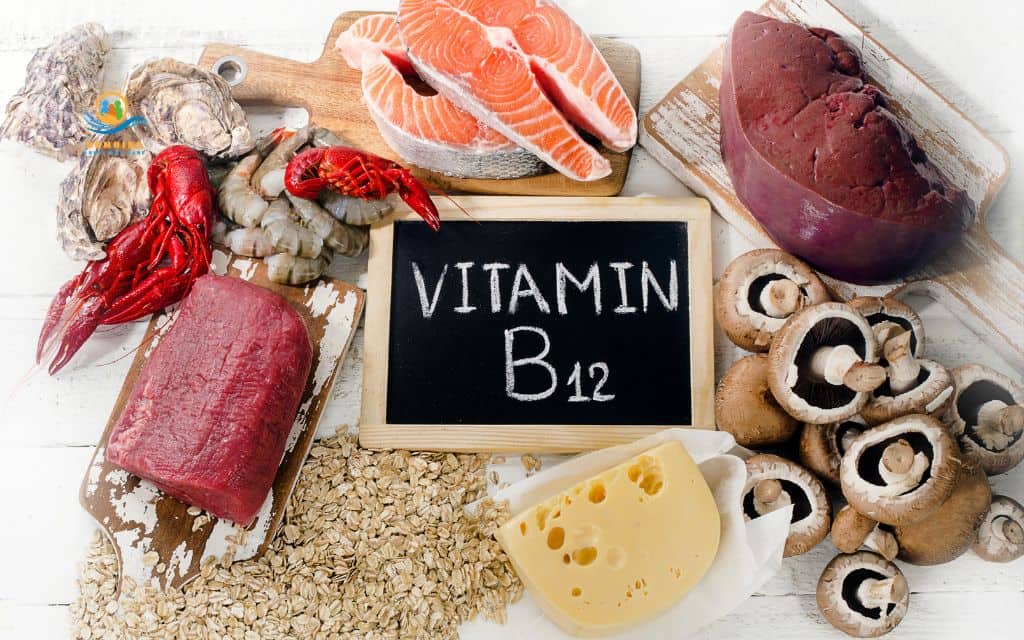
Best food sources for older women
Here are B12-rich foods with approximate amounts per serving:
Highest sources (20+ mcg):
- Beef liver, 3 ounces: 70+ mcg
- Clams, 3 ounces: 84 mcg
Excellent sources (2–6 mcg):
- Salmon, 3 ounces: 4.8 mcg
- Tuna, 3 ounces: 2.5 mcg
- Ground beef, 3 ounces: 2.4 mcg
- Turkey, 3 ounces: 1.6 mcg
Good sources (0.5–2 mcg):
- Milk, 1 cup: 1.2 mcg
- Yogurt, 6 ounces: 1.0 mcg
- Cheese, 1 ounce: 0.5–1.0 mcg
- Egg, 1 large: 0.6 mcg
Fortified foods for low-meat or plant-forward diets
If you’re eating less meat or following a plant-based diet, fortified foods can help bridge the gap:
- Breakfast cereals: Many cereals are fortified with 25–100% of the daily value for B12 (check the Nutrition Facts label). Some brands provide 6 mcg per serving.
- Nutritional yeast: A popular vegan staple, fortified nutritional yeast typically provides 2–8 mcg per tablespoon. Sprinkle it on popcorn, pasta, or salads.
- Plant-based milks: Fortified almond, soy, oat, and coconut milks often contain 1–3 mcg per cup – but always check labels, as not all brands fortify.
- Meat alternatives: Some veggie burgers, plant-based meats, and meat-free deli slices are fortified with B12. Check packaging to confirm.
Fortified foods can contribute meaningful B12, but you need to eat them consistently. For most older women, combining fortified foods with a B12 supplement provides the most reliable protection against deficiency.
Supplement types and how to choose
- Tablets and capsules: The most common and usually the most cost-effective. They’re absorbed well for the majority of older women, even those with mild absorption issues, especially at higher doses (100+ mcg).
- Sublingual lozenges: Dissolve under your tongue for absorption through the mucous membranes. These may be helpful if you have difficulty swallowing pills or prefer a pleasant-tasting option, but they’re not necessary for most people.
- Liquid drops or sprays: Another alternative for those who can’t or prefer not to swallow pills. Absorption is similar to tablets for most users.
- Injections: Administered by a healthcare provider, injections are reserved for severe deficiency, pernicious anemia, or other malabsorption conditions. They’re not available over-the-counter and require a prescription.
Conclusion
Maintaining healthy B12 levels is one of the simplest yet most impactful steps older women can take to protect energy, cognitive function, and independence. Whether you need 25 mcg daily or 500 mcg, consistent supplementation paired with B12-rich foods provides reliable protection against deficiency.
If you haven’t had your B12 tested recently, ask your healthcare provider to include it in your next blood panel – early detection and treatment prevent the serious neurological and cognitive complications that can develop from prolonged deficiency.
With the right daily dose and a simple routine, you can maintain the vitality and mental clarity that keep you active and engaged in the life you love.
________________
How Sunrise Adult Daycare Supports Your Nutritional Health
At Sunrise Adult Daycare in Denver, we understand that maintaining proper nutrition and medication routines is essential for senior health and well-being.
Our professional staff provides medication management supervision to ensure you take your daily B12 supplements and other vitamins consistently, while our nutritious meal programs include B12-rich foods like eggs, dairy, fish, and fortified options for vegetarian participants.
Through structured daily activities, health monitoring, and caring support in a social environment, we help older adults maintain the healthy habits – including proper supplementation – that protect cognitive function, energy levels, and independence as you age.
Contact us today to learn how our adult daycare programs can support your nutritional health and overall wellness in a warm, engaging community setting.
Frequently asked questions (FAQs)
Do older women need more B12 than younger adults?
While the official RDA remains 2.4 mcg daily for all adults, older women often need 10–12 mcg or more from food and supplements combined to achieve healthy blood levels due to reduced stomach acid and absorption capacity. Most experts recommend women over 50 get the majority of their B12 from supplements or fortified foods rather than relying on food alone.
Is 1,000 mcg of B12 per day too much for a woman over 65?
No, 1,000 mcg daily is safe and commonly prescribed to treat diagnosed deficiency. B12 is water-soluble, so excess is safely excreted through urine with no toxicity risk. However, for general maintenance without deficiency, 100–500 mcg daily is typically sufficient and more cost-effective.
How long does it take to feel better after starting B12?
Energy and fatigue often improve within 1–2 weeks of starting supplementation if you are deficient. Neurological symptoms like numbness and balance problems take longer – typically 3–6 months – while cognitive improvements develop gradually over 2–3 months.
Can I rely on food alone for B12 if I’m over 70?
For most women over 70, food alone is not reliable because age-related stomach acid reduction significantly impairs B12 extraction from animal foods. Supplements or fortified foods provide essential protection against deficiency even when you eat B12-rich foods regularly.
Should I take B12 in the morning or at night—and with or without food?
B12 can be taken any time of day with or without food—absorption doesn’t depend on timing or meals. Many people prefer morning doses for consistency and because B vitamins support energy, but choose whatever time helps you remember to take it daily.