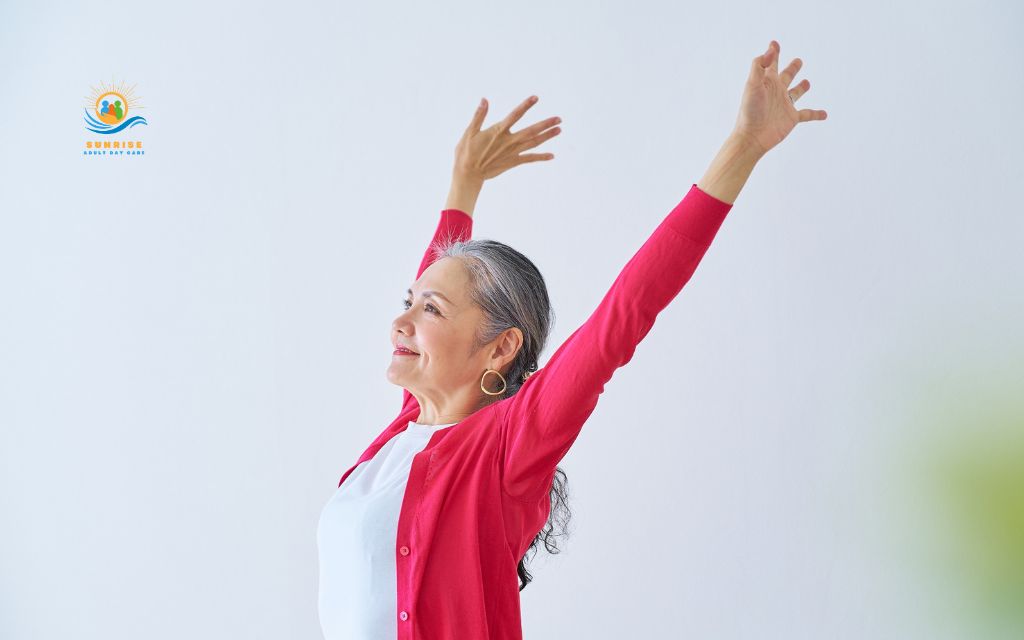
Stretching exercises for old people doesn’t mean contorting into pretzel shapes or attempting gymnastics. It means slow, controlled movements that help your joints move more freely, your muscles relax, and your body remember what comfortable movement feels like.
Studies show stretching can reduce joint pain, lower the risk of falls, and help maintain the independence that makes life worth living. According to the National Council on Aging, flexibility exercises are a crucial component of healthy aging, directly supporting the movements we take for granted until they start to hurt.
Here’s what this article will give you:
- A simple 8 stretching exercises for old people with chair options for every stretch
- Clear safety rules so you know when to stop, and when to talk to your doctor first
Let’s help your body move better, hurt less, and keep you doing what you love.
Why stretching matters more as you get older
What “flexibility” really means in everyday life
When healthcare providers talk about “flexibility” and “range of motion,” they’re not describing your ability to touch your toes (though that’s nice if you can). They’re talking about something much more practical: how far your joints can move comfortably through their natural paths.
For example: reaching overhead, turning your head, getting up from a chair, walking steadily, bending forward,… When joints get stiff – from arthritis, inactivity, or simply decades of wear – these everyday movements become harder, slower, and sometimes painful.
That’s where gentle stretching exercises for seniors come in: they help maintain the mobility your daily life depends on.
Key benefits of stretching for seniors
Regular stretching exercises for older adults deliver benefits that go far beyond being able to touch your toes. Here’s what research and clinical practice show:
Mobility & independence
Flexible muscles and joints make walking, bending, turning, and reaching easier. That translates directly into independence: dressing yourself, cooking meals, getting in and out of cars, and moving through your home safely without assistance.
Less stiffness & joint pain
Gentle stretches increase blood flow to muscles and help synovial fluid (your body’s natural joint lubricant) move more freely. This is helpful for common trouble spots: stiff necks from looking down at phones or books, tight shoulders from rounded posture, achy hips from sitting, and sore knees from years of use. While stretching won’t cure arthritis, many older adults report feeling less stiff and moving more comfortably when they stretch regularly.
Better posture & breathing
Years of sitting, computer work, or simply gravity’s pull can round your shoulders forward and compress your chest. Chest and upper-back stretches help counter this “forward slump,” opening your rib cage so you can take deeper, easier breaths.
Balance & fall prevention
Flexible ankles, calves, and hips allow for longer, more controlled strides and quicker balance reactions when you stumble. The National Institute on Aging emphasizes that flexibility work, combined with strength and balance training, significantly reduces fall risk in older adults. Tight muscles restrict movement and make it harder to catch yourself when you trip.
Mental well-being & stress relief
Gentle stretching activates your parasympathetic nervous system – your body’s “rest and digest” mode. Many older adults find that a daily stretching routine feels meditative, reducing anxiety and helping tight muscles (and tight minds) relax. It’s 10 – 15 minutes of quiet, focused self-care in a world that often feels rushed.
Getting set up: Chairs, walls, and simple tools
You don’t need a gym membership, expensive equipment, or even the ability to get down on the floor to do effective stretches for seniors. Here’s what makes these stretching exercises safe and accessible:
Recommended equipment
A sturdy, non-rolling chair with a backrest: Choose one without wheels that won’t slide across the floor. Armrests are optional. Some people find them helpful for stability; others prefer open sides for easier movement. Dining room chairs or solid office chairs work well.
A wall or kitchen countertop: Use these for balance during standing stretches. Even if your balance is generally good, having a hand on something stable reduces fall risk and lets you focus on the stretch instead of wobbling.
A towel or yoga strap (optional): If you can’t reach your foot or ankle comfortably, loop a towel around your foot to extend your reach safely. No special equipment needed.
Clothing and footwear
Wear comfortable, non-restrictive clothing that won’t bind when you bend or lift your arms – loose pants and a comfortable shirt are perfect. For footwear, choose supportive shoes with non-slip soles if you’re standing, or bare feet if you’re on a non-slip surface and it feels safe. Avoid socks on slippery floors.
Group setup for adult day programs or assisted living
If you’re an activity director or caregiver leading a group session of elderly stretching, here’s how to set up the space safely:
- Arrange chairs in a semicircle facing you (the instructor) so everyone can see demonstrations clearly
- Allow 3 – 4 feet between chairs so participants have room to extend their legs without kicking their neighbor
- Keep walkers, canes, and wheelchairs close by so no one has to walk far to retrieve them
- Have water available and remind participants to sip between stretches
- Start with a brief safety reminder: If anything hurts, stop that stretch. Everyone’s body is different, and there’s no prize for pushing through pain.
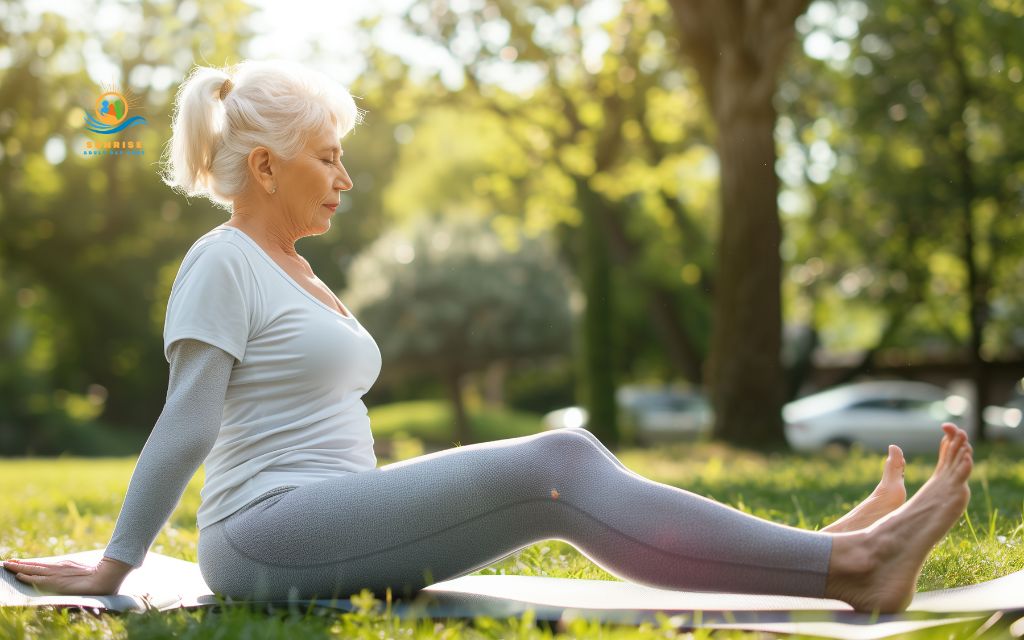
8 safe stretching exercises for old people
This core routine gives you a complete set of gentle stretching exercises for old people that targets the areas most important for daily living – neck, shoulders, back, hips, legs, and ankles.
Each stretch can be done seated or with chair support, making them appropriate whether you’re at home, in an adult day program, or helping a loved one.
Antes de empezar: Warm up with 5–10 minutes of light movement – marching in place while seated, slow arm circles, or a short walk around the room. Move into each stretch slowly, breathe steadily, and aim for a gentle pull, never sharp pain.
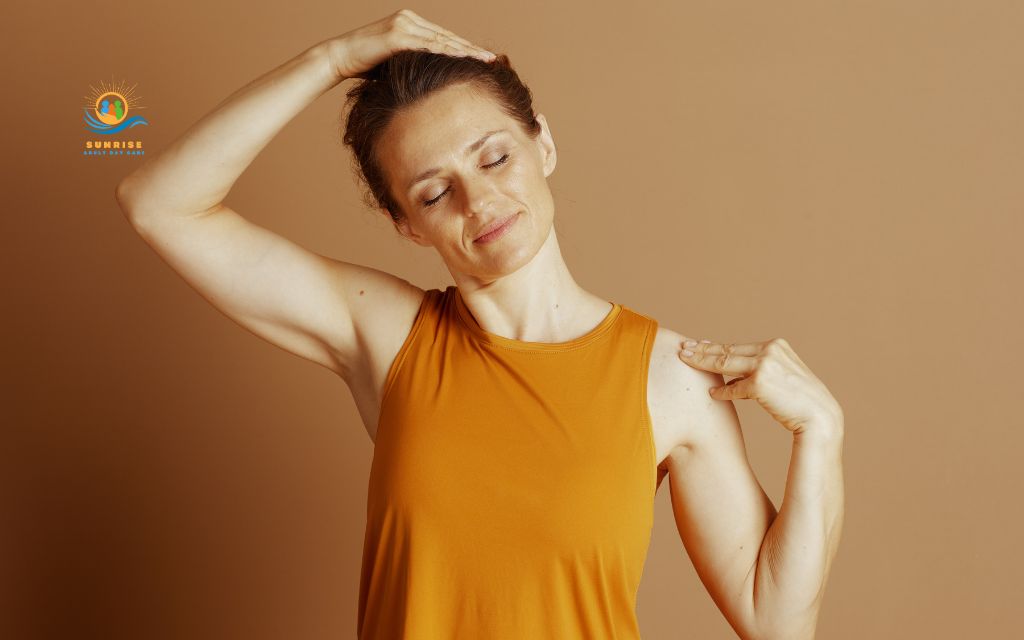
Neck stretch (seated or standing)
Reduces stiffness in the neck and improves your ability to turn your head when driving, reading, or checking around corners. Movements that get harder when neck muscles tighten with age.
Cómo hacerlo:
- Sit tall in a sturdy chair with feet flat on the floor, or stand with feet hip-width apart near a wall for balance if needed.
- Keep shoulders relaxed and down, away from your ears.
- Slowly tilt your right ear toward your right shoulder. Let the weight of your head create the stretch—don’t force it.
- Hold for 15–30 seconds, breathing calmly.
- Return to center slowly, then repeat on the left side.
- Next, gently turn your chin toward your right shoulder as if looking over it. Hold 15–30 seconds.
- Return to center, then turn left.
What you should feel: A gentle pull along the side or back of your neck, never sharp pain or tingling down your arm.
Chair option: This stretch works perfectly while seated. Keep both feet grounded and hands resting on your thighs for stability.
Shoulder & chest stretch (seated or doorway)
Opens tight chest and shoulder muscles that develop from rounded posture, making it easier to reach shelves, get dressed, and breathe more deeply.
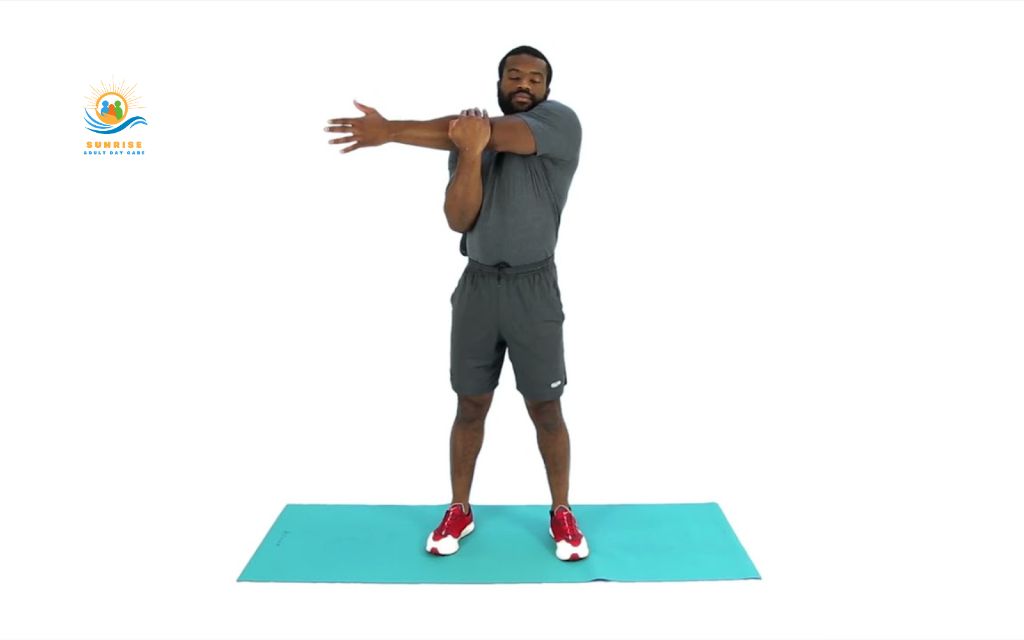
Option A: Seated cross-body shoulder stretch
Cómo hacerlo:
- Sit upright in your chair with feet flat.
- Bring your right arm across your chest at shoulder height.
- Use your left hand to gently press the right arm closer to your chest.
- Hold 15–30 seconds, keeping shoulders down and relaxed.
- Release and repeat on the other side.
What you should feel: A gentle stretch across the back of your shoulder and upper arm.
Option B: Doorway or wall chest stretch (standing)
Cómo hacerlo:
- Stand in a doorway or at a corner wall.
- Place your right forearm against the door frame, elbow bent at 90 degrees and at shoulder height.
- Gently step forward with your right foot until you feel a stretch across the front of your chest and shoulder.
- Hold 15–30 seconds, breathing steadily.
- Step back, switch sides.
What you should feel: A pleasant opening across your chest, especially if you tend to slump forward.
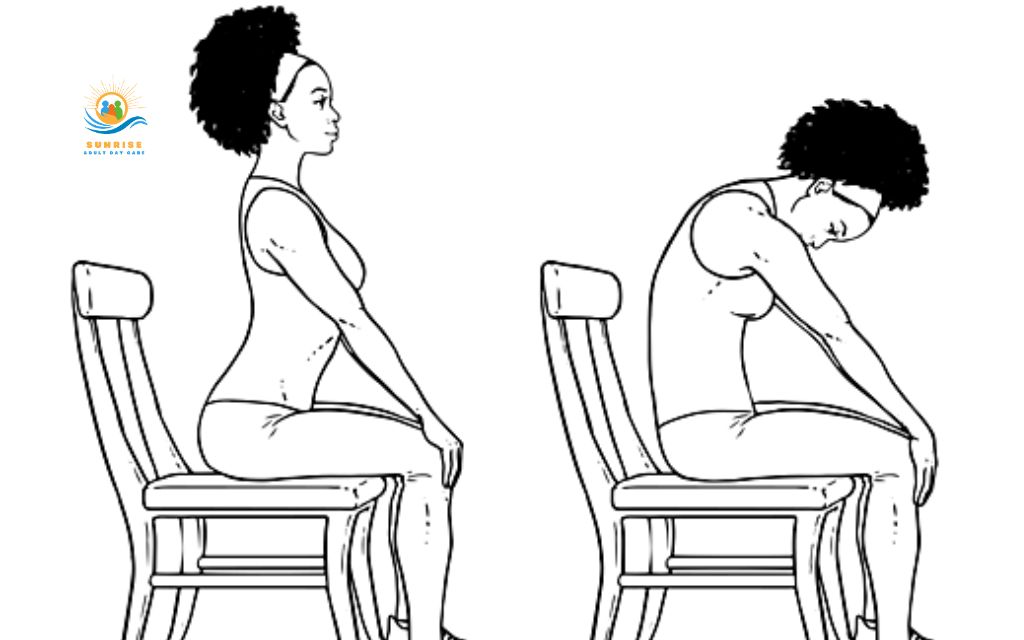
Seated cat–cow (upper back & spine)
Gently moves the spine through rounding and arching, reducing stiffness in the upper and mid-back that makes sitting upright and breathing comfortably harder.
Cómo hacerlo:
- Sit toward the front edge of a sturdy chair, feet flat and hip-width apart.
- Place your hands on your thighs or lightly on the seat beside your hips.
- Cat position: Slowly round your back, tucking your chin toward your chest and pulling your belly button toward your spine. Imagine curving into a gentle C-shape.
- Hold for 3 – 5 seconds, breathing out.
- Cow position: Slowly arch your back the opposite way, lifting your chest and gently looking up (not all the way back). Let your shoulder blades slide down your back.
- Hold for 3 – 5 seconds, breathing in.
- Repeat this slow rounding and arching 5 – 8 times, moving with your breath.
What you should feel: Gentle movement through your entire spine, loosening tight muscles between your shoulder blades and lower back.
Chair option: This is already a seated stretch. If balance is a concern, keep both hands on your thighs throughout.
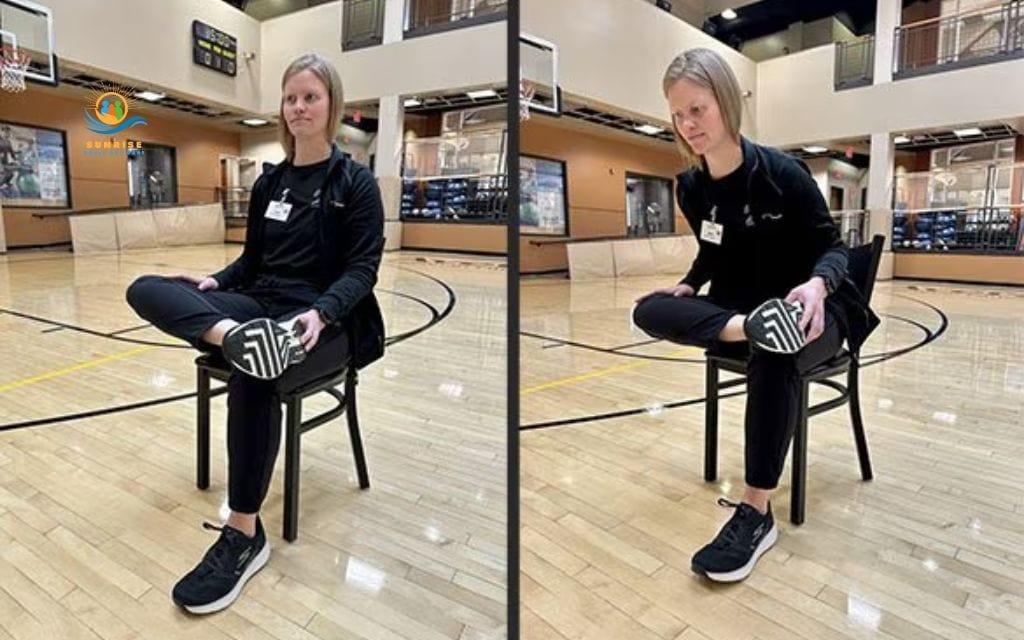
Seated hip stretch / figure-four stretch
Eases tightness in the hips and outer glutes, areas that stiffen from prolonged sitting. More flexible hips reduce lower-back strain and make getting in and out of cars or chairs easier.
Cómo hacerlo:
- Sit upright in a sturdy chair with feet flat on the floor.
- Lift your right foot and cross your right ankle over your left knee, creating a “figure-four” shape with your legs.
- Keep your right foot flexed (toes pulled toward your shin) to protect your knee.
- Sit tall and gently press down on your right knee with your right hand, just enough to feel a stretch, not to force it.
- For a deeper stretch, lean forward slightly from your hips while keeping your back straight.
- Hold 15–30 seconds, breathing calmly.
- Uncross slowly and repeat on the other side.
What you should feel: A gentle stretch in the outer hip and glute of the crossed leg, possibly into the lower back.
Chair option: This is designed for seated stretching. If you can’t lift your foot to your knee, rest your ankle on a low stool instead and lean forward gently.
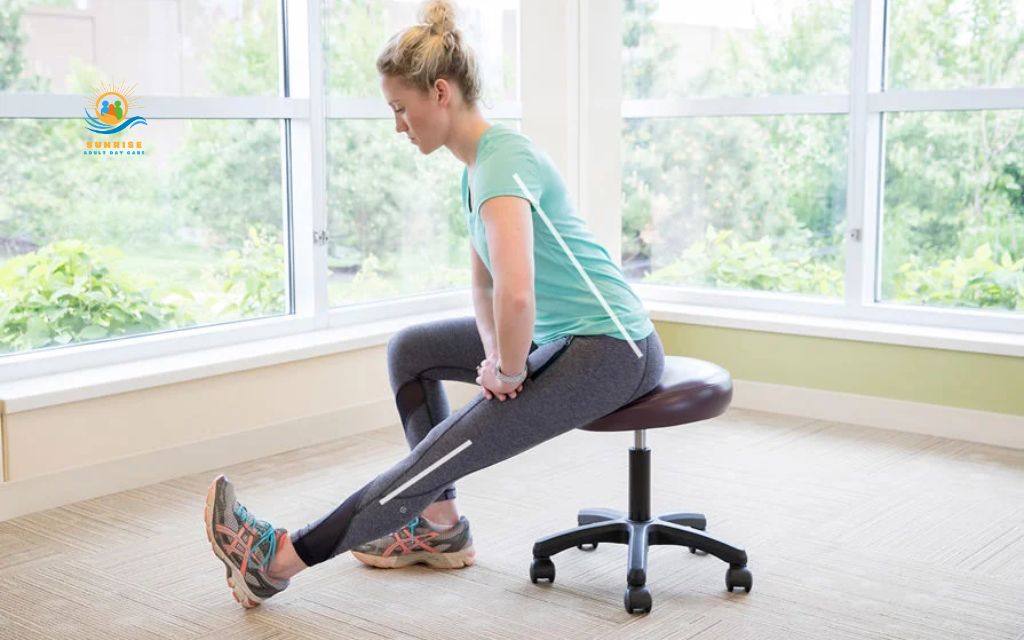
Seated hamstring stretch
Tight hamstrings (back-of-thigh muscles) make bending over, walking with a full stride, and getting in and out of low seats harder. Gentle stretching here improves mobility for everyday tasks.
Cómo hacerlo:
- Sit near the front edge of a sturdy chair with your back straight.
- Extend your right leg forward, heel on the floor, toes pointing up.
- Keep your left foot flat on the floor with your knees bent for stability.
- Place both hands on your left thigh for support.
- Keeping your back straight (don’t round forward), gently hinge forward from your hips until you feel a mild stretch down the back of your right thigh.
- Hold 15–30 seconds, breathing steadily.
- Sit up slowly, bring your right foot back, and repeat on the left side.
What you should feel: A gentle pull from the back of your knee up through the back of your thigh. You should NOT feel knee pain or lower-back strain.
Chair option: If you can’t straighten your leg fully, keep a slight bend in the knee and focus on the forward hinge from the hips. You can also rest your heel on a low stool or footrest instead of the floor.
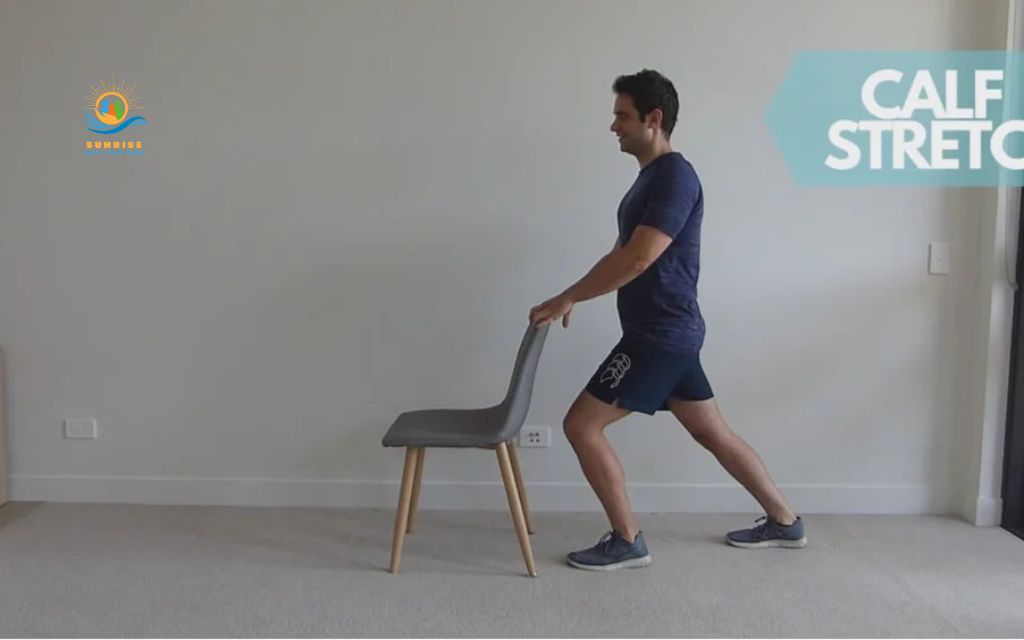
Calf stretch at wall or chair
Flexible calf muscles support longer, steadier strides and reduce your risk of tripping. Tight calves also contribute to ankle stiffness and foot pain.
Cómo hacerlo:
- Stand facing a wall or the back of a sturdy chair, hands resting on the surface for balance.
- Step your right foot back about 12 – 18 inches (a comfortable half-stride).
- Keep your right leg straight (or just a tiny bend if needed), heel pressed down toward the floor.
- Bend your left (front) knee slightly and lean your hips forward gently until you feel a stretch in the back of your right calf.
- Hold 15 – 30 seconds, keeping your back heel down and toes pointing forward (not out to the side).
- Step forward and repeat on the other side.
For a stretch lower in the calf and into the Achilles tendon, bend both knees slightly while keeping your back heel down.
What you should feel: A gentle pull in the middle or lower calf of the back leg. If you feel it in your heel or arch, ease up slightly.
Chair option: Hold the back of a sturdy chair with both hands for balance. If standing balance is unsafe, this stretch can be done seated by using a towel: sit with legs extended, loop a towel around the ball of your foot, and gently pull the towel toward you to stretch the calf.
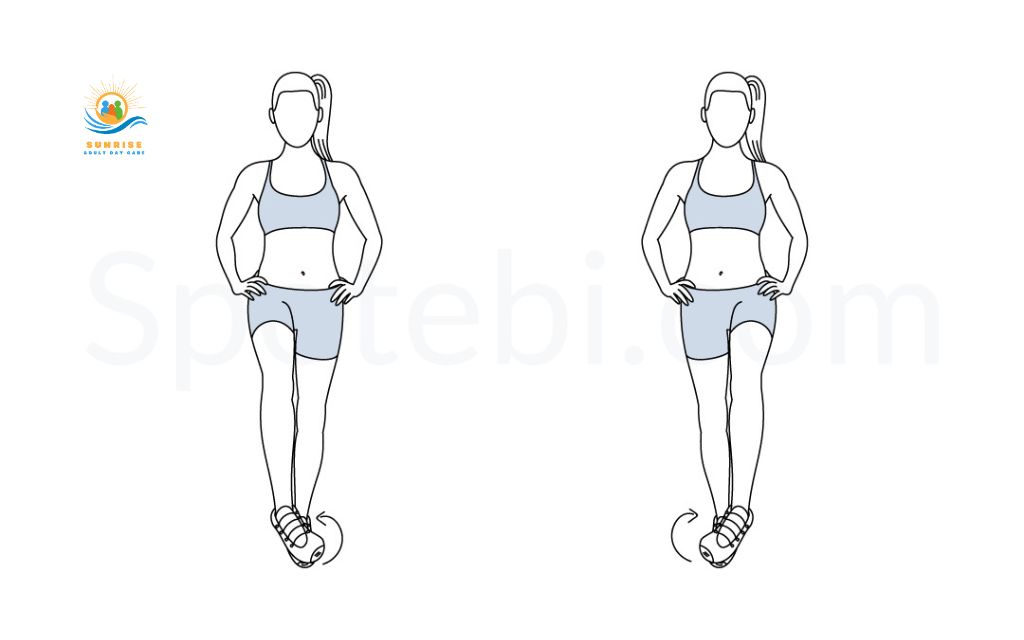
Ankle circles and toe/heel lifts
Keeps ankle joints mobile and promotes circulation in the lower legs, especially important for people who sit most of the day. Better ankle mobility also improves balance reactions and reduces stiffness when walking.
Ankle circles
Cómo hacerlo:
- Sit in a sturdy chair with feet flat on the floor.
- Lift your right foot a few inches off the ground.
- Slowly draw circles in the air with your toes—5 circles clockwise, then 5 circles counterclockwise.
- Set your right foot down and repeat with the left foot.
What you should feel: Gentle movement through your ankle joint and lower leg. You might hear some harmless clicks or pops.
Toe and heel lifts
Cómo hacerlo:
- Sit or stand (holding a chair or counter for balance if standing).
- Heel lifts: Press through the balls of your feet to lift your heels off the ground, rising onto your toes. Hold 2 – 3 seconds, then lower slowly. Repeat 8 – 10 times.
- Toe lifts: Shift weight to your heels and lift your toes/forefeet off the ground. Hold 2 – 3 seconds, then lower. Repeat 8 – 10 times.
What you should feel: Gentle work in your calf muscles (heel lifts) and shins (toe lifts), plus improved circulation.
Chair option: Both movements work well seated. For seated heel lifts, press the balls of your feet into the floor and lift your heels. For toe lifts, press your heels down and lift your toes toward your shins.
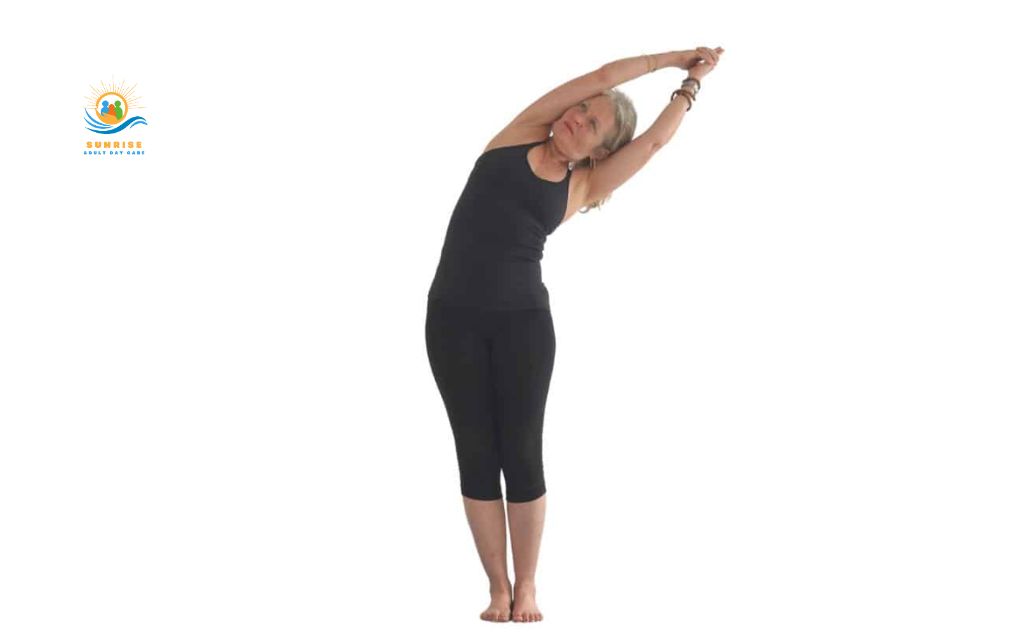
Side bend stretch (seated or standing with chair)
Opens the muscles along the side of your torso (ribs and waist), which helps with deeper breathing, reaching overhead or to the side, and counteracting the slumped posture that tightens this area.
How to do it (Seated):
- Sit tall in a sturdy chair, feet flat on the floor.
- Raise your right arm overhead, keeping your shoulder relaxed (don’t shrug it up to your ear).
- Gently lean your torso to the left, reaching your right arm over your head in that direction.
- Keep both hips firmly seated – don’t lift one side of your bottom off the chair.
- Hold 15 – 30 seconds, breathing into the stretch along your right side.
- Return to the center slowly and repeat on the other side.
How to do it (Standing):
- Stand next to a sturdy chair, holding the back with your left hand for balance.
- Raise your right arm overhead.
- Gently lean to the left, creating a gentle arc with your body.
- Hold 15–30 seconds, then return to center and switch sides.
What you should feel: A pleasant stretch from your armpit down through your ribs and waist on the side you’re reaching away from. You should NOT feel pinching or pain in your lower back.
Chair option: The seated version is safer and equally effective. Keep the movement small and controlled.
Safety reminder for all stretches
- Pain is your body’s stop sign. A gentle “ahhhh” stretch is good; sharp, burning, or shooting pain means stop immediately.
- Use support whenever balance feels uncertain. There is no prize for stretching without holding on – safety first.
- Breathe steadily. Never hold your breath during a stretch; it tenses muscles instead of relaxing them.
- Move slowly in and out of each position. Quick movements increase injury risk, especially in joints affected by arthritis.
For caregivers and activity directors
When leading these stretching exercises for seniors in a group setting, demonstrate each move first, circulate to check form, and remind participants that everyone’s flexibility is different. Encourage participants to speak up if anything hurts, and always keep chairs, walkers, and water nearby.
How often should seniors stretch?
Aim to do these stretching exercises most days of the week, ideally daily.
Consistency matters more than perfection. Stretching 5 – 7 days per week will give you noticeable results, but even 3 – 4 days per week is far better than nothing.
Many older adults find it easiest to build a stretching habit by pairing it with another daily routine: after breakfast, before the evening news, or right after a morning walk.
How long should you hold each stretch?
- Start with 15 – 30 seconds per stretch when you’re new to stretching exercises for older adults.
- Gradually work up to 30 – 60 seconds as it becomes more comfortable.
- Hold each position still – don’t bounce or pulse.
How many repetitions?
Repeat each stretch 1 – 3 times per side, depending on your energy level and schedule:
- If you’re short on time or fatigue easily, one gentle hold per side is fine.
- If you have more time and the stretch feels good, doing 2 – 3 repetitions allows muscles to relax more deeply.
Conclusión
These 8 stretching exercises for old people aren’t about becoming a gymnast or proving anything to anyone. They’re about giving your body the gentle care it needs to keep doing what matters: walking comfortably, reaching confidently, bending without bracing for pain, and moving through your day with less stiffness and more ease.
The beauty of this routine is its simplicity. No gym required. No equipment beyond a sturdy chair. No complicated moves to memorize. Just 10–15 minutes of slow, mindful movement.
Remember the essentials:
- Warm up first: 5 – 10 minutes of light movement makes stretching safer and more effective
- Move slowly and breathe steadily: No bouncing, no holding your breath
- Aim for “ahhh,” not “ouch”: Gentle tension is good; sharp pain is your stop sign
- Use support freely: Chairs, walls, and rails are there for your safety
- Be consistent: Daily or near-daily stretching delivers the best results over time
If you’re a caregiver or activity director leading group stretching exercises seniors participate in, approach each session with patience and encouragement.
Everyone’s body is different. Some participants will have more flexibility, others less. Create a space where there’s no competition, no judgment, just a shared commitment to staying mobile and independent.
Looking for more support with daily movement and healthy aging?
Sunrise Adult Daycare in Denver offers supervised exercise programs, including gentle stretching and balance activities, as part of our comprehensive adult day care services.
Call us to learn how we can help you or your loved one stay active, engaged, and independent.
Preguntas frecuentes (FAQ)
How often should seniors stretch to see a difference?
Daily or 5 – 6 days per week for best results. You’ll likely feel less stiff within 2 – 3 weeks, with more noticeable improvements in mobility and comfort after 4 – 8 weeks of consistent stretching. Flexibility responds to regular practice, sporadic stretching won’t deliver meaningful change.
Is it safe to stretch every day if I have arthritis?
Yes, gentle daily stretching is generally safe and beneficial for arthritis. It helps maintain joint mobility and reduce stiffness. However, avoid stretching during active flare-ups when joints are hot, swollen, or very painful. Always move slowly, stay within pain-free ranges, and warm up thoroughly. Check with your rheumatologist if you’re unsure which stretches are appropriate for your specific condition.
What time of day is best for stretching—morning or evening?
The best time is whenever you’ll actually do it consistently. Morning stretching helps loosen overnight stiffness but may require longer warm-ups. Evening stretching is often easier because muscles are already warm from daily movement and can promote relaxation before bed. Choose the time that fits your routine and energy level.
Do I need to warm up before these gentle stretches?
Yes. Always warm up for 5–10 minutes first. Cold muscles are stiff and injury-prone. Simple warm-ups include: seated marching (lifting knees while sitting), gentle walking around your home, slow arm circles and shoulder rolls, or ankle pumps. You should feel slightly warmer and more “awake” in your body before stretching.
Can stretching alone improve my balance and prevent falls, or do I need other exercises too?
Stretching helps with balance but works best combined with strength and balance training. Flexible joints allow better balance reactions and longer strides, but you also need leg and core strength to catch yourself when stumbling, plus specific balance exercises (like standing on one foot or tai chi) to train stability skills. The most effective fall prevention programs include all three: flexibility, strength training 2–3 times per week, and dedicated balance exercises.