
Hiking for seniors doesn’t have to be difficult or extreme. Many older adults picture steep mountain paths or long-distance treks, but that’s not what this guide is about.
For seniors, hiking can simply mean a gentle walk through a neighborhood park or a short, flat nature trail or a relaxed group outing in a botanical garden or along a lakeside path.
Hiking is one of the safest and most enjoyable ways for older adults to stay active, get outdoors, and feel connected to the people and world around them. Whether you’ve never walked a trail in your life or you’re returning after a health setback, it’s never too late to start.
This guide covers:
- The key benefits of hiking for seniors
- 10 easy trail types that work well for elderly beginners with Denver examples
- 20 practical safety and comfort tips
- The difference between solo and group hiking
- How structured programs support safe, regular outdoor activity
Benefits of hiking for seniors
Regular outdoor walking and hiking offer a wide range of benefits for older adults. Research consistently shows that even short, moderate-intensity walks improve multiple areas of health and well-being.
The U.S. Department of Health and Human Services (HHS) recommends that seniors should get at least 150 minutes of moderate-intensity aerobic activity per week – equivalent to about 30 minutes of brisk walking five days a week. Hiking on easy trails counts toward that goal.
Physical benefits
The body responds positively to consistent, low-impact movement. For seniors, hiking provides:
- Improves heart health: Walking at a moderate pace raises heart rate safely, supporting cardiovascular function and reducing the risk of heart disease.
- Builds strength and balance: Walking on varied surfaces engages leg muscles and improves coordination, which can help reduce fall risk.
- Supports joint flexibility: Gentle movement keeps joints mobile and may ease stiffness associated with arthritis or prolonged sitting.
- Helps maintain a healthy weight: Consistent outdoor activity supports healthy metabolism and contributes to caloric balance.
Mental & emotional benefits
Time outdoors supports brain health and emotional well-being in measurable ways:
- Reduces stress and anxiety: Exposure to green spaces and fresh air has been shown to lower cortisol levels and promote a sense of calm.
- Improves mood: Physical activity encourages the brain to release endorphins, the body’s natural mood-elevating chemicals.
- Boosts confidence: Completing a walk or trail, no matter how short, builds a meaningful sense of achievement.
Social benefits
For many seniors, social connection is as vital to health as physical activity. Hiking supports that need in important ways:
- Encourages connection with others: Group hikes foster conversation, shared laughter, and lasting friendships.
- Reduce la soledad: Regular outings with peers provide meaningful human contact and a sense of belonging.
- Builds routine and purpose: Scheduled walking outings create structure and give each week something to look forward to.
10 easy trails for seniors to choose
Choosing the right trail is the most important first step in elderly hiking. Denver is fortunate to have an exceptional variety of accessible, scenic outdoor spaces. Many of them are ideal for older adults looking to start safely and enjoy the outdoors close to home.
What to look for in any trail:
- Flat or gently sloped terrain with no steep drops
- Benches or seating areas for rest breaks along the route
- Shaded sections to protect from Colorado’s intense sun
- Clear signage and well-marked paths
- Accessible restrooms within reasonable distance
- Easy parking or public transit access nearby
1. Paved park walking paths
Smooth, even surfaces with clear markings make paved park paths the safest entry point for elderly hiking. They are easy on the joints, easy to navigate, and widely available throughout Denver’s park system.
Washington Park (Wash Park)
Washington Park is one of Denver’s most beloved urban parks, featuring wide, flat paved loops ideal for seniors at any fitness level. The paths wind around 2 scenic lakes – Smith Lake and Grasmere Lake – offering a relaxed, pleasant route surrounded by green space.

City Park
City Park offers smooth, well-maintained loop paths with open sightlines and impressive views of the Rocky Mountains on clear days. It is one of Denver’s largest parks and provides ample space to walk at your own pace without feeling crowded.

2. Botanical garden trails
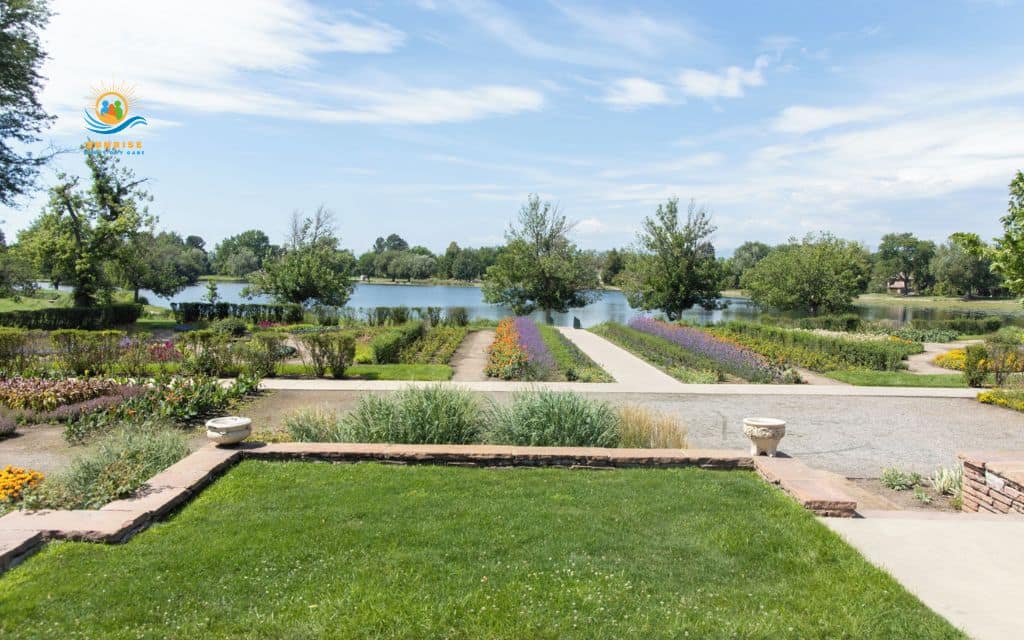
Botanical gardens are among the most accessible and visually rewarding environments for senior walkers. The combination of beautiful scenery, flat paths, and frequent seating makes them a natural fit for older adults.
Denver Botanic Gardens
The Denver Botanic Gardens at York Street provides fully accessible, thoughtfully designed walking paths winding through curated plant collections, water features, and seasonal displays. The peaceful, unhurried atmosphere is ideal for walkers who want beauty alongside their exercise.

3. Lakeside walking loops
Lakeside paths offer a calming, scenic environment with natural shade and consistently flat terrain. Denver has several excellent lake loop options suited to different fitness levels.
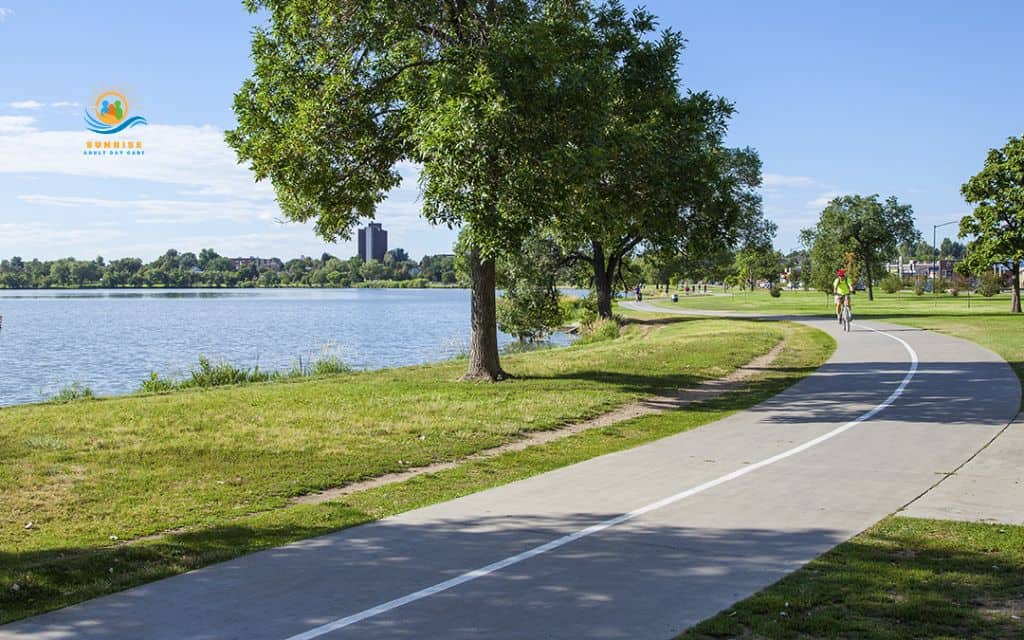
Sloan’s Lake Park
Sloan’s Lake Park features a popular paved loop around Denver’s largest city lake, offering beautiful water views and a consistent flat surface. The loop is approximately 2.6 miles in total, but walkers can easily turn around at any point, making the distance fully customizable.
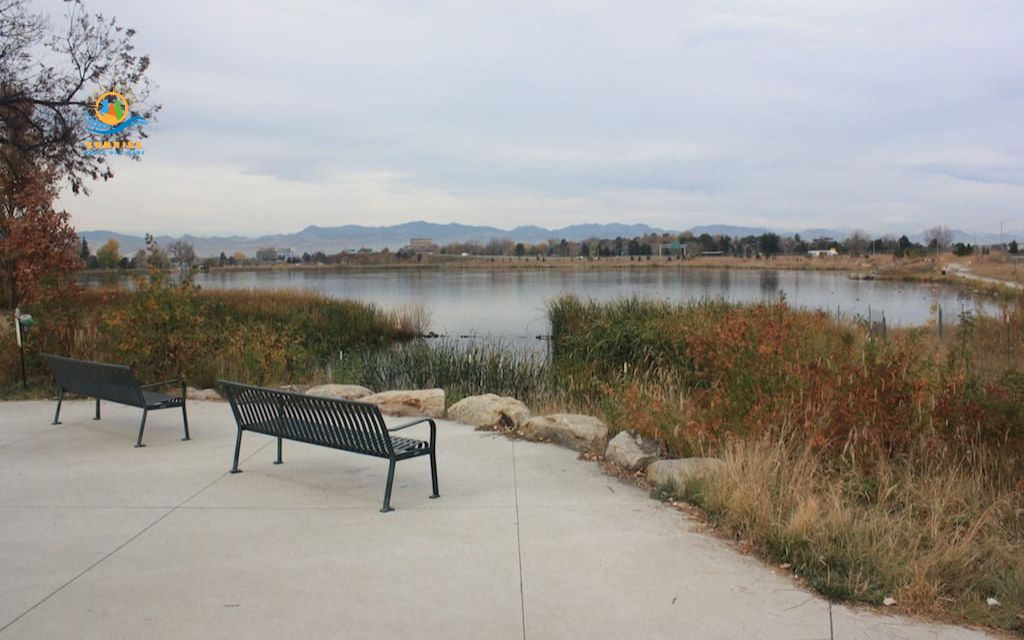
Berkeley Lake Park
Berkeley Lake Park offers a quieter, more intimate walking experience around a smaller lake in northwest Denver. The loop is shorter and less busy than Sloan’s Lake, making it a comfortable and peaceful option for beginners or those preferring less foot traffic.
4. Nature reserve / boardwalk trails
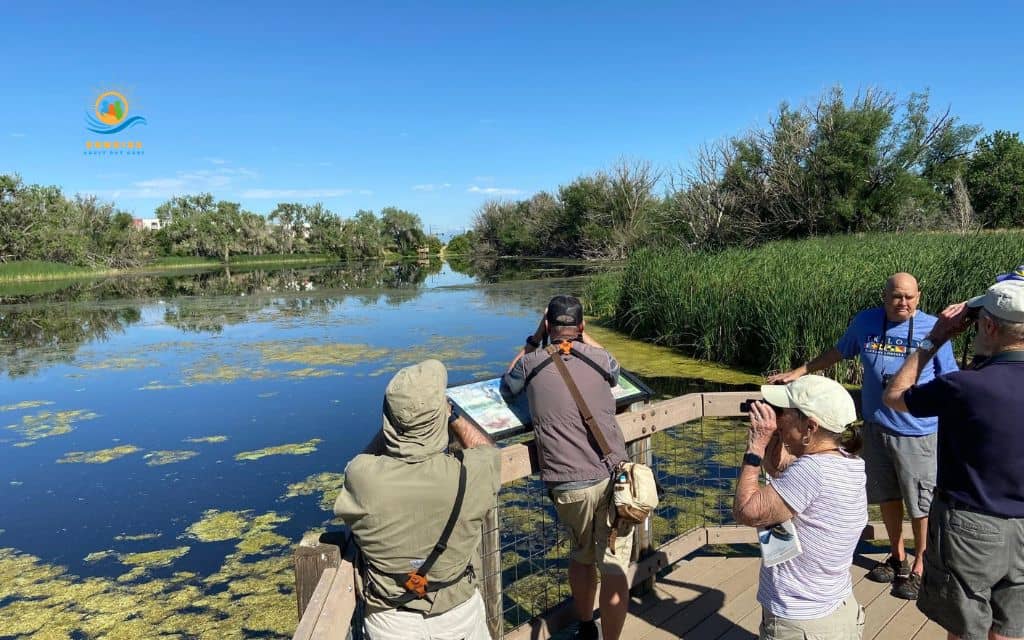
Nature reserves and boardwalk trails allow seniors to experience natural environments without the challenge of uneven ground. Boardwalks in particular are excellent for those using walking aids or who prefer a stable, predictable surface.
Bluff Lake Nature Center
Bluff Lake Nature Center in east Denver offers a serene mix of gentle dirt trails and wooden boardwalk sections winding through wetlands and native prairie. The site is managed as an educational nature preserve and attracts walkers who appreciate wildlife, birds, and a quiet escape from the city.
5. Flat forest trails
While Denver’s mountain parks can be steep and demanding, several nearby parks offer easy, flat sections through forested areas that are well within reach for most older adults.
Cherry Creek State Park
Cherry Creek State Park, located just south of Denver, includes several easy, flat trail segments alongside the reservoir and through open prairie. While some areas of the park are more rugged, the designated easy sections offer good footing, shade, and access to solid park facilities.

6. Community greenway paths
Denver’s greenway trail network is one of the city’s most valuable assets for outdoor recreation. These paved, multi-use paths are flat, well-maintained, and easy to access from many neighborhoods.
Cherry Creek Trail
The Cherry Creek Trail is one of Denver’s signature paved paths, running from the city’s core through Cherry Creek and beyond. The trail is fully paved, largely flat, and easily accessible at multiple entry points, making it straightforward to walk as little or as much as you like.

South Platte River Trail
The South Platte River Trail follows the river through the heart of Denver, offering a scenic, flat corridor popular with walkers, cyclists, and families. The paved surface and open layout make it one of the most welcoming urban trails in the city for seniors.

7. Senior-friendly walking tracks
Dedicated walking tracks at Denver’s neighborhood parks offer a safe, familiar, and low-pressure environment – perfect for seniors who want a consistent, reliable loop close to home.
Harvard Gulch Park
Harvard Gulch Park in south Denver features a compact, well-defined walking loop that is easy to navigate and complete at any pace. The park has a calm neighborhood feel, making it a comfortable spot for regular morning or afternoon walks without the crowds of larger parks.

8. Waterfront / promenade walks
Waterfront paths offer beautiful scenery, easy terrain, and a lively atmosphere. In Denver, riverside walking areas provide accessible outdoor experiences right in the heart of the city.
Confluence Park
Confluence Park sits at the meeting point of Cherry Creek and the South Platte River in Lower Downtown Denver. The area features paved riverside paths, open plazas, and multiple access points, making it an easily accessible and engaging destination for a relaxed senior walk.

9. Short loop trails (under 1 mile)
Short loop trails are the ideal starting point for seniors new to hiking. The circular format removes any pressure to track distance and allows walkers to turn around or rest at any point.
Cheesman Park
Cheesman Park in central Denver offers a flat, well-defined circular path through an open, beautifully maintained green space. The wide path and clear layout make it easy to walk at a comfortable pace while enjoying views of the surrounding neighborhood and skyline.

Cranmer Park
Cranmer Park in the Hilltop neighborhood is a quiet, elegant green space with a gentle open layout ideal for easy walking. The park includes a scenic semicircular promenade with panoramic views of the Rocky Mountains – a particularly rewarding spot for a short, peaceful outing.

10. Guided walk locations
For seniors who prefer company and structure on the trail, guided walks organized by parks, recreation programs, and senior centers provide a safe, social, and expertly paced outdoor experience.
Denver Parks & Recreation Programs
Denver Parks & Recreation organizes a range of guided outdoor programs for adults and seniors throughout the year. These structured walks are led by trained staff who set a comfortable pace, choose accessible routes, and ensure all participants can keep up and enjoy the experience safely.
Local Senior Centers / Adult Day Programs
Senior centers and adult day programs throughout the Denver metro area regularly coordinate supervised outdoor walks as part of their wellness programming. These outings are specifically designed for older adults – with appropriate pacing, staff support, and a welcoming group environment – making them one of the safest and most enjoyable ways to start hiking.

20 helpful tips in hiking for seniors
Training for hiking over 50 doesn’t need to be intensive or complicated. These 20 tips are organized into 5 practical categories to help you prepare, stay safe, and enjoy every outing.
Each tip includes additional detail to help you put it into practice right away.
Before you go
1. Check the weather: Avoid hiking in extreme heat, heavy rain, or icy conditions. Morning walks are often most comfortable, especially during summer when afternoon temperatures can spike quickly. Check the forecast the evening before your planned outing and have a backup indoor activity in mind if conditions are unfavorable.
2. Tell someone your plan: Let a family member or friend know where you’re going and when you expect to return. Share the trail name, your planned start time, and approximately how long you’ll be out. If you don’t check in by a certain time, they’ll know to follow up.
3. Choose a safe, familiar trail: For first-time outings, stick to well-known, easy paths. Familiar trails reduce anxiety, help you anticipate rest areas, and make it easier to turn back if needed. Once you’ve built comfort and fitness, gradually exploring new routes becomes part of the fun.
4. Wear proper walking shoes: Supportive, non-slip footwear is essential for elderly hiking. Look for shoes with cushioned soles, good arch support, and a firm grip. Walking or light hiking shoes are ideal. Avoid sandals, flip-flops, or flat-soled shoes that offer no stability or protection on uneven ground.
5. Bring water: Carry at least 16–20 oz of water for a 30-minute walk and drink before you feel thirsty. In warm weather or at higher altitude, increase this amount and consider adding an electrolyte packet to your water.
During the walk
6. Start slow: Begin at a relaxed pace for the first 5–10 minutes before gradually picking up speed. This warm-up period prepares your muscles, heart, and joints for sustained activity and reduces the risk of early fatigue or injury. There is no need to rush, the path will still be there at any pace.
7. Use the talk test: If you can speak in full sentences comfortably while walking, you’re at the right intensity level. If you find yourself too breathless to finish a sentence, slow down or take a short rest.
8. Take frequent breaks: Plan to rest every 10–15 minutes, especially during your first few outings. Use benches, low walls, or open areas along the trail to sit, rehydrate, and let your body recover briefly before continuing.
9. Stay on marked paths: Veering off the designated trail increases fall risk significantly and makes it harder for others to locate you if a concern arises. Marked paths are maintained for safety, clear of serious hazards, and typically well-suited for the fitness level they are rated for. When in doubt, stay on the main route.
10. Watch your footing: Scan ahead and look at the path in front of you, especially on sections with roots, rocks, puddles, or uneven surfaces. Loose gravel, wet leaves, and small stones are common trip hazards on otherwise easy trails. Keeping your gaze forward rather than looking around constantly can reduce the chance of a misstep.
Comfort & safety
11. Wear sun protection: Apply broad-spectrum sunscreen of SPF 30 or higher to all exposed skin before heading out, and reapply after 90 minutes if you’re out longer. Wear a wide-brimmed hat and lightweight, UV-protective clothing. Sunglasses with UV protection are also a worthwhile addition.
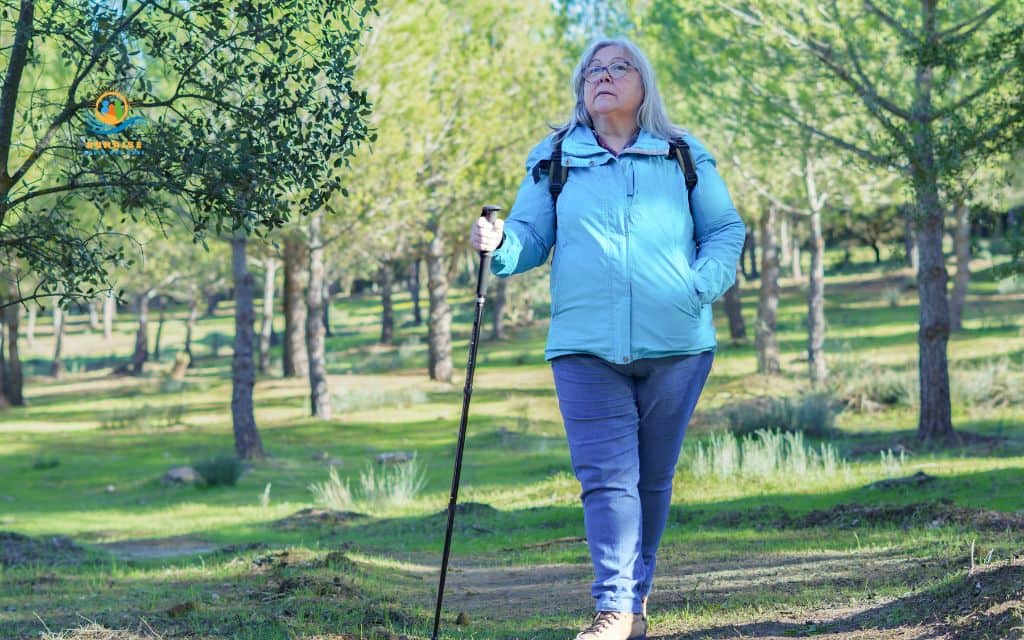
12. Use a walking stick if needed: A trekking pole or walking stick improves balance, distributes weight more evenly, and reduces stress on the knees during longer outings or slight inclines. Even on flat paved paths, a stick can provide peace of mind and extra stability.
13. Avoid uneven terrain at first: Build confidence and balance on flat, paved paths before progressing to more natural surfaces such as gravel, dirt, or grass. Once you’re comfortable on easy terrain and feel steady in your footwear, you can gradually introduce more varied ground.
14. Walk during daylight hours: Choose morning or early afternoon outings when visibility and temperatures are most comfortable. Avoid walking in low-light conditions, particularly in unfamiliar areas.
15. Stay hydrated throughout: Aim to drink at least 16 oz of water per 30 minutes of activity and sip consistently rather than waiting until you feel thirsty. Signs of dehydration include dry mouth, light-headedness, and fatigue, which can be easy to mistake for general tiredness.
Health awareness
16. Stop if you feel dizzy or weak: If you experience dizziness, chest discomfort, sudden weakness, or unusual shortness of breath, sit down immediately, stop all activity, and hydrate slowly. If symptoms do not improve within a few minutes, call for help or ask a nearby walker to assist you.
17. Know your limits: Shorter and slower is always better than pushing through discomfort. There is no benefit in overexerting yourself, and doing so on a trail is particularly risky if you are far from your car or from help. Set a realistic distance goal for each outing, listen to how your body feels, and always prioritize returning home safely over any target.
18. Bring medications if needed: Carry a small, lightweight bag with any necessary daily medications, an emergency inhaler, a blood glucose monitor if you have diabetes, or other prescribed items your doctor has recommended during physical activity. If you are uncertain which medications to bring on walks, ask your healthcare provider before your first outing. It is far better to carry something you don’t need than to need something you left at home.
Consistency & enjoyment
19. Walk regularly (2 – 4 times per week): Consistent, moderate activity builds fitness gradually and safely. Aim for 2 – 4 walks per week, starting with 15 – 20 minute sessions and increasing duration by 5 minutes every one to two weeks as your comfort grows. Building a routine also makes it far easier to stay motivated over the long term.
20. Choose locations you genuinely enjoy: You are far more likely to stay consistent when the setting inspires and delights you. Rotating between 2 or 3 favorite spots also keeps the experience fresh and gives you something to look forward to each week.
Solo vs. group hiking: Which is right for you?
Both approaches have real value, but for most seniors, group hiking offers meaningful safety and social advantages.
Solo hiking
Going it alone does have benefits:
- Flexible schedule – go whenever it works for you
- Quiet, peaceful experience with no external distractions
However, there are important downsides to consider:
- Less safe if a fall or sudden health issue occurs
- No one nearby to help or call for assistance
- Can feel isolating over time, reducing motivation to continue
Group hiking (recommended for many seniors)
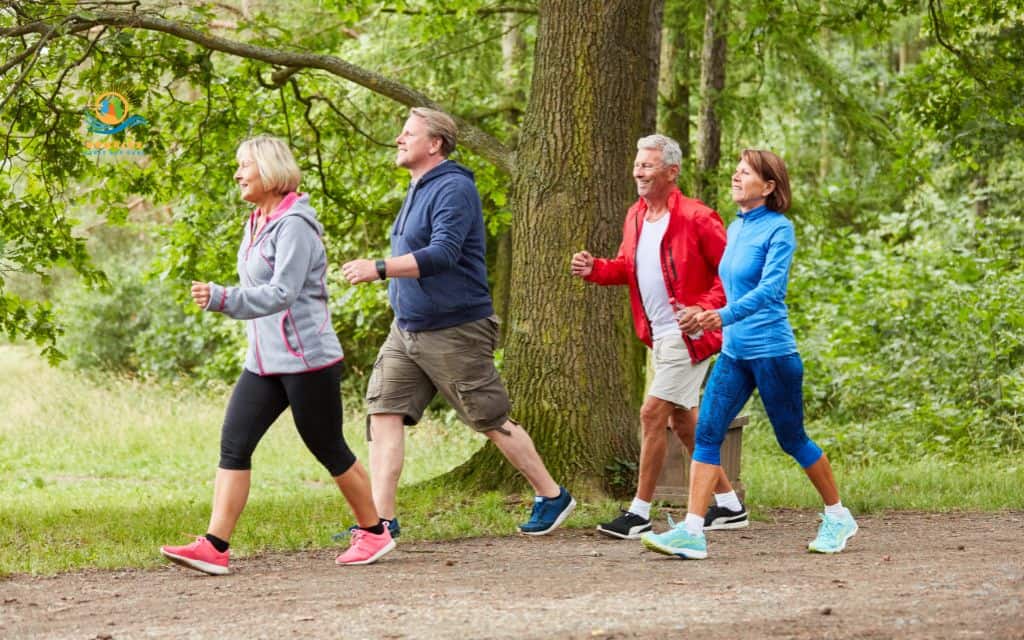
Group hiking is widely recommended by senior health experts and activity coordinators for several important reasons:
- Safer with others around: Fellow walkers can respond quickly and call for help if a health concern arises.
- More motivating: Social encouragement and friendly accountability make it easier to stay consistent.
- Encourages routine: Scheduled group walks provide regular structure, which is beneficial for overall health and mood.
- Social and enjoyable: Shared conversation and laughter transform a simple walk into a meaningful shared experience.
For seniors who feel uncertain about hiking alone, or who benefit from a supervised environment, organized group walks through community centers, senior clubs, or adult day programs are an excellent and safe starting point.
How adult day programs support hiking for seniors
Adult day care centers and senior wellness programs play a meaningful role in making outdoor activity safe, regular, and genuinely enjoyable for older adults. These programs are especially valuable for seniors who want to stay active but prefer not to do so alone.
Supervised walks
Program staff accompany participants during outdoor walks, monitoring pace, footing, and comfort throughout. This hands-on supervision is particularly important for seniors with balance concerns, chronic conditions, or limited mobility.
Scheduled activities
Structured programs build outdoor activity into a reliable weekly routine. Seniors don’t need to plan independently or motivate themselves to go, the schedule does that for them. Consistency becomes part of the program, not a personal challenge.
Interacción social
Group walks organized through adult day programs bring participants together in a shared, low-pressure environment. Many participants report that these outings become some of the most enjoyable parts of their week, not because of the distance covered, but because of the people they walk with.
Health support
Program staff are trained to provide assistance during physical activity, monitor participants for signs of fatigue or distress, and respond calmly to health concerns. For seniors managing conditions such as hypertension, diabetes, balance disorders, or limited endurance, this layer of support makes outdoor activity far more accessible and far less intimidating.
Acerca del centro de día para adultos Sunrise
At Sunrise Adult Daycare, located at 2500 S. Sheridan Blvd in Denver, we provide a structured daytime program designed to support seniors in staying active, engaged, and connected.
Our program includes supervised outdoor activities, wellness support, and a welcoming social environment – all in a professionally staffed daytime setting. We are not a residential facility; our program runs during daytime hours, giving families peace of mind while supporting their loved one’s independence and well-being.
To learn more about our adult daytime program or to schedule a tour, call us at 303-226-6882 today.
Conclusión
Hiking for seniors is not about distance or difficulty. At its heart, it is about staying active, breathing fresh air, enjoying the natural world, and connecting with the people around you.
With the right trail, thoughtful preparation, and the right level of support, hiking becomes one of the safest and most rewarding routines an older adult can build.
Start small. Walk at your own pace. Choose the kind of support that fits your comfort level and lifestyle. And remember: every step you take toward staying active is a step toward a healthier, happier life.
Preguntas frecuentes (FAQ)
Is hiking safe for seniors?
Yes. Hiking is safe for most older adults when practiced on easy, well-maintained trails with appropriate precautions. Starting on flat, paved paths, walking with a companion or group, and listening to your body all contribute to a safe experience. Always consult your doctor before starting a new physical activity, especially if you have any existing health conditions.
What is the best trail for elderly beginners?
Flat, paved trails with benches and clear markings are the ideal starting point. In Denver, options like Washington Park, Sloan’s Lake, and the Cherry Creek Trail are excellent first choices. Avoid uneven terrain, steep grades, or remote areas until you’ve built confidence and fitness.
How often should seniors go hiking?
Most health guidelines recommend 2–4 outdoor walks per week, beginning with 15 – 20 minute sessions and gradually increasing duration as comfort and fitness improve. Consistency matters more than duration- a 20-minute walk 4 times per week is more beneficial than a single long outing once a month.
Is it better to hike alone or in a group?
Group hiking is generally safer and more motivating for older adults. It provides social connection, built-in accountability, and a safety net if any concern arises on the trail. For seniors new to hiking or those managing a health condition, group walks are strongly recommended.
What should seniors bring on a hike?
Bring water, well-fitting supportive shoes, sunscreen, a hat, and a fully charged phone for emergencies. A light snack, any necessary medications, and a walking stick or trekking pole are also helpful.
How long should a 70-year-old walk every day?
For adults around age 70, most health guidelines recommend at least 150 minutes of moderate-intensity aerobic activity per week, which works out to roughly 20 – 30 minutes of walking per day, 5 days a week. Those just beginning may start with 10 – 15 minutes and build gradually over several weeks. Always listen to your body, and consult your doctor if you have conditions that may affect how much activity is appropriate for you.
Can 70-year-olds hike?
Absolutely. Many adults in their 70s are active, enthusiastic hikers. The key is choosing trails appropriate for your current fitness level – flat, paved, or boardwalk-style paths are excellent options for most beginners at this age. With comfortable footwear, a walking companion, good hydration, and a gradual approach, hiking at 70 is not only possible but beneficial for physical health, cognitive function, and emotional well-being.
Does hiking lower cholesterol?
Regular aerobic exercise such as hiking and walking has been shown to support cardiovascular health by raising HDL (“good”) cholesterol and potentially reducing LDL (“bad”) cholesterol levels over time. Hiking alone is not a substitute for medical treatment, but as part of a healthy lifestyle that includes a balanced diet and consistent movement, it can contribute positively to cholesterol management. Speak with your doctor about how physical activity fits into your personal cholesterol management plan.