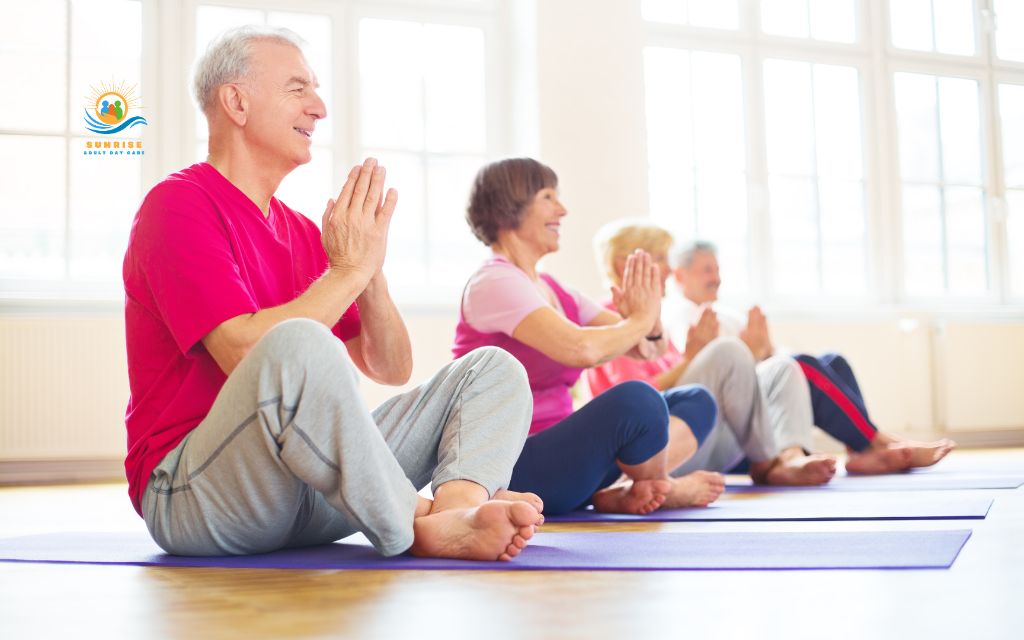
El yoga suave para personas mayores no requiere que te retuerzas como un pretzel, que te mantengas en equilibrio sobre una sola mano ni que te sientes con las piernas cruzadas en el suelo.
En cambio, te acompaña exactamente donde te encuentras: en una silla resistente, de pie con apoyo, moviéndote lenta y conscientemente a través de posturas que respetan las capacidades actuales de tu cuerpo, al tiempo que amplían suavemente tus posibilidades.
Esta guía presenta 12 posturas de yoga seguras para personas mayores, repartidas a partes iguales entre opciones que se realizan en una silla y otras de pie. Cada postura incluye:
- Instrucciones paso a paso redactadas en un lenguaje sencillo, sin jerga de yoga
- “Señales de lo que deberías sentir” para que sepas que lo estás haciendo bien
- Adaptaciones para problemas comunes como dificultades de equilibrio, artritis, hipertensión y osteoporosis
- Notas para el personal destinadas a cuidadores, familiares y coordinadores de programas de atención diurna para adultos
Ya sea que pruebes el yoga por primera vez a los 68 años o lo redescubras a los 85, ya sea que te muevas por tu cuenta o utilices un andador, esta guía te ofrece un camino suave y respetuoso con tu dignidad hacia un mejor equilibrio, movimientos más fáciles y una mente más tranquila.
¿Es seguro el yoga para las personas mayores? Lo que debes saber antes de empezar
El yoga puede ser muy seguro y beneficioso para las personas mayores cuando se adapta adecuadamente. Los estudios demuestran que los programas de yoga suaves y adaptados pueden mejorar el equilibrio, la movilidad, la flexibilidad, el estado de ánimo y el manejo del dolor crónico en las personas mayores.
Dicho esto, el yoga no es automáticamente seguro para todas las personas en todas las situaciones. A continuación, te indicamos cuándo debes consultar con tu médico, fisioterapeuta u otro profesional de la salud antes de empezar:
Cuándo se debe solicitar primero la autorización médica
Consulte con su médico si presenta:
- Presión arterial inestable o no controlada (muy alto o muy bajo)
- Glaucoma o otras afecciones oculares que se agravan al mantener la cabeza inclinada hacia abajo
- Cirugía reciente (en los últimos 3 a 6 meses, dependiendo del procedimiento)
- Osteoporosis grave con fracturas por compresión previas
- Caídas frecuentes o problemas graves de equilibrio sin causa identificada
- Enfermedades cardíacas que limitan la actividad física
- Daño articular grave o una artroplastia reciente (consulte a su cirujano sobre el plazo de recuperación)
Si alguna de estas situaciones te resulta familiar, una breve charla con tu equipo de atención médica puede ayudarte a entender qué posturas son seguras y qué adaptaciones necesitarás.
Normas de seguridad sencillas para cada sesión
Una vez que tenga autorización para comenzar, siga estas pautas que no admiten excepciones:
- Ninguna postura debe provocar un dolor agudo. Es normal sentir un estiramiento suave o un esfuerzo muscular leve; sin embargo, un dolor agudo, repentino o punzante es la señal de “alto” que te envía tu cuerpo.
- Nunca ignore el dolor de pecho, la dificultad para respirar que no se deba a un esfuerzo físico normal o los mareos repentinos. Detente de inmediato y busca ayuda.
- Sal de las posturas lentamente, especialmente en cualquier postura en la que la cabeza quede por debajo del corazón (como las flexiones hacia adelante). Esto evita cambios bruscos en la presión arterial que pueden provocar mareos.
- Mantén los ojos bien abiertos si te mareas con facilidad, sobre todo durante las posturas de equilibrio.
- Utiliza el servicio de asistencia. Agarrarse a una silla, tocarse la pared o mantener un pie en el suelo no es “hacer trampa”, sino una adaptación inteligente.
Nota del personal para los líderes de grupo
Antes de comenzar una sesión grupal de yoga en su centro para personas mayores o en su programa de atención diurna para adultos:
- Pregunte a los participantes sobre caídas recientes, prótesis articulares, problemas de presión arterial, antecedentes de mareos, glaucoma y osteoporosis grave.
- Coloca las sillas contra la pared para las posturas de pie, a fin de evitar caídas.
- Mantenga a un miembro del personal libre de ayudar a las personas en lugar de participar.
- Incluir descansos oficiales y anímalos a beber sorbos de agua.
- Muévete lentamente entre las posturas con indicaciones verbales claras y deja tiempo adicional para las transiciones.
Ver más: programas de ejercicio para personas mayores
Por qué el yoga es beneficioso para las personas mayores: 4 ventajas clave
Comprensión ¿por qué? Estas posturas de yoga para personas mayores pueden ayudarte a mantener la motivación y a notar los cambios sutiles que se van acumulando a lo largo de las semanas y los meses. Estos son los cuatro beneficios más importantes:
Equilibrio y prevención de caídas
Muchas posturas de yoga requieren que desplaces ligeramente el peso, actives el tronco y seas consciente de la posición de tu cuerpo en el espacio. Con el tiempo, esto entrena los pequeños músculos estabilizadores de los tobillos, las caderas y el tronco, que te ayudan a recuperar el equilibrio cuando tropiezas.
La práctica regular no te hace inmune a las caídas, pero puede reducir los tambaleos durante actividades cotidianas como alcanzar algo en un estante alto o pasar el umbral de una puerta.
Movilidad y postura
La rigidez no es algo inevitable con la edad, pero es común, sobre todo si la artritis, pasar muchas horas sentado o lesiones anteriores han limitado tu movilidad. Las posturas suaves de yoga hacen que tus articulaciones se muevan dentro de su rango de movimiento cómodo, lo que puede mantener o incluso mejorar la flexibilidad con el tiempo.
Las posturas que abren el pecho, alargan la columna vertebral y relajan las caderas y los hombros facilitan las tareas cotidianas: caminar sin arrastrar los pies, alcanzar algo en un armario, girarse para mirar hacia atrás mientras se conduce o levantarse de una silla sin usar los brazos.
Una mejor postura también favorece una mejor respiración y puede reducir la tensión en el cuello y la zona lumbar.
Tranquilidad y un sueño más reparador
El yoga no es solo una actividad física. La respiración lenta y consciente, junto con la atención concentrada que se requiere para mantener las posturas, activan suavemente el sistema nervioso parasimpático —el modo de “descanso y digestión” que contrarresta el estrés—.
Muchas personas mayores dicen sentirse más tranquilas después de una sesión, y algunas notan que la práctica regular mejora la calidad del sueño. La interacción social que se da en una clase grupal aporta un plus de bienestar emocional, ya que reduce el aislamiento y crea momentos compartidos de satisfacción.
Bienestar de las articulaciones y la espalda
Aunque parezca contradictorio, el movimiento suave suele aliviar la rigidez articular mejor que el reposo absoluto. Las posturas de yoga que mueven las articulaciones lentamente dentro de un rango que no cause dolor pueden reducir la rigidez que se acumula por la inactividad.
En el caso del dolor de espalda crónico, las posturas que estiran suavemente la columna vertebral, abren el pecho y fortalecen el tronco pueden proporcionar alivio, aunque siempre dentro de los límites del dolor y bajo la supervisión de tu médico si te han diagnosticado alguna afección de la columna vertebral.
6 posturas de yoga en silla para personas mayores
El yoga en silla es por donde deberían empezar la mayoría de las personas mayores. Es accesible, estable y te permite concentrarte en los movimientos sin preocuparte por el equilibrio. Necesitarás una silla resistente y estable, sin ruedas (a menos que estas se puedan bloquear firmemente) y, a ser posible, sin reposabrazos, para que puedas moverte con libertad.
Todas las instrucciones dan por hecho que estás sentado en el tercio delantero del asiento, con los pies apoyados en el suelo y separados a la altura de las caderas, a menos que se indique lo contrario.
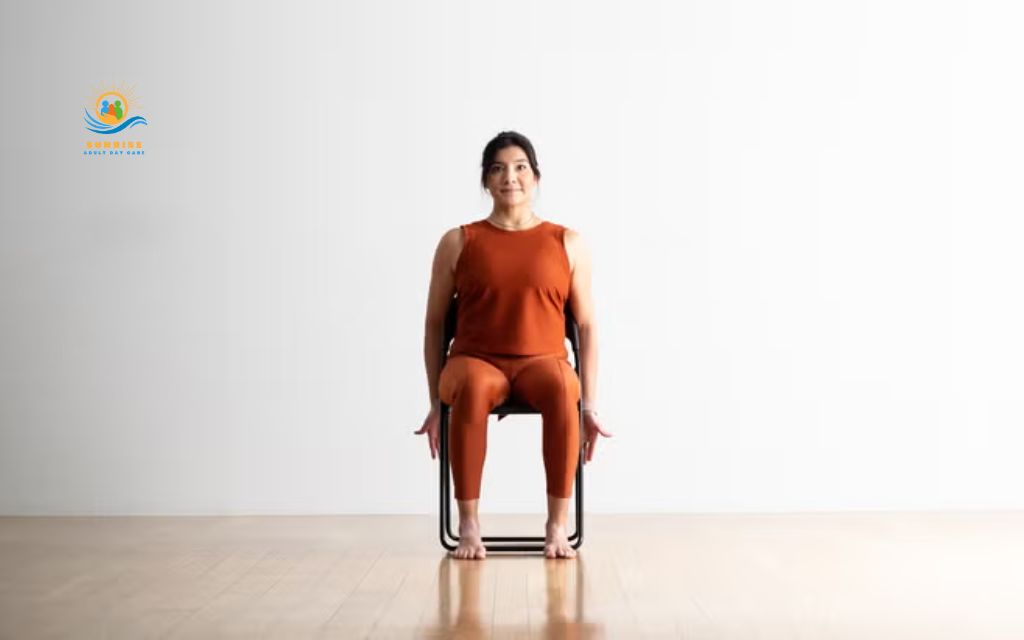
Postura de la montaña sentada (Tadasana)
Esta es tu base. Te enseña cómo se siente una columna vertebral erguida y alineada, y te ayuda a desarrollar una respiración adecuada, habilidades que utilizarás en todas las demás posturas.
Cómo hacerlo:
- Siéntate en la parte delantera de la silla, con los pies apoyados en el suelo y separados a la altura de las caderas.
- Apoya suavemente los pies en el suelo y siente cómo los isquiones se apoyan firmemente en el asiento.
- Estira la columna vertebral desde el coxis hasta la coronilla, como si un hilo suave te estuviera elevando hacia arriba.
- Deja que tus hombros se relajen hacia abajo y hacia atrás, sin forzarlos, con naturalidad.
- Apoya las manos sobre los muslos, con las palmas hacia abajo o hacia arriba (elige lo que te resulte más relajante).
- Cierra los ojos o mantén la mirada baja y tranquila. Respira entre 5 y 8 veces de forma lenta y regular.
Lo que deberías sentir: Una sensación de elongación en la columna vertebral sin tensión. La respiración debe ser fluida y profunda. Quizás notes que te sientas un poco más erguido de lo habitual.
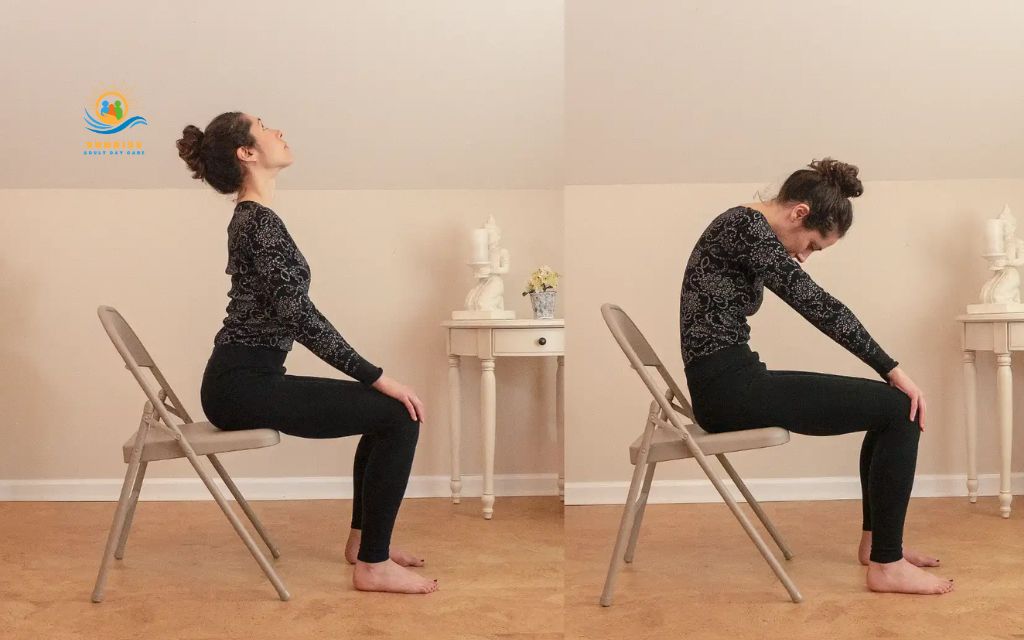
Postura del gato y la vaca sentada (flexión de la columna)
Este suave movimiento de vaivén activa la columna vertebral, alivia la rigidez y te ayuda a tomar conciencia de tu postura. Es un excelente ejercicio de calentamiento.
Cómo hacerlo:
- Comienza en la postura de la montaña sentada, con las manos apoyadas en los muslos o las rodillas.
- Vaca (arco): Mientras inhalas, empuja suavemente el pecho hacia adelante y levanta ligeramente la mirada. Deja que los omóplatos se acerquen un poco entre sí. La zona lumbar se arquea ligeramente.
- Gato (redondo): Mientras exhalas, arquea suavemente la parte superior de la espalda, acerca ligeramente la barbilla al pecho y deja que los hombros se desplacen hacia adelante.
- Sigue fluyendo con suavidad: inhala en la postura de la vaca, exhala en la postura del gato. Repite entre 5 y 8 veces, moviéndote lentamente al ritmo de la respiración.
Lo que deberías sentir: Un movimiento suave, como el de las olas, a lo largo de la columna vertebral. Debes sentir que los músculos de la espalda están activos, pero sin tensarse. La respiración y el movimiento deben sincronizarse con naturalidad.
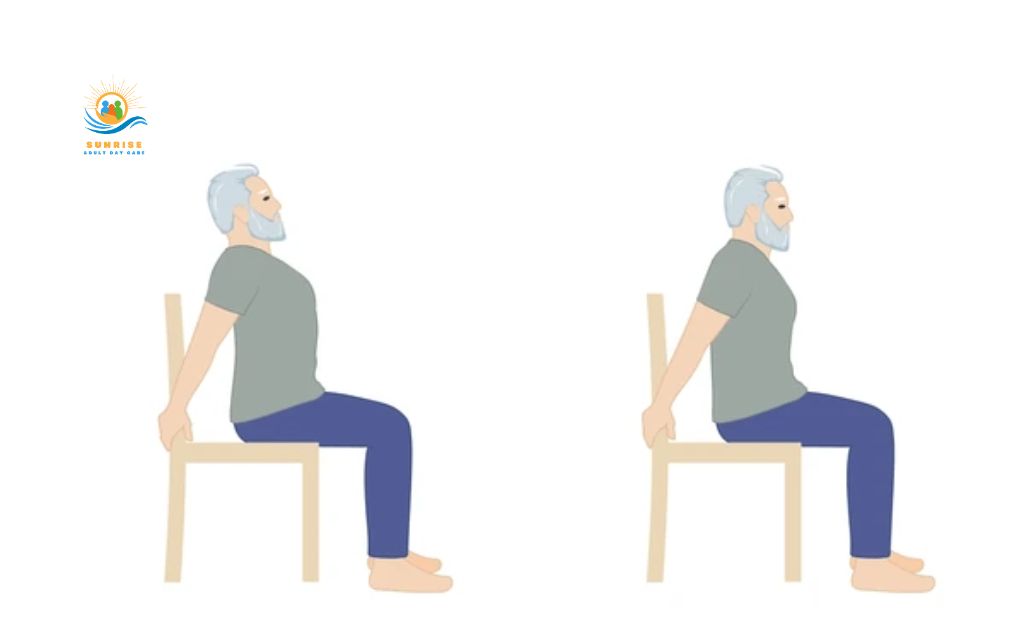
Ejercicio de apertura de hombros y pecho sentado
Contrarresta la postura encorvada hacia adelante, común en las personas mayores, especialmente en aquellas que han pasado años sentadas frente a un escritorio o realizando actividades que requieren inclinarse hacia adelante. Abre el pecho para facilitar la respiración.
Cómo hacerlo (Opción 1 – más fácil):
- Siéntate erguido en la silla, con los pies apoyados en el suelo.
- Estira ambos brazos hacia atrás y agarra con las manos los laterales del respaldo de la silla (o lo más cerca que puedas).
- Empuja suavemente el pecho hacia adelante y junta los omóplatos, manteniendo la barbilla a la altura de los hombros.
- Mantén la postura durante 3-5 respiraciones lentas.
Cómo hacerlo (Opción 2 – si los hombros lo permiten):
- Lleva ambos brazos hacia atrás y entrelaza los dedos (o sujeta una toalla entre las manos si no te alcanzas).
- Aleja ligeramente las manos de la zona lumbar con suavidad mientras empujas el pecho hacia adelante.
- Mantén la postura durante 3-5 respiraciones.
Lo que deberías sentir: Un estiramiento que abarca el pecho y la parte delantera de los hombros. Deberías notar cómo se activan los músculos de la parte superior de la espalda. Es posible que te resulte más fácil respirar profundamente.
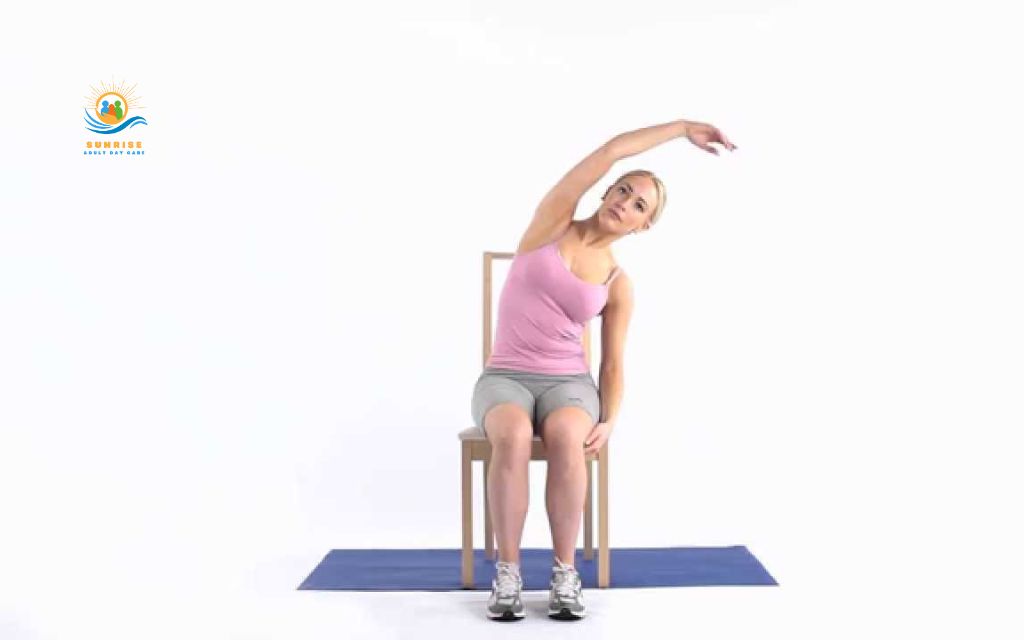
Flexión lateral sentado
Estira los músculos del costado y la cintura, alivia la tensión y mejora la capacidad respiratoria al abrir la caja torácica.
Cómo hacerlo:
- Siéntate erguido, con los pies apoyados en el suelo y las manos sobre los muslos.
- Inhala y estira el brazo derecho hacia arriba, hacia el techo, manteniendo la mano izquierda sobre el muslo izquierdo o el asiento de la silla para mantener el equilibrio.
- Exhala e inclínate suavemente hacia la izquierda, extendiendo el brazo derecho por encima de la cabeza describiendo un arco suave. Mantén ambos isquiones bien apoyados en el asiento.
- Mantén la postura durante 3 o 4 respiraciones, sintiendo el estiramiento a lo largo del costado derecho.
- Inhala para volver al centro y luego cambia de lado.
Lo que deberías sentir: Un estiramiento suave a lo largo de un lado del torso, desde la cadera hasta la axila. La respiración debe seguir siendo fluida; si se siente oprimida, es que has ido demasiado lejos.
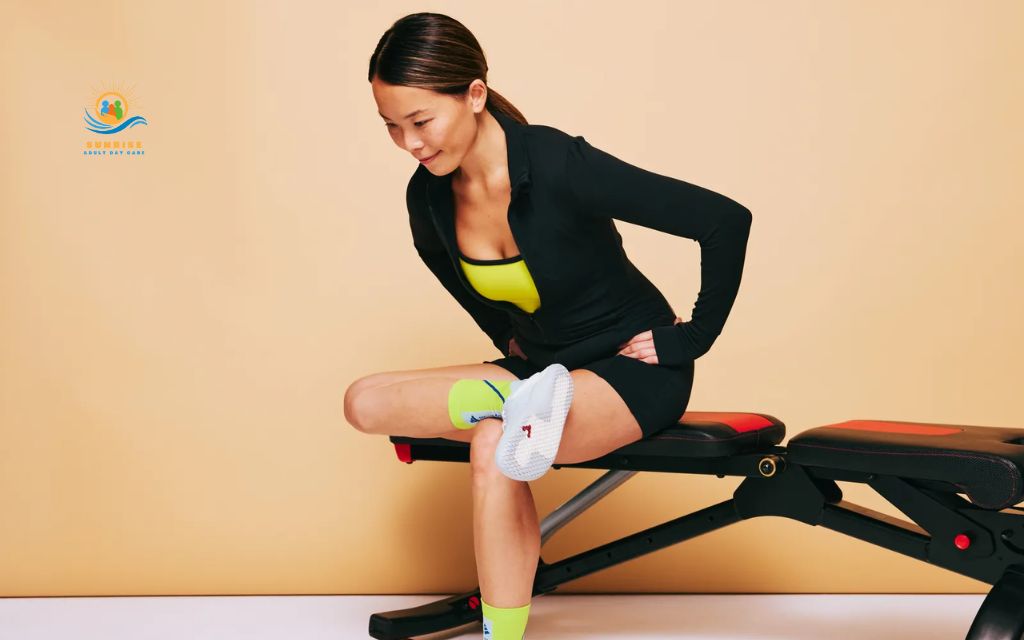
Estiramiento de cadera con las piernas en forma de «4» (sentado)
Relaja las caderas tensas, lo que puede aliviar las molestias en la zona lumbar y hacer que caminar y sentarse resulte más cómodo.
Cómo hacerlo:
- Siéntate erguido en la parte delantera de la silla, con los pies apoyados en el suelo.
- Levanta el pie derecho y cruza el tobillo derecho sobre el muslo izquierdo, justo por encima de la rodilla. La rodilla derecha se inclinará naturalmente hacia un lado, formando un “cuatro” con las piernas.
- Mantén el pie derecho flexionado (con los dedos apuntando hacia la espinilla) para proteger la rodilla.
- Si quieres un estiramiento más profundo, inclina suavemente el torso hacia adelante partiendo de las caderas (mantén la espalda recta, sin encorvarte). Ve solo hasta donde te resulte cómodo.
- Mantén la postura durante 5-8 respiraciones, luego descruza las piernas con cuidado y cambia de lado.
Lo que deberías sentir: Un estiramiento en la cadera derecha y la parte exterior del muslo. Deberías sentir un “buen estiramiento”, no dolor.
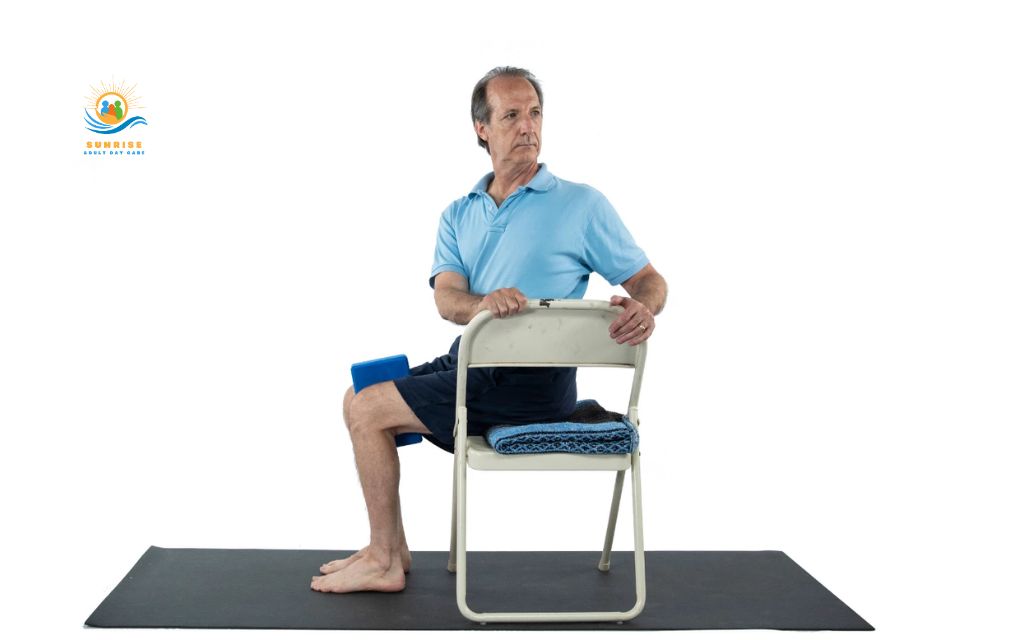
Torsión sentada (rotación suave de la columna vertebral)
Mantiene la movilidad de la columna vertebral, favorece la digestión y masajea suavemente los órganos. Proporciona una sensación refrescante.
Cómo hacerlo:
- Siéntate con la espalda recta, los pies apoyados en el suelo y mirando hacia adelante.
- Inhala para estirar la columna vertebral.
- Exhala y gira lentamente el torso hacia la derecha, colocando la mano izquierda en la parte exterior del muslo derecho y la mano derecha en el respaldo de la silla que tienes detrás (o en el asiento junto a la cadera derecha).
- Usa las manos para apoyarte suavemente, pero no te fuerces al girar. Piensa: “Primero la extensión, luego el giro”.”
- Mantén las caderas mirando hacia adelante; solo gira el torso.
- Mantén la postura durante 3-5 respiraciones y, a continuación, exhala mientras vuelves al centro. Repite el ejercicio con el otro lado.
Lo que deberías sentir: Una suave rotación en la parte media y superior de la espalda, tal vez una sensación de espacio entre las costillas.
6 posturas de yoga de pie para personas mayores (con apoyo en una silla)
Las posturas de pie fortalecen las piernas, mejoran el equilibrio y entrenan los movimientos que realizas a diario, como levantarte de una silla, caminar y sortear obstáculos.
Las seis posturas se realizan con una silla cerca para servir de apoyo. Los participantes deben sentirse libres de agarrarse a la silla con la fuerza que necesiten, ya sea con suavidad o con firmeza.
Configuración: Coloca la silla contra la pared (con el respaldo hacia la pared) para que no se vuelque si te apoyas en ella. Si estáis en grupo, coloca las sillas en semicírculo contra la pared para que todos puedan ver al instructor.
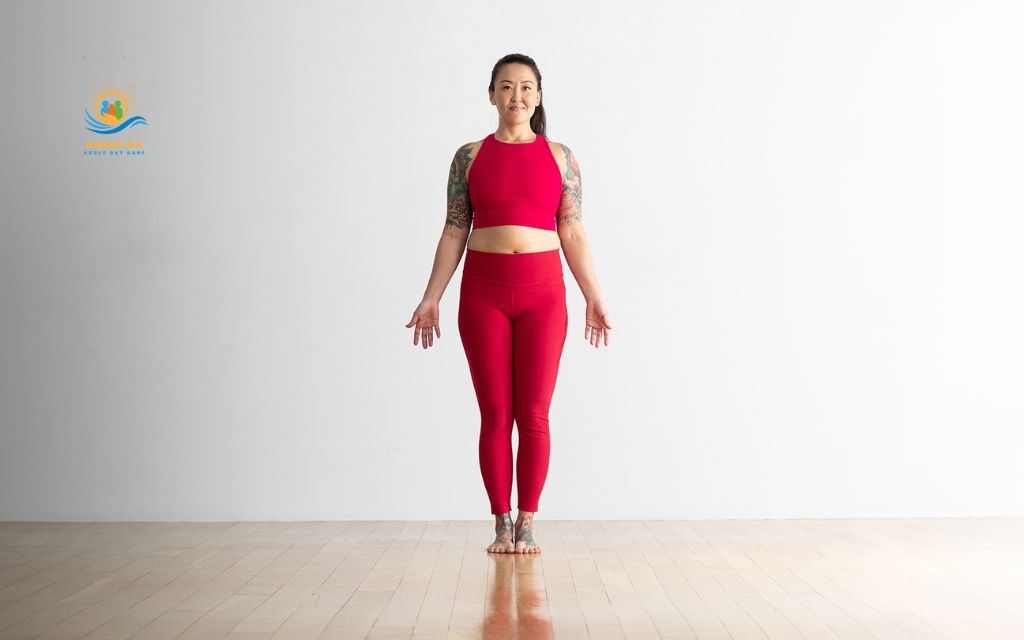
Postura de la montaña de pie
Te enseña cómo se siente una buena postura al estar de pie y sienta una base sólida para otras posturas.
Cómo hacerlo:
- Colócate detrás o al lado de la silla, con los pies separados a la altura de las caderas y las puntas de los pies mirando hacia adelante.
- Apoya ligeramente una o ambas manos en el respaldo de la silla para mantener el equilibrio.
- Apoya suavemente las cuatro esquinas de los pies contra el suelo.
- Estira la columna vertebral desde el coxis hasta la coronilla, igual que en la postura de la montaña sentada.
- Relaja los hombros hacia abajo y hacia atrás.
- Respira entre 5 y 8 veces, de forma lenta y regular.
Lo que deberías sentir: Apoyado firmemente con los pies, con la columna erguida. Es posible que notes que el peso se distribuye de manera más uniforme entre ambos pies.
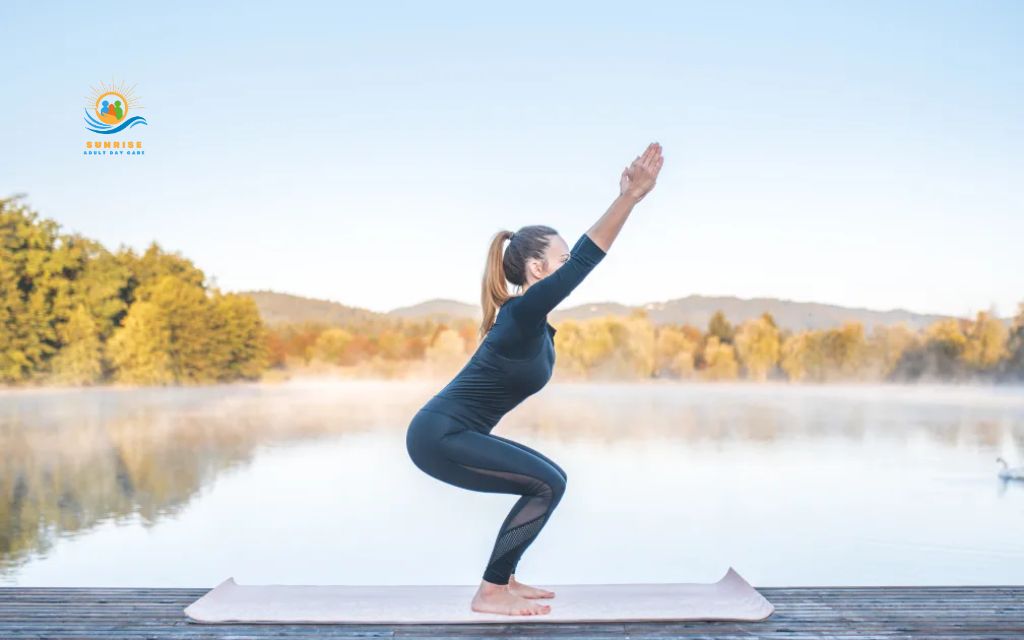
Postura de la silla con apoyo (mini sentadilla)
Fortalece los muslos, los glúteos y el tronco: precisamente los músculos que usas para levantarte de una silla o subir escaleras con seguridad.
Cómo hacerlo:
- Ponte de pie detrás de la silla, con ambas manos apoyadas en el respaldo y los pies separados a la altura de las caderas.
- Inhala para mantenerte erguido.
- Exhala y flexiona ligeramente las rodillas (imagina que estás suspendido a unos dos centímetros y medio del asiento de una silla, pero no bajes tanto si te resulta incómodo). Mantén el pecho erguido y el peso sobre los talones.
- Mantén la postura durante 2 o 3 respiraciones.
- Inhala mientras empujas con los talones y te enderezas.
- Repite entre 3 y 5 veces.
Lo que deberías sentir: Los músculos de los muslos están trabajando. Deberías sentir que te cuesta un poco, pero sin llegar a forzar.
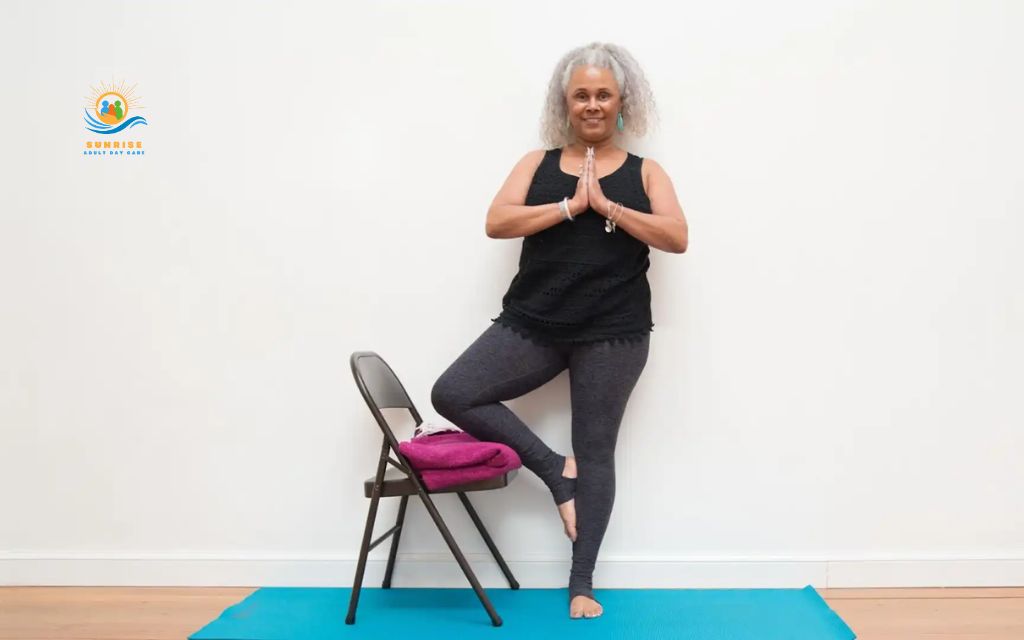
Postura del árbol con apoyo (ejercicio de equilibrio)
Uno de los mejores ejercicios de equilibrio suaves. Entrena los músculos estabilizadores del tobillo y el tronco.
Cómo hacerlo:
- Ponte de pie junto a la silla con la mano derecha apoyada ligeramente en el respaldo.
- Desplaza el peso hacia el pie izquierdo, sintiendo cómo las cuatro puntas de ese pie ejercen presión hacia abajo.
- Levanta el pie derecho y coloca los dedos del pie derecho en la parte interior del tobillo izquierdo (o en la pantorrilla, si el equilibrio te lo permite). La rodilla derecha quedará apuntando hacia un lado. Mantén la pierna izquierda recta, pero sin bloquearla.
- Si te sientes estable, retira la mano de la silla y respira un par de veces.
- Mantén la postura durante 5-8 respiraciones y luego cambia de lado.
Lo que deberías sentir: La pierna de apoyo te ayuda a mantener el equilibrio. Es normal tambalearse un poco; es el sistema del equilibrio el que está aprendiendo.
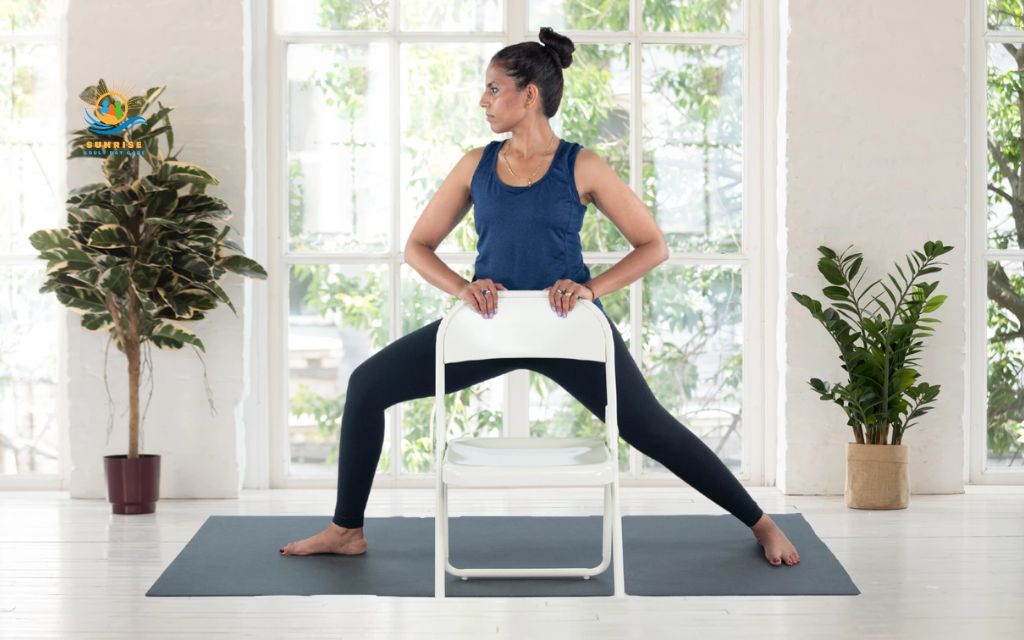
Postura del guerrero II con apoyo (zancada suave)
Fortalece las caderas y las piernas en una postura lateral, lo que aumenta la confianza a la hora de dar pasos en diferentes direcciones o moverse por terrenos irregulares.
Cómo hacerlo:
- Ponte de pie frente a la silla con ambas manos apoyadas en el respaldo. Da un paso hacia atrás con el pie izquierdo, de unos 60 a 90 centímetros, de modo que los pies queden bien separados. Gira ligeramente los dedos del pie izquierdo hacia afuera (unos 45 grados); mantén los dedos del pie derecho apuntando hacia adelante.
- Dobla suavemente la rodilla derecha (solo un poco, no hagas una zancada profunda). Mantén la rodilla derecha alineada con los dedos del pie derecho.
- Mantén las caderas y el pecho mirando hacia la silla, los brazos rectos y el torso erguido.
- Mantén la postura durante 3-5 respiraciones, sintiendo cómo trabajan tus piernas.
- Da un paso atrás hasta quedar de pie y cambia de lado.
Lo que deberías sentir: Tensa y estira las caderas y los muslos. Debes sentir que la pierna de delante está activa.
Estiramiento lateral de pie con silla
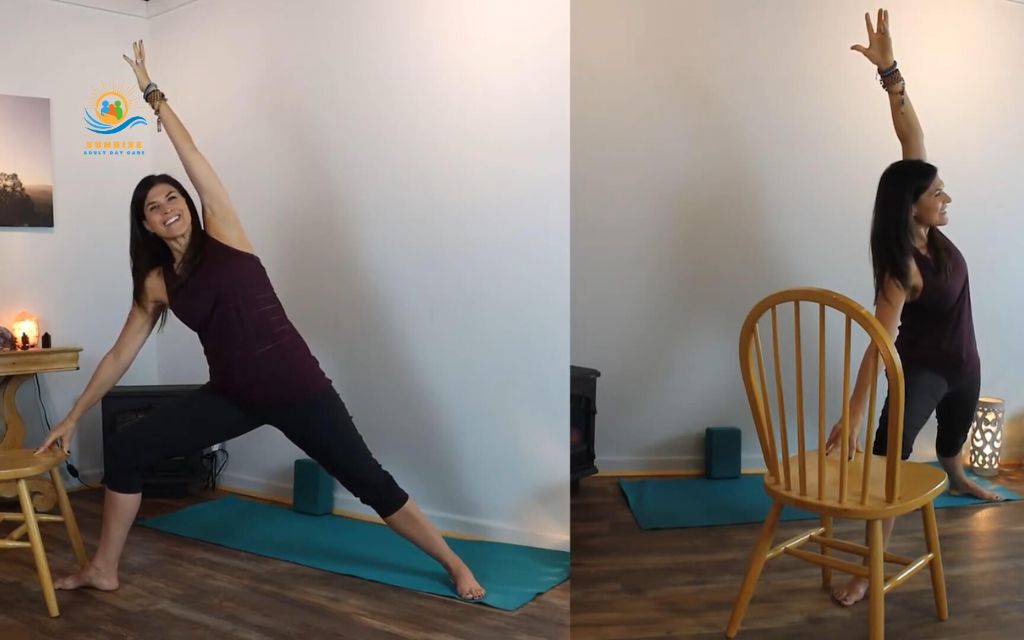
Abre la parte lateral del tronco y las costillas sin perder estabilidad, lo que favorece la respiración y alivia la tensión en la cintura.
Cómo hacerlo:
- Ponte de pie junto a la silla, con la mano izquierda apoyada en el respaldo.
- Inhala y estira el brazo derecho hacia arriba, en dirección al techo.
- Exhala e inclínate suavemente hacia la izquierda, formando un ligero arco con el cuerpo. Mantén la mano izquierda apoyada en la silla para mantener el equilibrio.
- Mantén la postura durante 3 o 4 respiraciones, sintiendo cómo se estira el costado derecho.
- Inhala mientras vuelves a la posición erguida y luego cambia de lado.
Lo que deberías sentir: Un suave estiramiento a lo largo del costado, desde la cadera hasta la caja torácica.
Estiramiento de isquiotibiales de pie con una silla
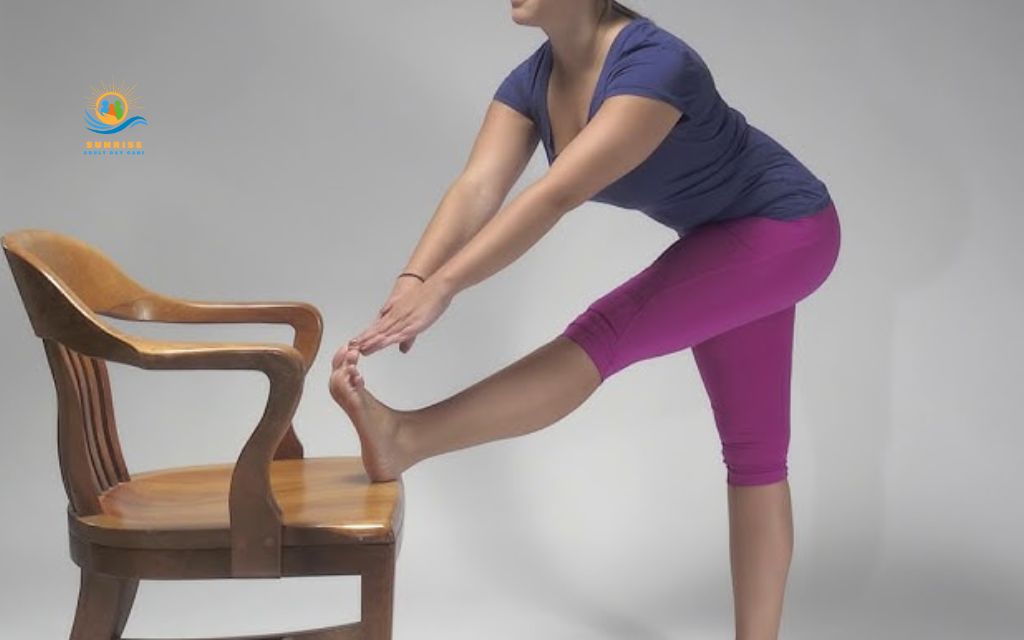
Por qué es importante: Estira suavemente la parte posterior de las piernas, lo que puede aliviar la tensión que contribuye a las molestias en la zona lumbar y facilita el caminar.
Cómo hacerlo:
- Ponte de pie frente a tu silla.
- Coloca el talón derecho sobre el asiento de la silla (o sobre un reposapiés resistente si el asiento es demasiado alto). Mantén la pierna derecha recta, pero sin tensarla, con los dedos de los pies apuntando hacia el techo.
- Apoya ambas manos en el asiento o en el respaldo de la silla para mantener el equilibrio.
- Mantén la columna estirada (no te encorves hacia adelante). Inclínate muy ligeramente hacia adelante desde las caderas si quieres un mayor estiramiento, pero solo si puedes mantener la espalda recta.
- Mantén la postura durante 5-8 respiraciones, sintiendo un suave estiramiento en la parte posterior del muslo derecho.
- Baja el pie con cuidado y cambia de lado.
Lo que deberías sentir: Un estiramiento en la parte posterior del muslo. La espalda debe mantenerse recta, sin encorvarse.
Ejemplos de rutinas de yoga suave para personas mayores
Ahora que ya conoces las posturas individuales, a continuación te explicamos cómo combinarlas en rutinas breves y eficaces. Estas secuencias están diseñadas pensando en la seguridad, la accesibilidad y la viabilidad en cuanto al tiempo que requieren.
Rutina de 10 minutos que se puede hacer sentado
Lo que necesitarás: Una silla resistente sin ruedas (o con las ruedas bloqueadas).
La secuencia:
- Postura de la montaña sentada – 1 minuto (acomodarse, estabilizar la respiración)
- Postura del gato y la vaca sentada – 1 minuto (6-8 series)
- Estiramiento de hombros y pecho sentado – 1 minuto (mantener la postura durante 5 respiraciones)
- Flexión lateral sentado – 1 minuto (ambos lados, 3-4 respiraciones cada uno)
- Estiramiento de cadera en posición de «cuatro» sentado – 2 minutos (ambos lados, de 5 a 8 respiraciones cada uno; deja tiempo suficiente para colocarte de forma segura)
- Torsión sentada – 2 minutos (ambos lados, 4-5 respiraciones cada uno)
- Postura de la montaña sentada con respiración – 2 minutos (terminar con respiraciones tranquilas y profundas)
Total: 10 minutos
Rutina de 15 minutos combinando ejercicios en silla y de pie
Lo que necesitarás: Una silla resistente (apoyada contra la pared, si es posible).
La secuencia:
- Postura de la montaña sentada – 1 minuto
- Postura del gato y la vaca sentada – 1 minuto
- Flexión lateral sentado – 1 minuto (ambos lados)
- Levántate poco a poco (tómate tu tiempo)
- Postura de la montaña de pie – 1 minuto
- Postura de la silla con apoyo (mini sentadilla) – 2 minutos (3-5 repeticiones)
- Postura del árbol con apoyo – 2 minutos (ambos lados)
- Vuelta a la posición sentada
- Estiramiento de cadera sentado – 2 minutos (por ambos lados)
- Torsión sentada – 2 minutos (por ambos lados)
- Postura de la montaña sentada con respiración – 2 minutos
Total: 15 minutos
Rutina grupal de 25 minutos para centros de la tercera edad / centros de atención diurna para adultos
Preparación: Coloca las sillas en semicírculo junto a la pared. Pide a los participantes que empiecen sentados.
La secuencia:
- Bienvenida y revisión de seguridad: 2 minutos (preguntar si hay mareos, dolor o si se necesitan adaptaciones)
- Postura de la montaña sentada – 1 minuto (instrucciones: “Siéntate erguido, con los pies apoyados en el suelo y respira con tranquilidad”)
- Postura del gato y la vaca sentada – 1,5 minutos (indicación: “Inhala mientras arqueas suavemente la espalda, exhala mientras la redondeas; muévete al ritmo de la respiración”)
- Estiramiento de hombros sentado – 1 minuto (instrucciones: “Sujeta el respaldo de la silla y empuja el pecho hacia adelante suavemente”)
- Flexión lateral sentado – 1,5 minutos (indicación: “Ambos lados; mantén ambas caderas fijas”)
- Descanso y pausa para beber agua – 1 minuto
- Transición a la posición de pie: 1 minuto (indicación: “Tómate tu tiempo; usa la silla”)
- Postura de la montaña de pie – 1 minuto
- Postura de la silla con apoyo – 2 minutos (indicación: “Ligera flexión de rodillas, peso en los talones, pecho erguido”)
- Postura del árbol con apoyo – 2 minutos (indicación: “No pasa nada si te tambaleas; eso significa que estás mejorando tu equilibrio”)
- Estiramiento lateral de pie – 1,5 minutos (ambos lados)
- Descanso de pie o sentado: 1 minuto
- Vuelta a la posición sentada – 1 minuto
- Estiramiento de cadera sentado – 2 minutos (ambos lados; ofrecer variaciones)
- Torsión sentada – 2 minutos (en ambos lados; indicación: “Estira primero y luego gira suavemente”)
- Cierre con la postura de la montaña sentada y respiración: 1,5 minutos (indicación: “Presta atención a cómo te sientes; agradece a tu cuerpo por haberse movido hoy”)
Total: 20 minutos
Consejos para el personal sobre cómo facilitar:
- Habla con calma y despacio. No te apresures al dar las instrucciones.
- Repite las indicaciones de seguridad: “Ve solo hasta donde te sientas cómodo”, “Un dolor agudo es una señal para detenerte”.”
- Comunícalo a todos para que puedan hacer modificaciones individuales, pero sin señalar a nadie en particular.
- Terminá con unas palabras de ánimo: “Todos lo hicieron de maravilla. ¡A la misma hora la semana que viene!”.”
Ver más: ejercicios de estiramiento para personas mayores
Conclusión
Esto es lo cierto: las posturas de yoga para personas mayores no tienen por qué parecer impresionantes para ser efectivas. Las 12 posturas de esta guía son sencillas, lentas y fáciles de realizar. Sin embargo, si se practican con regularidad, pueden:
- Alivia la rigidez en las caderas, los hombros, la espalda y las piernas, lo que te permitirá estirarte, agacharte y moverte con mayor comodidad a lo largo del día
- Mejora tu equilibrio y tu postura, reduciendo las oscilaciones y ayudándote a sentirte más firme al caminar
- Relaja tu mente mediante la respiración consciente y movimientos suaves, lo que te ayudará a dormir mejor y a reducir el estrés
- Fomenta tu independencia reforzando los movimientos específicos que utilizas para levantarte, caminar, subir escaleras y desenvolverte en tu vida cotidiana
- Si practicas en grupo, crea momentos de conexión para reducir el aislamiento y compartir logros
No hace falta que domines las 12 posturas esta semana, ni siquiera este mes. Empieza con una o dos poses hoy – tal vez la postura de la montaña sentada y la del gato-vaca sentada – y fíjate en cómo te sientes.
Escucha a tu cuerpo, respeta tus límites y avanza poco a poco. Si una postura no te sienta bien, modifícala o sáltatela. Esta es tu práctica, moldeada por las necesidades y capacidades actuales de tu cuerpo.
Si está buscando un entorno acogedor donde practicar yoga suave bajo la supervisión de personal cualificado y en compañía de otras personas, le recomendamos que eche un vistazo a los programas de bienestar estructurados que ofrecen los centros de día para adultos de Denver.
En Guardería Sunrise Senior, entendemos la importancia del movimiento y la conexión, y estamos aquí para ayudarte a ti o a tu ser querido a manteneros activos, comprometidos y estables.
Preguntas frecuentes (FAQ)
¿Es seguro practicar yoga para las personas mayores que nunca han hecho ejercicio?
Sí, siempre y cuando se adapte adecuadamente. El yoga en silla y las posturas suaves con apoyo son de bajo impacto y se pueden practicar con seguridad a cualquier edad; sin embargo, debes consultar primero con tu médico si padeces afecciones como hipertensión no controlada, osteoporosis grave, te has sometido recientemente a una cirugía o sufres caídas frecuentes.
¿Tengo que tumbarme en el suelo para sacar provecho del yoga?
No. El yoga en silla ofrece todos los beneficios fundamentales —mayor flexibilidad, equilibrio, fuerza y tranquilidad— sin necesidad de levantarse del asiento. Las seis posturas en silla que se describen en esta guía aportan mejoras significativas en el funcionamiento diario y el bienestar.
¿Con qué frecuencia deben practicar yoga las personas mayores para notar los beneficios?
Lo ideal es hacerlo dos o tres veces por semana. Las investigaciones demuestran que esta frecuencia, mantenida durante 8 a 12 semanas, produce mejoras cuantificables en el equilibrio, la movilidad y la confianza. La constancia es más importante que la duración: 10 minutos tres veces por semana es mejor que una sola sesión larga que no puedas mantener.
¿Qué ropa debo llevar y qué equipo necesito?
Lleva ropa cómoda que no te limite los movimientos y calcetines antideslizantes o zapatos planos que te brinden sujeción. Necesitarás una silla resistente sin ruedas (o con ruedas bloqueadas); entre los artículos opcionales se incluyen una correa de yoga o una toalla y un cojín para el asiento.
¿De verdad puede el yoga ayudar a prevenir las caídas en las personas mayores?
Las investigaciones demuestran que practicar yoga suave entre dos y tres veces por semana puede mejorar el equilibrio, la marcha y la confianza en uno mismo, factores todos ellos relacionados con una menor probabilidad de sufrir caídas. Aunque el yoga no te hará inmune a las caídas, es una herramienta con base científica que entrena tu capacidad para recuperarte cuando pierdes el equilibrio, que es precisamente la habilidad que se necesita al tropezar o al caminar sobre superficies irregulares.