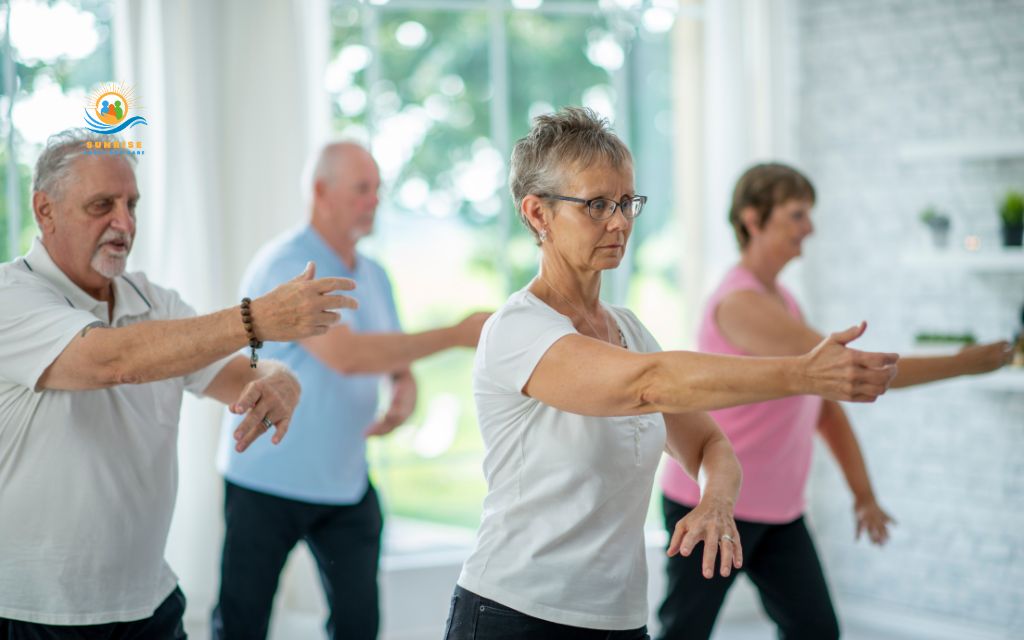
El tai chi es una práctica de movimientos lentos, fluidos y de bajo impacto que combina ejercicio suave con entrenamiento del equilibrio y relajación profunda. A diferencia de las actividades de alto impacto que pueden causar estrés en las articulaciones envejecidas, los ejercicios de tai chi para personas mayores funcionan. con los ritmos naturales de tu cuerpo, desarrollando fuerza y estabilidad mediante movimientos cuidadosos y deliberados.
Esta guía completa ofrece:
- Beneficios claros y demostrados del tai chi para las personas mayores
- Ejercicios de tai chi paso a paso para personas mayores, incluyendo opciones con apoyo en silla.
- Consejos prácticos para cuidadores y coordinadores de programas diurnos para adultos
- Respuestas a sus preguntas más urgentes sobre seguridad y eficacia.
Tanto si eres una persona mayor que desea mejorar su equilibrio, un cuidador familiar que busca actividades seguras o un coordinador de actividades que planifica sesiones grupales, esta guía te ofrece todo lo que necesitas para iniciarte en el tai chi para personas mayores.
¿Qué es el tai chi y por qué es ideal para las personas mayores?
El tai chi (a menudo escrito como “tai chi chuan”) es un antiguo arte marcial chino que ha evolucionado hasta convertirse en una forma suave de “meditación en movimiento”.”
La práctica consiste en movimientos lentos y continuos, combinados con una respiración coordinada y una atención concentrada. Piensa en ello como una danza elegante realizada a cámara lenta, que cualquiera puede aprender, independientemente de su estado físico.
¿Por qué el ejercicio de tai chi es especialmente ideal para las personas mayores?
- Sin impacto y respetuoso con las articulaciones: A diferencia del jogging o los aeróbicos de alto impacto, el tai chi ejerce una presión mínima sobre las articulaciones. No hay saltos, movimientos bruscos ni golpes. Esto lo hace especialmente adecuado para personas mayores que padecen artritis, osteoporosis o se están recuperando de una artroplastia.
- Opciones para estar de pie o sentado: El tai chi se puede practicar de pie con apoyo o adaptarse completamente para practicarlo sentado en una silla. Si utiliza un andador, una silla de ruedas o simplemente se siente más estable sentado, también puede beneficiarse de los ejercicios de tai chi para personas mayores.
- Adaptable a todos los niveles de condición física: Tanto si eres una persona activa de 65 años que practica senderismo con regularidad como si eres una persona de 90 años que padece múltiples problemas de salud, el tai chi se adapta a tus necesidades. Los movimientos pueden ser más pequeños, más lentos o con más apoyo, según las necesidades individuales.
- Diseñado para ofrecer equilibrio: Los lentos cambios de peso y los movimientos controlados inherentes al ejercicio del tai chi entrenan directamente los sistemas de equilibrio que utiliza el cuerpo para evitar caídas, sin crear riesgo de caídas durante la práctica.
Para los adultos mayores que buscan un movimiento seguro y eficaz que favorezca tanto la salud física como mental, el tai chi ofrece un enfoque basado en la evidencia que respeta el envejecimiento del cuerpo al tiempo que desarrolla fuerza y resistencia reales.
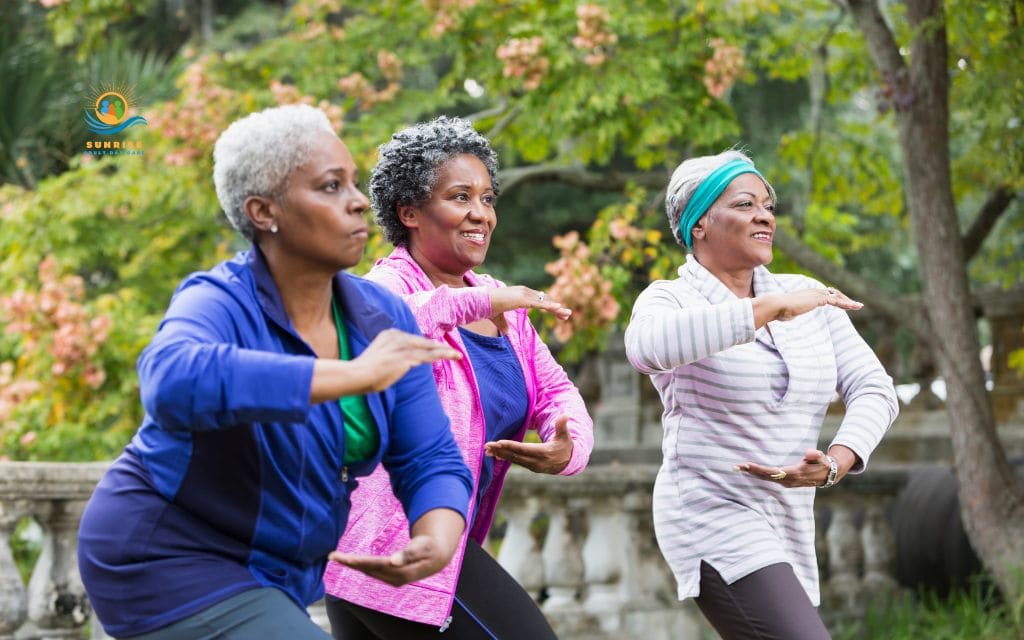
Principales beneficios para la salud de los ejercicios de tai chi para personas mayores
Las investigaciones demuestran sistemáticamente que los beneficios del tai chi para las personas mayores van mucho más allá del simple ejercicio. Exploremos las formas específicas y basadas en pruebas en las que el tai chi favorece un envejecimiento saludable.
Mejor equilibrio y menos caídas
Las caídas representan uno de los riesgos más graves para la salud de las personas mayores. Según los Centros para el Control y la Prevención de Enfermedades (CDC), las caídas son la principal causa de muerte por lesiones entre las personas mayores, y uno de cada cuatro adultos mayores de 65 años sufre una caída cada año.
Aquí es donde el tai chi marca una diferencia notable: múltiples estudios de investigación han descubierto que la práctica regular de tai chi puede reducir el riesgo de caídas en aproximadamente un 43-50% en los adultos mayores. Una revisión exhaustiva también descubrió que el tai chi era una de las intervenciones más eficaces para prevenir las caídas en las personas mayores que viven en la comunidad.
¿Cómo funciona? Los ejercicios de tai chi para personas mayores de 70 años entrenan específicamente:
- Equilibrio dinámico: Mover el centro de gravedad sin perder el control
- Propriocepción: La conciencia que tiene tu cuerpo de dónde se encuentra en el espacio.
- Estrategias para el tobillo y la cadera: Las sutiles correcciones que realiza tu cuerpo para mantenerse erguido
- Confianza en el desplazamiento del peso: Practicar movimientos controlados genera confianza en la capacidad de tu cuerpo para moverse de forma segura.
La naturaleza lenta y deliberada del tai chi le da tiempo a tu sistema nervioso para crear nuevos patrones de movimiento que se transfieren directamente a actividades cotidianas como caminar, girar y desplazarse por superficies irregulares.
Piernas más fuertes, tronco más fuerte y mayor estabilidad general.
“Pero es muy lento”, piensan algunas personas. “¿Cómo puede el movimiento lento desarrollar fuerza?”.”
La respuesta está en cómo el ejercicio de tai chi trabaja los músculos. Las posiciones de semi-sentadilla, las transferencias lentas de peso y las posturas sostenidas crean lo que los fisiólogos del ejercicio llaman “activación muscular excéntrica” e “isométrica”: mantener posturas que desarrollan la fuerza sin un estrés de alto impacto.
- Fuerza de los cuádriceps (parte delantera del muslo): Esencial para levantarse de las sillas, subir escaleras y prevenir caídas.
- Estabilidad del tronco: Los músculos profundos del abdomen y la espalda que sostienen la columna vertebral y mejoran la postura.
- Fuerza de cadera y glúteos: Fundamental para caminar, mantener el equilibrio y conservar la movilidad independiente.
- Estabilidad del tobillo: Importante para desplazarse por terrenos irregulares y recuperarse de tropiezos.
Más flexibilidad y comodidad en las articulaciones
La rigidez no es una parte inevitable del envejecimiento, aunque sin duda es muy común. Los movimientos suaves y fluidos de los ejercicios de tai chi para personas mayores trabajan las articulaciones en todo su rango de movimiento sin forzar ni tensar.
Beneficios para la flexibilidad y la salud de las articulaciones:
- Reducción de la rigidez matutina: Los movimientos rítmicos estimulan la producción de líquido sinovial, que lubrica las articulaciones.
- Mejor movilidad del hombro: Alcanzar los armarios de cocina o el ropero resulta más fácil.
- Mayor flexibilidad de la cadera: Subir y bajar del coche, agacharse para atarse los zapatos y sentarse cómodamente son actividades que se benefician de ello.
- Rotación espinal mejorada: Mirar hacia atrás mientras conduces o caminas mejora
- Mantenimiento de la movilidad de la mano y la muñeca: Importante para tareas cotidianas como abrir frascos, escribir a máquina o realizar actividades manuales.
Salud cardíaca y pulmonar
Aunque el tai chi puede no parecer un ejercicio “cardio” tradicional, su práctica regular favorece la salud cardiovascular de maneras importantes.
Los beneficios cardiovasculares incluyen:
- Reducción moderada de la presión arterial: Los estudios demuestran que el tai chi puede reducir la presión arterial sistólica.
- Mejora de la circulación: Los movimientos suaves estimulan la circulación sanguínea sin forzar el corazón.
- Mejor eficiencia respiratoria: La respiración profunda y coordinada mejora el intercambio de oxígeno y la capacidad pulmonar.
- Reducción de la variabilidad del ritmo cardíaco: Un indicador de la mejora de la salud cardíaca y la regulación del estrés.
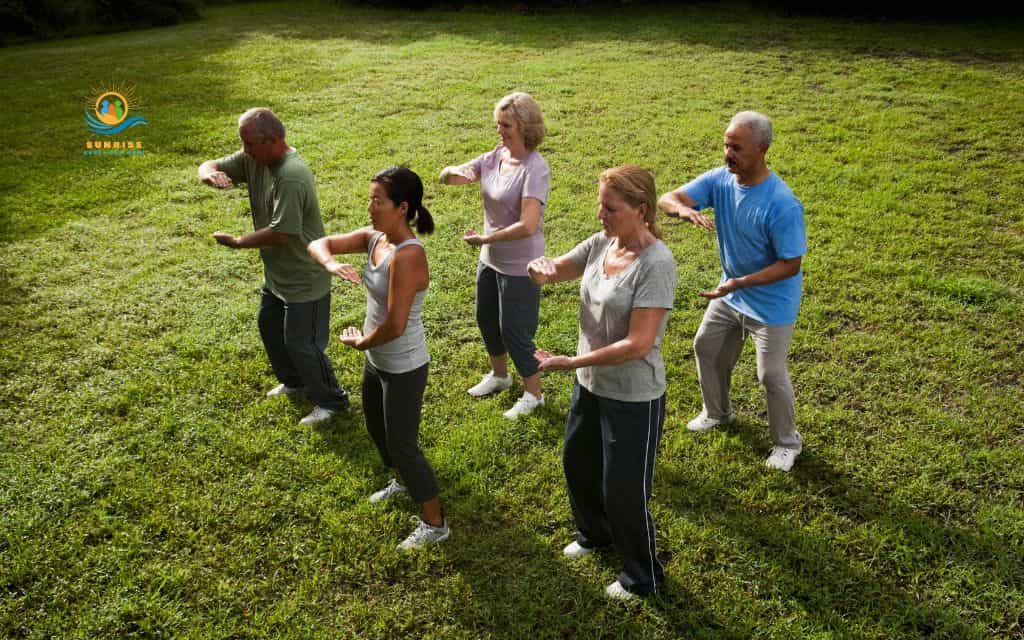
Salud cerebral, concentración y estado de ánimo
La conexión entre la mente y el cuerpo en la práctica del tai chi chi kung para personas mayores ofrece profundos beneficios cognitivos y emocionales.
Beneficios cognitivos:
- Mejora de la memoria y la atención: Aprender y recordar secuencias de movimientos ejercita tu cerebro.
- Función ejecutiva mejorada: La coordinación que requiere el tai chi estimula la corteza prefrontal.
- Posible protección contra el deterioro cognitivo: Las investigaciones sugieren que la práctica regular de tai chi puede ayudar a mantener la función cognitiva en los adultos mayores.
- Mejor percepción espacial: Comprender la posición de tu cuerpo en el espacio te ayuda a orientarte y a garantizar tu seguridad diaria.
Beneficios para la salud emocional y mental:
- Reducción de la ansiedad y el estrés: La naturaleza meditativa y fluida de los ejercicios chinos para personas mayores activa el sistema nervioso parasimpático, el modo de “descanso y digestión” del cuerpo.
- Mejora del estado de ánimo: Los estudios demuestran que el tai chi puede reducir los síntomas de la depresión en los adultos mayores.
- Mejor calidad del sueño: La práctica regular ayuda a regular los ciclos de sueño-vigilia y reduce el insomnio.
- Mindfulness y conciencia del momento presente: La atención concentrada que se requiere desarrolla la resiliencia mental.
Confianza, independencia y calidad de vida
Cuando mejora el equilibrio, disminuye el miedo a caerse. Cuando disminuye el miedo, aumenta la confianza. Cuando aumenta la confianza, las personas mayores son más propensas a:
- Pasea por el vecindario.
- Asistir a reuniones sociales y eventos comunitarios.
- Visita a familiares y amigos
- Participa en actividades que les gusten.
- Mantener la independencia durante más tiempo
Las personas mayores que practicaban tai chi informaron de mejoras significativas en los indicadores de calidad de vida, incluyendo la función física, el dolor corporal, la salud general, la vitalidad, el funcionamiento social y el bienestar emocional.
Cómo empezar: postura, respiración y calentamiento
Antes de sumergirnos en ejercicios específicos de tai chi, establezcamos los elementos fundamentales que hacen que tu práctica sea segura y eficaz.
Fundamentos de la postura del tai chi
Una buena postura es la base de toda práctica de tai chi. Esto es lo que hay que buscar:
Postura de pie
- Pies: Pies separados a la altura de las caderas, dedos de los pies apuntando hacia adelante, peso distribuido uniformemente entre ambos pies.
- Rodillas: Suave y ligeramente curvado
- Caderas: Nivelado y neutro, sin inclinación hacia adelante ni hacia atrás.
- Columna vertebral: Imagina una cuerda que tira suavemente de la coronilla hacia el techo, alargando la columna vertebral.
- Hombros: Relajadas y caídas, no encorvadas hacia las orejas.
- Armas: Colgando naturalmente a los lados, con los codos ligeramente flexionados.
- Jefe: Posición neutra, barbilla ligeramente retraída, mirada al frente y suave.
Postura sentada (para tai chi en silla):
- Siéntese en el borde delantero de una silla resistente sin brazos.
- Pies planos sobre el piso, separados a la altura de las caderas.
- Espalda recta, sin apoyarse en el respaldo de la silla.
- Las manos descansando suavemente sobre los muslos o las rodillas.
- Hombros relajados, pecho abierto
Respiración
La respiración del tai chi es lenta, profunda y coordinada con el movimiento. A diferencia de la respiración superficial cotidiana, el tai chi fomenta la respiración diafragmática completa que oxigena el cuerpo y calma el sistema nervioso.
Patrón de respiración básico:
- Inhalar por la nariz al abrir, expandir o elevar
- Exhalar por la nariz o la boca al cerrar, contraer o bajar
- Respira de forma natural, no fuerces ni contengas la respiración.
- Deja que la respiración sea suave y continua, como una ola suave.
No te preocupes por respirar “perfectamente” al principio. Concéntrate en los movimientos y deja que tu respiración sea natural. A medida que te familiarices con los ejercicios, la coordinación de la respiración se desarrollará de forma natural.
Calentamiento suave (3-5 minutos)
Nunca te saltes el calentamiento. Estos sencillos movimientos preparan tus articulaciones, músculos y sistema nervioso para la práctica del tai chi.
Secuencia de calentamiento de pie
1. Giros de cuello (8-10 en cada dirección)
- Mantén una buena postura
- Gira lentamente la cabeza para mirar por encima del hombro derecho.
- Volver al centro
- Gira la cabeza para mirar por encima del hombro izquierdo.
- Muévete con cuidado.
2. Rotaciones de hombros (8-10 hacia adelante, 8-10 hacia atrás)
- Levanta los hombros hacia las orejas.
- Enróllalos hacia atrás y hacia abajo con un movimiento circular.
- Luego, invierte el movimiento: rueda hacia adelante y hacia abajo.
- Mantenga movimientos suaves y controlados.
3. Círculos con las muñecas y los tobillos (8-10 en cada dirección)
- Extiende un brazo y haz círculos suaves con la muñeca.
- Repita con la otra muñeca.
- Levanta ligeramente un pie y haz círculos con el tobillo.
- Repita con el otro tobillo.
- Si es necesario, apóyese en algo para hacer círculos con los tobillos.
4. Cambios de peso de lado a lado (10-15 repeticiones)
- Pies separados a la altura de las caderas
- Desplaza tu peso hacia el pie derecho, dejando que el pie izquierdo se aligere (sin levantarlo).
- Desplaza el peso hacia el pie izquierdo.
- Muévete despacio y con cuidado.
- Esto entrena la base del cambio de peso del tai chi.
Calentamiento sentado (si es necesario)
- Giros de cuello sentado
- Rotaciones de hombros sentado
- Círculos con las muñecas mientras estás sentado
- Círculos con los tobillos sentado (pies en el piso)
- Giros suaves sentado: coloque las manos sobre las rodillas, gire lentamente la parte superior del cuerpo hacia la derecha y luego hacia la izquierda.
Después del calentamiento, haz una pausa. Observa cómo se siente tu cuerpo: más cálido, más relajado, más despierto. Esta conciencia ya forma parte de tu práctica de tai chi.
Vea el video de demostración a continuación para conocer la técnica adecuada de calentamiento y los movimientos básicos del tai chi.
Los mejores ejercicios de tai chi para personas mayores (paso a paso)
Ahora llegamos al meollo de esta guía: ejercicios específicos de tai chi para personas mayores que puedes aprender y practicar de forma segura. Cada ejercicio incluye instrucciones detalladas para practicar de pie y modificaciones con apoyo en una silla.
Antes de empezar:
- Despeja un espacio donde puedas extender los brazos libremente.
- Lleve ropa cómoda y holgada.
- Utilice zapatos planos que le proporcionen sujeción o calcetines antideslizantes.
- Mantén agua cerca.
- Ten a la mano una silla resistente para apoyarte o practicar sentado.
- Muévete a tu propio ritmo
Ejercicio 1: Abrir y cerrar la puerta (cambio básico de peso)
Objetivo: Este ejercicio básico calienta las articulaciones, practica un suave desplazamiento del peso y establece la coordinación entre la respiración y el movimiento que define al tai chi.
- Ponte de pie con los pies separados a la anchura de las caderas, las rodillas ligeramente flexionadas y los brazos colgando de forma natural.
- Inhala: Levanta lentamente ambos brazos hacia adelante y hacia arriba hasta la altura del pecho, con las palmas enfrentadas y separadas unos 30 cm (como si sostuvieras una pelota de playa).
- Exhalar: Acerca suavemente las palmas de las manos entre sí (sin tocarlas) y luego baja los brazos a la posición inicial.
- A medida que te sientas cómodo, añade un cambio de peso: desplaza ligeramente el peso hacia el pie derecho al levantar los brazos y vuelve al centro al bajarlos.
- Repita entre 8 y 10 veces, moviéndose lentamente y coordinando la respiración con el movimiento.
Ejercicio 2: Sujetar la pelota (postura de tai chi)
Objetivo: Esta postura básica fortalece las piernas, mejora la conciencia corporal y entrena la posición de sentadilla suave que se utiliza en todo el tai chi.
- Póngase de pie con los pies separados a la anchura de los hombros.
- Dobla ligeramente las rodillas, como si estuvieras empezando a sentarte en una silla (solo 10-20 grados de flexión de rodilla, muy sutil).
- Levanta ambos brazos como si sostuvieras una pelota de playa grande a la altura del pecho: una mano arriba (con la palma hacia abajo) y otra abajo (con la palma hacia arriba).
- Mantenga esta posición durante 5-10 segundos., respirar normalmente
- Desplace lentamente el peso hacia el pie derecho y luego hacia el izquierdo, manteniendo la posición del brazo como si estuviera sujetando una pelota.
- Cambie la posición de las manos (si la derecha estaba arriba, ahora la izquierda está arriba) y repita los cambios de peso.
- Practique durante 30-60 segundos en total.
Ejercicio 3: Separar la crin del caballo salvaje
Objetivo: Este movimiento clásico de tai chi favorece la coordinación, la seguridad al dar pasos y la transferencia del peso hacia delante, habilidades esenciales para caminar con seguridad.
- Comience en su postura básica, con el peso distribuido de manera uniforme.
- Desplaza el peso hacia el pie derecho y da un paso cómodo hacia adelante con el pie izquierdo (primero toca el talón y luego rueda el pie).
- Al dar un paso, coloca las manos en posición de “sujetar una pelota”: la mano derecha arriba y la izquierda abajo.
- Desplaza el peso hacia delante sobre el pie izquierdo (aproximadamente el 70 % del peso sobre el pie delantero).
- A medida que el peso se desplaza hacia adelante, lentamente “separar las manos: la mano izquierda se mueve hacia adelante y hacia arriba (con la palma a la altura del hombro), la mano derecha se mueve hacia abajo y hacia atrás, hacia la cadera derecha.
- Aguanta la respiración, luego desplaza el peso hacia el pie derecho y vuelve a colocar las manos en la posición de “sujetar la pelota”.”
- Lleve el pie izquierdo hacia atrás a la posición inicial.
- Repite en el lado contrario: da un paso adelante con el pie derecho, coloca la mano izquierda sobre la pelota y luego separa las manos con la mano derecha hacia adelante.
- Realiza entre 4 y 6 repeticiones con cada lado.
Ejercicio 4: Mueve las manos como si fueran nubes.
Objetivo: Este hermoso movimiento fluido desarrolla el equilibrio lateral, la movilidad del tronco y la coordinación, lo que resulta excelente para los movimientos rotatorios necesarios en la vida diaria.
- Póngase de pie con los pies separados a una distancia superior a la anchura de las caderas (entre 45 y 60 cm), con las rodillas ligeramente flexionadas.
- Desplaza el peso hacia el pie derecho.
- Levanta la mano derecha a la altura del hombro, con la palma hacia ti, y la mano izquierda a la altura de la cintura, con la palma hacia abajo.
- Desplaza lentamente el peso hacia el pie izquierdo. mientras que:
- La mano derecha barre tu cuerpo a la altura del hombro (siguiéndola con la mirada).
- La mano izquierda se eleva desde la cintura hasta la altura del hombro.
- El torso gira suavemente hacia la izquierda.
- Cuando el peso recae sobre el pie izquierdo, la mano izquierda queda a la altura del hombro y la mano derecha a la altura de la cintura.
- Desplaza el peso hacia el pie derecho. mientras que:
- La mano izquierda barre el cuerpo a la altura del hombro.
- La mano derecha se eleva desde la cintura hasta la altura del hombro.
- El torso gira suavemente hacia la derecha.
- Continúa con este movimiento fluido, similar a una ola, durante 8-10 ciclos completos (de lado a lado = 1 ciclo).
Ejercicio 5: Rozar la rodilla y empujar
Objetivo: Este movimiento ayuda a mejorar la confianza al caminar, la fuerza de las piernas y los movimientos de extensión hacia adelante que se utilizan en las actividades cotidianas.
- Comience con los pies juntos y las manos a los lados.
- Da un paso adelante con el pie izquierdo (primero con el talón, con una longitud de paso cómoda).
- Al dar un paso y desplazar el peso hacia adelante:
- La mano izquierda realiza un suave movimiento descendente “cepillando” por encima de la rodilla izquierda.
- La mano derecha “empuja” hacia adelante a la altura del pecho, con la palma mirando hacia afuera.
- Mantén la postura momentáneamente con la mayor parte del peso sobre el pie delantero (izquierdo).
- Desplaza el peso hacia el pie trasero (derecho).
- Lleve el pie izquierdo hacia atrás a la posición inicial.
- Repite en el lado contrario: da un paso adelante con el pie derecho, la mano derecha roza la rodilla y la mano izquierda empuja.
- Realiza entre 4 y 6 repeticiones con cada lado.
Ejercicio 6: Repeler al mono
Objetivo: Este ejercicio entrena los pasos hacia atrás y el control del equilibrio, habilidades fundamentales para prevenir caídas y realizar movimientos cotidianos como alejarse de una encimera o retroceder desde una puerta.
- Ponte de pie con los pies separados a la altura de las caderas.
- Desplaza el peso hacia el pie derecho.
- Da un paso atrás con el pie izquierdo (primero toca el suelo con la punta del pie y luego rueda hacia el talón, al contrario que al dar un paso adelante).
- Al dar un paso atrás:
- La mano derecha se retira hacia el hombro derecho, con la palma hacia arriba.
- La mano izquierda empuja hacia adelante a la altura de la cintura, con la palma hacia abajo.
- Desplaza el peso hacia el pie trasero (izquierdo).
- Haz una breve pausa, manteniendo el equilibrio.
- Vuelva a desplazar el peso hacia el pie derecho.
- Da un paso atrás con el pie derecho, cambiando los brazos: el izquierdo tira hacia atrás y el derecho empuja hacia adelante.
- Realiza entre 4 y 6 repeticiones con cada lado.
IMPORTANTE SEGURIDAD para dar pasos hacia atrás:
- Esta es una habilidad de equilibrio avanzada, practíquela solo si se siente seguro.
- Practique siempre cerca de una pared o una superficie firme a la que pueda agarrarse si es necesario.
- Al principio, da pasos muy pequeños hacia atrás (10-15 cm).
- Mira por dónde pisas; no pasa nada por mirar atrás.
- Si dar pasos hacia atrás te hace sentir inseguro, practica solo los movimientos de los brazos o omite este ejercicio por completo.
Ejercicio 7: El gallo dorado se pone de pie sobre una pata
Objetivo: El entrenamiento del equilibrio sobre una sola pierna es una de las formas más eficaces de prevenir las caídas. Este ejercicio entrena los sistemas de equilibrio de forma segura con el apoyo adecuado.
- Póngase de pie junto a una silla, un mostrador o una pared resistentes.
- Coloque las yemas de los dedos de una mano ligeramente sobre la superficie de apoyo (solo para mantener el equilibrio, sin apoyarse con fuerza).
- Póngase de pie sobre la pierna derecha y levante lentamente la rodilla izquierda unos centímetros del suelo (solo hasta donde le resulte cómodo).
- Mantén la posición durante 5-10 segundos (o tanto tiempo como te resulte cómodo).
- Baja el pie izquierdo al suelo con control.
- Cambio: párate sobre la pierna izquierda, levanta la rodilla derecha.
- Realiza entre 3 y 5 repeticiones con cada pierna.
Seguridad crítica:
- Ten SIEMPRE apoyo disponible, incluso si crees que no lo necesitas.
- Nunca fuerces el equilibrio; si te sientes inestable, baja el pie inmediatamente.
- Si tienes un deterioro grave del equilibrio, omite la versión de pie y practica solo la marcha sentada.
- Consulte a su médico antes de intentar realizar ejercicios con una sola pierna si se ha sometido recientemente a una cirugía, padece artritis grave o tiene trastornos de equilibrio significativos.
Ejercicio 8: Forma de cierre y meditación de pie
Objetivo: Esta suave secuencia final ayuda a tu cuerpo a pasar del movimiento activo a la quietud, favoreciendo la relajación y la conciencia corporal.
- Ponte de pie con los pies separados a la altura de las caderas (o siéntate con la espalda recta en una silla).
- Inhala: Levanta lentamente ambos brazos hacia adelante y hacia arriba hasta la altura de los hombros, con las palmas hacia abajo.
- Exhalar: Gira las palmas de las manos para que queden enfrentadas y luego baja lentamente los brazos por la línea central del cuerpo (como si presionaras suavemente a través del agua).
- Repita este movimiento de subir y bajar 3 o 4 veces, moviéndose muy lentamente.
- En la última repetición, deja que los brazos descansen naturalmente a los lados (o sobre los muslos si estás sentado).
- Párate (o siéntate) en silencio durante 30-60 segundos:
- Los ojos pueden estar abiertos con una mirada suave o cerrados con delicadeza.
- Respira de forma natural y profunda.
- Observa las sensaciones en tu cuerpo: calor, hormigueo, estabilidad.
- Libera cualquier tensión en los hombros, la mandíbula o las manos.
Aprenda más sobre los ejercicios de tai chi para personas mayores en este video.
Ver más: posturas de yoga para personas mayores
Ejercicios de tai chi en silla para personas mayores con movilidad limitada
El tai chi en silla pone todos los beneficios de esta práctica suave al alcance de las personas mayores con limitaciones significativas de movilidad, aquellas que se están recuperando de una lesión o cirugía, las personas que utilizan sillas de ruedas a tiempo completo o cualquiera que simplemente se sienta más estable y seguro estando sentado.
Por qué funciona el tai chi sentado
Los principios fundamentales del tai chi funcionan a la perfección desde una posición sentada. Aún así, obtienes:
- Flexibilidad y fuerza de la parte superior del cuerpo
- Mejora de la respiración y la circulación.
- Estabilidad del tronco y postura
- Concentración mental y reducción del estrés
- La conexión social cuando se practica en grupos
Aunque no se obtiene el mismo fortalecimiento de la parte inferior del cuerpo ni el mismo entrenamiento del equilibrio en posición de pie, el tai chi sentado ofrece beneficios muy reales para mantener la movilidad, reducir el dolor y favorecer el bienestar general.
Ejemplo de secuencia de tai chi sentado (10 minutos)
Centrarse y respirar sentado (2 minutos)
- Siéntese erguido cerca del borde delantero de la silla, con los pies apoyados en el piso y separados a la altura de las caderas.
- Coloca las manos suavemente sobre los muslos.
- Cierre los ojos o suavice la mirada hacia abajo.
- Respire lenta y profundamente entre 5 y 6 veces, observando cómo se eleva el abdomen al inhalar y desciende al exhalar.
- Abre los ojos con suavidad.
Cambio de peso sentado (1 minuto)
- Mantén la columna recta.
- Desplaza lentamente el peso hacia la cadera derecha, dejando que la cadera izquierda se aligere (sin levantarla de la silla).
- Haz una pausa para respirar.
- Desplaza el peso hacia la cadera izquierda.
- Continúa lentamente de lado a lado entre 8 y 10 veces.
Sentado, “agitar las manos como nubes” (2 minutos)
- Las manos comienzan a la altura de la cintura.
- Levanta la mano derecha a la altura del hombro, con la palma hacia ti.
- Desplaza el peso hacia la cadera izquierda mientras la mano derecha barre el cuerpo.
- La mano izquierda se levanta mientras la derecha se baja.
- Gire suavemente el torso y la cabeza para seguir el movimiento.
- Continúa este movimiento fluido durante 8-10 ciclos completos.
Sentado, “sostener la pelota” con rotación del torso (2 minutos)
- Sostén una pelota imaginaria a la altura del pecho (una mano arriba y otra abajo).
- Gire lentamente el torso hacia la derecha, manteniendo la posición de la pelota.
- Volver al centro
- Gire el torso hacia la izquierda.
- Continúe rotando suavemente de lado a lado entre 6 y 8 veces.
- Cambie la posición de las manos (si la derecha estaba arriba, ahora la izquierda estará arriba).
- Repita las rotaciones entre 6 y 8 veces.
Patadas suaves sentado o golpecitos con el talón (2 minutos)
- Siéntese erguido, con las manos apoyadas en el asiento de la silla junto a las caderas para mayor estabilidad.
- Estira la pierna derecha, flexiona el pie (los dedos hacia el techo).
- Mantén la posición durante 2-3 segundos, sintiendo un suave estiramiento en los isquiotibiales.
- Baja el pie al piso.
- Repita con la pierna izquierda.
- Alterne las piernas entre 8 y 10 veces en total.
- Modificación: Si te resulta difícil extender completamente la pierna, simplemente golpea el talón contra el suelo repetidamente o practica levantamientos pequeños de rodilla.
Cierre sentado y quietud (1 minuto)
- Levanta los brazos lentamente hasta la altura del pecho, con las palmas hacia abajo.
- Baja los brazos suavemente mientras exhalas.
- Repita 3 veces.
- Apoye las manos sobre los muslos, cierre los ojos y respire con naturalidad durante 30 segundos.
- Observa cómo se siente tu cuerpo.
Aprenda más sobre los ejercicios de tai chi sentado para personas mayores en este video.
Tai chi en grupos, programas diurnos para adultos y comunidades de personas mayores.
El tai chi se presta naturalmente a la práctica en grupo. Los movimientos lentos y sincronizados crean una sensación de unidad y un propósito común que combate el aislamiento social al que se enfrentan muchas personas mayores.
Por qué el tai chi es ideal para practicar en grupo
Crea comunidad: Moverse juntos crea conexión. Los participantes suelen decir que se sienten “parte de algo” y entablan amistad con otros practicantes.
Reduce la soledad: La asistencia regular a los grupos proporciona estructura, interacción social y un sentido de pertenencia.
Aumenta la motivación: Es más fácil mantener una rutina cuando tienes una clase programada y caras amigas que esperan verte.
Crea una competencia sana: En el sentido más saludable, ver el progreso de tus compañeros puede inspirarte a progresar tú mismo.
Ofrece orientación experta: Un instructor capacitado o un coordinador de actividades puede garantizar que los movimientos se realicen de forma segura y ofrecer modificaciones para adaptarse a las necesidades individuales.
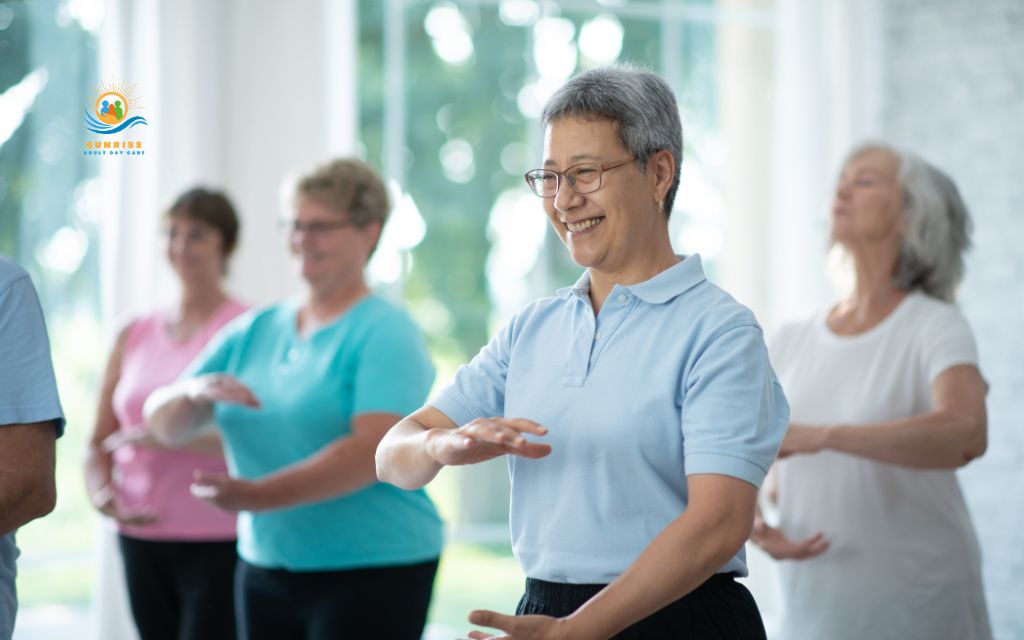
Tai chi en el centro de día para adultos Sunrise
En Sunrise Adult Daycare, en Denver, comprendemos los poderosos beneficios que el tai chi tiene para nuestros participantes. Nuestra estructurada programa diurno para adultos ofrece a las personas mayores la oportunidad de participar en actividades de bienestar basadas en la evidencia, incluyendo clases de movimiento suave que incorporan los principios del tai chi.
Los participantes en nuestros programas de atención diurna se benefician de:
- Actividades grupales supervisadas por profesionales.
- Conexión social con los compañeros
- Ejercicio seguro y accesible, adecuado para distintos niveles de movilidad.
- Oportunidades para mantener la independencia y la calidad de vida
Más información: Llame al (303) 226-6882 o visite nuestro sitio web para descubrir cómo nuestros programas diurnos promueven el bienestar de las personas mayores a través del movimiento, la conexión y la atención compasiva.
Conclusión
Los ejercicios de tai chi para personas mayores ofrecen algo poco común en el mundo del envejecimiento: una práctica que respeta la sabiduría del cuerpo, trabaja dentro de sus limitaciones y, aun así, desarrolla fuerza, equilibrio y resistencia genuinos.
No es necesario dominar formas complejas ni recordar secuencias largas. Incluso unos pocos movimientos sencillos, practicados con regularidad, atención y cuidado, pueden marcar una diferencia significativa en la estabilidad que sientes al caminar, la confianza con la que te mueves a lo largo del día y la conexión que sientes con tu propio cuerpo y sus capacidades.
Empieza hoy mismo:
- Empieza con solo uno o dos ejercicios de esta guía.
- Practique durante 5-10 minutos varias veces esta semana.
- Presta atención a cómo responde tu cuerpo.
- Hable con su proveedor de servicios médicos sobre la posibilidad de incorporar el tai chi a su rutina de bienestar.
- Considere la posibilidad de unirse a una clase grupal en un centro para personas mayores, un programa comunitario o un centro de día para adultos.
- Sé paciente contigo mismo; los beneficios se acumulan gradualmente a lo largo de semanas y meses.
Preguntas frecuentes (FAQ)
¿Es seguro el tai chi para las personas mayores con artritis u osteoporosis?
Sí, el tai chi es generalmente seguro y, a menudo, beneficioso para ambas afecciones cuando se practica de manera adecuada. Para la artritis: Los movimientos suaves ayudan a reducir la rigidez y el dolor de las articulaciones al estimular la producción de líquido sinovial. Para la osteoporosis: La naturaleza del tai chi, que implica soportar peso, favorece la salud ósea y reduce el riesgo de caídas. Evite las flexiones profundas hacia delante que flexionan excesivamente la columna vertebral, muévase lentamente durante los cambios de peso y utilice un apoyo para los ejercicios de equilibrio.
¿Son suficientes 10 minutos diarios de ejercicio de tai chi para las personas mayores?
¡Sí! Diez minutos al día son beneficiosos y mejor que no practicar nada.
Por qué funcionan las sesiones cortas:
– La constancia es más importante que la duración.
– Desarrolla hábitos y memoria muscular más rápidamente.
– Más fácil de integrar en las rutinas diarias.
– Menor riesgo de fatiga.
¿Puedo practicar tai chi si utilizo un andador o una silla de ruedas?
¡Por supuesto! El tai chi se adapta muy bien a las ayudas para la movilidad. Con un andador: Practique tai chi sentado o realice movimientos con la parte superior del cuerpo mientras permanece de pie con el andador como apoyo. Concéntrese en los movimientos de los brazos, la respiración y las rotaciones suaves del torso. En silla de ruedas: El tai chi en silla funciona muy bien. Asegúrate de que los frenos estén bloqueados y practica todos los movimientos de la parte superior del cuerpo, los ejercicios de respiración y los cambios de peso sentado.