Skip to content

Denver offers many quality options for skilled nursing care throughout the metro area, and numerous other licensed facilities.
This variety is ultimately good news, giving families choices that fit different needs, locations, and budgets. But when you’re in the middle of a health crisis or watching a loved one struggle, having many options can feel overwhelming rather than helpful.
This guide is here to help. We’ll explain exactly what a skilled nursing care facility is, who benefits from this level of care, and how to choose a facility with confidence. Understanding your options is the first step toward making a decision that honors both safety and dignity.
Let’s break it down together with us in this blog!
What is a skilled nursing care facility?
Skilled nursing care facility definition
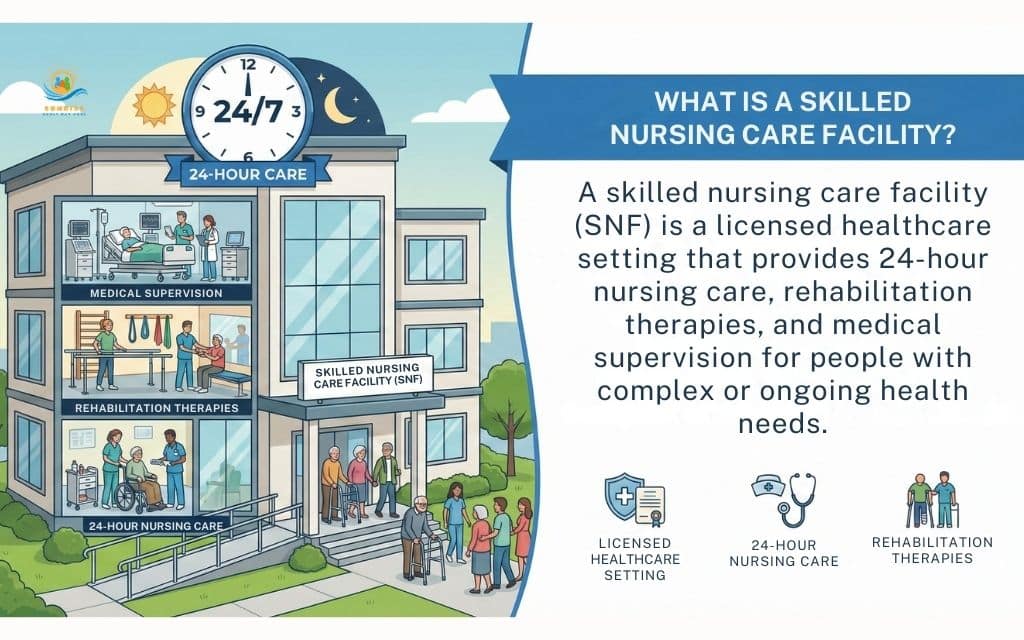
A skilled nursing care facility (SNF) is a licensed healthcare setting that provides 24-hour nursing care, rehabilitation therapies, and medical supervision for people with complex or ongoing health needs.
Unlike settings that help with daily tasks like bathing or medication reminders, skilled nursing facilities offer intensive medical care delivered by registered nurses (RNs) and licensed practical nurses (LPNs) around the clock.
How skilled nursing differs from other care options
Skilled nursing facilities are distinct from assisted living communities and home care services.
Assisted living focuses on helping generally stable seniors with daily activities in a residential setting, while home care brings support services into a person’s home.
Skilled nursing facilities, by contrast, are clinical healthcare environments designed for people who need intensive medical management, frequent monitoring, or rehabilitation that requires coordinated care from multiple healthcare professionals.
We’ll explore these differences in greater detail later in this guide.
See more: https://sunriseseniordaycare.com/what-is-senior-living/
Types of care offered at skilled nursing facilities
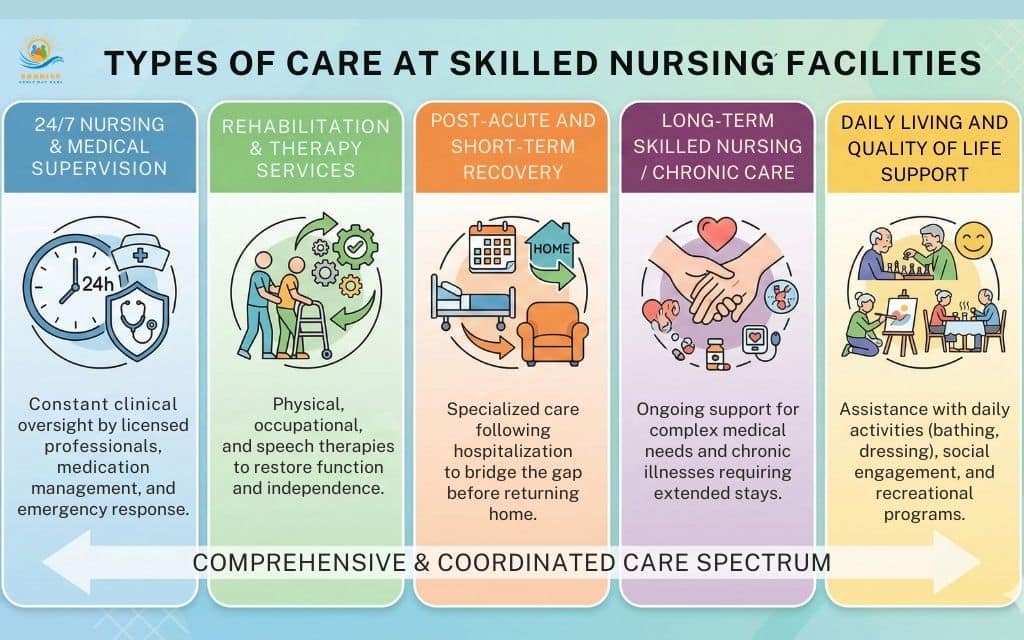
24/7 nursing and medical supervision
The cornerstone of skilled nursing care is continuous nursing presence. At any hour of the day or night, registered nurses (RNs) or licensed practical nurses (LPNs) are on-site and available.
Services include:
- Medication management: Administering medications on schedule, including injections, IV medications, and complex medication regimens
- Vital sign monitoring: Regular tracking of blood pressure, heart rate, oxygen levels, and other critical indicators
- Medical treatments: Oxygen therapy, wound care, catheter management, feeding tube care, IV therapy
- Condition management: Close monitoring of complex chronic conditions like congestive heart failure (CHF), chronic obstructive pulmonary disease (COPD), diabetes, kidney disease, and advanced dementia
Rehabilitation and therapy services
Many people enter skilled nursing facilities specifically for rehabilitation after a medical event.
Denver SNFs typically have on-site therapy gyms and employ licensed therapists who work with residents daily. Rehabilitation is especially common after any hospitalization that left someone significantly weaker.
Physical therapy (PT)
Physical therapy (PT) helps rebuild strength, improve balance, and restore mobility. Common goals include:
- Walking safely with or without assistive devices
- Transferring from bed to chair independently
- Climbing stairs
- Preventing falls through strength and balance training
Occupational therapy (OT)
Occupational therapy (OT) focuses on reclaiming independence in daily activities:
- Bathing, dressing, and grooming oneself
- Preparing simple meals
- Managing household tasks
- Adapting techniques for people with limitations
Speech-language therapy (SLP)
Speech-language therapy (SLP) addresses communication, swallowing, and cognitive challenges:
- Recovering speech after stroke
- Treating swallowing difficulties (dysphagia) to prevent aspiration pneumonia
- Cognitive exercises for memory and thinking skills
- Communication strategies for people with aphasia or other language disorders
Post-acute and short-term recovery
Post-acute care describes the transitional period immediately following hospital discharge. Many Denver families first encounter skilled nursing facilities during this phase.
When doctors say someone isn’t ready to go home yet but doesn’t need to stay in the acute hospital, a skilled nursing facility bridges that gap. This short-term skilled nursing care provides:
- Close medical monitoring during the vulnerable early recovery period
- Intensive daily therapy to rebuild strength and function
- Medication adjustments and wound care in a supervised setting
- Coordination with hospital physicians and specialists
- Preparation and safety planning for eventual return home or transition to assisted living
Long-term skilled nursing / chronic care
Not everyone in a skilled nursing facility is working toward going home. For some seniors, ongoing skilled nursing becomes necessary due to progressive conditions or medical complexity that makes other settings unsafe.
Long-term skilled nursing care supports:
- Chronic disease management: Ongoing treatment of multiple conditions requiring frequent nursing assessment and intervention
- Advanced dementia care: When dementia progresses to the point where the person also has physical care needs, complex behaviors, or medical complications beyond what memory care alone can handle
- Palliative care: Comfort-focused care for people with serious illnesses, managing symptoms and maintaining quality of life
- End-of-life care: Some facilities provide hospice services on-site or coordinate with hospice agencies
Daily living and quality of life support
Beyond medical care and therapy, skilled nursing facilities provide comprehensive support with activities of daily living (ADLs):
- Personal care: Assistance with bathing, dressing, grooming, toileting, and eating
- Meals: 3 prepared meals daily plus snacks, with dietary modifications for medical needs
- Housekeeping and laundry: Room cleaning, bed linens, and personal laundry services
- Social and recreational activities: While the environment is more clinical than assisted living, quality SNFs offer activity programming including social events, exercise classes, music programs, art activities, and religious services
Comparing assisted living and skilled nursing
This confusion is understandable because both serve older adults who need help, but they serve fundamentally different needs. Let’s clarify the distinction between assisted living vs skilled nursing.
Core difference in purpose
Assisted living
The primary focus is maintaining independence and quality of life for seniors who need help with daily tasks but whose medical conditions are relatively stable. Assisted living emphasizes social engagement, activities, and a residential lifestyle with support services available.
Medical care in assisted living is limited. The resident is generally managing their health with the assistance of a support team, not requiring continuous medical oversight.
Skilled nursing
The focus shifts to medical treatment, rehabilitation, and continuous nursing care. Skilled nursing facilities are designed for people whose health conditions are unstable, complex, or require interventions that only licensed nurses can safely provide. While quality of life remains important, the clinical need drives the care model.
Environment and lifestyle
Assisted living
Assisted living communities in Denver typically resemble apartment buildings or residential neighborhoods. Residents have private apartments with kitchenettes, their own bathrooms, and personal space that feels like home.
Common areas include dining rooms, activity spaces, libraries, and outdoor gardens. The atmosphere aims to feel like a hotel or community center, not a healthcare facility.
Skilled nursing
Skilled nursing facilities have a more clinical environment. Nurses’ stations are visible on each hallway, therapy gyms are prominent, and the setting clearly communicates “medical care.”
Rooms are more likely to be shared (though private rooms are often available at higher cost). Bathrooms may have medical safety features like grab bars and raised toilets.
The trade-off is immediate access to professional care, but with less privacy and homeliness than assisted living offers.
Staffing and clinical services
Assisted living
Assisted living employs primarily caregivers and medication technicians who help with daily tasks.
Nurses are usually on staff but in supervisory or as-needed roles rather than providing hands-on care around the clock. Medical care comes from residents’ own physicians who visit or see patients in outside clinics.
Skilled nursing
Skilled nursing maintains RNs and LPNs 24 hours a day, seven days a week. Licensed therapists (PT, OT, SLP) are on staff and work with residents regularly. Physicians often make regular rounds within the facility, and many SNFs have medical directors who oversee resident care. The clinical team is larger, more specialized, and more continuously present.
Cost and payor sources (high-level)
Assisted living
Assisted living is typically private pay, meaning families pay out-of-pocket or use long-term care insurance if they have it.
Some Colorado programs and VA benefits may help with costs for eligible veterans. Monthly costs for assisted living in Denver range considerably based on the level of care needed and the community’s amenities.
Skilled nursing
Skilled nursing has a higher daily rate due to the intensity of care provided. However, different payers may cover skilled nursing costs:
- Medicare may cover short-term skilled nursing for rehabilitation following a qualifying hospital stay
- Medicaid may cover long-term skilled nursing for eligible individuals who meet financial and medical criteria
- Private pay and long-term care insurance also apply
Who needs a skilled nursing care facility vs other options?
Determining the right level of care is one of the most consequential decisions families make. Let’s look at common scenarios that indicate skilled nursing may be necessary, and how to distinguish when assisted living or home care might be sufficient.
Recent hospitalization
If your loved one has been hospitalized for joint replacement surgery, a heart attack, stroke, serious infection like pneumonia, or any major medical event, doctors may recommend skilled nursing for post-acute rehabilitation. Signs this is appropriate include:
- Unable to safely walk or transfer without significant assistance
- Requires IV antibiotics or other injectable medications
- Has surgical wounds requiring professional monitoring
- Needs multiple hours of therapy daily to regain function
- Medical condition remains unstable and requires frequent nursing assessment
Complex medical needs
Some families reach a point where managing a loved one’s health at home, even with home health visits, is no longer safe or sustainable. Red flags include:
- Frequent falls despite home modifications and assistive devices
- Pressure ulcers (bedsores) developing or worsening
- Uncontrolled diabetes with dangerously fluctuating blood sugar
- Respiratory conditions requiring oxygen and frequent interventions
- Multiple medications with complex schedules that aren’t being followed correctly
- Cognitive decline combined with wandering, medication errors, or unsafe behaviors

Progressive conditions requiring high-level support
Certain diseases progress to a point where skilled nursing becomes the safest option:
- Advanced dementia with significant physical care needs, incontinence, and mobility challenges
- Neuromuscular diseases like ALS (amyotrophic lateral sclerosis), advanced Parkinson’s disease, or multiple sclerosis
- Late-stage chronic illnesses such as severe heart failure, advanced COPD, or end-stage kidney disease
In these situations, the combination of medical complexity and physical dependence exceeds what less intensive care settings can appropriately manage.
Transitioning to skilled nursing
Emotional preparation for seniors and families
Let’s acknowledge the feelings openly: moving a loved one to a skilled nursing facility often brings up fear, guilt, sadness, and anxiety. These emotions are normal and valid.
Have open, respectful conversations with your loved one whenever possible. Listen to their fears and wishes. Even when someone has dementia, treating them with dignity and involving them in decisions (to the extent they’re able) matters deeply.
If they’re strongly opposed, explore their concerns – sometimes specific fears (losing belongings, being alone, discomfort) can be addressed directly.
What to bring when moving in
When your loved one moves into a skilled nursing facility, certain items will make the transition smoother and the room feel more personal.
Essential documents
- Government-issued photo ID
- Insurance cards (Medicare card, Medicaid card if applicable, supplemental insurance)
- Complete medication list (the facility will have this from the hospital, but bring your own copy)
- Advance directives (living will, healthcare power of attorney documents, DNR orders if applicable)
- Contact list with family and healthcare providers’ information
Personal items for comfort and function
- Comfortable, season-appropriate clothing (avoid clothing that’s difficult to put on—elastic waists and front-opening shirts work best)
- Non-slip footwear or slippers with backs
- Eyeglasses, hearing aids, and cases
- Dentures and cleaning supplies
- Assistive devices: walker, cane, wheelchair cushions
Items that make the space feel like home
- Family photos in frames (labeled on back with resident’s name)
- A favorite blanket or pillow
- Books, magazines, or tablets for entertainment
- Religious items (Bible, prayer beads, small religious images)
- Small décor items like a plant or familiar clock (check facility rules about what’s allowed)
What NOT to bring
Most facilities discourage bringing valuables (jewelry, large amounts of cash), medications from home (the facility pharmacy dispenses medications), or items that are safety hazards (space heaters, candles, sharp objects). Check the facility’s specific list.
Label everything with your loved one’s name – clothing, glasses cases, assistive devices – to prevent items from being misplaced or mixed up with other residents’ belongings.

Conclusion
Making decisions about skilled nursing care for yourself or a loved one is never easy. These choices come during times of stress, health challenges, and emotional strain. Remember that seeking the right level of care – whether that’s skilled nursing, assisted living, or home care with support – is an act of love and responsibility, not a failure or abandonment.
If you’re in the Denver area and navigating these decisions, take your time to research options, visit facilities and ask questions. The right choice honors both safety and dignity, providing the care your loved one needs while maintaining quality of life and connection to family.
___________________________
Sunrise Adult Daycare is a warm, home-like adult day center for seniors, offering a safe, joyful, and engaging place to spend the day. Here, older adults enjoy gentle exercise, memory games, creative activities, social connection, and nutritious meals in a community that feels like family.
- Adult Day Program: A structured daily schedule with light stretching, brain games, arts & crafts, music, group activities, and quiet rest time. Chef-prepared meals are served family-style with options for diabetic, vegetarian, and low-sodium diets.
- Active Older Adults Program: Gentle fitness and movement classes such as chair yoga, stretching, light strength training, dance for balance, and group walks – combined with memory enrichment, workshops, and cultural/creative activities to keep seniors strong, sharp, and confident.
- Caregiver Support Services: A trained, multilingual caregiving team (English, Vietnamese, Korean, Spanish) provides personal assistance with daily tasks, medication reminders, wellness checks, companionship, mobility support, and safe transportation between home and the center.
For more detailed information about Sunrise Adult Daycare’s services, contact us at (303) 226-6882.
Frequently asked questions (FAQs)
What is a skilled nursing care facility, in simple terms?
A skilled nursing care facility is a licensed healthcare setting where people with complex medical needs receive 24-hour nursing care and supervision. Registered nurses and licensed practical nurses are on-site around the clock to provide medical treatments, medication management, wound care, and monitoring.
How is a skilled nursing unit different from assisted living?
The key difference is medical intensity. Assisted living helps generally healthy seniors with daily tasks in a residential apartment-style setting. Skilled nursing provides intensive medical care with 24/7 nursing staff, rehabilitation therapies, and treatment of complex or unstable health conditions.
When does my loved one need skilled nursing instead of home care?
Skilled nursing becomes necessary when your loved one requires 24-hour medical monitoring. Warning signs include frequent falls, uncontrolled chronic conditions, recent hospitalization, or when home care isn’t sufficient to keep them safe.
How much does a skilled nursing facility cost in Denver?
Denver skilled nursing facilities typically cost $250-$400+ per day ($7,500-$12,000+ monthly), depending on care level and facility amenities. However, Medicare covers short-term rehabilitation stays following a qualifying hospital admission – days 1-20 fully covered, days 21-100 with copayments.
Does Medicare pay for a skilled nursing facility stay?
Yes, but with specific requirements. You must have a qualifying hospital stay of at least three consecutive days and enter the skilled nursing facility within 30 days of discharge. Medicare Part A covers up to 100 days per benefit period: days 1-20 fully covered; days 21-100 require daily copayments (approximately $200/day in 2024). Coverage is only for “medically necessary” skilled care.